
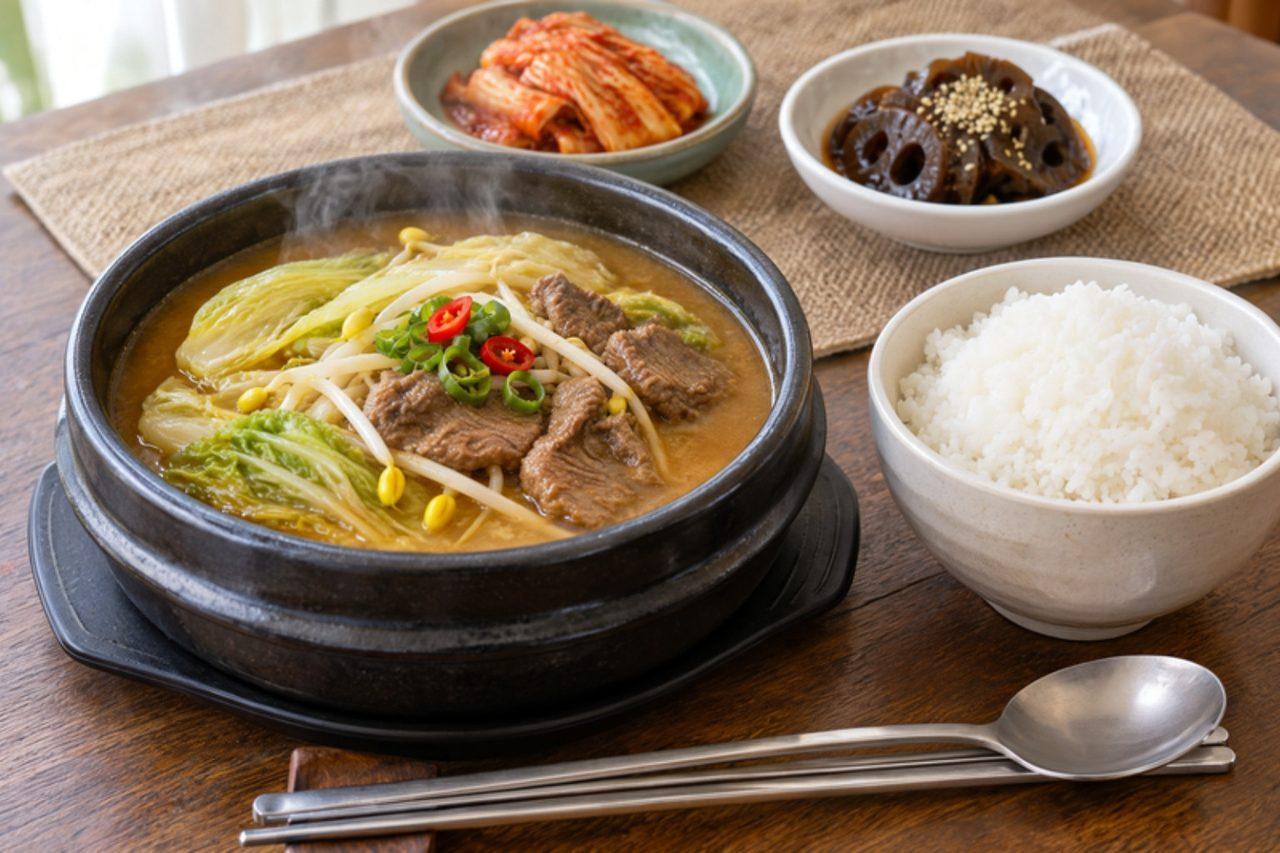
AI-generated image
Haejang-guk
Ugeoji haejang-guk (우거지 해장국): Korean morning soup of cabbage and bean sprouts in beef bone broth


Haejang-guk means "soup to chase a hangover", and in Seoul and every Korean city the 24-hour haejang-guk houses fill at dawn with office workers and night-shift drivers. This version is the everyday ugeoji style: outer napa cabbage leaves and bean sprouts simmered with doenjang and chilli in a beef bone broth, with tender beef shin, eaten with a bowl of rice. The common mistake is skipping the soak and first boil of the bones, which leaves the broth murky and metallic. Chef's tip: squeeze the blanched cabbage leaves and rub them with the doenjang and chilli before they go into the pot, so the seasoning clings to every leaf.
- Total time
- 120 min
- Difficulty
- medium
- Serves
- 4
Ingredients
For the broth
- 2 ¼ lb beef marrow or knuckle bones
- 14 oz beef shinin one piece
- 2.5 litres water
- 1 onionhalved
- 6 garlic clovescrushed
For the soup
- 7 oz soybean sproutsrinsed
- 1 ½ tbsp gochugaru (Korean chilli flakes)
- 3 garlic clovesminced
- 1 tbsp Korean soup soy sauce
- 3 spring onionssliced
- ½ tsp saltto taste
- 4 bowls cooked short-grain riceto serve
Shop this recipe on Amazon
Spices & pantry
Fresh ingredients (5)
Links open Amazon in a new tab. As an Amazon Associate, WhatToEat.Today earns from qualifying purchases.
Method
0/8 doneStep 1: Soak 2 ¼ lb beef marrow or knuckle bones and 14 oz beef shin in cold water for 1 hour, changing the water once, to draw out the blood.
Step 2: Put the bones and shin in a pot, cover with fresh water and boil hard for 5 minutes. Drain, rinse the bones and pot, and throw that water away.
5 minStep 3: Return the bones and shin to the pot with 2.5 litres water, 1 onion and 6 garlic cloves. Bring to the boil, then simmer gently, half covered, for 75 minutes, skimming now and then, until the shin is tender when pierced.
75 minStep 4: Meanwhile, blanch 14 oz napa cabbage outer leaves in boiling water for 3 minutes until floppy. Cool under cold water, squeeze dry and tear into strips.
3 minStep 5: In a bowl, rub the cabbage with 3 tbsp doenjang (Korean soybean paste), 1 ½ tbsp gochugaru (Korean chilli flakes) and 3 garlic cloves until every strip is coated.
Step 6: Lift out the shin and slice it thinly. Strain the broth, discarding the bones and onion; you need about 1.5 litres.
Step 7: Bring the broth back to the boil, add the seasoned cabbage and simmer for 10 minutes. Add 7 oz soybean sprouts and the sliced shin and simmer for 5 minutes more with the lid on, until the sprouts lose their raw, beany smell.
15 minStep 8: Season with 1 tbsp Korean soup soy sauce and ½ tsp salt, scatter in 3 spring onions and serve bubbling hot with 4 bowls cooked short-grain rice.
Nutrition per serving
- Calories
- 340 kcal
- Protein
- 26 g
- Carbs
- 18 g
- Fat
- 18 g
- Fibre
- 5 g
Nutrition values are estimates.
KrazyBadal
Good to know
- How long does haejang-guk take?
- About 120 minutes in total: 25 minutes to prepare and 95 minutes to cook.
- How many people does it serve?
- 4 as written. Change the servings above the ingredients and every amount scales to match.
- Is it very spicy?
- It has some heat. Use less chilli for a milder version, or more if you like it hot.
- What can I use instead of onion?
- 2 shallots per onion.
- What can I use instead of garlic cloves?
- ½ tsp garlic paste or ⅛ tsp garlic powder per clove.
Reviews
No reviews yet. Be the first to cook it.
Rate this recipe
Sign in to rate and review this recipe.
You might also like

Soto Banjar
Along the rivers of Banjarmasin in South Kalimantan, breakfast often means soto Banjar eaten at a wooden riverside warung, sometimes after a dawn trip to the floating market. Unlike the turmeric sotos of Java, this broth is pale and clear, perfumed with the sweet spices that traders brought up the river centuries ago: cinnamon, cloves, star anise, cardamom and nutmeg. Shredded chicken, glass noodles, carrot and a boiled egg go into the bowl with rice cakes, and lime and a little chilli sharpen it at the table. Chef's tip: toast the whole spices in the pan for a minute before the paste goes in; it brings out their sweetness without the dusty edge of ground spice.
 Indonesian


Sopa da pedra
Almeirim, a market town in the Ribatejo, is the capital of this soup; its restaurants serve it every day, and each bowl arrives with a clean stone at the bottom, after the folk tale of a friar who 'made soup from a stone' by talking villagers into giving him everything else. This is a pork soup: red kidney beans simmer with chouriço, morcela blood sausage and a piece of pork belly, then potatoes, carrots and coriander finish it into a thick, hearty bowl. Chef's tip: cook the sausages whole and slice them at the end, so they stay juicy and don't turn the broth greasy.
 Portuguese
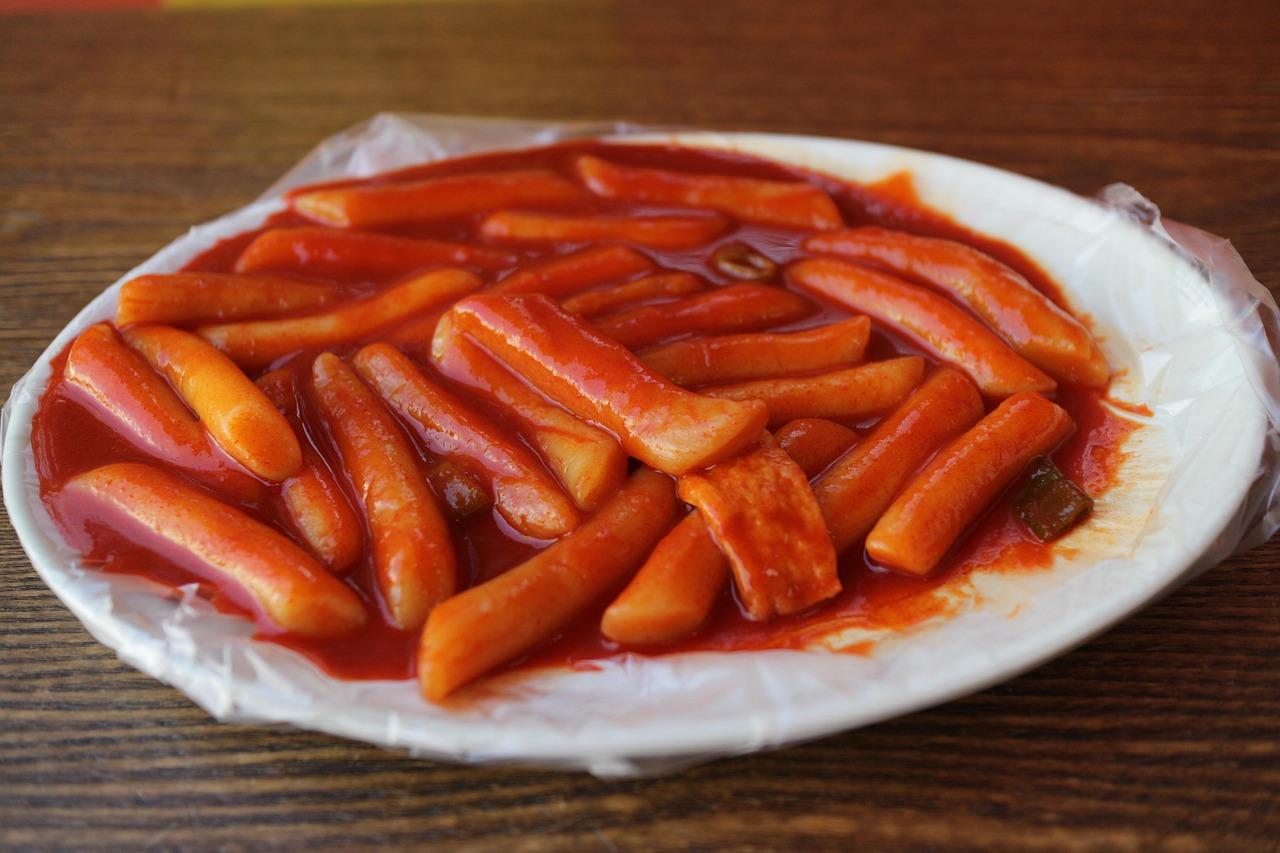
Tteokbokki
Tteokbokki (떡볶이) is Korea's best-loved street snack: chewy cylinders of rice cake simmered in a thick, glossy, sweet and spicy red sauce. It became a classic in Seoul, where it is sold from street stalls and snack bars in every neighbourhood. Street versions use anchovy stock and fish cakes; this vegan version uses a quick kelp and shiitake stock with cabbage and spring onions, and has all the same punch. Eat it hot, while the rice cakes are soft and stretchy. Chef's tip: keep stirring and scrape the bottom; the rice cakes release starch that thickens the sauce but also catches. The sauce is right when it clings to the spoon in a glossy coat.

