Skip to content

Portuguese recipes

18 Portuguese recipes to cook at home, each with photos, step-by-step instructions and cook times. The quickest, Galão, takes 5 minutes. Most take around 60 minutes.

Filter these by time, diet or cuisine

Caldo verde

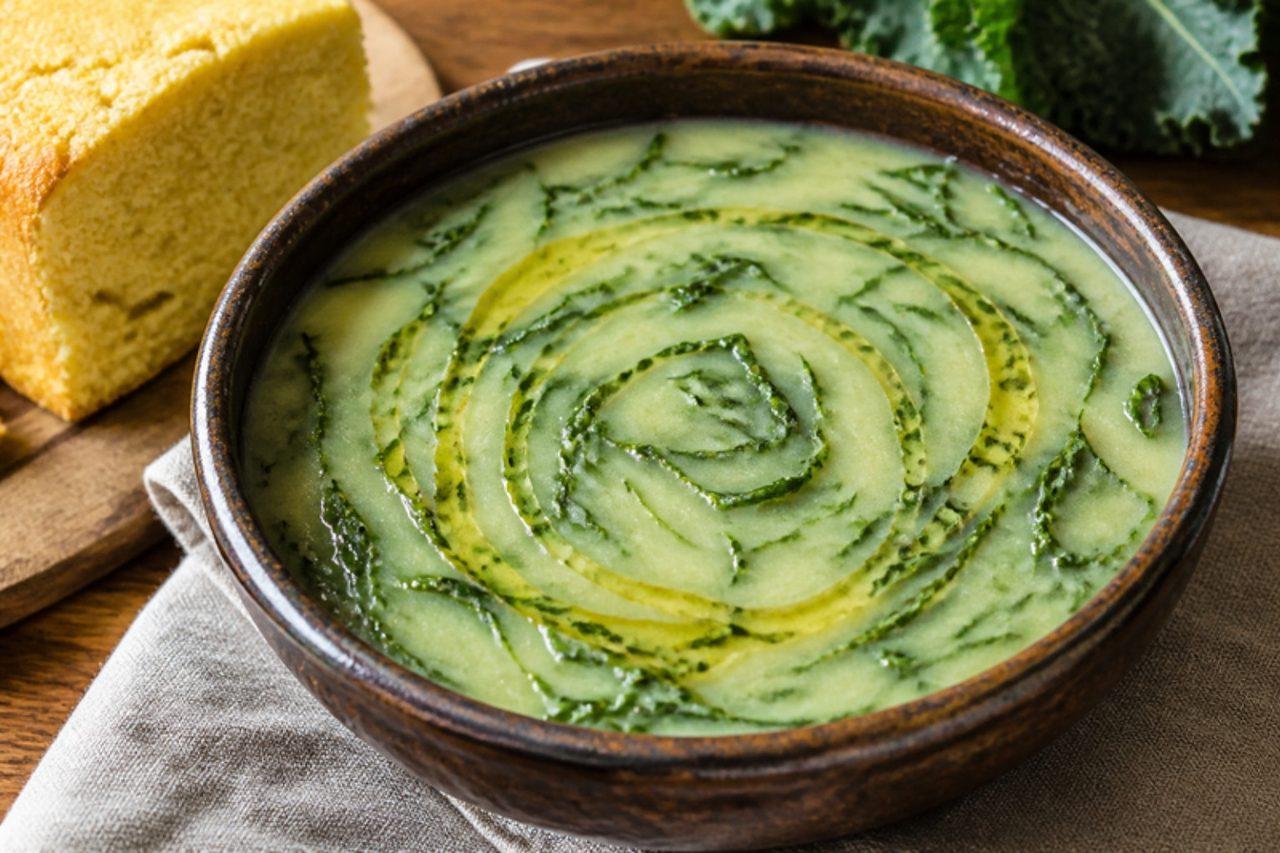
Caldo verde comes from the Minho, the green, rainy corner of northern Portugal above Porto, where couve galega (a tall, flat-leaved cabbage) grows in every back garden. It is a plain purée of potato and onion with ribbons of dark green cabbage cut as fine as string, finished with a thread of raw olive oil, and it is drunk from earthenware bowls at the Santos Populares street festivals in June, at weddings at midnight and on any cold evening with a slice of broa (maize bread). In the north a coin of chouriço is usually floated on top; this version keeps the soup vegetarian and lets a little smoked paprika in the oil stand in for it. Chef's tip: shred the greens as thinly as you can, rolled up tight like a cigar, because they only cook for a few minutes and thick strips stay chewy.

40 minSoupsVeganGluten free
by KrazyBadal 0 views

Açorda alentejana

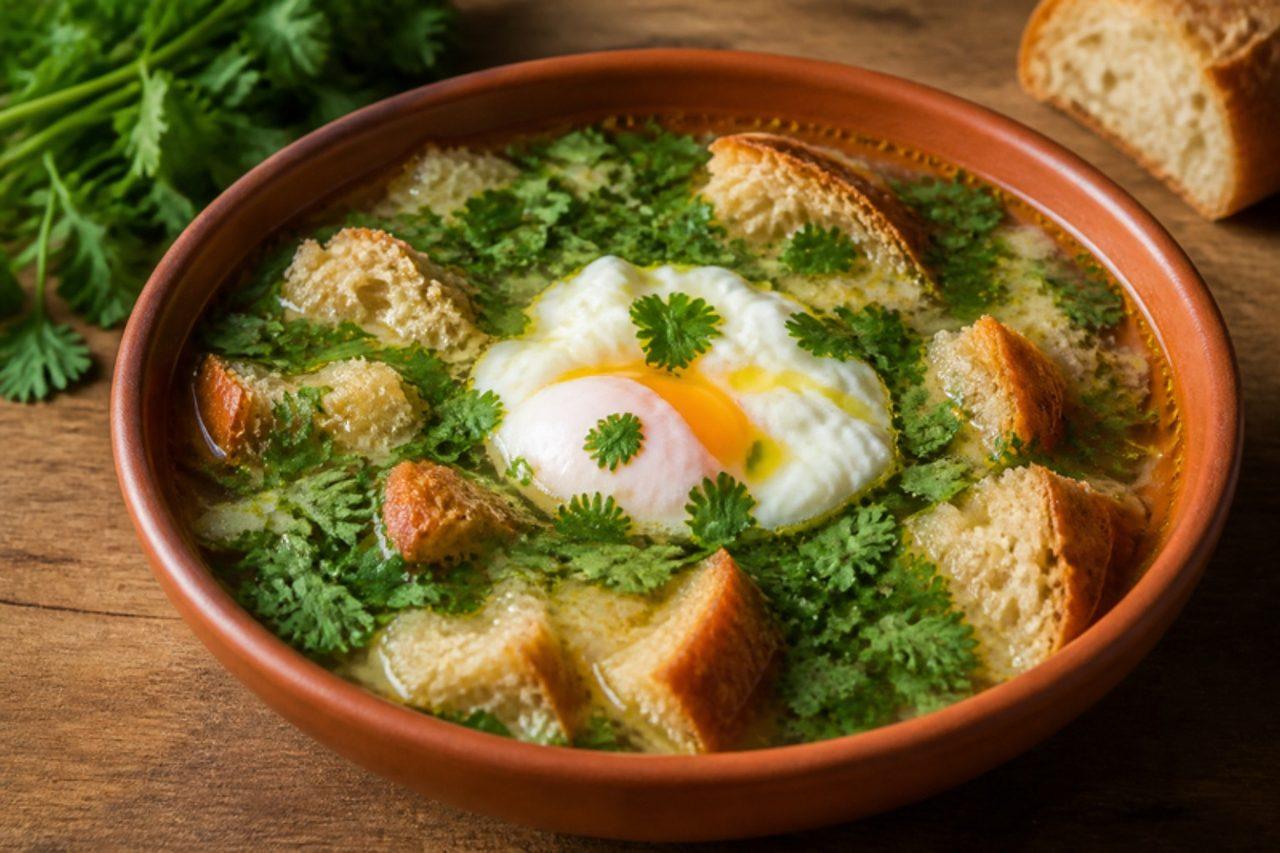
Açorda à alentejana is the shepherd's supper of the Alentejo, the wide, hot plain of cork oaks and wheat fields south of Lisbon. It is barely cooked at all: raw garlic, salt and a big handful of fresh coriander are pounded to a paste in the bowl, sliced day-old bread goes on top, and boiling water poured over turns it all into a fragrant, green broth, crowned with a soft poached egg. Unlike Spain's sopa de ajo, nothing is fried and there is no paprika; the flavour is fresh herbs, sharp garlic and fruity olive oil. Alentejanos eat it at home in summer and winter alike, and in Évora's tascas in the evening, sometimes with a few olives or a slice of fresh cheese. Chef's tip: use firm, dense, two-day-old country bread; soft sandwich bread collapses into mush the moment the water hits it.

20 minSoups
by KrazyBadal 0 views

Migas with greens and garlic

In the Alentejo nothing made of bread is wasted, and migas is the proof: stale loaves soaked, then worked in a pan of hot olive oil and garlic until they come together into a golden, crusty roll with a soft middle. Around Évora and Beja it usually sits next to fried pork, but in spring, when wild asparagus (espargos bravos) and grelos are picked along the field edges, cooks fold the greens straight into the bread and make it a dish in its own right. This version uses tender asparagus or turnip tops and is entirely plant-based. Serve it as a side with a fried egg or a bean stew, or on its own with olives. Chef's tip: soak the bread only until it is damp and heavy, then squeeze it hard; wet bread steams in the pan instead of forming the golden crust that makes migas worth eating.

30 minSidesVegan
by KrazyBadal 0 views

Pastéis de nata

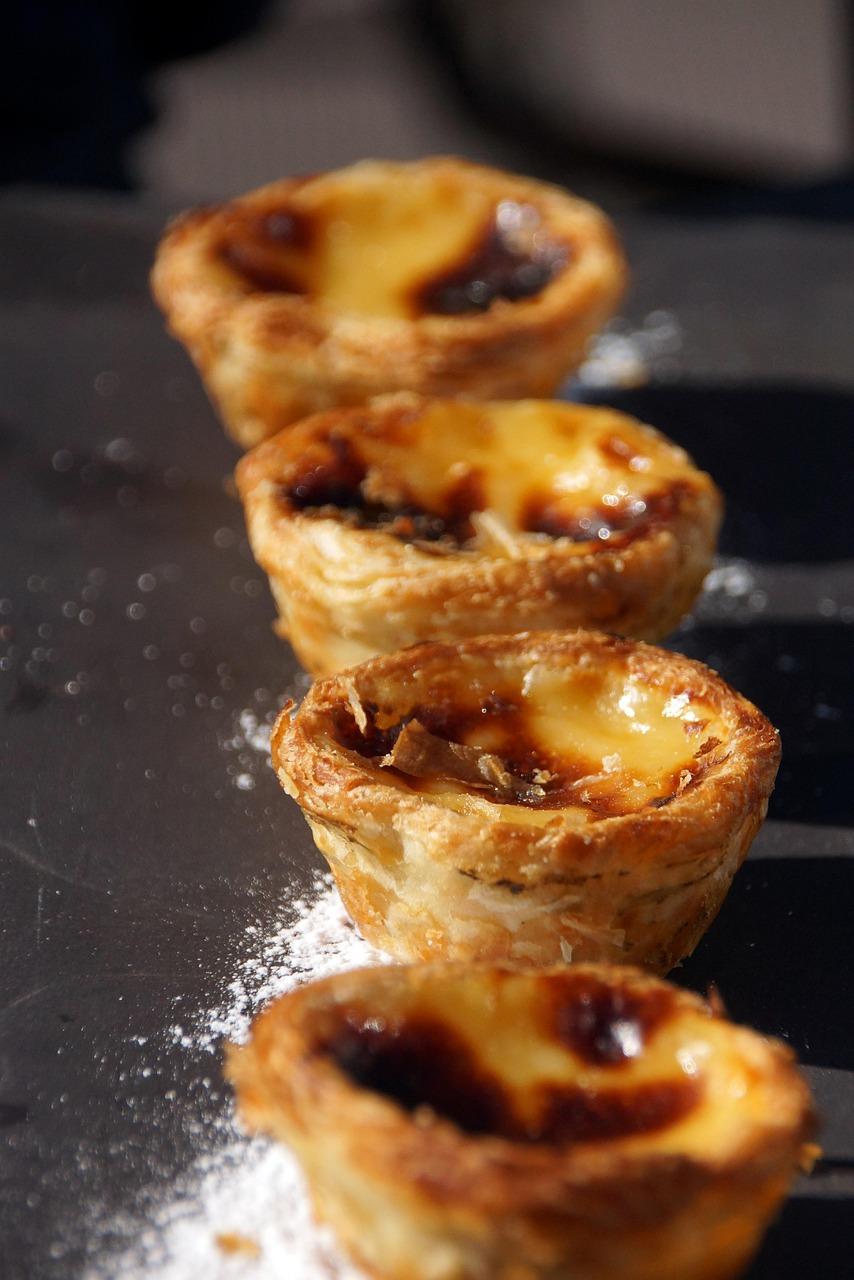
Pastéis de nata were first baked by monks of the Jerónimos Monastery in Belém, on the Lisbon waterfront, who used surplus egg yolks (whites went to starch habits) in a lemon-and-cinnamon custard. Today every pastelaria in Portugal sells them warm from first thing in the morning, eaten standing at the counter with a bica or galão, dusted with cinnamon and icing sugar. The pastry is a spiral of thin, buttery layers pressed up the sides of the tin with a wet thumb; the custard is baked in the hottest oven you have, so it sets creamy and catches dark freckles in under 15 minutes. Chef's tip: chill the rolled log of pastry well and press the discs from the centre outwards, so the edge stands slightly above the rim; that thin rim is what shatters when you bite.

120 minBaking
by KrazyBadal 0 views

Bolo de arroz

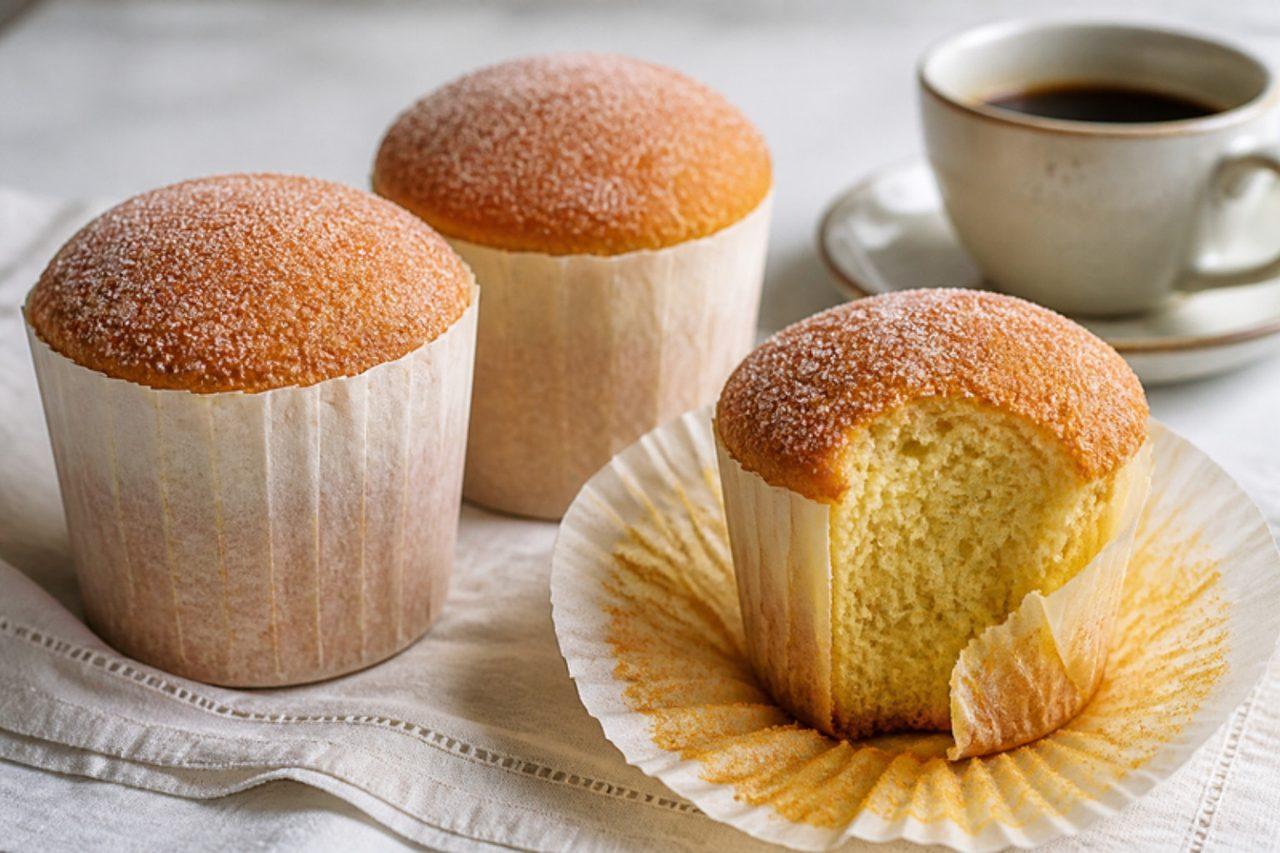
Bolos de arroz are the tall, sugar-crusted cakes standing in their paper wrappers in every Portuguese café cabinet, from Porto's breakfast counters to the pastelarias of Lisbon's neighbourhoods. Despite the name they are mostly wheat flour, with a share of rice flour that gives a fine, slightly sandy, springy crumb, perfumed with lemon zest. People have one with a galão mid-morning or for lanche, the afternoon snack, peeling the paper down as they go. Chef's tip: wrap a strip of baking paper around the inside of each muffin hole so it stands 3 cm above the rim; the batter climbs up it and you get the tall, straight-sided shape.

40 minBaking
by KrazyBadal 0 views

Arroz doce

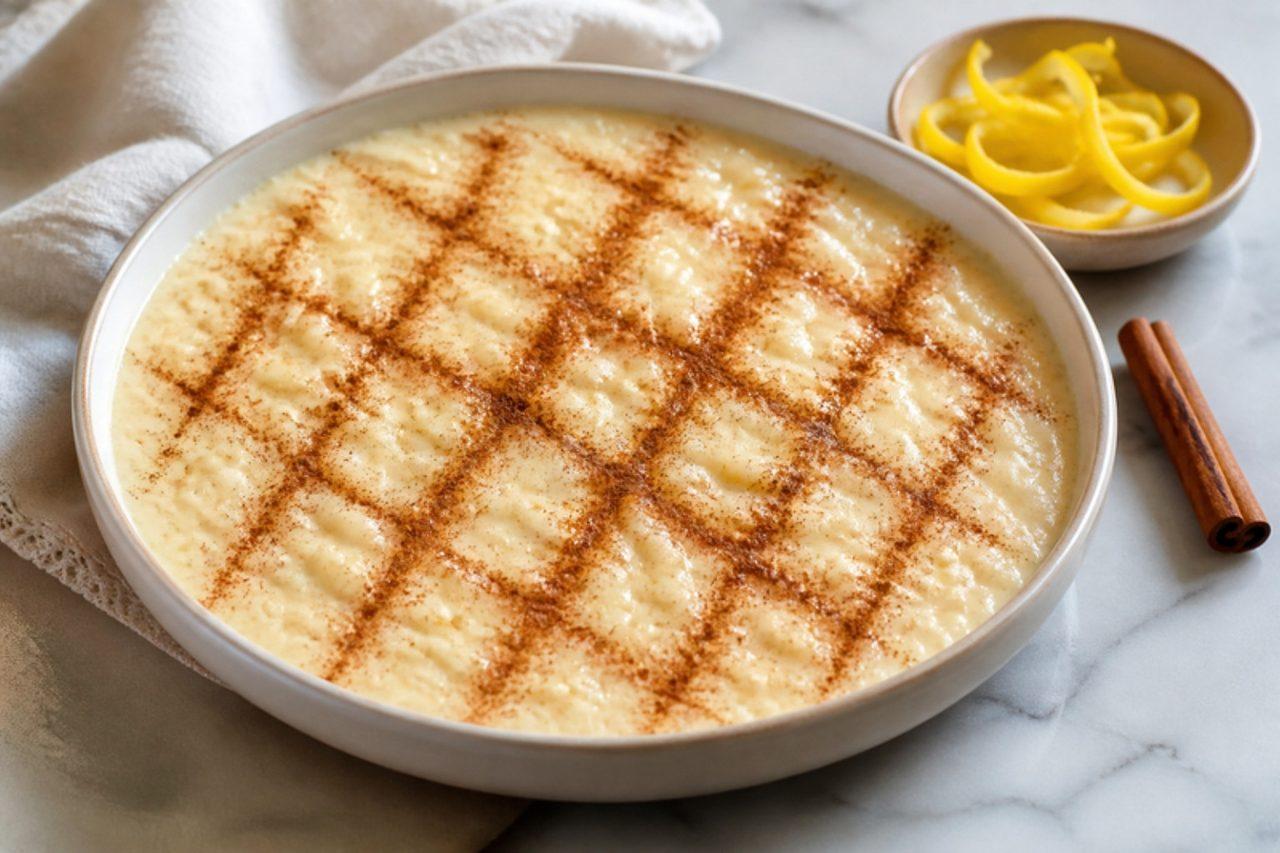
Arroz doce is set out on every Portuguese table at Christmas, at weddings and at the summer romarias (village saints' festivals) of the Minho, poured into wide, shallow platters and dusted with cinnamon in lattices, initials or little hearts. Short-grain carolino rice is first boiled in water with lemon peel and cinnamon, then simmered slowly in milk and sugar, and finally thickened off the heat with egg yolks, which turns it pale gold and custardy; that last step is what sets it apart from Spanish or Mexican rice puddings. It is eaten cold or at room temperature, by the spoonful straight from the platter. Chef's tip: cook the rice in water first until it has swollen, and only then add the milk; starting in milk scorches easily and leaves the grains firm in the middle.

50 minDessertsGluten free
by KrazyBadal 0 views

Pão de ló de Ovar

Pão de ló is Portugal's oldest sponge cake, made with nothing but eggs, sugar and a little flour, and every region claims its own. In Ovar, a town on the lagoon coast south of Porto, it is baked only briefly, so a thin golden crust hides a centre of barely set, glossy egg cream that oozes when cut. It is the cake for Easter, when godparents give it to their godchildren, and it is sold all year at the town's bakeries wrapped in the paper it was baked in. Eat it at room temperature with a spoon, on its own or with a glass of port. Chef's tip: whisk the eggs and sugar for a full 12–15 minutes until the mixture is very thick and white; that air is the only thing that lifts the cake.

50 minBaking
by KrazyBadal 0 views

Bolas de Berlim

On Portuguese beaches in summer, from Praia da Rocha in the Algarve to Nazaré and Figueira da Foz, vendors walk the sand with a glass box on their shoulder calling 'Olha a bola!': soft fried doughnuts rolled in sugar, split along one side and stuffed with thick yellow creme pasteleiro. Though named after the Berliner, the Portuguese version is cut open rather than injected, so the custard shows like a smile. They are eaten in swimsuits, sticky-fingered, mid-afternoon, and in cafés the rest of the year. Chef's tip: let the shaped balls rise until they look puffy and a gentle finger press springs back slowly; under-proved dough fries dense and over-proved dough collapses and soaks up oil.

70 minDesserts
by KrazyBadal 0 views

Galão

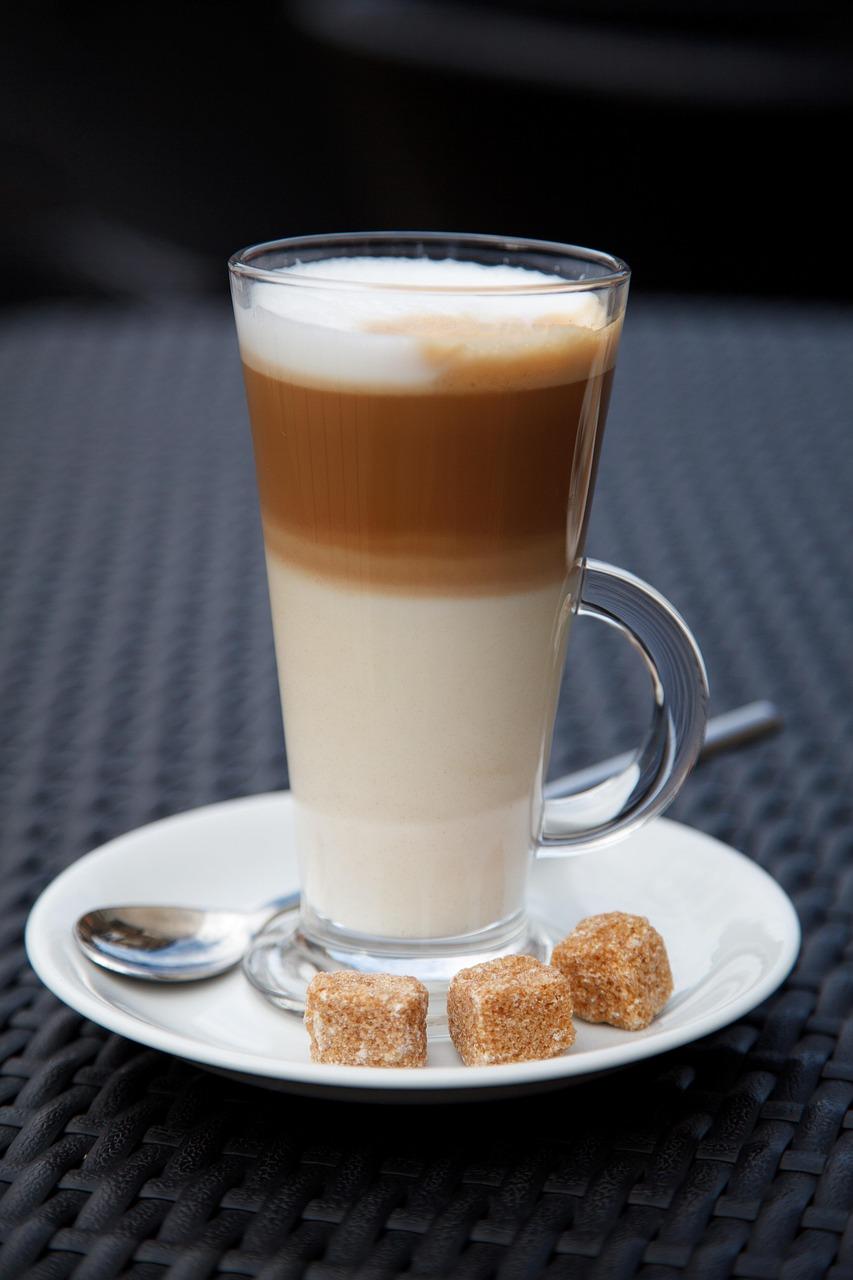
Ask for a galão in a Lisbon café and it arrives in a tall glass, not a cup: one short espresso (a bica, in the capital's slang) topped up with about three times as much hot, frothy milk, so it is pale, mild and creamy. It is the breakfast and mid-morning drink of the city, ordered at the counter with a pastel de nata or a tosta mista, and the glass is held by the rim because it gets hot. A galão escuro has less milk, a galão claro more. Chef's tip: heat the milk only until it steams and the jug is too hot to hold for more than a moment, about 65 °C; boiled milk tastes flat and loses its sweetness.

5 minDrinksGluten free
by KrazyBadal 0 views

Bacalhau à Brás

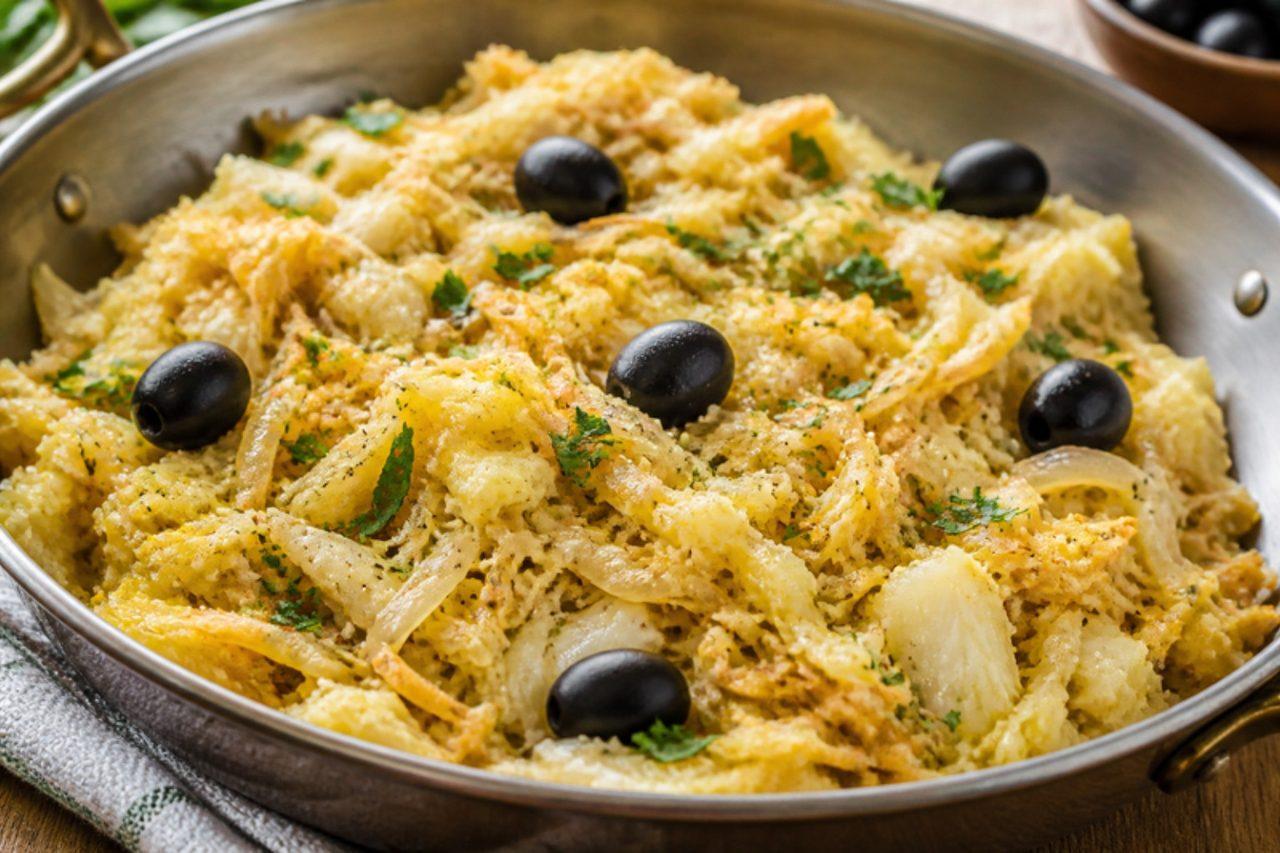
Lisbon's Bairro Alto taverns claim this dish, said to be named after a tasca owner called Brás, and it is still a weeknight favourite in homes all over the city. Flaked salt cod is softened with slowly cooked onion, tossed with a heap of fine straw-cut fried potatoes, then bound at the last second with beaten egg so everything stays creamy and loose. Black olives and parsley go on top. A green salad is all it needs. Chef's tip: take the pan off the heat the moment you add the eggs; they should finish cooking from the warmth of the potatoes, like a soft scramble.

60 minFishGluten free
by KrazyBadal 0 views

Bacalhau com natas

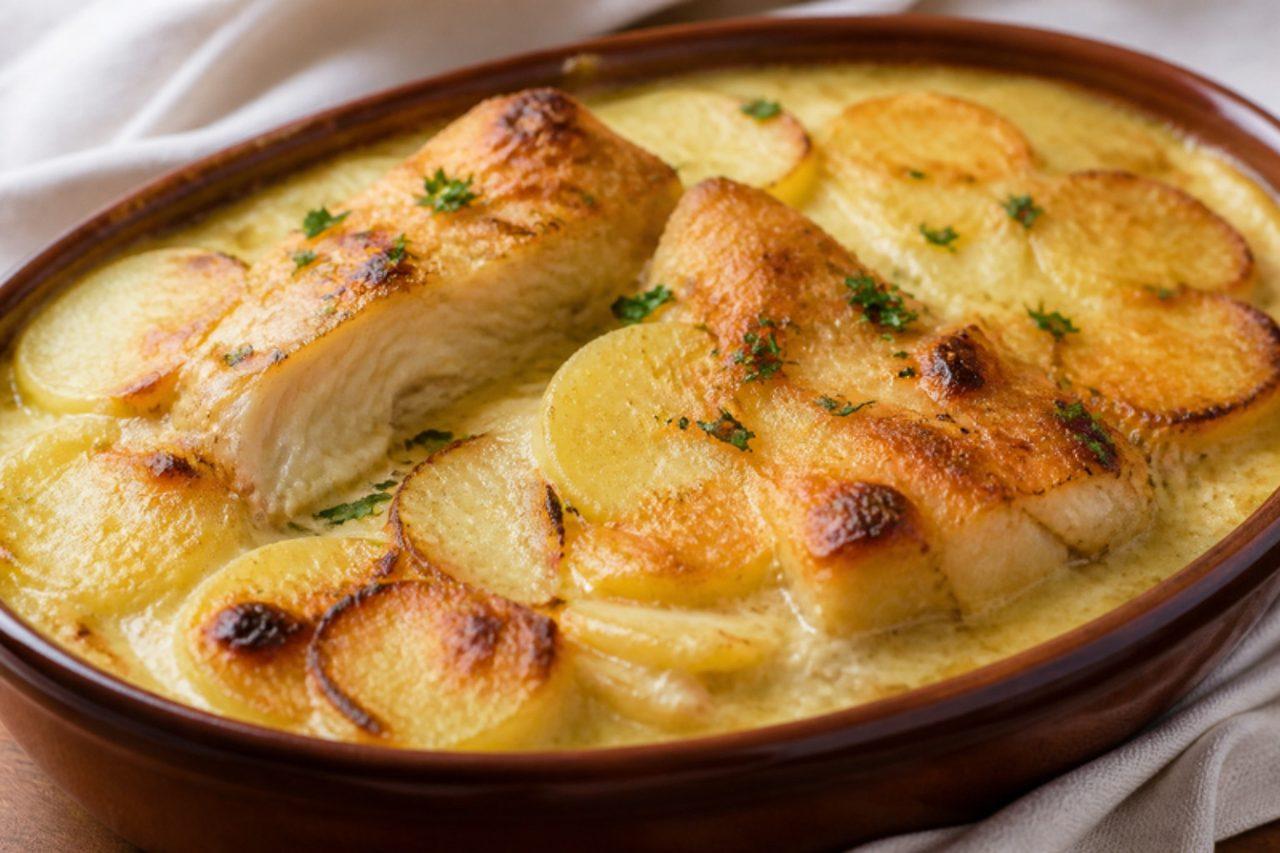
Bacalhau com natas is the comfort bake that turns up at Portuguese Christmas gatherings, Sunday lunches and every café menu from Porto to Faro. Flaked salt cod, soft onion and cubes of fried potato are folded into a light béchamel enriched with cream, then baked until bubbling and golden on top. It is rich, gently salty and easy to make ahead for a crowd. Serve with a crisp green salad and some bread. Chef's tip: fry the potato cubes only until pale gold; they finish cooking in the oven, and crisp ones turn soggy anyway.

90 minFish
by KrazyBadal 0 views

Sardinhas assadas

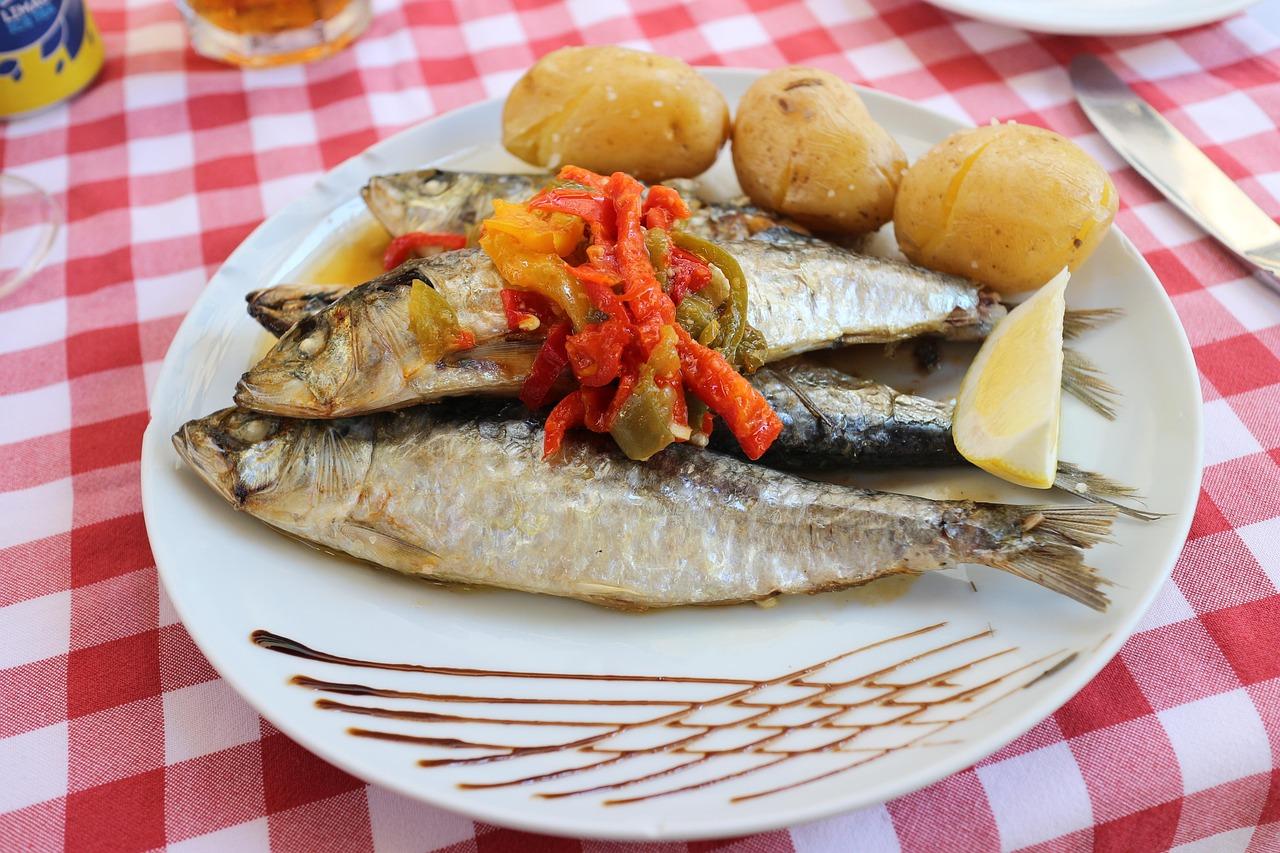
In June the steep lanes of Alfama and Mouraria fill with smoke during the Santos Populares, Lisbon's street festivals for Saint Anthony, and almost every grill is loaded with sardines. They are salted, grilled whole over charcoal until the skin blisters, and laid on a thick slice of country bread that soaks up their juices. Add roasted green peppers and a salad of tomato and onion, and that is the whole feast. Chef's tip: salt the sardines with coarse salt 30 minutes before grilling and keep them chilled; the salt firms the skin so it doesn't stick to the grill.

20 minFish
by KrazyBadal 0 views

Cataplana de marisco

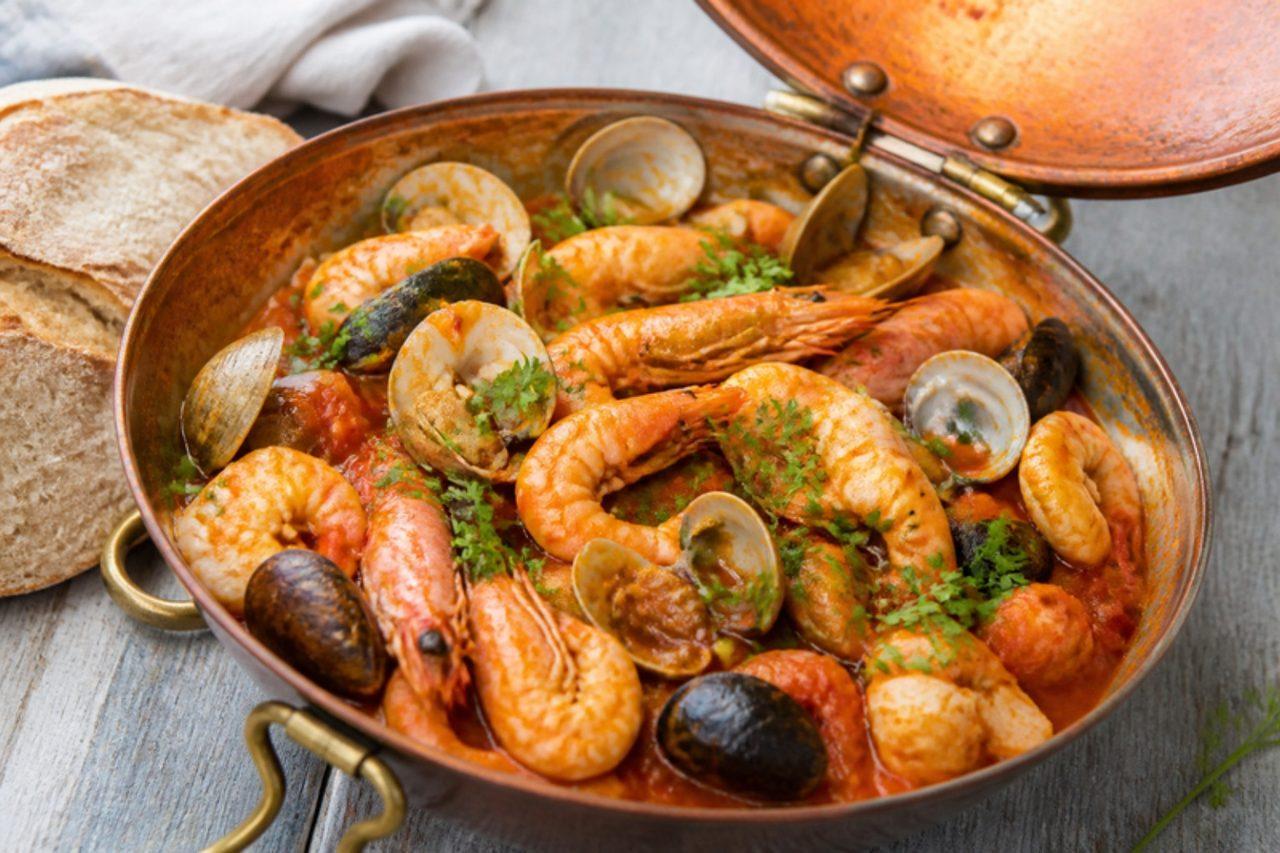
Cataplana is the Algarve's showpiece, named after the hinged, clam-shaped copper pan it is cooked in, and it is served at the table in harbour towns like Olhão and Portimão, lid opened in a puff of steam. This version contains pork: smoky chouriço sausage goes in with the onion, peppers and tomato, then clams, prawns and firm white fish steam on top in their own juices. Bring bread for the broth. No cataplana? A wide casserole with a tight lid works. Chef's tip: purge the clams in salty water in the fridge for an hour so they spit out their sand before cooking.

60 minFishGluten free
by KrazyBadal 0 views

Frango piri-piri

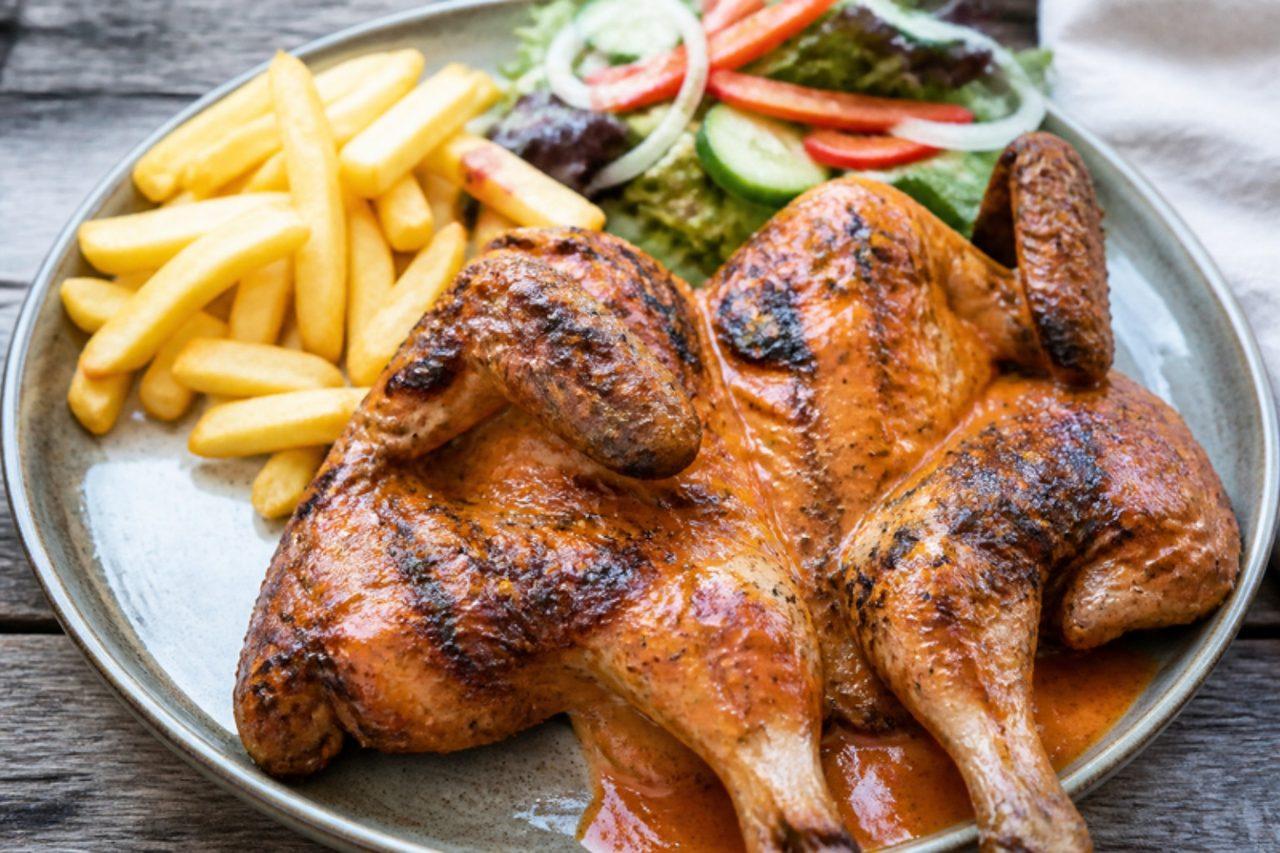
Guia, a small inland village in the Algarve, is famous across Portugal for its churrasqueiras, where flattened chickens are grilled over charcoal and painted with fiery piri-piri sauce; families drive out on summer evenings just to eat it. The bird marinates in a blend of small hot chillies, garlic, lemon, paprika and olive oil, then grills until the skin is blistered and the meat juicy. Serve with chips, rice or a tomato salad, and extra sauce for brave diners. Chef's tip: keep back some of the sauce before it touches the chicken; that fresh portion is for basting and the table.

70 minChickenGluten freeSpicy
by KrazyBadal 0 views

Carne de porco à alentejana

Despite the name, this surf-and-turf dish of pork and clams is most often linked with the Algarve coast, where Alentejo pork met local shellfish; today it is served in tascas all over Portugal, especially for Sunday lunch. It is a pork dish: cubes of pork shoulder marinate in massa de pimentão (sweet red pepper paste), garlic and traditionally white wine, then are fried and tossed with steamed clams, crisp potato cubes, pickles and lots of coriander. For an alcohol-free version, swap the wine for chicken stock with a tablespoon of white wine vinegar. Chef's tip: buy the pork with a little fat on; lean loin turns dry and tough when fried.

80 minMeatGluten free
by KrazyBadal 0 views

Sopa da pedra

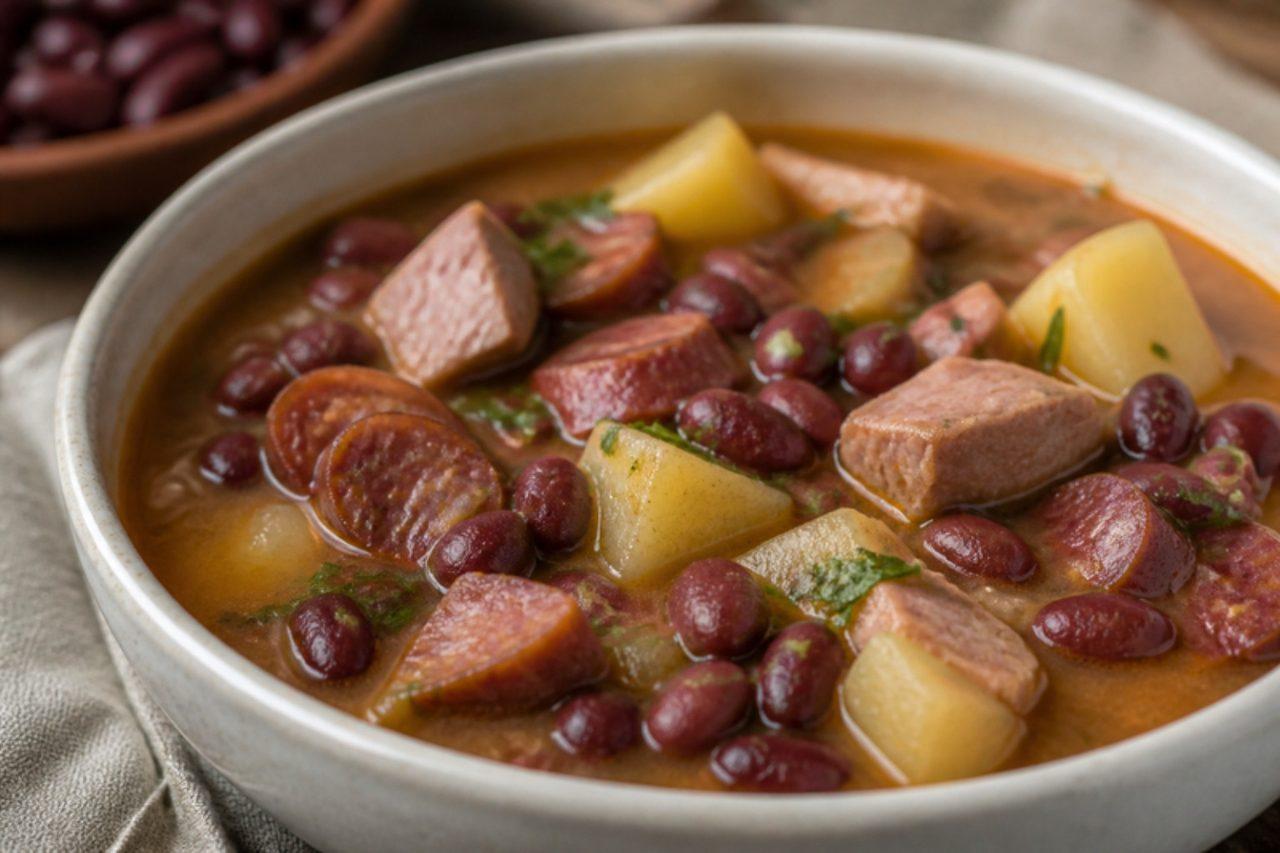
Almeirim, a market town in the Ribatejo, is the capital of this soup; its restaurants serve it every day, and each bowl arrives with a clean stone at the bottom, after the folk tale of a friar who 'made soup from a stone' by talking villagers into giving him everything else. This is a pork soup: red kidney beans simmer with chouriço, morcela blood sausage and a piece of pork belly, then potatoes, carrots and coriander finish it into a thick, hearty bowl. Chef's tip: cook the sausages whole and slice them at the end, so they stay juicy and don't turn the broth greasy.

140 minSoupsGluten free
by KrazyBadal 0 views

Francesinha

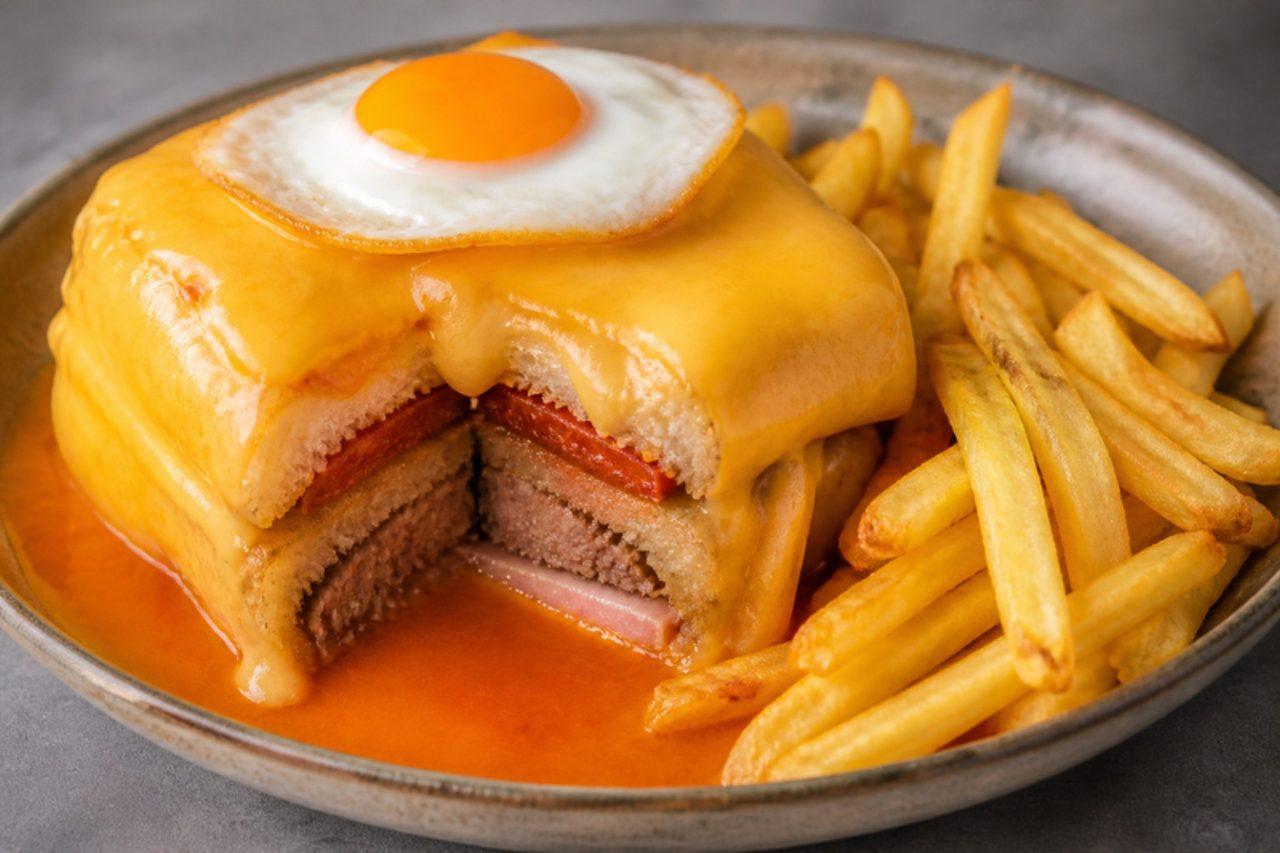
The francesinha ('little French girl') belongs to Porto, where it was dreamed up in the 1950s by a cook inspired by the croque monsieur, and it is now the city's famous late-night and match-day meal. This sandwich contains pork: thick bread is layered with steak, ham and fresh sausage, covered in cheese slices, then drowned in a spicy tomato sauce made with beer and port-style fortified wine. For an alcohol-free sauce, use alcohol-free beer, or beef stock with a teaspoon of honey. Serve with chips and a fried egg on top if you dare. Chef's tip: simmer the sauce for at least 20 minutes and blend it smooth; it should be thick enough to cling, not run off.

70 minFast Food
by KrazyBadal 0 views

Bifana

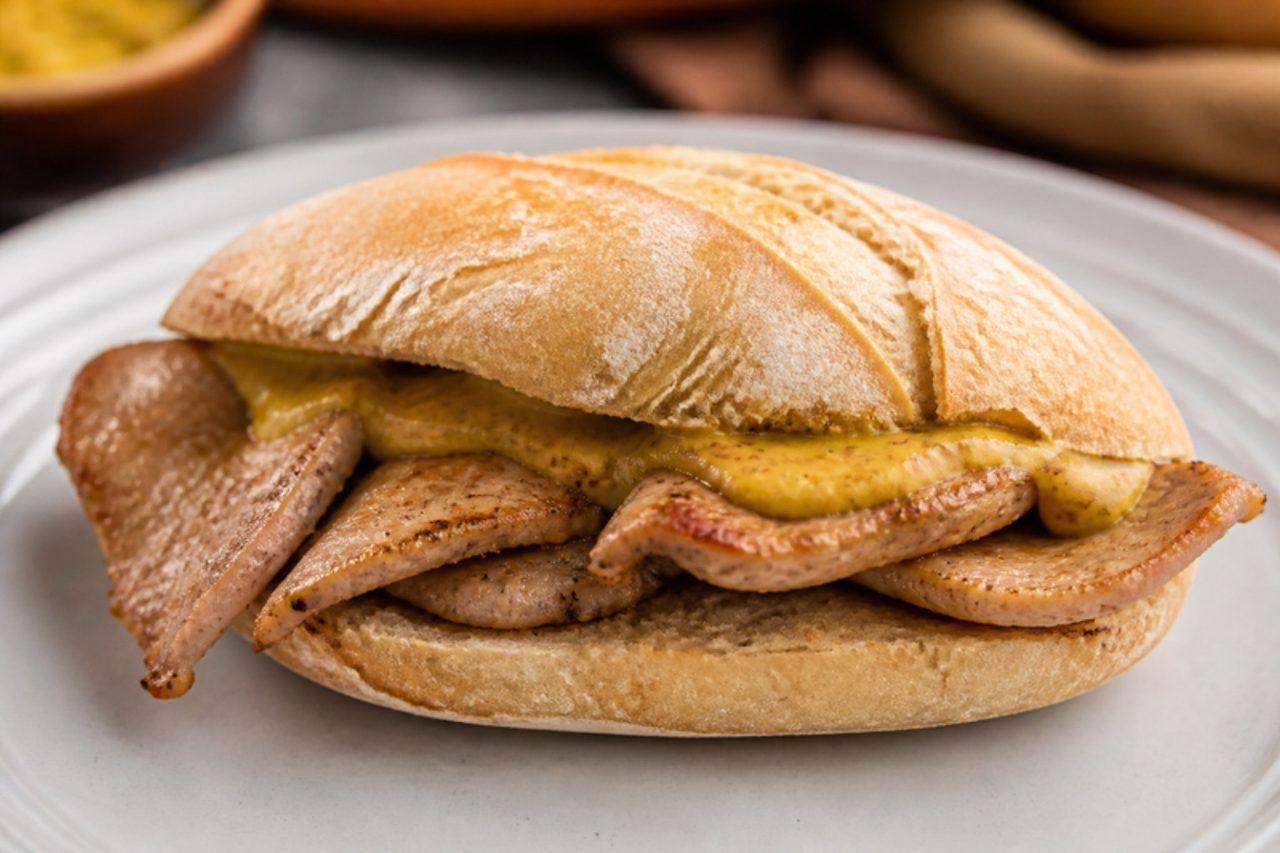
Lisbon's standing-room snack bars, from the Baixa to the stalls outside football grounds, sell bifanas all day: thin pork steaks simmered in a garlicky, bay-scented sauce and pushed into a soft papo-seco roll with a smear of mustard. It's a pork sandwich, and the pork is traditionally marinated in white wine; for an alcohol-free version use chicken stock with a tablespoon of white wine vinegar. It makes a quick lunch or a late snack. Chef's tip: dip the cut side of the roll into the pan juices before filling it; that's how the bars make them so juicy.

25 minFast Food
by KrazyBadal 0 views

More Portuguese ideas

Other cuisines