
AI-generated image
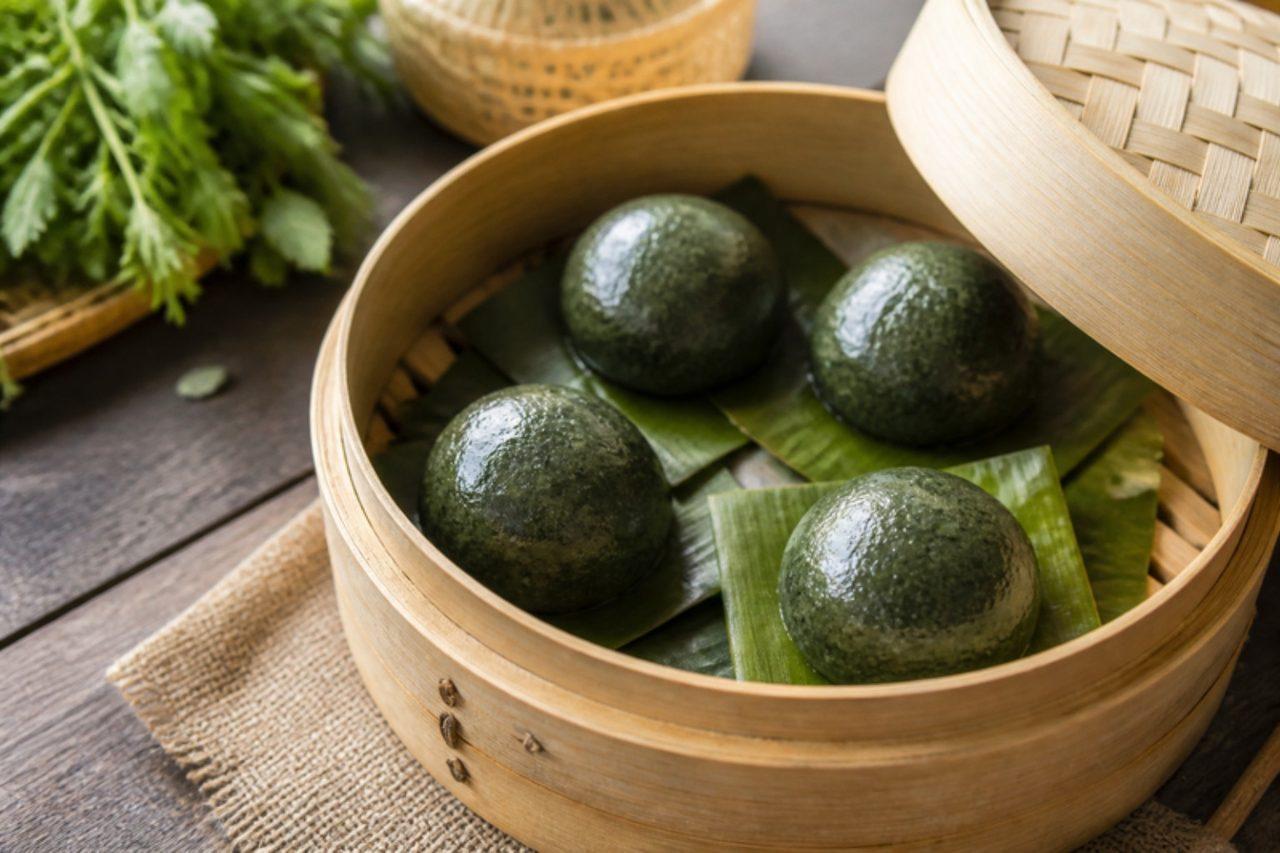
Hakka caozai guo
Herb rice dumplings with radish
Cǎo zǎi guǒ (草仔粿) / ài bǎn (艾粄): green herb rice dumplings filled with savoury dried radish and shiitake


Around Qingming, the spring tomb-sweeping festival, Hakka households across Taoyuan, Hsinchu and Miaoli steam trays of these deep-green dumplings to carry to the family graves and share afterwards. The colour and grassy, slightly bitter perfume come from cudweed or mugwort kneaded into glutinous rice dough, and the chewy skin wraps a savoury filling of chopped dried radish and shiitake. The festival version has long been meatless, so this one needs no changes to be vegan. Without a cooked piece of dough kneaded back in, the skin cracks as you shape it; that small step is what makes it supple. Chef's tip: look for frozen mugwort or cudweed purée in Asian grocers; if you can only find fresh mugwort, blanch it with a pinch of bicarbonate of soda to keep it bright green.
- Total time
- 120 min
- Difficulty
- hard
- Serves
- 6
Ingredients
For the filling
- 6 dried shiitake mushroomssoaked in warm water for 30 minutes
- 3 tbsp vegetable oil
- 3 shallotsfinely sliced
- 1 tbsp light soy sauce
- 1 tsp sugar
- ½ tsp ground white pepper
For the dough
- 10 ½ oz glutinous rice flour
- 3 ½ oz cooked cudweed or mugwort puréefrozen, thawed
- ⅔ oz sugar
- ¾ cup hot waterabout 80 °C, add gradually
- 1 tbsp vegetable oilplus extra for hands and leaves
For steaming
- 12 banana leaf squares or baking paperabout 10 cm, lightly oiled
Shop this recipe on Amazon
Spices & pantry
Fresh ingredients (1)
Links open Amazon in a new tab. As an Amazon Associate, WhatToEat.Today earns from qualifying purchases.
Method
0/12 doneStep 1: Soak 5 ½ oz shredded dried radish (cai pu) in cold water for 10 minutes, rinse twice, then squeeze very dry and chop roughly. Taste a piece: it should be pleasantly salty, not harsh.
10 minStep 2: Squeeze 6 dried shiitake mushrooms dry, remove the stems and finely dice the caps.
Step 3: Heat 3 tbsp vegetable oil in a wok over a medium heat and fry 3 shallots for 3–4 minutes, until golden and crisp at the edges.
4 minStep 4: Add the shiitake and radish and stir-fry for 5–6 minutes, until the radish smells sweet and toasty and the pan looks dry.
6 minStep 5: Season with 1 tbsp light soy sauce, 1 tsp sugar and ½ tsp ground white pepper, toss for 1 minute and spread on a plate to cool completely.
1 minStep 6: For the dough, mix 10 ½ oz glutinous rice flour and ⅔ oz sugar, add 3 ½ oz cooked cudweed or mugwort purée and work it in with your fingertips. Add ¾ cup hot water a little at a time, kneading, until you have a soft, smooth dough like play dough. You may not need all the water.
Step 7: Pinch off a 60 g piece of dough, flatten it and drop it into a pan of boiling water. Cook for 3–4 minutes, until it floats and turns darker green all through.
4 minStep 8: Lift it out, drain briefly and knead it straight back into the main dough together with 1 tbsp vegetable oil. Knead for 3–4 minutes, until it's elastic and no longer cracks at the edges. Divide into 12 balls.
4 minStep 9: Oil your hands. Press a ball into a cup about 8 cm wide, fill with a heaped tablespoon of filling and draw the edges up to seal, then shape into a smooth oval.
Step 10: Set each dumpling on an oiled 12 banana leaf squares or baking paper square and place in a steamer, leaving 2 cm between them. Bring the water to the boil.
Step 11: Steam over a medium heat for 18–20 minutes, until the skins are glossy and slightly translucent. Too fierce a heat makes them slump and spread.
20 minStep 12: Open the lid a crack and let them stand 3 minutes before lifting out, then brush lightly with oil so they don't stick together. Eat warm; leftovers can be re-steamed for 8 minutes.
3 min
Nutrition per serving
- Calories
- 330 kcal
- Protein
- 6 g
- Carbs
- 58 g
- Fat
- 8 g
- Fibre
- 4 g
Nutrition values are estimates.
KrazyBadal
Good to know
- How long does hakka caozai guo take?
- About 120 minutes in total: 70 minutes to prepare and 50 minutes to cook.
- How many people does it serve?
- 6 as written. Change the servings above the ingredients and every amount scales to match.
- Is it vegan?
- Yes. It has no meat, fish, dairy or eggs.
- What can I use instead of dried shiitake mushrooms?
- Aubergine, diced, same weight.
- What can I use instead of shallots?
- Half an onion per 2 shallots.
Reviews
No reviews yet. Be the first to cook it.
Rate this recipe
Sign in to rate and review this recipe.
You might also like

SakarpadaSweet fried dough diamonds
Sakarpada (shakarpara) are little sweet diamonds of a rich dough made with ghee, milk and sugar, fried until golden and crunchy. They are a Diwali favourite with tea, and the cubes go into bhusu too. They keep for weeks in an air-tight tin.
 Indian

Yaki onigiriGrilled rice balls
Yaki onigiri (焼きおにぎり) are rice balls grilled until they form a crisp, toasty crust, then brushed with soy sauce glaze. They are eaten all over Japan, at izakaya, at barbecues and from the freezer section, as a snack or with miso soup. The inside stays soft and steamy while the outside crackles. Best eaten hot, straight from the pan. Chef's tip: let the shaped rice balls dry for 10 minutes before they go in the pan. A drier surface forms a better crust and won't stick, and the glaze goes on only at the end so it doesn't burn.
 Japanese

Taiwanese grilled corn
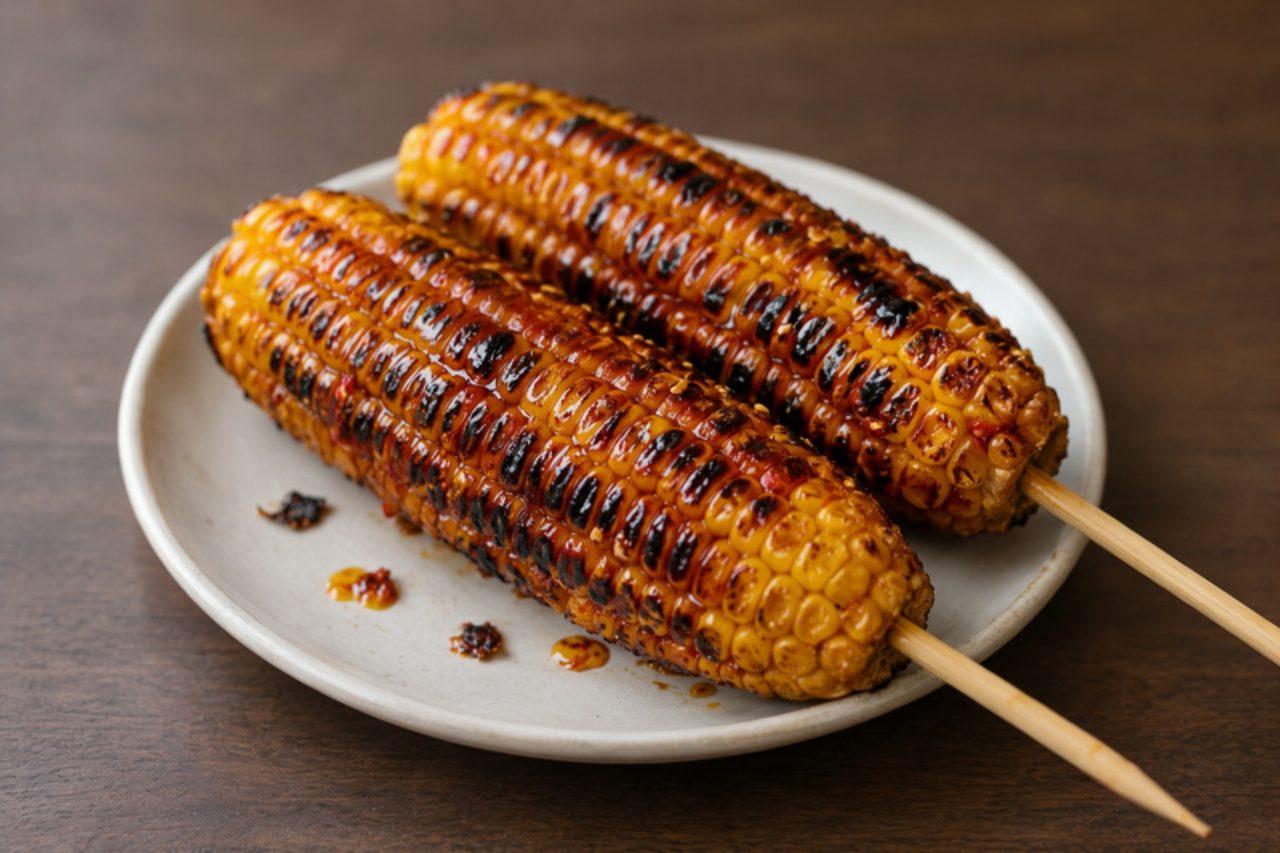
At Raohe and Shilin night markets the grilled-corn stalls are easy to find: look for the queue and the smoky, sweet smell. Cobs are par-cooked, then turned slowly over charcoal while the cook brushes them with a dark glaze of sacha sauce, thick soy paste, garlic and chilli, layer after layer, until the kernels are sticky, slightly charred and deeply savoury. It is eaten hot from a paper sleeve while walking the market. Sacha (shacha) sauce, a Taiwanese barbecue paste, usually contains dried fish and shrimp; vegetarian sacha is sold in Asian shops. Contains soy, wheat and fish. Chef's tip: brush thin coats and turn often; one thick coat burns before the corn chars.