
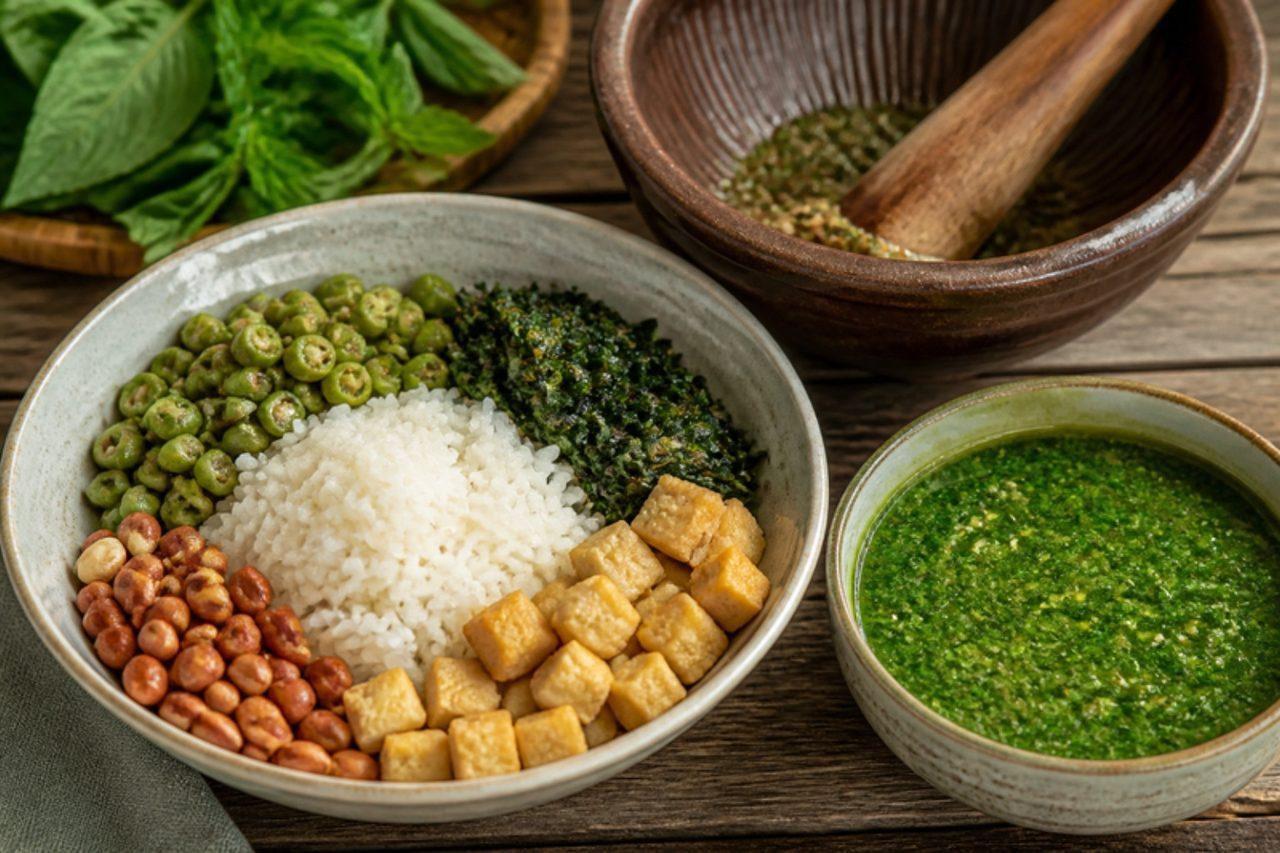
AI-generated image
Hakka lei cha
Pounded herb and peanut tea
Kèjiā léi chá (客家擂茶): green 'pounded tea' of herbs, sesame and peanuts poured over rice and vegetables



Lei cha means 'pounded tea', and in Hakka villages from Jieyang and Hepo to Taiwan and Malaysia it is still ground by hand in a ridged bowl with a guava-wood stick. Tea leaves, basil, mint and coriander are pounded with sesame and peanuts, then loosened with hot water into a grassy green soup. It's ladled over a bowl of rice topped with small heaps of stir-fried greens, beans, tofu and preserved radish. Some families eat it on the seventh day of the New Year. Chef's tip: toast the sesame and peanuts yourself; the toasting gives the soup its depth.
- Total time
- 45 min
- Difficulty
- medium
- Serves
- 4
Ingredients
For the tea soup
- ⅓ oz green tea leaves
- ⅔ oz Thai basil leaves
- ⅓ oz mint leaves
- ⅔ oz fresh coriander
- 3 tbsp white sesame seeds
- 1 ¾ oz raw peanuts
- ½ tsp salt
- 3 ¼ cups just-boiled water
For the bowls
- 1 ⅓ lb cooked rice (brown or white)warm
- 2 tbsp vegetable oil
- 5 ½ oz green beansfinely chopped
- 7 oz choi sum or cabbagefinely chopped
- 7 oz firm tofudiced small
- 1 ⅜ oz preserved radish (chai poh)rinsed and chopped
- ½ tsp salt
- 3 tbsp roasted peanutsfor scattering
Shop this recipe on Amazon
What you'll need
Spices & pantry
Fresh ingredients (7)
Links open Amazon in a new tab. As an Amazon Associate, WhatToEat.Today earns from qualifying purchases.
Method
0/5 doneStep 1: Toast 3 tbsp white sesame seeds in a dry pan over a medium-low heat for 3 minutes, until golden and starting to pop. Tip out, then toast 1 ¾ oz raw peanuts in the same pan for 6–8 minutes until browned in spots.
10 minStep 2: Pound or blend the sesame, peanuts, ⅓ oz green tea leaves, ⅔ oz Thai basil leaves, ⅓ oz mint leaves, ⅔ oz fresh coriander and ½ tsp salt with a splash of ¾ cup just-boiled water to a thick, dark green paste. A food processor works; a mortar gives a coarser, more traditional texture.
Step 3: Stir in the rest of 2 ½ cups just-boiled water a ladle at a time until it looks like a thin, frothy green soup. Common mistake: using boiling water straight onto the herbs at the start, which turns them brown and bitter; the small first splash is enough.
Step 4: Heat 2 tbsp vegetable oil in a wok over a high heat. Stir-fry each topping separately with a pinch of ½ tsp salt: 5 ½ oz green beans for 3 minutes until bright, 7 oz choi sum or cabbage for 2 minutes until wilted, 7 oz firm tofu for 4 minutes until golden at the edges, and 1 ⅜ oz preserved radish (chai poh) for 1 minute until fragrant.
10 minStep 5: Put the warm 1 ⅓ lb cooked rice (brown or white) in bowls and arrange the toppings in small heaps on top. Scatter with 3 tbsp roasted peanuts, pour the tea soup over at the table, mix and eat.
Nutrition per serving
- Calories
- 430 kcal
- Protein
- 16 g
- Carbs
- 52 g
- Fat
- 18 g
- Fibre
- 6 g
Nutrition values are estimates.
KrazyBadal
Good to know
- How long does hakka lei cha take?
- About 45 minutes in total: 25 minutes to prepare and 20 minutes to cook.
- How many people does it serve?
- 4 as written. Change the servings above the ingredients and every amount scales to match.
- Is it vegan?
- Yes. It has no meat, fish, dairy or eggs.
- Is it gluten free?
- Yes, as written. Check the labels on stock, sauces and spice mixes, which sometimes contain gluten.
- What can I use instead of mint leaves?
- Fresh coriander, same amount.
- What can I use instead of fresh coriander?
- Flat-leaf parsley with a little mint (for people who dislike coriander too).
Reviews
No reviews yet. Be the first to cook it.
Rate this recipe
Sign in to rate and review this recipe.
You might also like
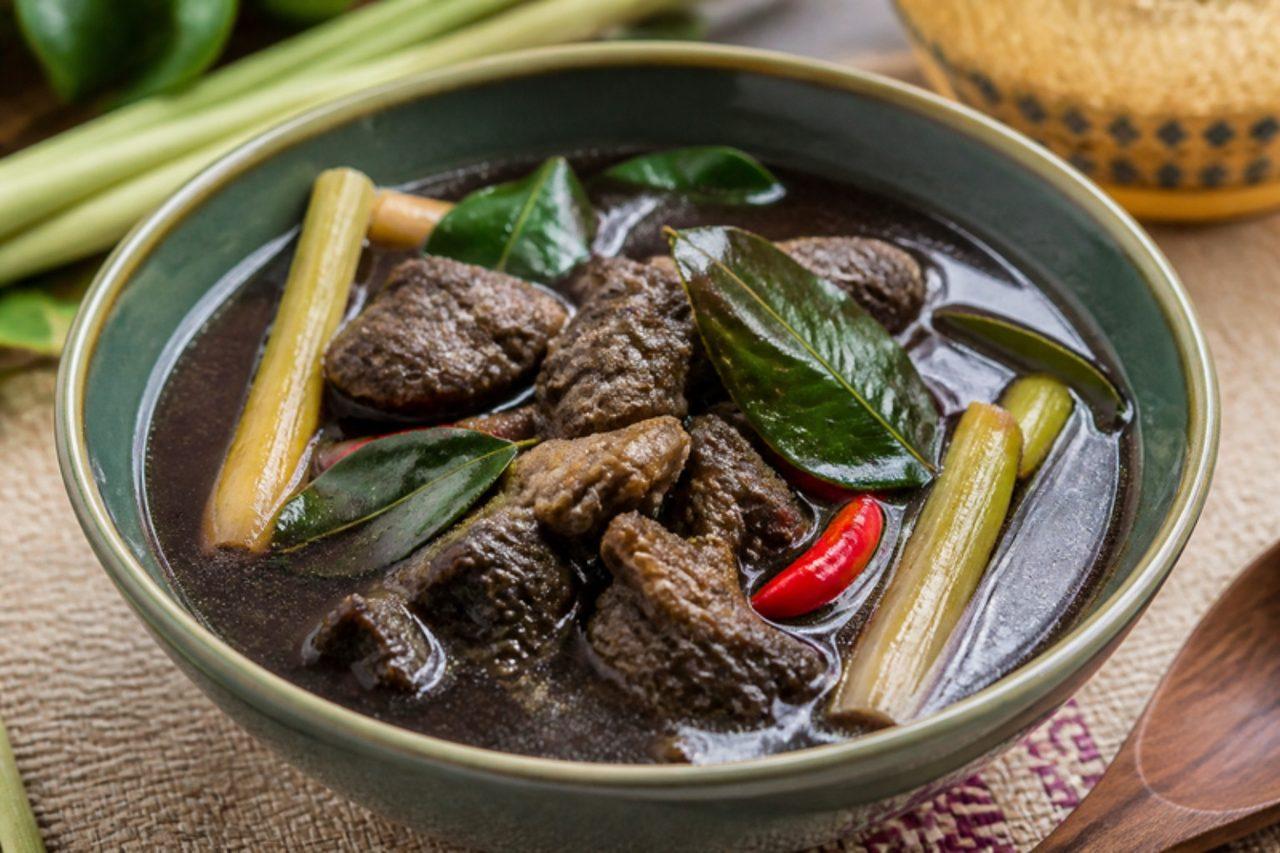
Tiyula itumBlack beef soup
Tiyula itum, 'black soup', is the pride of the Tausug people of Sulu in the far south of the Philippines, cooked for weddings, Eid celebrations and when guests come home. Beef (it is a halal, pork-free dish) is simmered with ginger, lemongrass and turmeric, then darkened with pamapa itum, a paste of grated coconut toasted until almost black and pounded with spices. The broth looks dramatic but tastes smoky, earthy and gently peppery, with heat from chillies. Serve it with plain rice. Chef's tip: toast the coconut slowly, stirring all the time, until it is very dark brown but not ashy; burnt-to-ash coconut tastes bitter and ruins the soup.
 Filipino

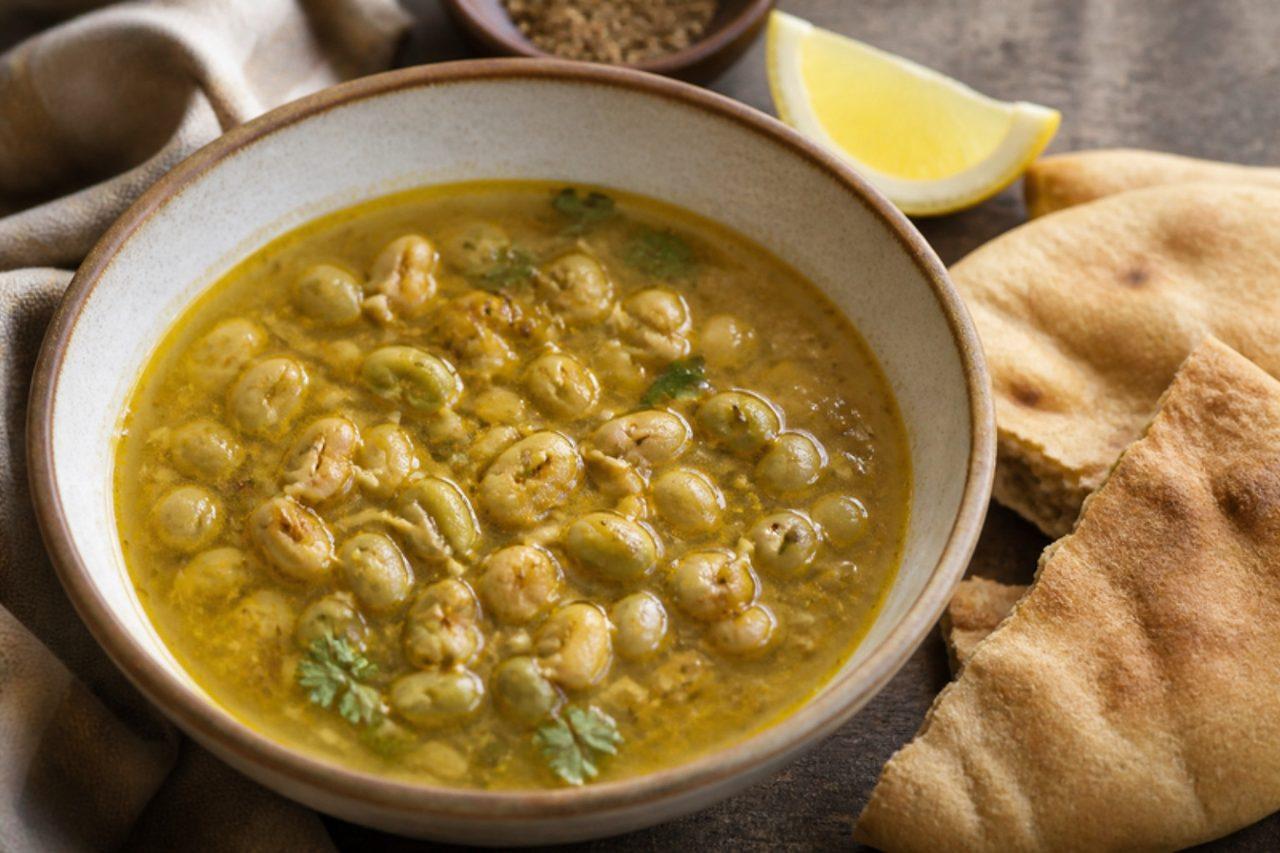
Ful nabitSprouted fava bean soup
Sprouted beans are ladled out with their cooking liquor in Cairo homes when the weather turns cold or someone is feeling run down, and Egyptians swear by the broth as a pick-me-up. The beans are soaked and left to sprout for a few days, then simmered with onion, garlic and cumin into a light, earthy soup that is sharpened at the table with plenty of lemon. You can eat the beans with a spoon or pop them from their skins. Allow 3 to 4 days for sprouting, although the hands-on work is only about 20 minutes. People with G6PD deficiency (favism) must not eat fava beans. Chef's tip: stop the sprouting when the shoots are about 1 cm long; longer sprouts taste grassy and bitter.
 Egyptian


Miso soup
Miso soup (味噌汁) is drunk every day in homes all over Japan, at breakfast as well as dinner, beside a bowl of rice. The base is dashi; this vegan version uses kombu and dried shiitake instead of bonito, which gives it a deep, rounded flavour. Silken tofu and wakame seaweed are the classic fillings. It takes ten minutes; just remember not to boil the miso. Chef's tip: add the miso at the very end and never let it boil. Boiling kills the miso's fresh, fermented aroma; Japanese cooks say the soup should only 'smile', with the surface barely trembling.
 Japanese