
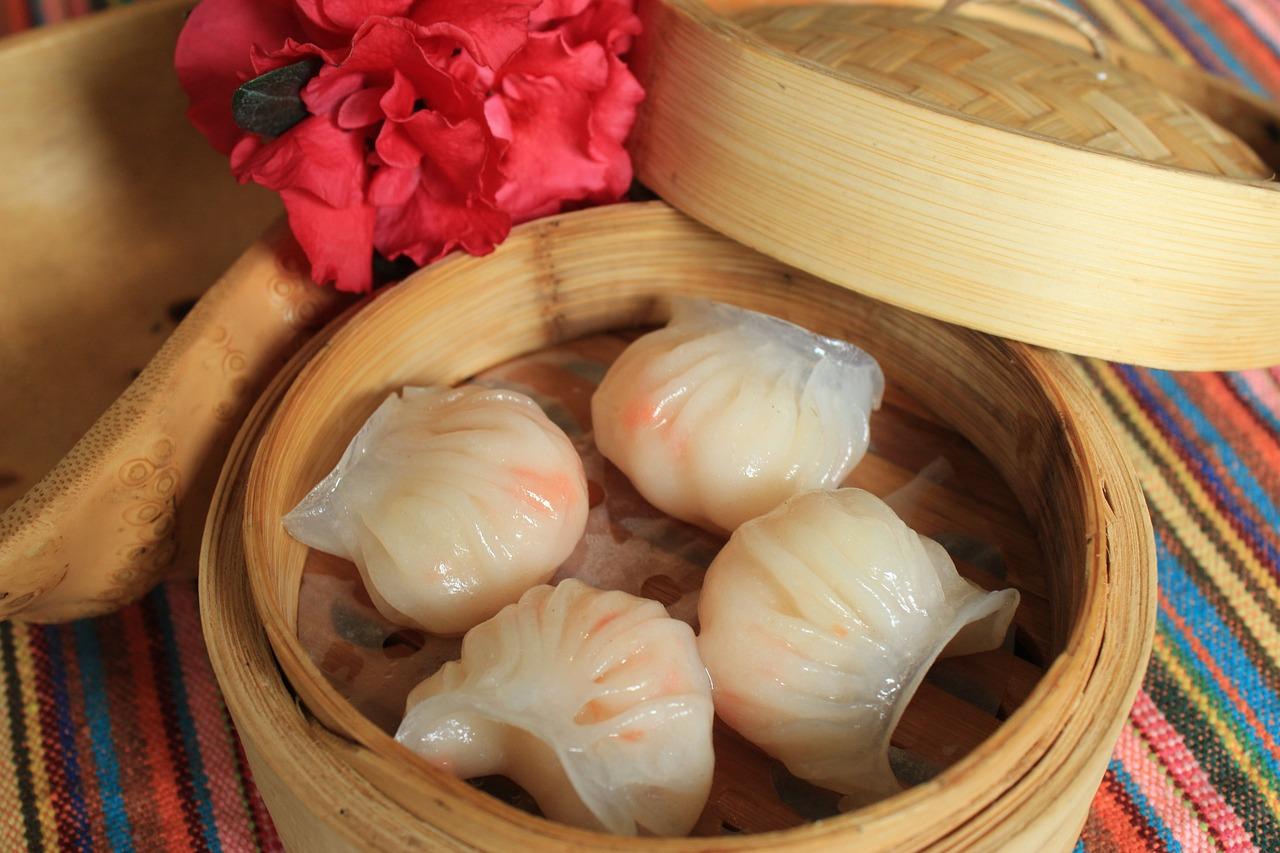
Har gow
Prawn dumplings
虾饺 xiājiǎo / Cantonese haa1 gaau2: translucent prawn dumplings from Guangzhou's dim sum tables
 Chinese
No basket at a Guangzhou yum cha is judged more harshly than the har gow: a dim sum chef is said to prove themselves by folding ten or more pleats into each one. The wrapper is made from wheat starch and tapioca, so it steams clear and slightly chewy, showing the pink prawns inside; the filling is snappy, sweet and lightly seasoned with sesame and bamboo shoot. They take patience rather than special skill, and a batch made on a weekend morning feels like a trip to a teahouse. Serve them straight from the steamer with jasmine or pu'er tea and a little chilli oil on the side. Chef's tip: roll each wrapper only when you are ready to fill it, because the thin starch dough dries and cracks within minutes.
- Total time
- 75 min
- Difficulty
- hard
- Serves
- 4
Ingredients
For the filling
- 10 ½ oz raw king prawnspeeled and deveined
- ½ tsp saltfor cleaning the prawns, plus 1/4 tsp for seasoning
- 1 ⅜ oz bamboo shootstinned, drained and finely diced
- 1 tsp cornflour
- ½ tsp sugar
- 1 tsp toasted sesame oil
- ¼ tsp ground white pepper
- 1 tsp fresh gingervery finely grated
For the wrappers
- 4 oz wheat starch
- 1 oz tapioca starchplus extra for dusting
- 1 pinch salt
- ¾ cup boiling waterstraight from the kettle
- 1 tbsp neutral oilplus extra for the cleaver and steamer
To serve
- 2 tbsp chilli oil (optional)
Shop this recipe on Amazon
What you'll need
Spices & pantry
Fresh ingredients (2)
Links open Amazon in a new tab. As an Amazon Associate, WhatToEat.Today earns from qualifying purchases.
Method
0/11 doneStep 1: Toss the 10 ½ oz raw king prawns with ⅓ tsp salt and rub for 1 minute, then rinse well under cold water. Pat them very dry on kitchen paper; wet prawns make a loose, watery filling.
3 minStep 2: Chop a third of the prawns into a coarse paste and cut the rest into 1 cm pieces. Mix both in a bowl with the remaining ⅛ tsp salt, 1 tsp cornflour, ½ tsp sugar, 1 tsp toasted sesame oil, ¼ tsp ground white pepper and 1 tsp fresh ginger.
5 minStep 3: Stir in 1 ⅜ oz bamboo shoots and beat the filling in one direction for 1–2 minutes until sticky. Cover and chill for 20 minutes while you make the dough; the prawns stay firm and easier to wrap.
20 minStep 4: Mix 4 oz wheat starch, 1 oz tapioca starch and 1 pinch salt in a heatproof bowl. Pour in ¾ cup boiling water all at once, stirring hard with chopsticks. It must be at a rolling boil, or the starch will not cook and the dough will crumble.
Step 5: Cover the bowl with a plate for 5 minutes to steam, then add 1 tbsp neutral oil and knead on a tapioca-dusted surface for 2–3 minutes, until smooth and soft like play dough.
8 minStep 6: Roll the dough into a log, cut into 24 pieces and keep them under an upturned bowl or damp cloth.
Step 7: Rub a little oil on the flat of a cleaver (or a rolling pin). Press one piece into a thin round about 8 cm across, about 1 mm thick, so the dough is translucent at the edges.
Step 8: Put a heaped teaspoon of filling in the middle. Fold the round in half, then pleat the front edge 6–10 times while pressing it to the flat back edge, forming a crescent. Seal firmly and set it on an oiled plate under a cloth. Repeat.
Step 9: Line a bamboo steamer with oiled baking paper or cabbage leaves and set the dumplings 2 cm apart. Bring water in a wok to a rolling boil.
Step 10: Steam over high heat for 6–7 minutes, until the wrappers turn clear and glossy and the prawns show pink and opaque through them. Steam in batches rather than crowding.
7 minStep 11: Serve at once, with chilli oil if you like. Har gow toughen as they cool, so steam the next batch while the first is eaten.
Nutrition per serving
- Calories
- 230 kcal
- Protein
- 17 g
- Carbs
- 33 g
- Fat
- 4 g
- Fibre
- 1 g
Nutrition values are estimates.
KrazyBadal
Good to know
- How long does har gow take?
- About 75 minutes in total: 60 minutes to prepare and 15 minutes to cook.
- How many people does it serve?
- 4 as written. Change the servings above the ingredients and every amount scales to match.
- What can I use instead of cornflour?
- Arrowroot or potato starch, same amount.
- What can I use instead of sugar?
- Caster sugar, same amount.
Reviews
No reviews yet. Be the first to cook it.
Rate this recipe
Sign in to rate and review this recipe.
You might also like

SakarpadaSweet fried dough diamonds
Sakarpada (shakarpara) are little sweet diamonds of a rich dough made with ghee, milk and sugar, fried until golden and crunchy. They are a Diwali favourite with tea, and the cubes go into bhusu too. They keep for weeks in an air-tight tin.
 Indian

Yaki onigiriGrilled rice balls
Yaki onigiri (焼きおにぎり) are rice balls grilled until they form a crisp, toasty crust, then brushed with soy sauce glaze. They are eaten all over Japan, at izakaya, at barbecues and from the freezer section, as a snack or with miso soup. The inside stays soft and steamy while the outside crackles. Best eaten hot, straight from the pan. Chef's tip: let the shaped rice balls dry for 10 minutes before they go in the pan. A drier surface forms a better crust and won't stick, and the glaze goes on only at the end so it doesn't burn.
 Japanese

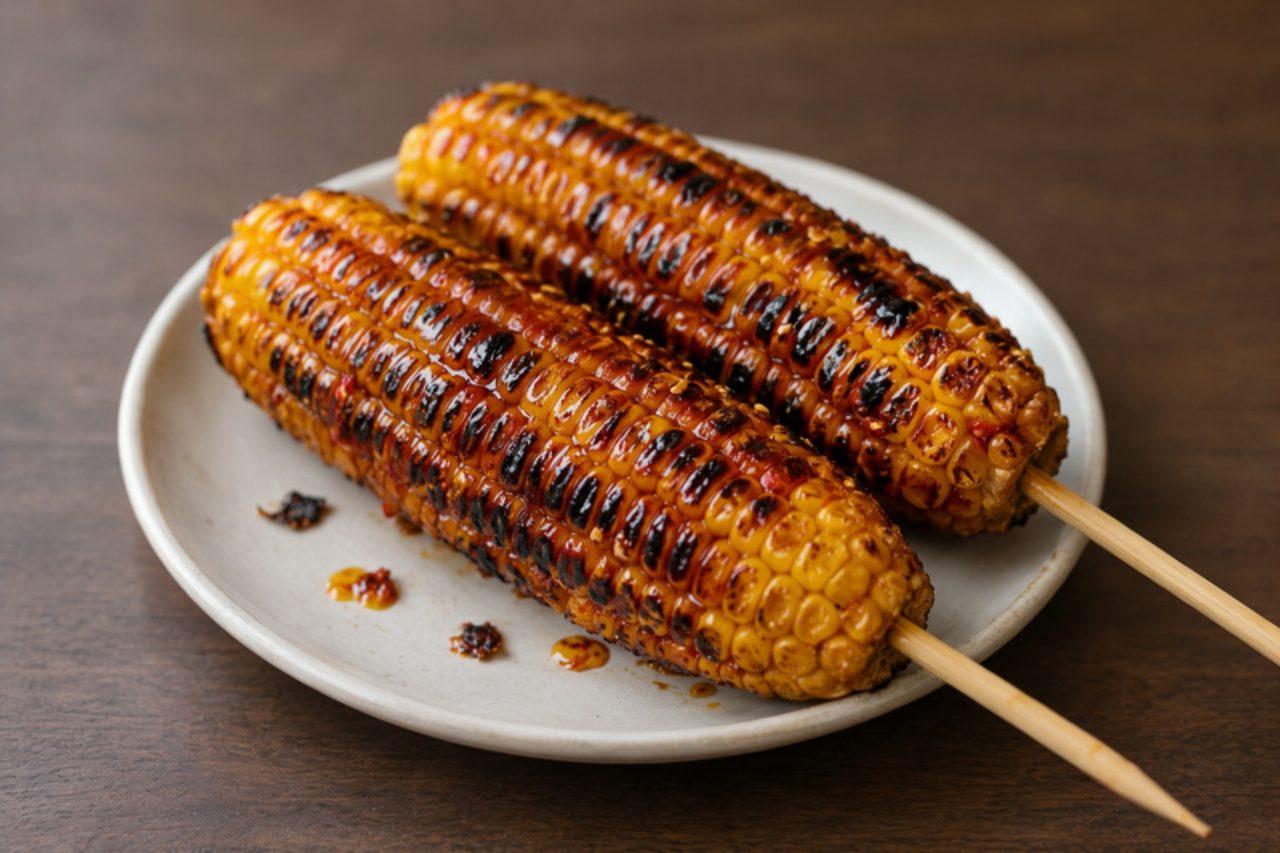
Taiwanese grilled corn
At Raohe and Shilin night markets the grilled-corn stalls are easy to find: look for the queue and the smoky, sweet smell. Cobs are par-cooked, then turned slowly over charcoal while the cook brushes them with a dark glaze of sacha sauce, thick soy paste, garlic and chilli, layer after layer, until the kernels are sticky, slightly charred and deeply savoury. It is eaten hot from a paper sleeve while walking the market. Sacha (shacha) sauce, a Taiwanese barbecue paste, usually contains dried fish and shrimp; vegetarian sacha is sold in Asian shops. Contains soy, wheat and fish. Chef's tip: brush thin coats and turn often; one thick coat burns before the corn chars.
 Taiwanese