
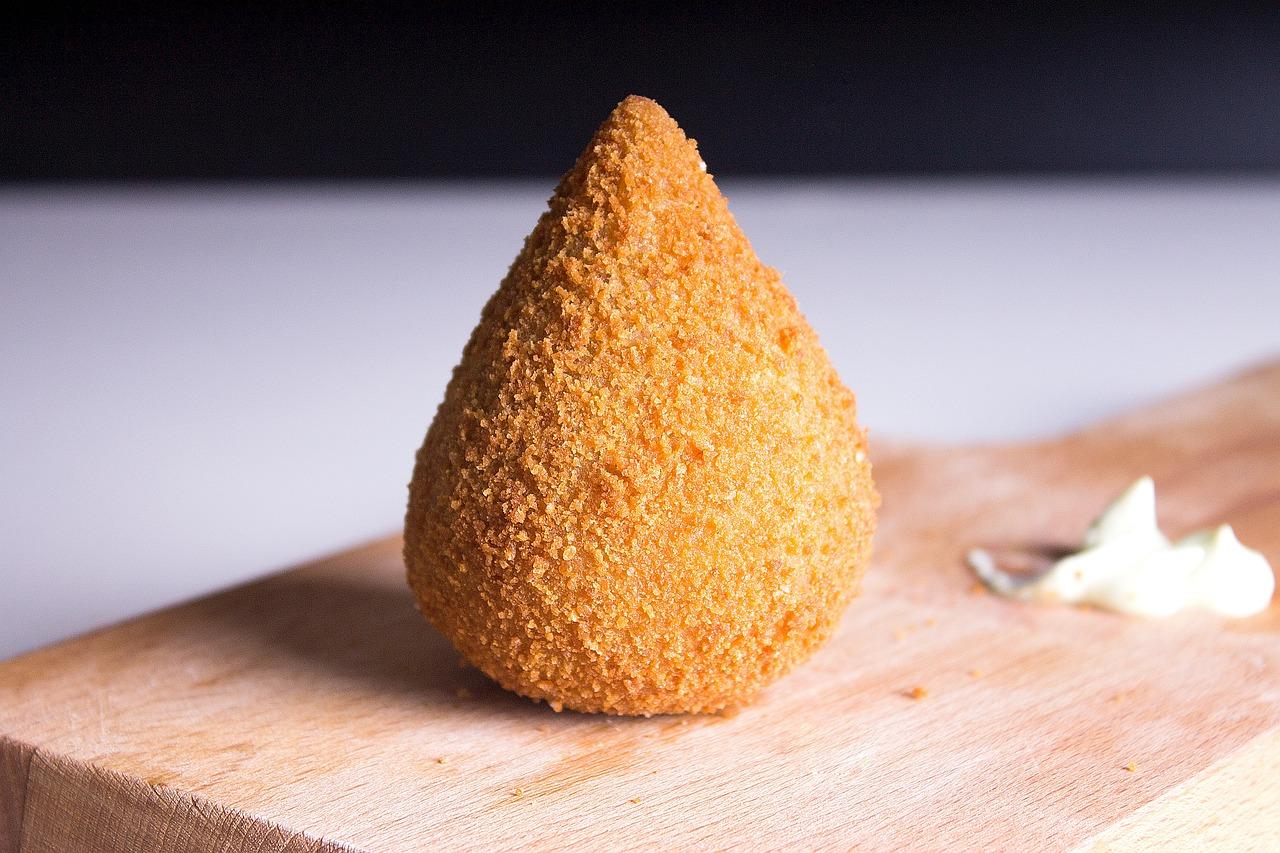
Heart of palm coxinha
Coxinha de palmito: crisp teardrop croquettes with a creamy heart of palm filling

Coxinha is the king of Brazilian salgados, sold in every padaria and served at every birthday party, especially in São Paulo. The teardrop shape copies a chicken thigh, but coxinha de palmito, filled with soft heart of palm, tomato and creamy cheese, is a much-loved meat-free version. The dough is a cooked, savoury choux-like paste, rolled in breadcrumbs and fried until shatteringly crisp. Chef's tip: cook the dough until it comes away from the pan in one smooth ball, then knead it while still warm with oiled hands. Lumpy or under-cooked dough cracks in the fryer and lets the filling leak.
- Total time
- 120 min
- Difficulty
- hard
- Serves
- 8
Ingredients
For the filling
For the dough
For coating and frying
Method
0/11 doneStep 1: Make the filling first so it can cool. Heat the 2 tbsp olive oil in a frying pan over a medium heat and fry the 1 onion for 5 minutes until soft. Add the 2 garlic cloves for 30 seconds, then the 2 tomatoes, and cook for 3–4 minutes until it collapses into a thick sauce.
9 minStep 2: Add the 14 oz hearts of palm (palmito) and cook for 5 minutes, stirring, until it's hot and most of the liquid has gone. Stir in the 1 tsp cornflour mixture and cook for 1 minute until it thickens and turns glossy. A dry, thick filling is easier to wrap and won't burst in the oil.
6 minStep 3: Off the heat, stir in the 3 ½ oz cream cheese or requeijão, 3 tbsp flat-leaf parsley and 2 spring onions, and season with the ½ tsp salt and ¼ tsp black pepper. Spread on a plate and chill for at least 30 minutes; cold filling is far easier to wrap.
30 minStep 4: For the dough, bring the 2 cups vegetable stock, 1 cup whole milk, 1 oz butter and ½ tsp salt to the boil in a wide, heavy pan. Turn the heat to low and tip in all the 13 oz plain flour at once, stirring hard with a wooden spoon.
5 minStep 5: Keep stirring and pressing over a low heat for 3–4 minutes, until the dough forms a smooth ball that pulls cleanly from the sides and leaves a thin film on the pan base. Undercooked dough is sticky and tears.
4 minStep 6: Tip the dough onto a lightly oiled worktop. As soon as you can handle it, knead it with oiled hands for 3–5 minutes until completely smooth, like soft play dough. Cover with a bowl so it doesn't dry out.
5 minStep 7: Take a piece of dough the size of a golf ball (about 40 g), flatten it in your palm into a 9 cm disc, and press a cup in the centre. Put in a heaped teaspoon of filling.
Step 8: Bring the edges up around the filling and pinch to seal, then gently pull and roll the top into a point to make a teardrop with a flat base. Check there are no cracks; smooth them with an oiled finger. You should get about 24.
Step 9: Dip each coxinha in the ¾ cup milk, then roll in the 5 ½ oz fine dry breadcrumbs, pressing so they stick all over. At this point you can freeze them on a tray, then bag them; fry from frozen at a slightly lower heat.
Step 10: Heat the 6 ¼ cups vegetable oil in a deep, heavy pan to 350°F (a cube of bread should turn golden in 40 seconds). Fry 5–6 coxinhas at a time for 4–5 minutes, turning, until deep golden all over. If the oil is too hot they brown before the dough cooks through; too cool and they soak up oil.
25 minStep 11: Lift out onto kitchen paper and rest for 3 minutes; the filling is very hot. Serve warm, with a squeeze of lime or a little chilli sauce.
Nutrition per serving
- Calories
- 420 kcal
- Protein
- 10 g
- Carbs
- 58 g
- Fat
- 16 g
- Fibre
- 3 g
Nutrition values are estimates.
KrazyBadal
Good to know
- How long does heart of palm coxinha take?
- About 120 minutes in total: 70 minutes to prepare and 50 minutes to cook.
- How many people does it serve?
- 8 as written. Change the servings above the ingredients and every amount scales to match.
- Is it vegetarian?
- Yes. It has no meat or fish.
- Can I make it ahead?
- Yes. It keeps well, so you can cook it earlier in the day or the day before and reheat it.
- What can I use instead of onion?
- 2 shallots per onion.
- What can I use instead of garlic cloves?
- ½ tsp garlic paste or ⅛ tsp garlic powder per clove.
Reviews
No reviews yet. Be the first to cook it.
Rate this recipe
Sign in to rate and review this recipe.
You might also like
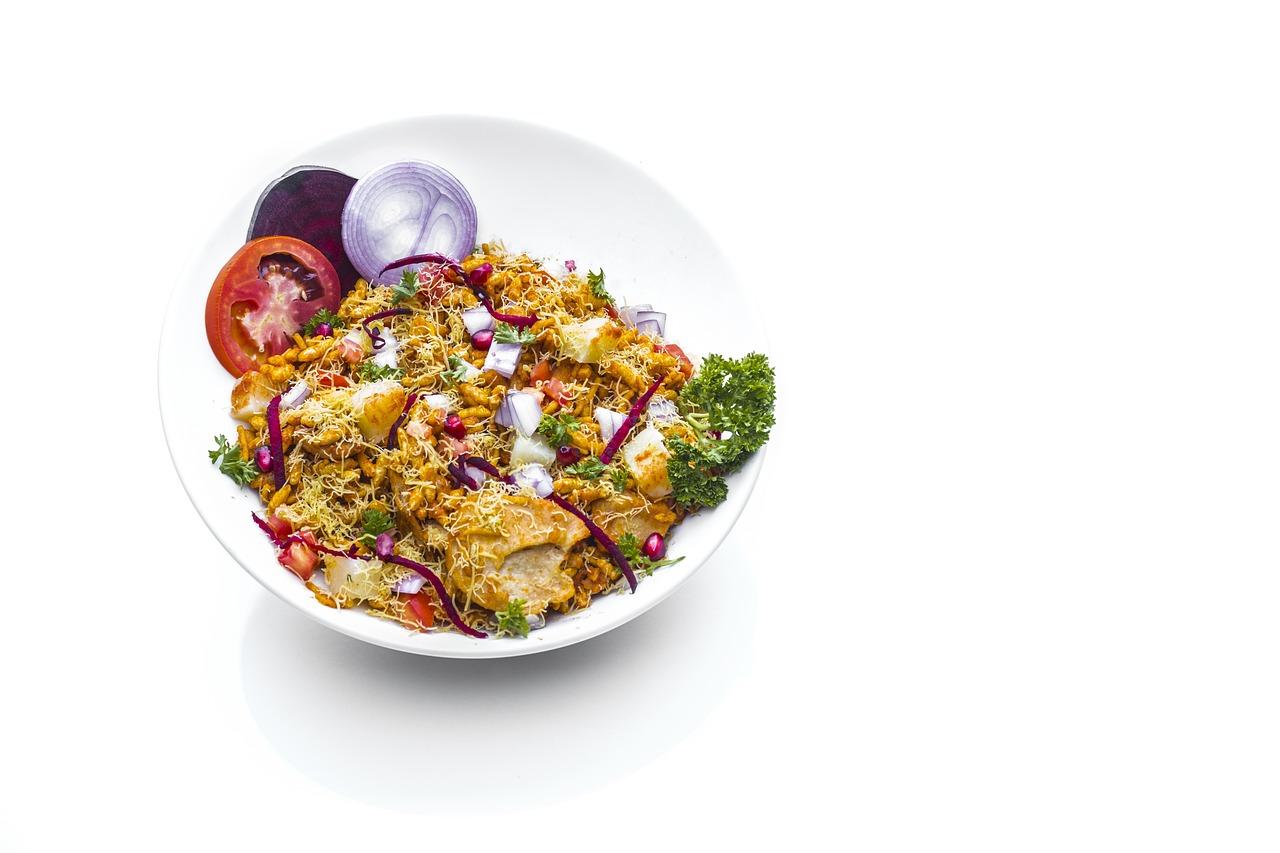
Coastal Mombasa mix
A Mombasa street-food bowl: chickpeas and potato simmered in coconut milk with raw mango and chilli, ladled into small bowls and topped with crisp lentil fritters, crunchy chevdo and red, green and tamarind chutneys. Make the fritters and chevdo ahead and assemble at the table. It's sweet, sour, hot and crunchy all at once.

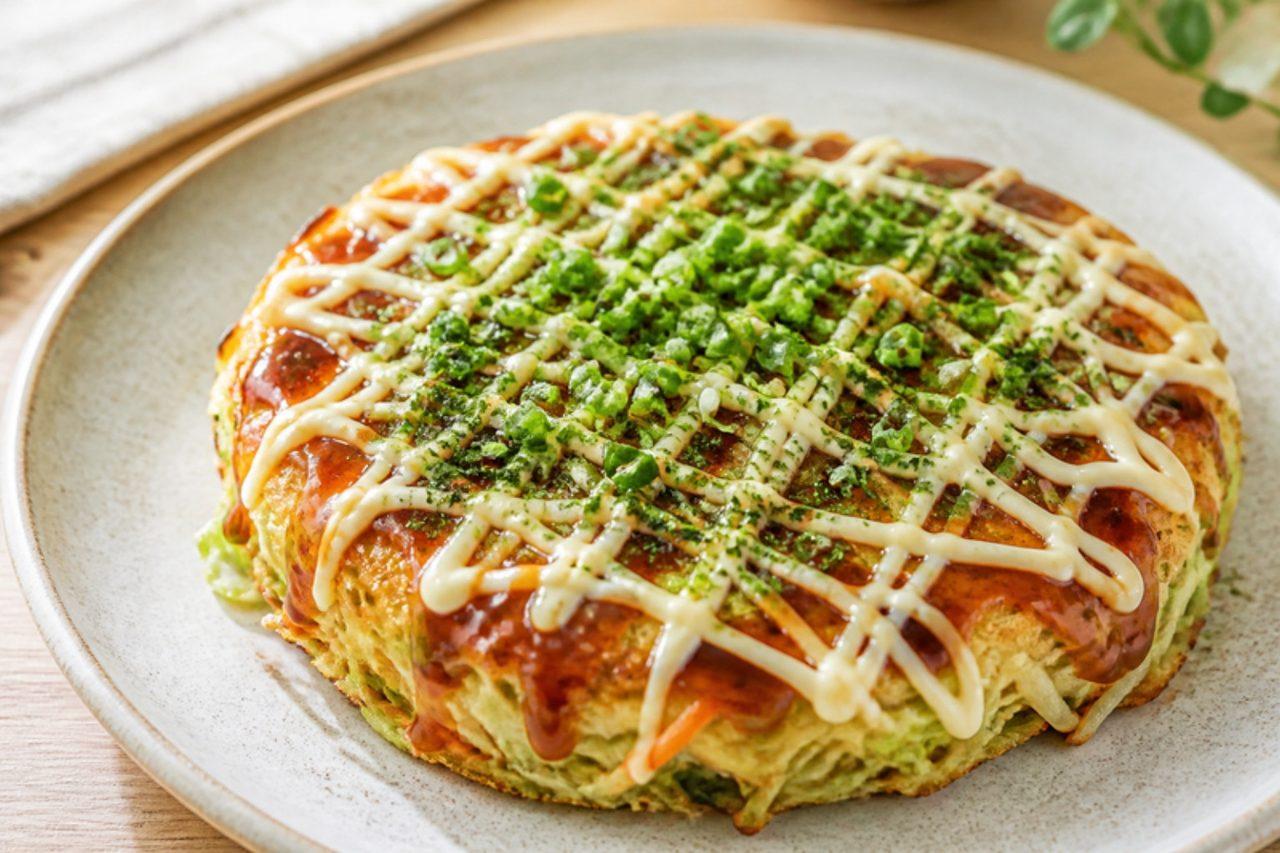
Okonomiyaki
Okonomiyaki (お好み焼き, 'grilled as you like it') is the pride of Osaka, where it's cooked on hot iron griddles in lively restaurants. Finely shredded cabbage is folded into a light batter with egg and spring onion, then fried into a thick, soft pancake with a crisp outside. It's painted with a fruity brown sauce and zigzagged with mayonnaise. Bonito flakes are usual on top; this vegetarian version uses seaweed flakes and pickled ginger instead. Chef's tip: don't press the pancake down with your spatula while it cooks. Osaka cooks leave it alone so the cabbage steams inside and stays light and fluffy; pressing squeezes out the air.

Masala khakhra
Khakhra are thin chapaties roasted slowly on a griddle until they turn crisp, like a cracker. This masala version adds gram flour, fresh fenugreek, turmeric and chilli to the wheat dough. They are a light Gujarati breakfast or tea-time snack, and lovely with pickle, chutney or a smear of butter. You can also make them in a roti maker.

