

AI-generated image
Heotjesatbap
Rice with seven vegetable sides
헛제삿밥 · Andong's 'fake ancestral-rite rice' with seven namul, tofu jeon and soy sauce


In Andong, the old Confucian town of North Gyeongsang, the scholars of the yangban class were said to want the food from jesa, the rite offered to ancestors, without waiting for a rite to come round, so they cooked the same dishes and called them heotjesatbap (헛제삿밥), 'fake rite rice'. Restaurants by Andong's dam still serve it: a bowl of rice to be mixed with brown, white and green namul and seasoned with soy sauce, never chilli, because ritual food avoids red pepper and garlic. The full table includes grilled fish and beef skewers; this vegetarian version keeps the vegetables and tofu jeon that make up most of it. Chef's tip: cook each namul separately with only salt, soy or sesame, so each keeps its own taste and colour when you mix the bowl.
- Total time
- 60 min
- Difficulty
- medium
- Serves
- 4
Ingredients
For the rice
- 10 ½ oz short-grain rice
- 1 ½ cups water
For the namul
- 5 ½ oz rehydrated fernbrake (gosari)or 25 g dried, soaked overnight and boiled for 20 minutes
- 3 ½ oz bellflower root (doraji)shredded, or more radish
- 9 oz Korean radish (mu) or daikoncut into matchsticks
- 7 oz spinach
- 7 oz soybean sprouts
- 1 courgettecut into half-moons
- 6 fresh shiitake mushroomssliced
- 2 tbsp soy sauceused a little at a time
- 1 ½ tsp saltused a pinch at a time
- 3 tbsp toasted sesame oilused a little at a time
- 1 tbsp perilla oil (optional)or more sesame oil
- 3 tbsp neutral oilused a little at a time
- 1 tbsp toasted sesame seeds
For the tofu jeon
- 10 ½ oz firm tofucut into 1 cm slices
- 2 tbsp plain flour
For the seasoning soy
- 4 tbsp soy sauce
- 1 tbsp water
- ½ tsp sugar
- 1 tsp toasted sesame oil
Shop this recipe on Amazon
Spices & pantry
Fresh ingredients (5)
Links open Amazon in a new tab. As an Amazon Associate, WhatToEat.Today earns from qualifying purchases.
Method
0/9 doneStep 1: Rinse 10 ½ oz short-grain rice until the water runs nearly clear, then cook with 1 ½ cups water: bring to the boil, cover, turn to the lowest heat and cook for 15 minutes, then rest off the heat for 10 minutes.
25 minStep 2: Blanch 7 oz spinach in boiling salted water for 30 seconds, cool in cold water and squeeze dry. Season with a pinch of 1 ½ tsp salt and a teaspoon of 3 tbsp toasted sesame oil.
Step 3: In the same water, boil 7 oz soybean sprouts with the lid on for 4 minutes, drain and season with a pinch of salt and a teaspoon of sesame oil.
4 minStep 4: Stir-fry 9 oz Korean radish (mu) or daikon in a little 3 tbsp neutral oil over a medium heat with a pinch of salt and 3 tablespoons of water for 4–5 minutes, until translucent and soft. Wipe the pan.
5 minStep 5: Stir-fry 5 ½ oz rehydrated fernbrake (gosari) with a tablespoon of 2 tbsp soy sauce and 1 tbsp perilla oil (or sesame oil) for 4 minutes over a medium heat until it smells nutty and looks glossy brown. Wipe the pan.
4 minStep 6: Squeeze 3 ½ oz bellflower root (doraji) with a pinch of salt, rinse, and stir-fry in a little oil for 2 minutes. Stir-fry 1 courgette with a pinch of salt for 2 minutes until just bright green, and 6 fresh shiitake mushrooms with a teaspoon of soy for 3 minutes until glossy.
7 minStep 7: Pat 10 ½ oz firm tofu dry, salt lightly, dust with 2 tbsp plain flour and fry in oil over a medium heat for 3 minutes each side, until golden and crisp at the edges.
6 minStep 8: Mix 4 tbsp soy sauce, 1 tbsp water, ½ tsp sugar and 1 tsp toasted sesame oil in a small bowl.
Step 9: Put rice in each bowl and arrange the namul around the top in separate heaps, with the tofu jeon on the side. Scatter 1 tbsp toasted sesame seeds. Each person adds seasoning soy and mixes. A common mistake is adding gochujang or garlic, which turns it into bibimbap; the point of this bowl is its quiet, clean taste.
Nutrition per serving
- Calories
- 520 kcal
- Protein
- 20 g
- Carbs
- 74 g
- Fat
- 17 g
- Fibre
- 8 g
Nutrition values are estimates.
KrazyBadal
Good to know
- How long does heotjesatbap take?
- About 60 minutes in total: 30 minutes to prepare and 30 minutes to cook.
- How many people does it serve?
- 4 as written. Change the servings above the ingredients and every amount scales to match.
- Is it vegan?
- Yes. It has no meat, fish, dairy or eggs.
- What can I use instead of short-grain rice?
- Any long-grain rice, same amount.
- What can I use instead of courgette?
- Cucumber, same weight (raw dishes only).
Reviews
No reviews yet. Be the first to cook it.
Rate this recipe
Sign in to rate and review this recipe.
You might also like
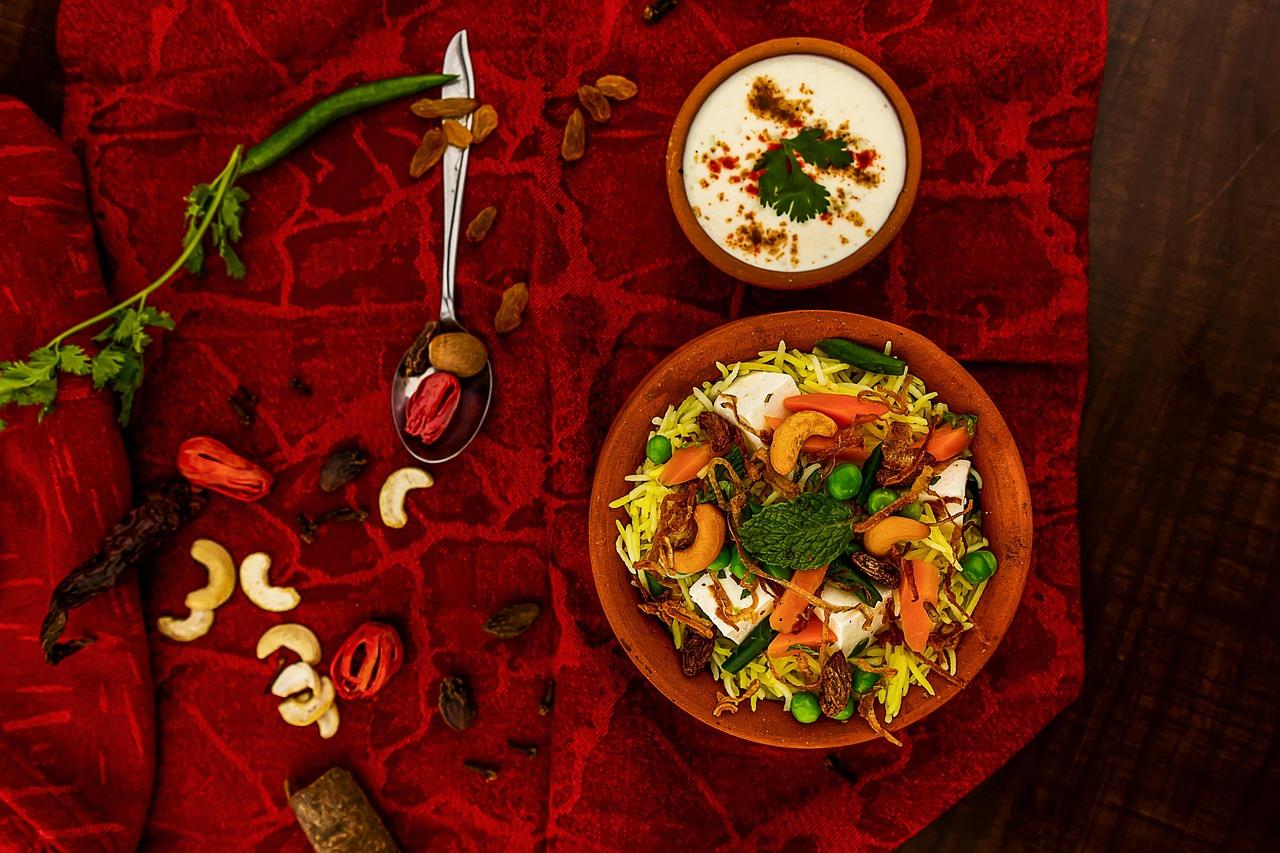
Paneer biryaniRice and moong dal in coconut milk
A mild, creamy biryani: rice and husked green gram roasted in ghee, then cooked in coconut milk with peas, carrots, potatoes, peanuts and cashews, and finished with soft fried paneer and a fresh coriander yogurt. Serve hot, garnished with more fried cashews and paneer.
 Indian

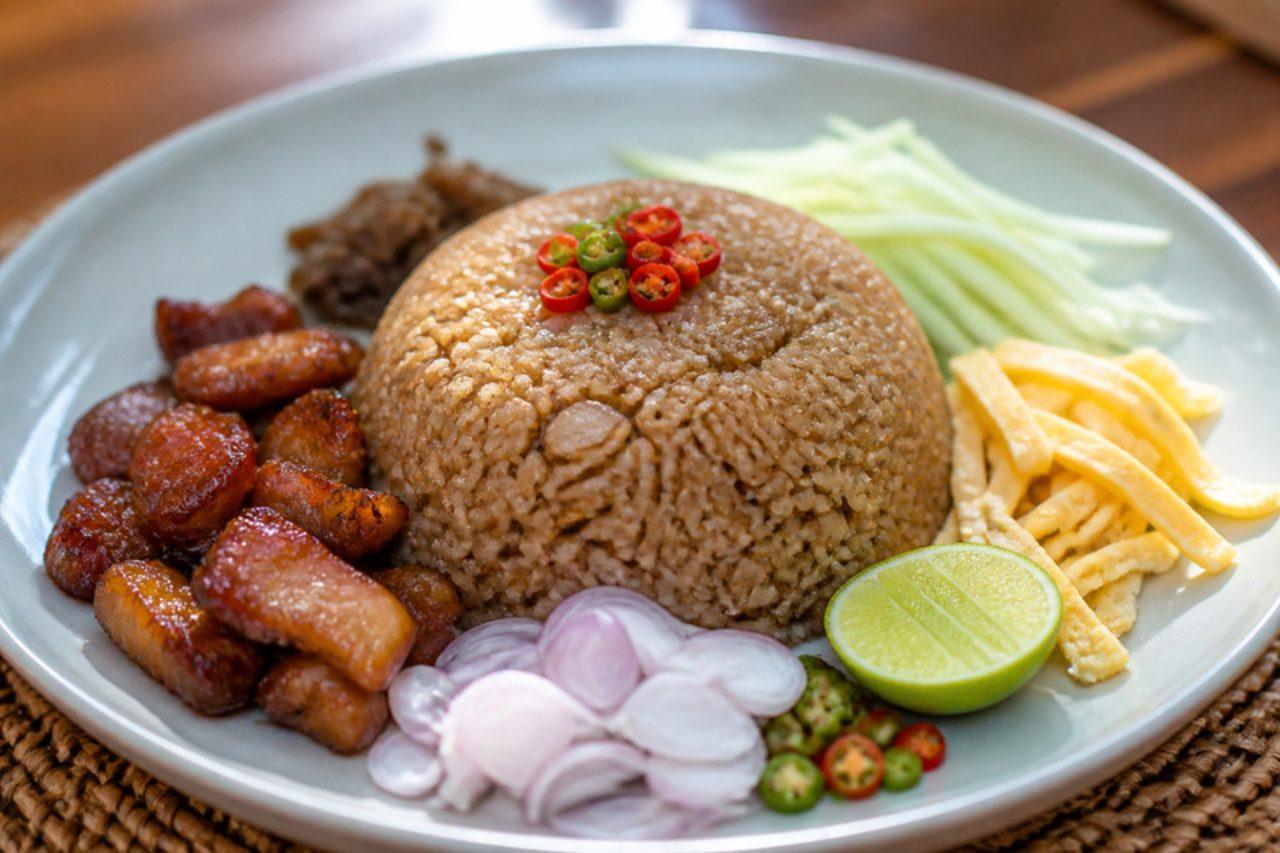
Khao kluk kapiShrimp paste rice
Everything on this central Thai plate is arranged in little heaps around a mound of rice tossed with garlic and fermented shrimp paste: sticky caramelised pork (moo wan), threads of sour green mango, shallots, chillies, sliced long beans, crisp dried shrimp and ribbons of thin omelette. You mix a bit of each into every spoonful, so salty, sweet, sour and hot arrive together. It's a favourite at Bangkok's curry-and-rice shops and a clever way to use up yesterday's rice at home; lime wedges and cucumber cool it down. Chef's tip: use day-old jasmine rice straight from the fridge, because freshly cooked rice clumps and smears the shrimp paste instead of coating each grain.
 Thai
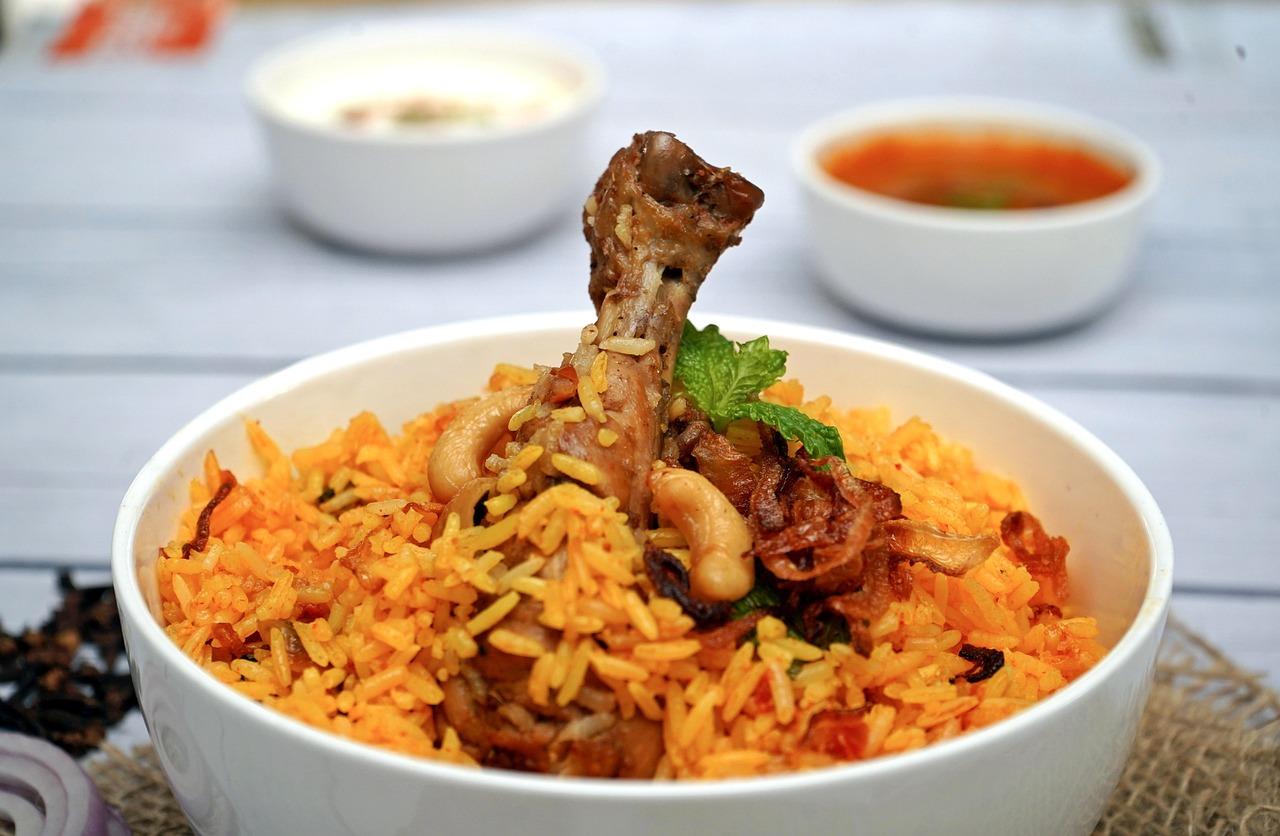
Hyderabadi chicken dum biryani
Hyderabad's biryani grew up in the kitchens of the Nizams, and the kacchi style is its proudest form: the chicken goes into the pot raw, in a thick yogurt, mint and fried-onion marinade, and cooks only in the steam trapped under part-cooked basmati. In the old city it is wedding and Eid food, ordered in huge copper deghs, and at home it's the Sunday showpiece, served with mirchi ka salan and a cooling raita. Because the meat cooks without being stirred, small bone-in thigh and drumstick pieces work best. Chef's tip: marinate overnight in the fridge — the yogurt tenderises the chicken and the flavours go right to the bone.