
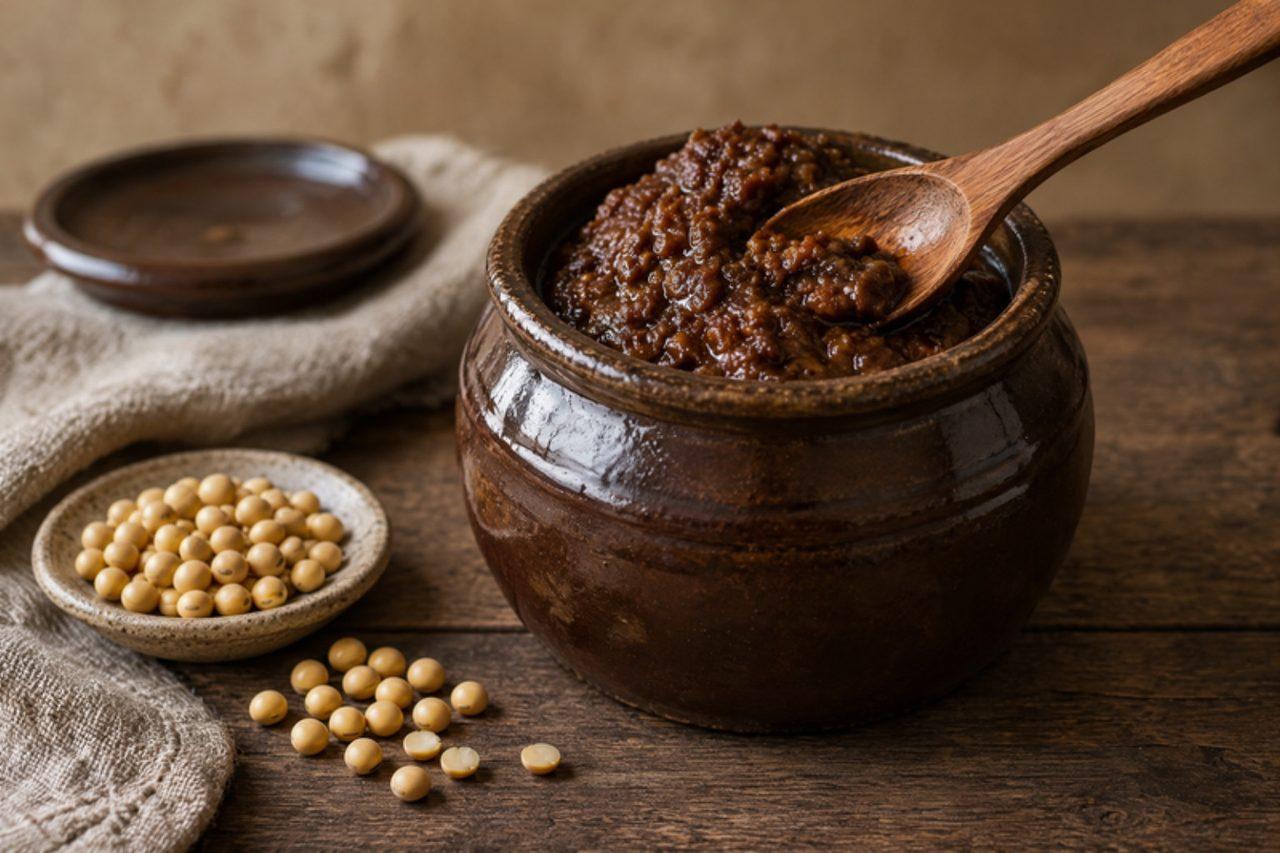
AI-generated image
Homemade doenjang
된장: a brick of hand-shaped meju, brined through spring and mashed into a deep, chunky savoury paste



Doenjang starts in late autumn, after the soybean harvest, when Korean households used to boil beans in a cauldron, pound them into bricks and hang the meju from the rafters on straw ropes to grow a white, sweet-smelling bloom over the winter. In early spring, on a clear dry day, the bricks are dropped into salt brine in an onggi jar with dried chillies, jujubes and a red-hot piece of charcoal. Some six to eight weeks later the dark liquid is drawn off and boiled into soup soy sauce (guk-ganjang), and the softened bricks are mashed into doenjang, which ripens through the summer. It is chunkier, saltier and funkier than miso, with a nutty, almost smoky depth: the backbone of doenjang-jjigae, ssamjang and spinach namul. Common mistake: making the brick too thick or drying it in a warm, still room, so the centre rots before it dries; keep it about 6 cm thick and hang it where air moves. The paste is ready when it is mid-brown, smells of toasted nuts and soy, and tastes salty-sweet rather than sharp. Chef's tip: you can buy dried meju blocks from Korean grocers and start at the brining step.
- Total time
- 300 min
- Difficulty
- hard
- Serves
- 24
Ingredients
For the meju
- 1 ⅛ lb dried yellow soybeans
- clean rice straw or a cotton mesh bag (optional)for hanging
For brining
- 2 litres water, boiled and cooled
- 14 oz coarse sea saltmakes a brine of about 17% salt
- 1 piece of hardwood lump charcoal (optional)traditional; heated red-hot, then cooled
For the paste
- 2 tbsp coarse sea salt
Shop this recipe on Amazon
What you'll need
Spices & pantry
Links open Amazon in a new tab. As an Amazon Associate, WhatToEat.Today earns from qualifying purchases.
Method
0/14 doneStep 1: Rinse 1 ⅛ lb dried yellow soybeans and soak them in plenty of cold water for 12 hours, until doubled in size with smooth, unwrinkled skins.
Step 2: Drain, cover with fresh water by 5 cm and bring to the boil, skimming the foam. Simmer, partly covered, for 3–4 hours, topping up with boiling water, until a bean crushes easily between your thumb and fourth finger and has turned light tan. (A pressure cooker takes about 40 minutes.)
210 minStep 3: Drain well and mash the beans while hot with a potato masher or in a mortar until mostly crushed, with a few halves left.
15 minStep 4: Press the mash firmly into one brick about 18 × 12 × 6 cm, squeezing out air pockets and smoothing the surface; cracks and holes let mould in.
10 minStep 5: Dry the brick on a rack in a warm, airy room for 2–4 days, turning it daily, until the surface is dry and firm. Then tie it with clean rice straw or a cotton mesh bag or put it in a mesh bag and hang it in an airy place at 15–77°F for 4–8 weeks.
Step 6: Check the meju weekly. A white to pale-yellow fuzzy bloom and a sweet, nutty, slightly musty smell are normal. Discard the brick if you see black, pink or green fuzz, wet slimy patches, or it smells putrid or strongly of ammonia. It is ready when it is hard right through, much lighter, and sounds hollow when tapped.
Step 7: Brush the surface under cold running water with a soft brush to remove loose bloom, then let it dry on a rack for a day.
Step 8: Sterilise a 4-litre glass jar or onggi: wash in hot soapy water, rinse, then dry glass in a 250°F oven for 10 minutes, or scald an onggi with boiling water and dry it in the sun.
Step 9: Stir 14 oz coarse sea salt into 2 litres water, boiled and cooled until completely dissolved, then let any grit settle. This is a strong brine of about 17% salt; do not reduce the salt, it is what keeps the ferment safe.
5 minStep 10: Put the meju in the jar and pour the clear brine over it; it will float, which is normal. Add 3 dried red chillies, 4 dried jujubes (red dates) and, if using, 1 piece of hardwood lump charcoal (held in a gas flame until it glows red, then cooled). Cover with a cloth, then the lid.
Step 11: Leave for 40–60 days, taking the lid off on sunny days and closing it at night and in rain. The brine turns dark brown and smells of soy sauce; a thin flat white film can be skimmed off. Fuzzy coloured mould or a rotten smell mean it has spoiled: discard everything.
Step 12: Lift the softened meju into a clean bowl. Strain the liquid through a cloth into a pot and boil it for 20 minutes, skimming, to make soup soy sauce; cool and bottle it for the fridge.
20 minStep 13: Mash the meju with 1 tbsp coarse sea salt and enough of the soy liquid to make a thick, wet-sand paste. Pack it firmly into a clean dry jar, pressing out air, and scatter 1 tbsp coarse sea salt over the top.
15 minStep 14: Cover with a cloth and lid and let it ripen in a sunny, airy spot for at least 2–3 months (6 months is better), lid off on fine days. Then keep it in the fridge for up to 2 years, always using a clean dry spoon, and discard it if fuzzy coloured mould or a putrid smell appears.
Nutrition per serving
- Calories
- 70 kcal
- Protein
- 6 g
- Carbs
- 5 g
- Fat
- 3 g
- Fibre
- 2 g
Nutrition values are estimates.
KrazyBadal
Good to know
- How long does homemade doenjang take?
- About 300 minutes in total: 60 minutes to prepare and 240 minutes to cook.
- How many people does it serve?
- 24 as written. Change the servings above the ingredients and every amount scales to match.
- Is it vegan?
- Yes. It has no meat, fish, dairy or eggs.
- Is it gluten free?
- Yes, as written. Check the labels on stock, sauces and spice mixes, which sometimes contain gluten.
- Can I make it ahead?
- Yes. It keeps well, so you can cook it earlier in the day or the day before and reheat it.
Reviews
No reviews yet. Be the first to cook it.
Rate this recipe
Sign in to rate and review this recipe.
You might also like

Vegetable brown stock
A hearty stock that's simmered for 2 hours, then blended and strained, so the potato gives it body. Its deeper flavour suits thick soups, gravies and stews. Freeze it in portions so it's ready when you need it.



Chaat masala
Chaat masala is the tangy, salty, slightly sulphurous sprinkle that makes chaat taste like chaat. Dried mango (amchur) gives the sourness and black salt the distinctive savoury edge. Sprinkle it over fruit, salads, raita, chips and street-food snacks.
 Indian

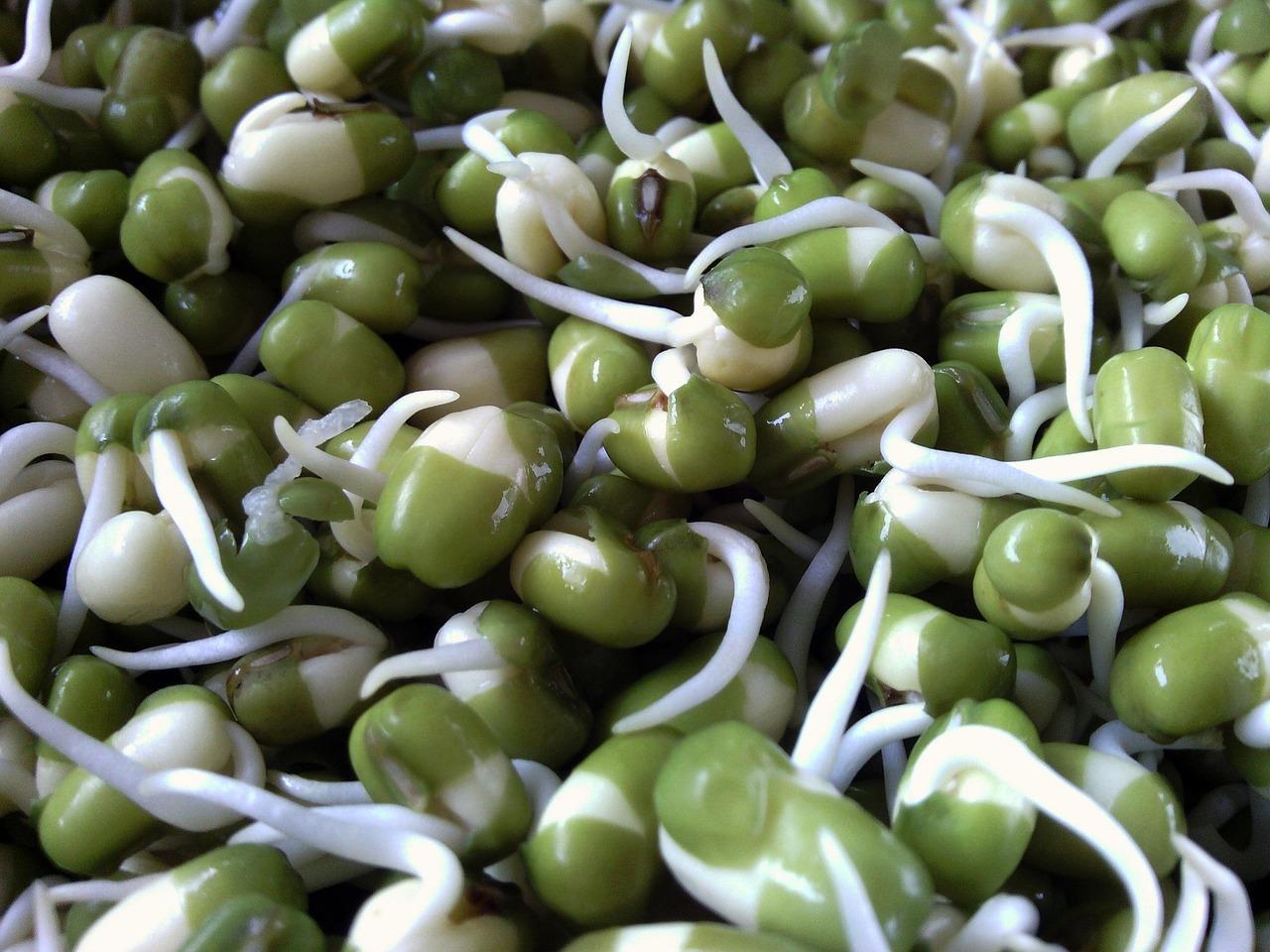
Bean sprouts
Sprouting whole green grams makes them crunchier, quicker to cook and more nutritious. All you need is muslin, water and a warm spot, and they're ready in 3–4 days. Use them in salads, bhel, usal and stir-fries. Any other whole pulse sprouts the same way.