
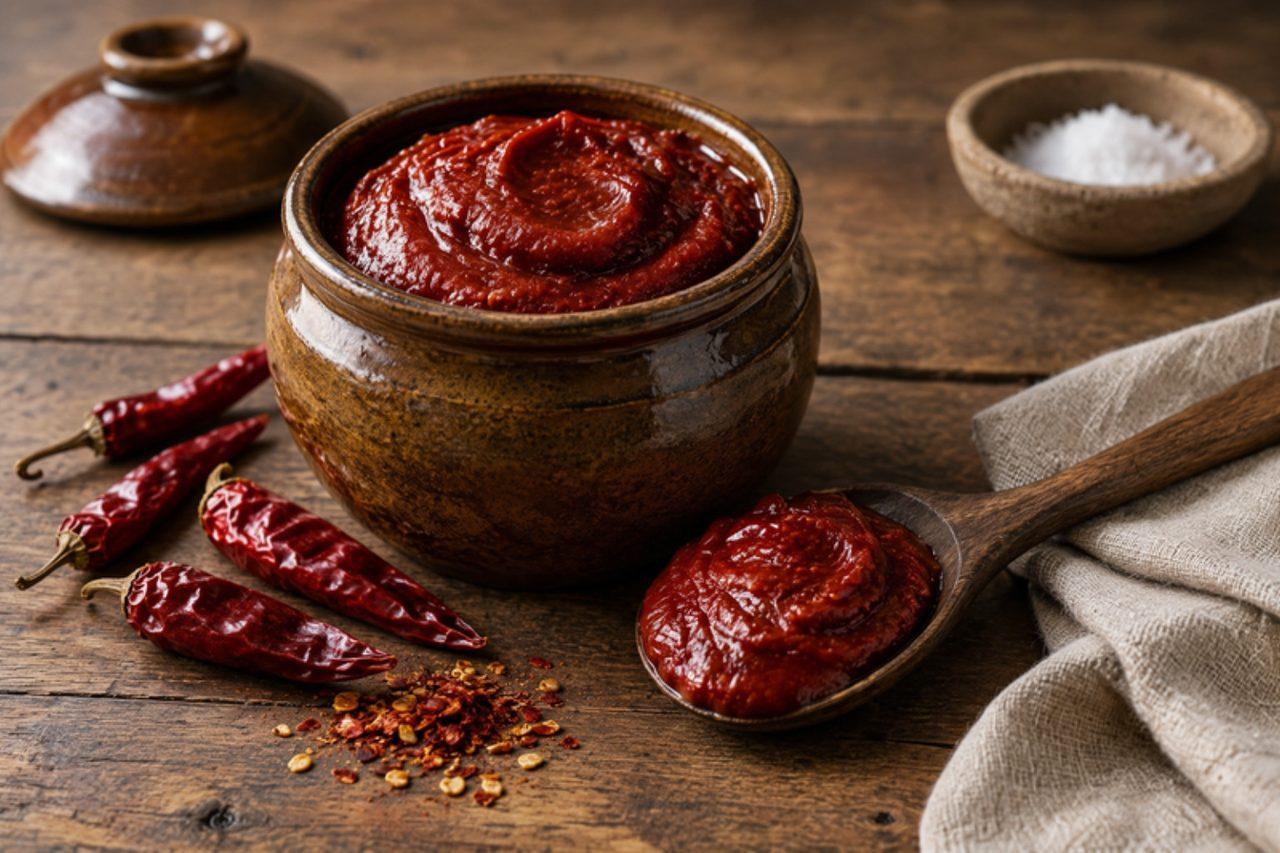
AI-generated image
Homemade gochujang
고추장: sweet rice porridge, malt and sun-dried chilli beaten into a glossy red paste and left to ripen in the sun



Sunchang, a small county in North Jeolla, is so tied to gochujang that it holds a jang festival every October, but the paste itself is traditionally made in the cold weeks of late winter, when there are no flies and it can ferment slowly in glazed onggi jars on the sunny jangdokdae terrace. Glutinous rice flour is broken down by barley malt into a sweet, runny porridge, boiled down, then beaten with fine chilli powder, fermented soybean (meju) powder, rice syrup and salt. Young, it is bright, sweet and fiery; after two or three months it darkens to brick red and gains a round, savoury depth, thick enough to hold a ridge on the spoon. It goes into bibimbap, tteokbokki, ssamjang, stews and marinades all year. Common mistake: adding the chilli and salt while the porridge is still hot, which dulls the colour and can make the paste turn sour; wait until it is lukewarm. It is ready when it is glossy, deep red, and smells sweet and earthy with no sharp, boozy note. Chef's tip: hold the malt and rice at 55–60 °C on a rice cooker's keep-warm setting; any hotter and the malt enzymes stop working, so the porridge never thins.
- Total time
- 210 min
- Difficulty
- hard
- Serves
- 24
Ingredients
For the malt porridge
- 5 cups water
- 2 ½ oz barley malt powder (yeotgireum)from Korean grocers; contains gluten
- 10 ½ oz glutinous rice flour (chapssal-garu)also sold as sweet rice flour
For the paste
- 2 ⅛ oz fermented soybean powder for gochujang (meju-garu)fine powder, not the coarse kind for doenjang
- 9 oz fine Korean chilli powder (gochujang gochugaru)the fine, powdery grind; sun-dried taeyangcho is best
- 4 oz coarse sea saltabout 7% of the finished paste
Shop this recipe on Amazon
What you'll need
Spices & pantry
Links open Amazon in a new tab. As an Amazon Associate, WhatToEat.Today earns from qualifying purchases.
Method
0/10 doneStep 1: Clean the fermenting jar (3 litres, glass or onggi): wash it in hot soapy water, rinse, then dry a glass jar in a 250°F oven for 10 minutes, or scald an onggi with boiling water and dry it in the sun. Every bowl, spoon and lid must be bone dry.
Step 2: Whisk 2 ½ oz barley malt powder (yeotgireum) into 5 cups water in a large bowl and leave it for 1 hour, squeezing the powder between your fingers every 15 minutes to release the enzymes. Strain through a fine cloth, squeezing hard, and discard the husks; you should have about 1 litre of cloudy, beige liquid.
60 minStep 3: Warm the malt water in a heavy pot to 55–140°F (use a thermometer; it should feel very hot but not scalding). Whisk in 10 ½ oz glutinous rice flour (chapssal-garu) until no lumps remain.
5 minStep 4: Hold the mixture at 55–140°F for 2 hours, on a rice cooker's keep-warm setting or the lowest heat with the lid ajar, stirring every 20 minutes. It is ready when the thick batter has turned into a sweet, runny liquid that pours like thin cream.
120 minStep 5: Bring it to the boil, then simmer over a medium-low heat for 40–50 minutes, stirring often and scraping the bottom, until reduced by about a third, pale tan and bubbling in thick, lazy blips. Stir in 9 oz rice syrup (ssal-jocheong).
45 minStep 6: Take the pot off the heat and cool to lukewarm (about 104°F), stirring now and then so a skin does not form; this takes 1–2 hours.
Step 7: Beat in 2 ⅛ oz fermented soybean powder for gochujang (meju-garu) until smooth, then add 9 oz fine Korean chilli powder (gochujang gochugaru) in three batches, beating with a wooden spoon after each, and finally 4 oz coarse sea salt. Keep beating until the paste is glossy, evenly red and thick enough to hold a ridge. It should taste very salty, sweet and hot.
15 minStep 8: Spoon the paste into the jar, filling it no more than two-thirds full because it rises as it ferments. Smooth the top, scatter 1 tbsp coarse sea salt, for the surface over the surface, cover the mouth with a clean cloth tied on with string, then put the lid on loosely.
Step 9: Leave it to ferment in a sunny, airy place (a balcony is ideal) for 1–3 months; at least 4 weeks before eating. On dry, sunny days take the lid off and leave the cloth on; close it at night and in rain. Normal signs: the colour deepens, small bubbles form, the paste rises a little and smells sweet and earthy. A thin flat white film can be scraped off with the salt layer. Fuzzy green, black or pink mould, a slimy surface or a rotten smell mean it has spoiled: throw it away.
Step 10: When it tastes rounded and savoury, spoon it into smaller clean jars with a dry spoon and keep it in the fridge for up to a year. Always use a clean, dry spoon, and discard it if mould, sliminess or an off smell ever appears.
Nutrition per serving
- Calories
- 140 kcal
- Protein
- 3 g
- Carbs
- 29 g
- Fat
- 2 g
- Fibre
- 4 g
Nutrition values are estimates.
KrazyBadal
Good to know
- How long does homemade gochujang take?
- About 210 minutes in total: 40 minutes to prepare and 170 minutes to cook.
- How many people does it serve?
- 24 as written. Change the servings above the ingredients and every amount scales to match.
- Is it vegan?
- Yes. It has no meat, fish, dairy or eggs.
- Is it very spicy?
- It has some heat. Use less chilli for a milder version, or more if you like it hot.
- Can I make it ahead?
- Yes. It keeps well, so you can cook it earlier in the day or the day before and reheat it.
- What can I use instead of fine korean chilli powder (gochujang gochugaru)?
- Cayenne, half the amount (hotter).
Reviews
No reviews yet. Be the first to cook it.
Rate this recipe
Sign in to rate and review this recipe.
You might also like

Vegetable brown stock
A hearty stock that's simmered for 2 hours, then blended and strained, so the potato gives it body. Its deeper flavour suits thick soups, gravies and stews. Freeze it in portions so it's ready when you need it.


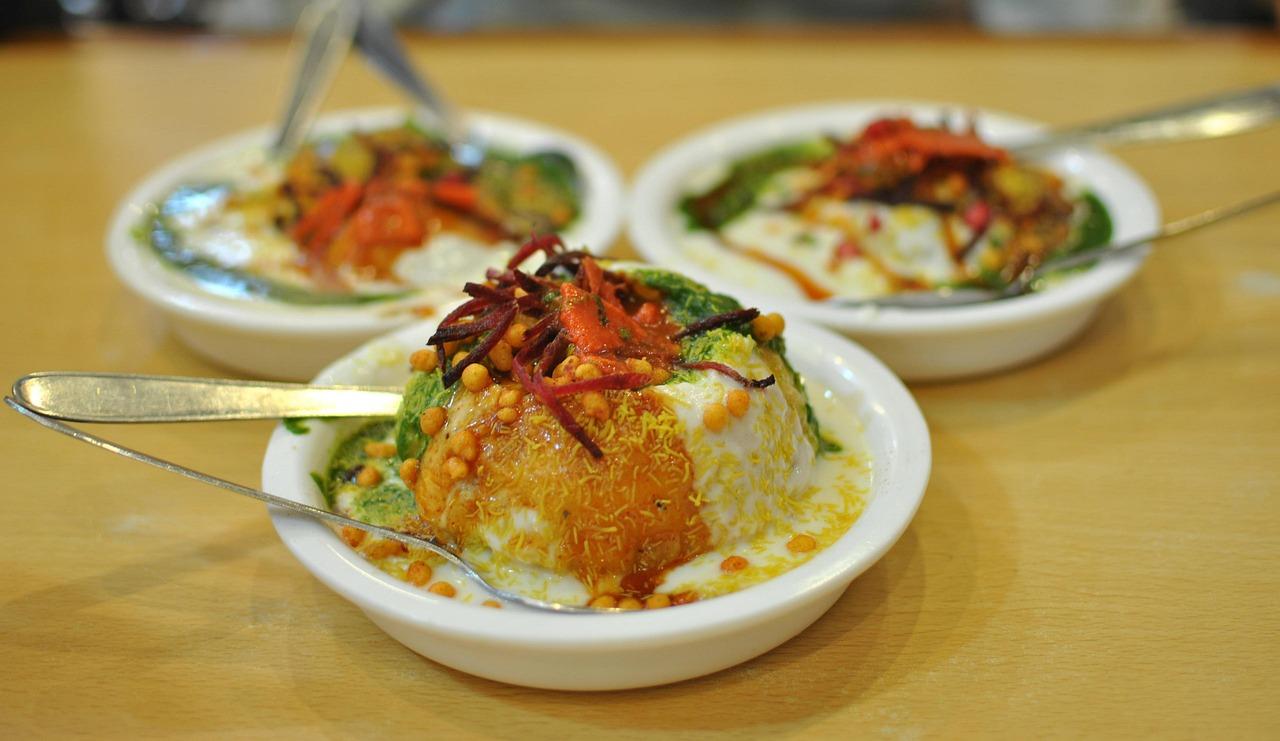
Chaat masala
Chaat masala is the tangy, salty, slightly sulphurous sprinkle that makes chaat taste like chaat. Dried mango (amchur) gives the sourness and black salt the distinctive savoury edge. Sprinkle it over fruit, salads, raita, chips and street-food snacks.
 Indian

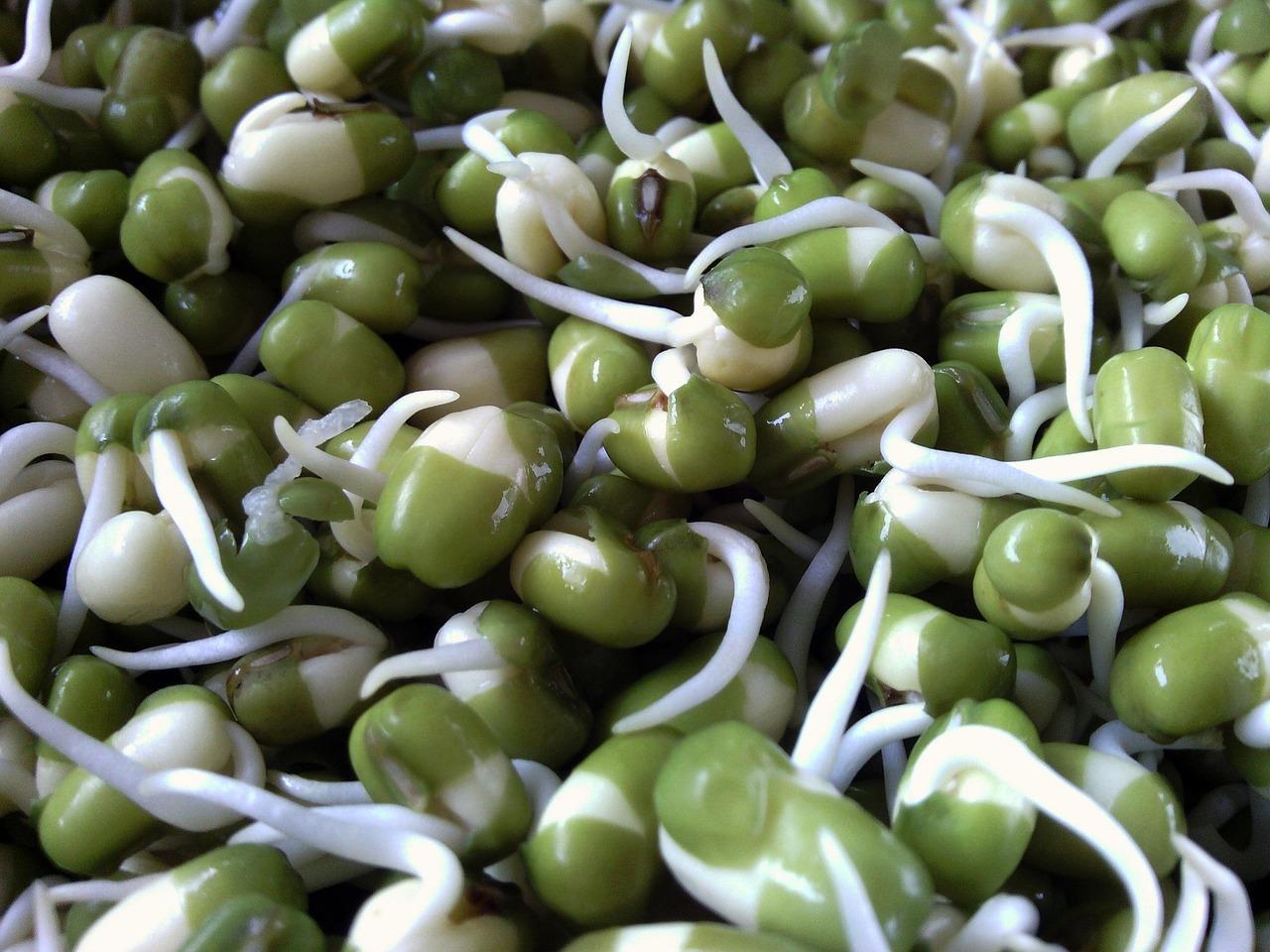
Bean sprouts
Sprouting whole green grams makes them crunchier, quicker to cook and more nutritious. All you need is muslin, water and a warm spot, and they're ready in 3–4 days. Use them in salads, bhel, usal and stir-fries. Any other whole pulse sprouts the same way.