
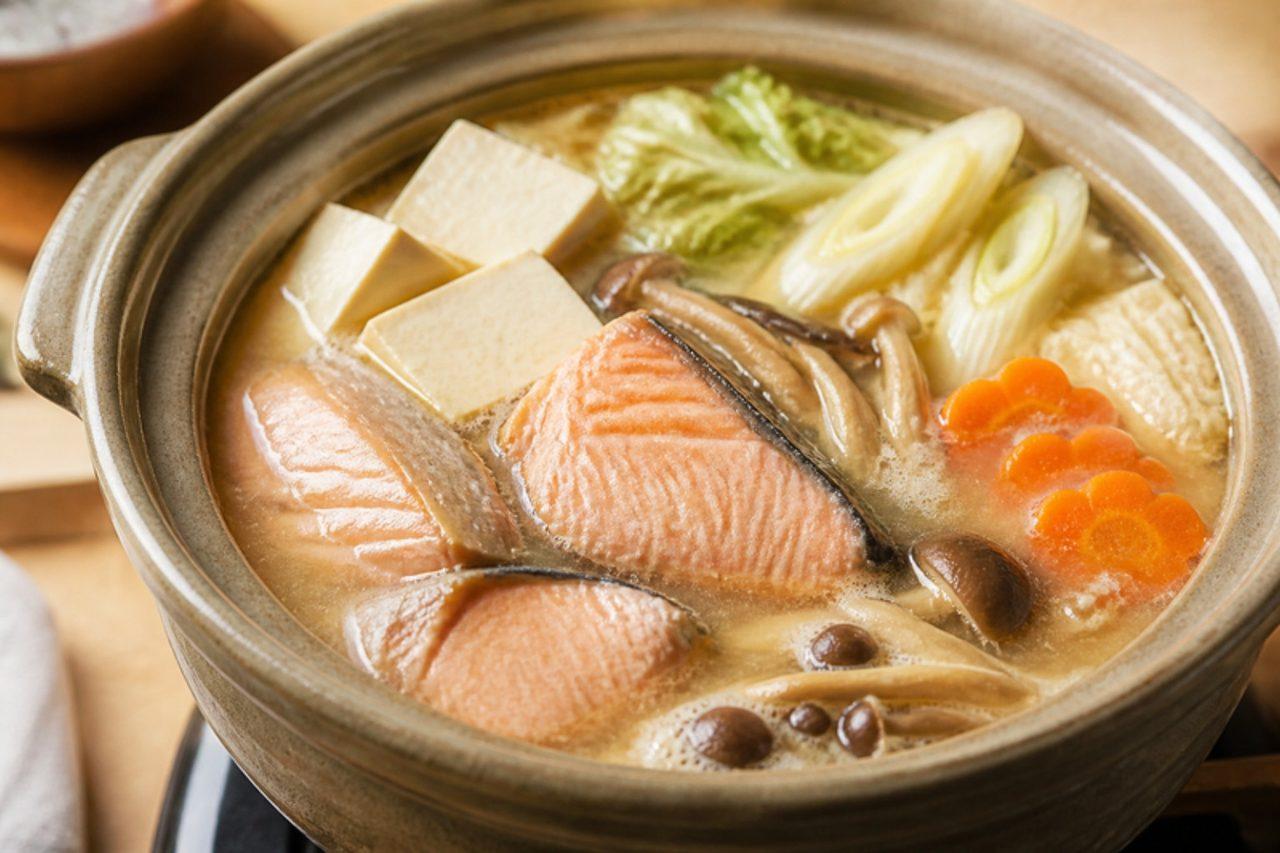
AI-generated image
Ishikari nabe
石狩鍋: salmon and vegetable hot pot in a miso broth from Hokkaido
Autumn salmon swimming up the Ishikari River, near Sapporo, gave the fishing families at its mouth a glut of fish, and this miso hot pot is how they cooked it. Today Hokkaido families bring a clay pot of it to the table on cold nights from October onwards, and everyone helps themselves as it bubbles on a portable burner. Chunks of salmon, potato, cabbage, tofu and mushrooms simmer in kombu broth thickened with miso. A pinch of sansho pepper at the end lifts the richness, and some cooks melt a knob of butter on top. Chef's tip: salt the salmon for 10 minutes and pour boiling water over it before it goes in the pot, as this firms the flesh and washes away any fishy smell.
- Total time
- 45 min
- Difficulty
- medium
- Serves
- 4
Ingredients
For the broth
For the pot
To finish
Method
0/7 doneStep 1: Put ⅓ oz kombu (dried kelp) in a wide casserole or clay pot with 5 cups water and leave to soak for 20 minutes while you prepare everything else.
20 minStep 2: Sprinkle 1 ⅛ lb salmon fillet, skin on with ½ tsp salt and leave for 10 minutes. Put it in a colander, pour a kettle of just-boiled water over it until the surface turns pale, then rinse under the cold tap.
10 minStep 3: Heat the kombu water over a medium heat and lift the kombu out just before it boils. Add 2 potatoes, 7 oz daikon (white radish), 1 carrot and 1 onion and simmer for 10 minutes, until a knife meets only slight resistance.
12 minStep 4: Mix 4 tbsp miso with a ladle of the broth in a bowl until smooth, then stir it back into the pot with 2 tbsp sake and 1 tbsp mirin. Sake and mirin contain alcohol; for an alcohol-free broth, leave them out and add 1 tsp sugar.
1 minStep 5: Add 10 ½ oz Chinese leaf (napa cabbage), 6 fresh shiitake mushrooms, 10 ½ oz firm tofu and 1 leek or Japanese negi and nestle the salmon in among them. Simmer gently for 6–8 minutes, until the salmon is opaque all the way through and flakes easily (145°F/145 °F). Common mistake: stirring once the fish is in. It breaks into flakes and clouds the broth; gently push pieces around with chopsticks instead.
8 minStep 6: Lay 3 ½ oz shungiku (chrysanthemum greens) or spinach on top for the last minute, just until wilted. Take the pot to the table, add ½ oz butter if you like and season each bowl with 1 pinch ground sansho pepper.
1 minStep 7: Once the pot is empty, a classic finish is to add cooked rice or udon to the leftover broth and simmer for a few minutes.
Nutrition per serving
- Calories
- 420 kcal
- Protein
- 35 g
- Carbs
- 30 g
- Fat
- 17 g
- Fibre
- 7 g
Nutrition values are estimates.
KrazyBadal
Good to know
- How long does ishikari nabe take?
- About 45 minutes in total: 20 minutes to prepare and 25 minutes to cook.
- How many people does it serve?
- 4 as written. Change the servings above the ingredients and every amount scales to match.
- What can I use instead of mirin?
- Rice vinegar with ½ tsp sugar per tbsp.
- What can I use instead of salmon fillet, skin on?
- Trout or any firm white fish, same weight (check white fish a little sooner).
Reviews
No reviews yet. Be the first to cook it.
Rate this recipe
Sign in to rate and review this recipe.
You might also like
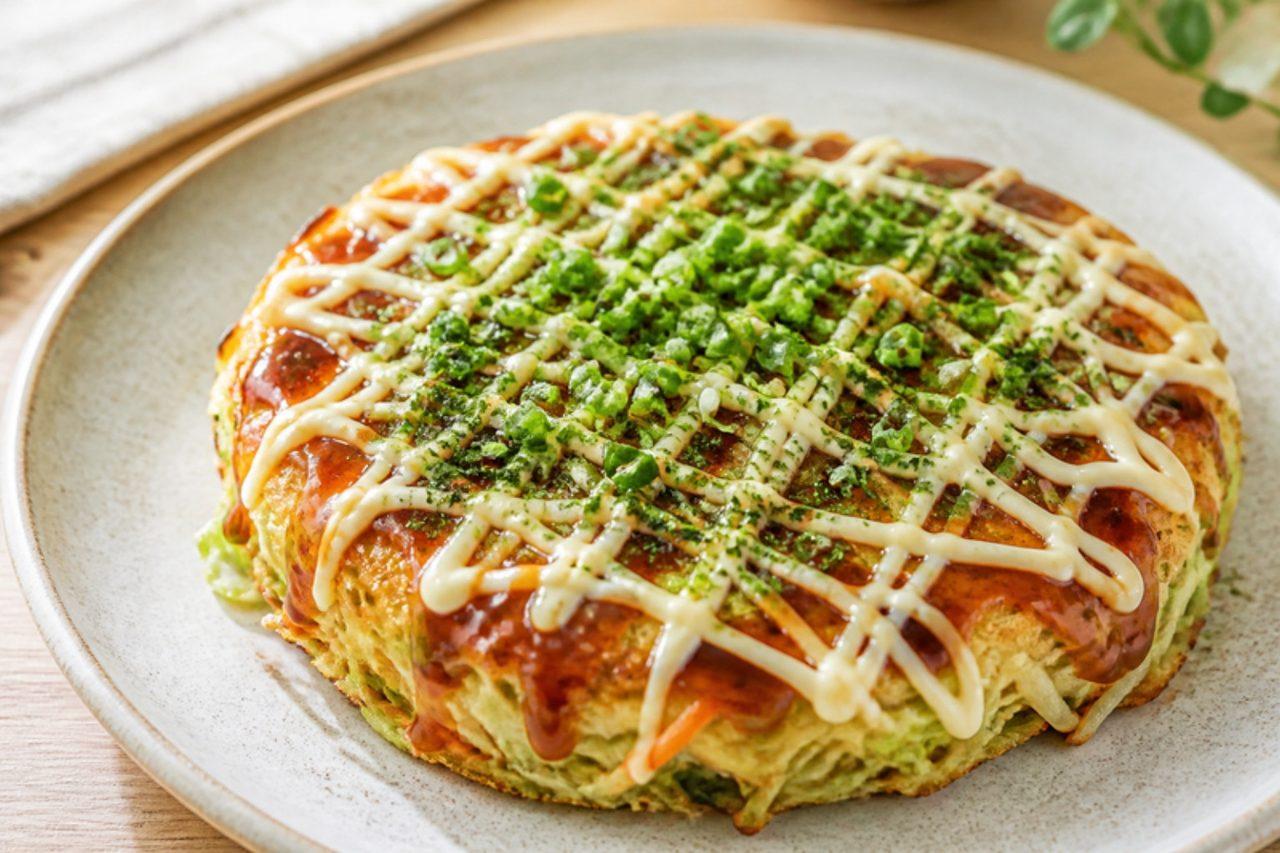
Okonomiyaki
Okonomiyaki (お好み焼き, 'grilled as you like it') is the pride of Osaka, where it's cooked on hot iron griddles in lively restaurants. Finely shredded cabbage is folded into a light batter with egg and spring onion, then fried into a thick, soft pancake with a crisp outside. It's painted with a fruity brown sauce and zigzagged with mayonnaise. Bonito flakes are usual on top; this vegetarian version uses seaweed flakes and pickled ginger instead. Chef's tip: don't press the pancake down with your spatula while it cooks. Osaka cooks leave it alone so the cabbage steams inside and stays light and fluffy; pressing squeezes out the air.

Miso soup
Miso soup (味噌汁) is drunk every day in homes all over Japan, at breakfast as well as dinner, beside a bowl of rice. The base is dashi; this vegan version uses kombu and dried shiitake instead of bonito, which gives it a deep, rounded flavour. Silken tofu and wakame seaweed are the classic fillings. It takes ten minutes; just remember not to boil the miso. Chef's tip: add the miso at the very end and never let it boil. Boiling kills the miso's fresh, fermented aroma; Japanese cooks say the soup should only 'smile', with the surface barely trembling.

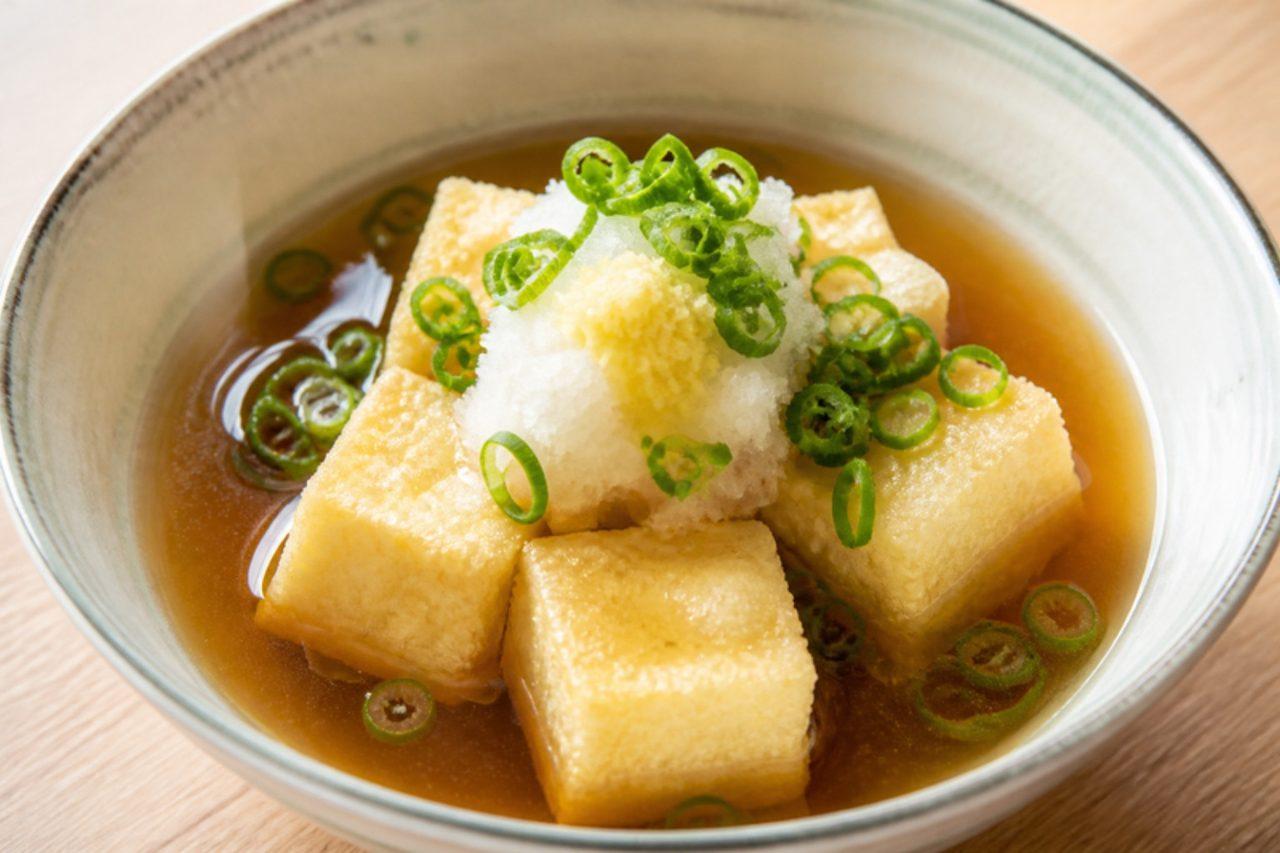
Agedashi tofu
Agedashi tofu (揚げ出し豆腐) is a classic izakaya dish eaten all over Japan: cubes of soft tofu dusted in potato starch, fried until they form a thin, crisp shell, then bathed in a hot, savoury broth. The coating turns silky as it soaks up the sauce while the tofu inside stays creamy. Usually topped with bonito flakes; here it's grated daikon, ginger and spring onion with a kombu-shiitake broth instead. Chef's tip: coat the tofu in starch right before it goes into the oil, not ahead of time; if it sits, the starch turns damp and the coating fries up gummy instead of crisp.