
AI-generated image
Izumo warigo soba
Buckwheat noodles in stacked bowls
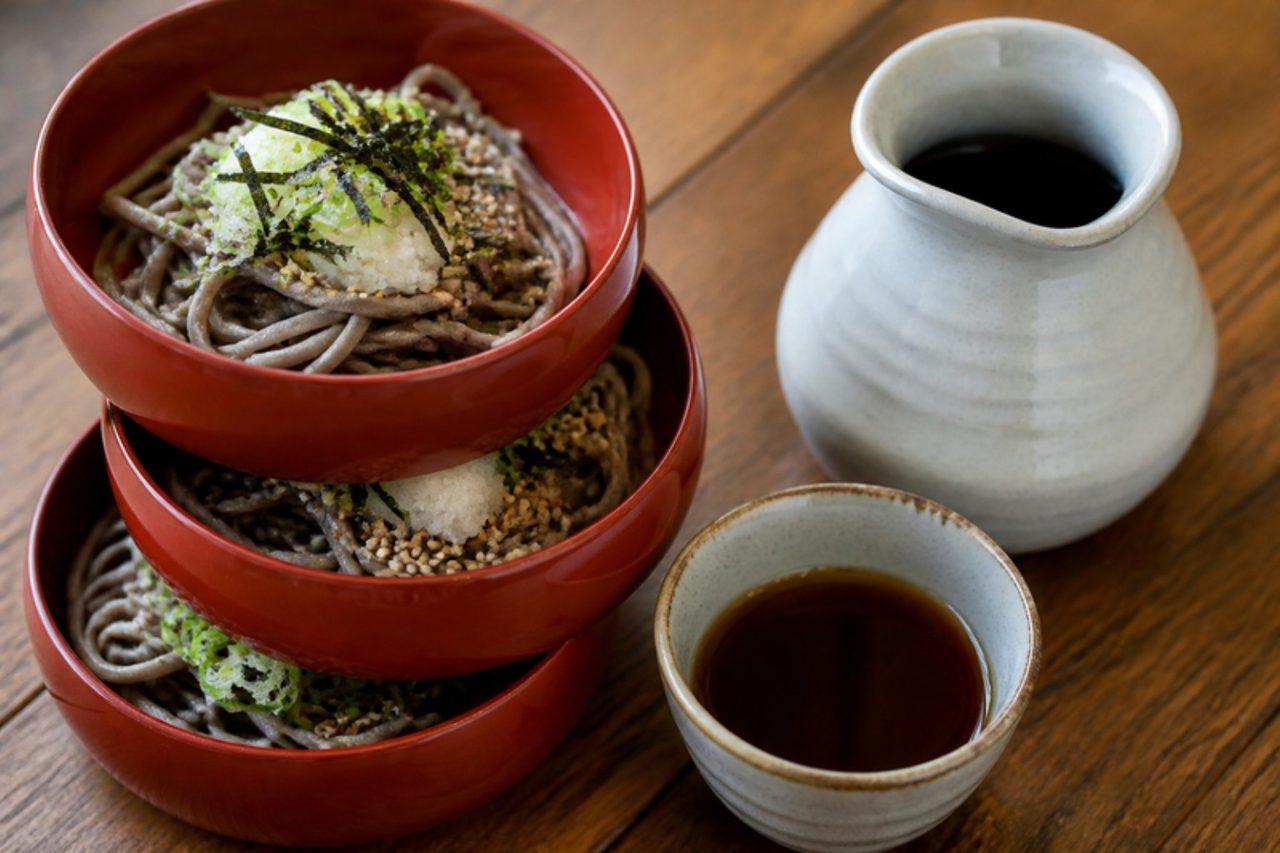
出雲割子そば (Izumo warigo soba): dark, whole-buckwheat noodles served in three stacked bowls with sauce poured straight on


Izumo, in Shimane, is home to one of Japan's oldest shrines, and its soba is among the country's three most famous. The buckwheat is ground whole, husk and all, so the noodles are grey-brown, rough and strongly nutty. They come in a stack of three shallow round lacquer boxes called warigo, a custom from the picnic boxes Izumo townspeople carried to view flowers in the Edo period. You don't dip the noodles: you pour sauce and toppings straight onto the top bowl, eat it, then tip what's left onto the next. Classic toppings are grated daikon, spring onion and nori; ours leave out the usual bonito flakes. Chef's tip: look for 'inaka' (country-style) or 100% buckwheat soba. Paler noodles taste too mild for this dish.
- Total time
- 25 min
- Difficulty
- easy
- Serves
- 2
Ingredients
For the sauce
- ¾ cup kombu-shiitake dashi
- 4 tbsp soy sauce
- 3 tbsp mirinor 1 tbsp sugar
- 1 tsp sugar
For the noodles
Toppings
- 5 ½ oz daikon radishfinely grated and lightly squeezed
- 2 spring onionsthinly sliced
- 1 norisheet, cut into thin strips
- ½ tsp chilli flakes or shichimi togarashi (optional)
- 2 tsp toasted sesame seeds (optional)
Shop this recipe on Amazon
Spices & pantry
Fresh ingredients (2)
Links open Amazon in a new tab. As an Amazon Associate, WhatToEat.Today earns from qualifying purchases.
Method
0/6 doneStep 1: Bring ¾ cup kombu-shiitake dashi, 4 tbsp soy sauce, 3 tbsp mirin and 1 tsp sugar to a simmer, cook for 1 minute, then cool. The sauce is poured on, so it's a little stronger than a soba dip.
3 minStep 2: Boil 7 oz dark inaka or 100% buckwheat soba in a large pan of water for the time on the packet, usually 5–7 minutes for thick country soba, until tender with a slight chew in the middle.
6 minStep 3: Drain and rinse under cold running water, rubbing the noodles gently, then drain well. Common mistake: leaving water on the noodles. It pools in the bowl and dilutes the sauce, so shake the colander hard.
Step 4: Divide the noodles between three shallow bowls per person, stacked if they fit. Mix a little ½ tsp chilli flakes or shichimi togarashi into 5 ½ oz daikon radish for a pink, spicy oroshi.
Step 5: Top each bowl with daikon, 2 spring onions, 1 nori and 2 tsp toasted sesame seeds. Bring to the table with the sauce in a jug.
Step 6: Pour about 2 tablespoons of sauce over the top bowl and eat it. Tip any sauce and toppings left in the bowl onto the next one, add a little fresh sauce and carry on down the stack.
Nutrition per serving
- Calories
- 390 kcal
- Protein
- 16 g
- Carbs
- 78 g
- Fat
- 3 g
- Fibre
- 6 g
Nutrition values are estimates.
KrazyBadal
Good to know
- How long does izumo warigo soba take?
- About 25 minutes in total: 15 minutes to prepare and 10 minutes to cook.
- How many people does it serve?
- 2 as written. Change the servings above the ingredients and every amount scales to match.
- Is it vegan?
- Yes. It has no meat, fish, dairy or eggs.
- What can I use instead of soy sauce?
- Tamari, same amount (gluten free).
- What can I use instead of mirin?
- Rice vinegar with ½ tsp sugar per tbsp.
Reviews
No reviews yet. Be the first to cook it.
Rate this recipe
Sign in to rate and review this recipe.
You might also like

Boiled pasta
The basic method for any dried pasta, from penne to spaghetti. A large pan of salted boiling water keeps the pasta from sticking, and you cook it only until just done, with a little bite left. Use it in salads, bakes or with any sauce.
 Italian


Miso soup
Miso soup (味噌汁) is drunk every day in homes all over Japan, at breakfast as well as dinner, beside a bowl of rice. The base is dashi; this vegan version uses kombu and dried shiitake instead of bonito, which gives it a deep, rounded flavour. Silken tofu and wakame seaweed are the classic fillings. It takes ten minutes; just remember not to boil the miso. Chef's tip: add the miso at the very end and never let it boil. Boiling kills the miso's fresh, fermented aroma; Japanese cooks say the soup should only 'smile', with the surface barely trembling.

Yaki onigiriGrilled rice balls
Yaki onigiri (焼きおにぎり) are rice balls grilled until they form a crisp, toasty crust, then brushed with soy sauce glaze. They are eaten all over Japan, at izakaya, at barbecues and from the freezer section, as a snack or with miso soup. The inside stays soft and steamy while the outside crackles. Best eaten hot, straight from the pan. Chef's tip: let the shaped rice balls dry for 10 minutes before they go in the pan. A drier surface forms a better crust and won't stick, and the glaze goes on only at the end so it doesn't burn.