
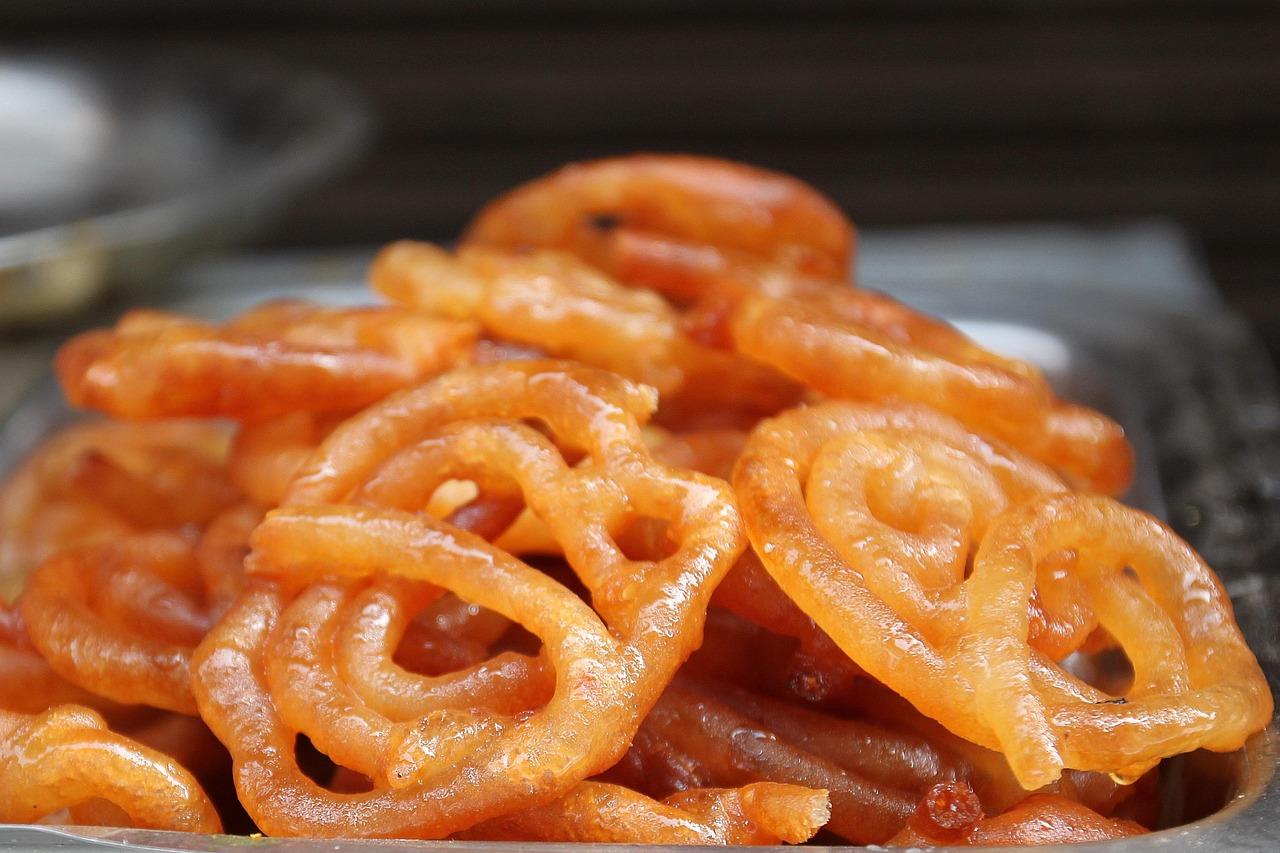
Jalebi
જલેબી: crisp, chewy coils of overnight-fermented batter fried in ghee and soaked in saffron syrup (plus 12 hours fermenting)
 Indian
On Uttarayan morning in Ahmedabad and Surat, queues form outside every farsan shop for two things: undhiyu and hot jalebi, sold by the kilo for the terrace party. This is the plain fermented jalebi, not the mawa or instant kind: a batter of maida, a little gram flour and curd left overnight until it smells sour and bubbly, piped in tight double coils into ghee, fried until crisp and dropped into warm saffron syrup. Good ones crackle when bitten, then flood the mouth with syrup, with a gentle tang from the ferment. Eat them hot with undhiyu, with fafda on Dussehra, or with rabri. The common mistake is syrup that is too thick or too cold; it then sits on the surface and the jalebi stays dry inside. Keep the syrup warm and at just one string. Chef's tip: if the batter spreads in the ghee, it is too thin; whisk in a spoon of maida. If the coils break, it is too thick; add a spoon of water.
- Total time
- 60 min
- Difficulty
- medium
- Serves
- 6
Ingredients
For the batter
- 5 ½ oz plain flour (maida)
- 1 tbsp gram flour (besan)
- 3 tbsp sour plain yogurt (curd)
- ¾ cup lukewarm waterroughly
- 1 pinch pinch of turmeric or orange food colour (optional)
For the syrup
- 10 ½ oz sugar
- ¾ cup water
- 1 pinch saffron strands
- ½ tsp ground green cardamom
- 1 tsp lemon juice
For frying
- 2 cups ghee or oil for frying
Shop this recipe on Amazon
Spices & pantry
Fresh ingredients (2)
Links open Amazon in a new tab. As an Amazon Associate, WhatToEat.Today earns from qualifying purchases.
Method
0/8 doneStep 1: Whisk 5 ½ oz plain flour (maida), 1 tbsp gram flour (besan) and 3 tbsp sour plain yogurt (curd) with ¾ cup lukewarm water to a thick, smooth batter that flows slowly off a spoon, like thick pancake batter. Cover and leave in a warm place for 12–14 hours.
5 minStep 2: The next day, the batter should be bubbly and smell pleasantly sour. Beat it well for 2 minutes, add 1 pinch pinch of turmeric or orange food colour if using, and pour into a squeeze bottle or a cloth with a small hole.
3 minStep 3: Dissolve 10 ½ oz sugar in ¾ cup water over a medium heat, add 1 pinch saffron strands and 1 tsp lemon juice and boil for 5–6 minutes to one-string consistency. Stir in ½ tsp ground green cardamom and keep the syrup warm on the lowest heat.
8 minStep 4: Heat 2 cups ghee or oil for frying in a wide, shallow pan over a medium heat to about 350°F: a drop of batter should rise steadily with lots of bubbles.
5 minStep 5: Squeeze the batter into the ghee in tight spirals about 7 cm across, starting from the centre and finishing with a cross to join the coils. Fry 4–5 at a time.
2 minStep 6: Fry for 2 minutes, turn and fry 1–2 minutes more until crisp and light golden.
20 minStep 7: Lift out, drain for a second and drop into the warm syrup for 30–40 seconds, turning once. Common mistake: leaving them in for minutes, which makes them soggy.
1 minStep 8: Lift onto a plate and serve hot, ideally with undhiyu or fafda.
Nutrition per serving
- Calories
- 390 kcal
- Protein
- 4 g
- Carbs
- 72 g
- Fat
- 11 g
- Fibre
- 1 g
Nutrition values are estimates.
KrazyBadal
Good to know
- How long does jalebi take?
- About 60 minutes in total: 20 minutes to prepare and 40 minutes to cook.
- How many people does it serve?
- 6 as written. Change the servings above the ingredients and every amount scales to match.
- Is it vegetarian?
- Yes. It has no meat or fish.
- What can I use instead of plain flour (maida)?
- Self-raising flour, same amount (then leave out the baking powder).
- What can I use instead of sour plain yogurt (curd)?
- Sour cream or buttermilk, same amount.
Reviews
No reviews yet. Be the first to cook it.
Rate this recipe
Sign in to rate and review this recipe.
You might also like

SakarpadaSweet fried dough diamonds
Sakarpada (shakarpara) are little sweet diamonds of a rich dough made with ghee, milk and sugar, fried until golden and crunchy. They are a Diwali favourite with tea, and the cubes go into bhusu too. They keep for weeks in an air-tight tin.
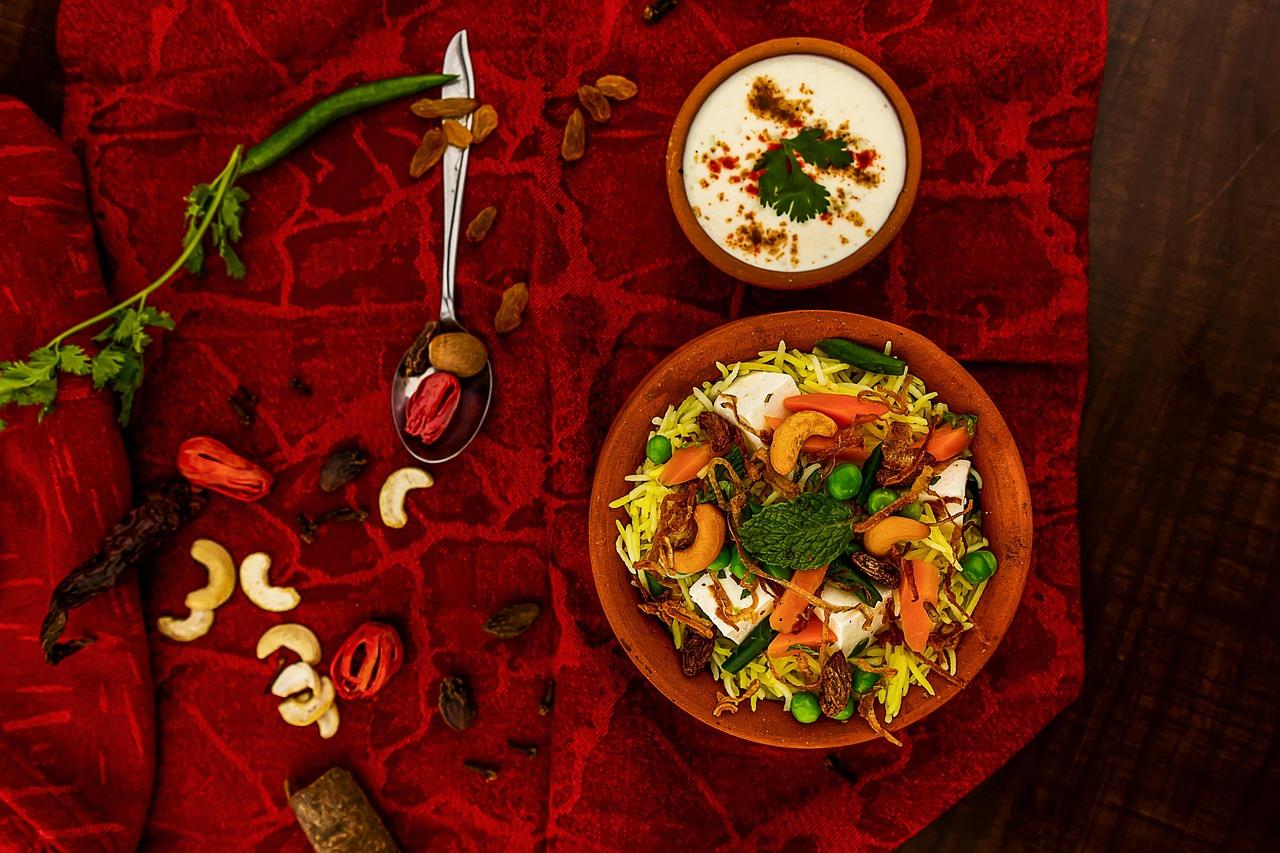
Paneer biryaniRice and moong dal in coconut milk
A mild, creamy biryani: rice and husked green gram roasted in ghee, then cooked in coconut milk with peas, carrots, potatoes, peanuts and cashews, and finished with soft fried paneer and a fresh coriander yogurt. Serve hot, garnished with more fried cashews and paneer.


Sabudana khichdiSago with peanuts and potato
Sabudana khichdi is the dish that sees Maharashtra through every vrat (fast), from Navratri to Ekadashi, but it's so good that people eat it any day of the week. Soaked sago pearls are tossed in a pan with crushed roasted peanuts, cubes of potato, cumin and green chilli until each pearl turns glassy and separate, then finished with lemon and coriander. It's soft, chewy, nutty and gently hot. Fasting rules vary from family to family, so check yours; this version uses rock salt and no asafoetida, onion or garlic. Traditionally it's cooked in ghee; use ghee instead of oil if you aren't keeping it vegan. Chef's tip: soak the sago in just enough water to cover by the height of the pearls themselves, no more; too much water is the reason khichdi turns into one sticky lump.
