
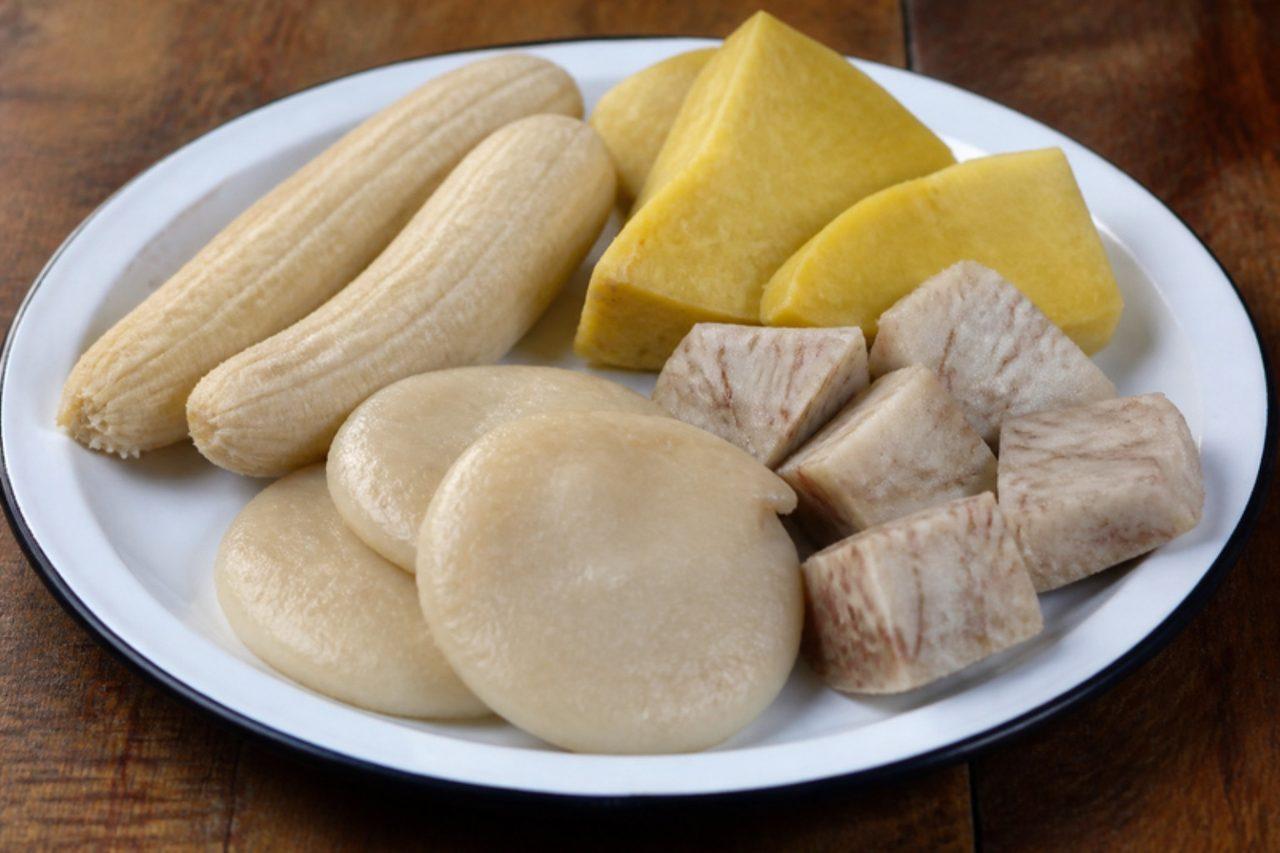
AI-generated image
Jamaican hard food
Boiled banana, yam and dumplings
Hard food: boiled green banana, yellow yam, dasheen and flour dumplings


From Kingston cookshops to farm kitchens in the hills, "hard food" is the plain boiled base that sits under ackee, callaloo, stew peas or a fried egg: green bananas, a wedge of yellow yam, dasheen and chewy flour dumplings, all from one big pot. Each piece keeps its own character, from the banana's firm, faintly tangy bite to the yam's floury softness, so nothing is mashed. The usual mistake is dropping everything in at once; the roots cook at different speeds, so they go in stages. Peel green bananas with oiled hands or gloves, as the sap stains. Chef's tip: if the bananas fight you, boil them in their scored skins for 2 minutes first and the peel slips straight off.
- Total time
- 45 min
- Difficulty
- easy
- Serves
- 4
Ingredients
For the dumplings
- 5 ½ oz plain flour
- 1 ½ tsp salthalf for the dough, the rest for the pot
- ½ cup cold waterabout
For the pot
- 4 green bananasunripe, ends trimmed
- 14 oz yellow yampeeled, cut into 5 cm chunks (or white yam)
- 10 ½ oz dasheenpeeled, cut into 4 cm chunks (or eddoes or taro)
- 1 tsp vegetable oilfor your hands
Shop this recipe on Amazon
Spices & pantry
Fresh ingredients (2)
Links open Amazon in a new tab. As an Amazon Associate, WhatToEat.Today earns from qualifying purchases.
Method
0/7 doneStep 1: Bring a large pot of water to the boil with two-thirds of 1 tsp salt.
Step 2: Mix 5 ½ oz plain flour with the rest of ½ tsp salt, then work in ½ cup cold water a little at a time until you have a firm, smooth dough that no longer sticks to your fingers. Knead for 2 minutes and rest it under a cloth.
5 minStep 3: Rub your hands with 1 tsp vegetable oil. Slit the skin of each of 4 green bananas along two ridges, prise it off and drop the peeled bananas into a bowl of cold water so they don't darken.
Step 4: Add 14 oz yellow yam and 10 ½ oz dasheen to the boiling pot first; they need the longest. Boil for 10 minutes.
10 minStep 5: Pinch off walnut-sized pieces of dough, roll them into balls and flatten each into a thick disc with a dent in the middle so it cooks through. Add them to the pot with the drained bananas.
3 minStep 6: Boil for 15 minutes more, until a knife slides easily into the yam and dasheen, the bananas are tender but still hold their shape, and the dumplings float and feel firm and springy.
15 minStep 7: Drain well and serve hot, a piece of each per plate. Leftovers keep for 2 days in the fridge and are very good sliced and fried until golden.
Nutrition per serving
- Calories
- 330 kcal
- Protein
- 5 g
- Carbs
- 74 g
- Fat
- 2 g
- Fibre
- 7 g
Nutrition values are estimates.
KrazyBadal
Good to know
- How long does jamaican hard food take?
- About 45 minutes in total: 15 minutes to prepare and 30 minutes to cook.
- How many people does it serve?
- 4 as written. Change the servings above the ingredients and every amount scales to match.
- Is it vegan?
- Yes. It has no meat, fish, dairy or eggs.
- Can I make it ahead?
- Yes. It keeps well, so you can cook it earlier in the day or the day before and reheat it.
- What can I use instead of plain flour?
- Self-raising flour, same amount (then leave out the baking powder).
- What can I use instead of green bananas?
- Mango, same weight (in smoothies and shakes).
Reviews
No reviews yet. Be the first to cook it.
Rate this recipe
Sign in to rate and review this recipe.
You might also like
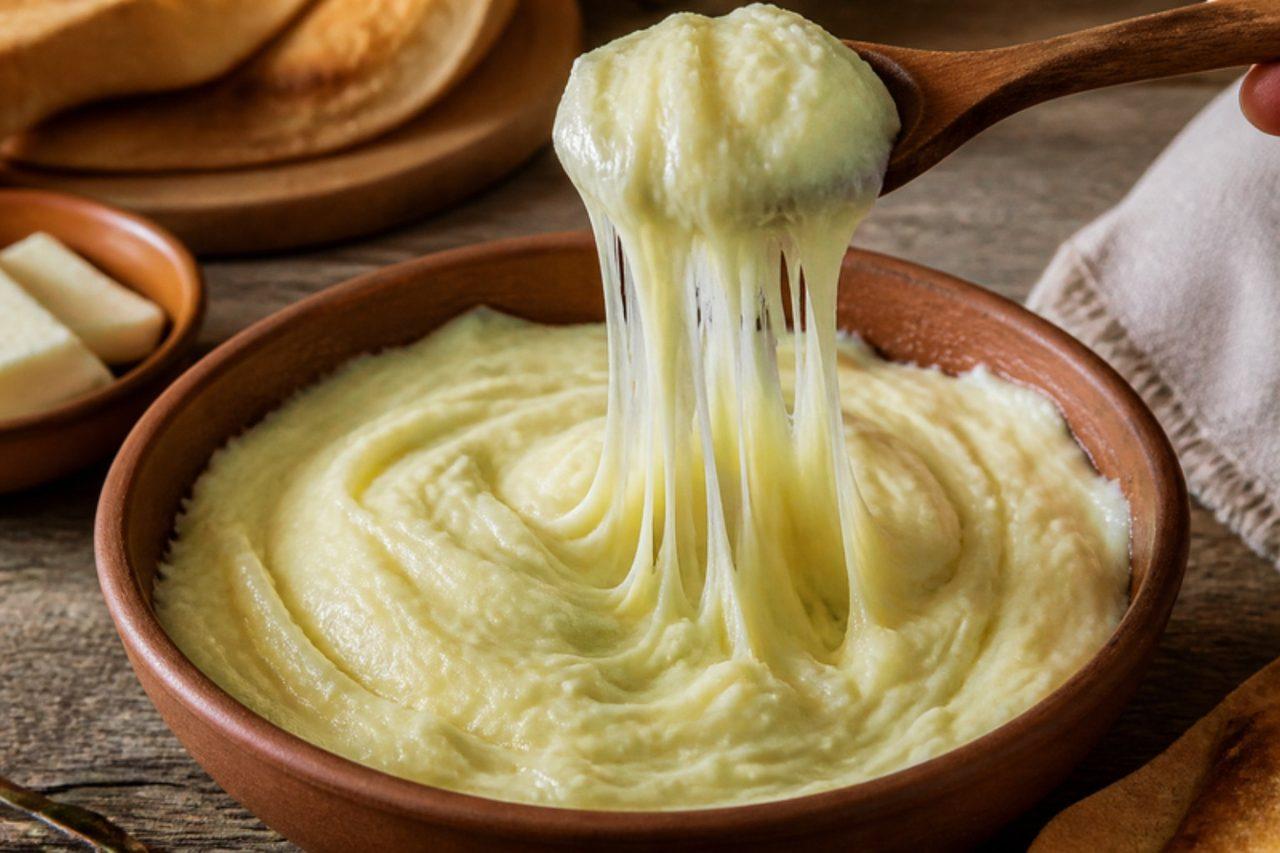
TashmijabiMashed potatoes with stretchy cheese
Potatoes grow well in the cold valleys of Svaneti, and tashmijabi is how families around Mestia turn them into a feast dish: they are mashed hot, then beaten with handfuls of young sulguni until the purée becomes glossy and stretches from the spoon in long strands. It is served with grilled meat, kubdari or simply with pickles and Svan salt. A common mistake is letting the potatoes cool before adding the cheese; they must be piping hot for the cheese to melt and stretch. Chef's tip: keep the pan on a low heat while you beat, and use a firm wooden spoon. Most sulguni uses animal rennet; choose a vegetarian one or use mozzarella.
 Georgian


Yorkshire puddings
In Yorkshire the pudding was once served first, on its own with gravy, to fill people up before the meat; today these puffed, crisp-edged cups sit beside the roast at Sunday lunch all over England. The batter is nothing but eggs, flour and milk, and the trick is in the heat: smoking-hot fat in the tin and a hot oven. Serve with onion gravy for a vegetarian roast. Chef's tip: rest the batter for at least 30 minutes, which helps the puddings rise tall and even.
 British
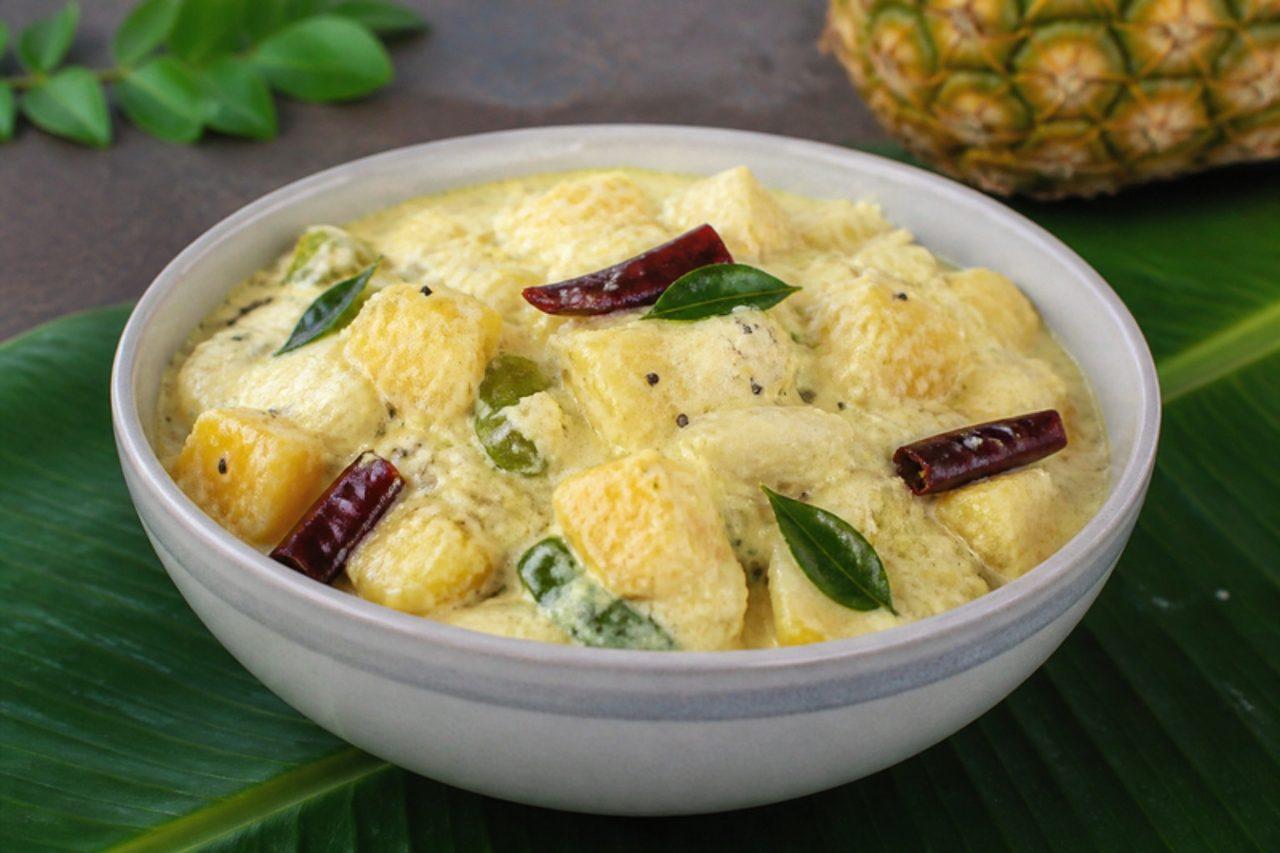
Pineapple pachadiPineapple in yogurt and coconut
Sadya etiquette puts pachadi next to the kichadi, and pineapple is the festive favourite, especially in central Kerala around Kottayam and Thrissur, where it appears at Onam, weddings and Vishu. Ripe pineapple is simmered briefly with turmeric, chilli and a little sugar, then folded into a paste of coconut, green chilli and raw mustard seed and loosened with whisked curd. The result is sweet, tangy and gently pungent from the ground mustard, with a crackling coconut-oil tadka on top. Serve it cool alongside rice, sambar and thoran, or as a side with appam. The mistake to avoid is adding the yogurt to a hot pan: it splits into grainy curds, so take the pineapple off the heat and let it cool first. Chef's tip: grind the mustard seeds raw with the coconut, but only briefly; over-ground mustard turns bitter.
 Indian