
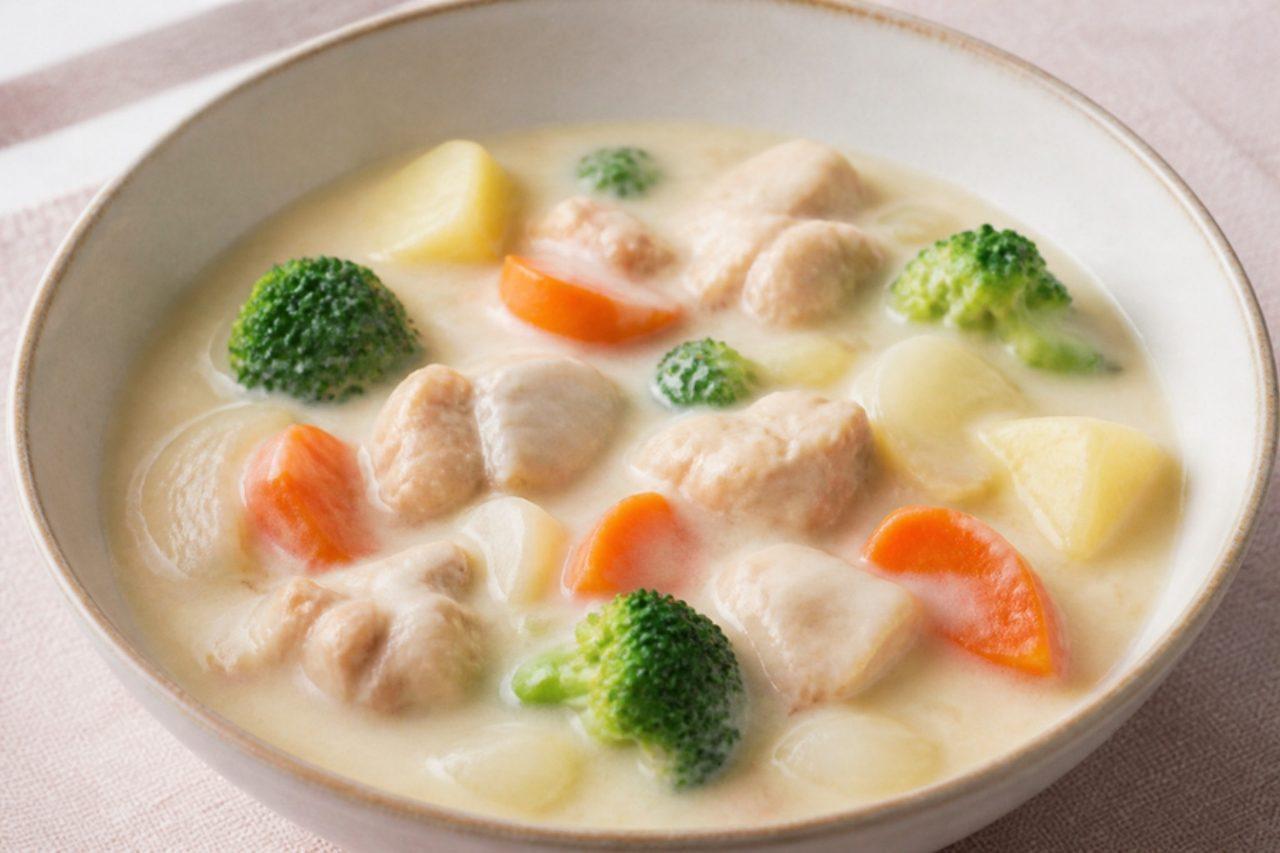
AI-generated image
Japanese cream stew (chicken white stew)
クリームシチュー · Chicken and vegetables in a milky white sauce

When the first cold evenings arrive in Hokkaido, where dairy farming is king, and then across the rest of Japan, home cooks make cream stew: chunks of chicken thigh, potato, carrot and onion simmered in stock and finished with a silky milk sauce, eaten with rice or bread. It was a school lunch favourite after the war and is still one of the gentlest, most child-friendly Japanese dinners. This version makes the roux from scratch instead of using a block. A common mistake is adding cold milk to a fast boil, which can make it split; stir it in over a low heat. Chef's tip: add the broccoli only in the last 3 minutes so it stays bright green.
- Total time
- 50 min
- Difficulty
- easy
- Serves
- 4
Ingredients
- 14 oz boneless chicken thighsskinned, in 3 cm pieces
- 1 tsp salt
- ¼ tsp white pepper
- 1 tbsp vegetable oil
- 1 onionin wedges
- 2 carrotsin chunks
- 3 waxy potatoesabout 400 g, in large chunks
- 1 ¾ cups chicken stock
- 5 ½ oz broccolismall florets
For the white sauce
- 1 ⅜ oz butter
- 1 ⅜ oz plain flour
- 1 ¾ cups milk
Shop this recipe on Amazon
Fresh ingredients (6)
Links open Amazon in a new tab. As an Amazon Associate, WhatToEat.Today earns from qualifying purchases.
Method
0/6 doneStep 1: Season 14 oz boneless chicken thighs with half the ½ tsp salt and ¼ tsp white pepper. Heat 1 tbsp vegetable oil in a large pot over a medium heat and cook the chicken until white on the outside.
4 minStep 3: Add 3 waxy potatoes and 1 ¾ cups chicken stock, bring to the boil, skim, then cover and simmer until the potatoes are just tender and the chicken is cooked to 165°F.
15 minStep 4: In a small pan melt 1 ⅜ oz butter, stir in 1 ⅜ oz plain flour and cook over a low heat for 2 minutes without browning. Gradually whisk in 1 ¾ cups milk until smooth and thick.
6 minStep 6: Taste for salt and serve hot with rice or bread.
Nutrition per serving
- Calories
- 440 kcal
- Protein
- 28 g
- Carbs
- 34 g
- Fat
- 20 g
- Fibre
- 5 g
Nutrition values are estimates.
KrazyBadal
Good to know
- How long does japanese cream stew (chicken white stew) take?
- About 50 minutes in total: 15 minutes to prepare and 35 minutes to cook.
- How many people does it serve?
- 4 as written. Change the servings above the ingredients and every amount scales to match.
- What can I use instead of boneless chicken thighs?
- Chicken breast, same weight (cook a few minutes less so it stays juicy).
- What can I use instead of onion?
- 2 shallots per onion.
Reviews
No reviews yet. Be the first to cook it.
Rate this recipe
Sign in to rate and review this recipe.
You might also like

Miso soup
Miso soup (味噌汁) is drunk every day in homes all over Japan, at breakfast as well as dinner, beside a bowl of rice. The base is dashi; this vegan version uses kombu and dried shiitake instead of bonito, which gives it a deep, rounded flavour. Silken tofu and wakame seaweed are the classic fillings. It takes ten minutes; just remember not to boil the miso. Chef's tip: add the miso at the very end and never let it boil. Boiling kills the miso's fresh, fermented aroma; Japanese cooks say the soup should only 'smile', with the surface barely trembling.


Yaki onigiriGrilled rice balls
Yaki onigiri (焼きおにぎり) are rice balls grilled until they form a crisp, toasty crust, then brushed with soy sauce glaze. They are eaten all over Japan, at izakaya, at barbecues and from the freezer section, as a snack or with miso soup. The inside stays soft and steamy while the outside crackles. Best eaten hot, straight from the pan. Chef's tip: let the shaped rice balls dry for 10 minutes before they go in the pan. A drier surface forms a better crust and won't stick, and the glaze goes on only at the end so it doesn't burn.
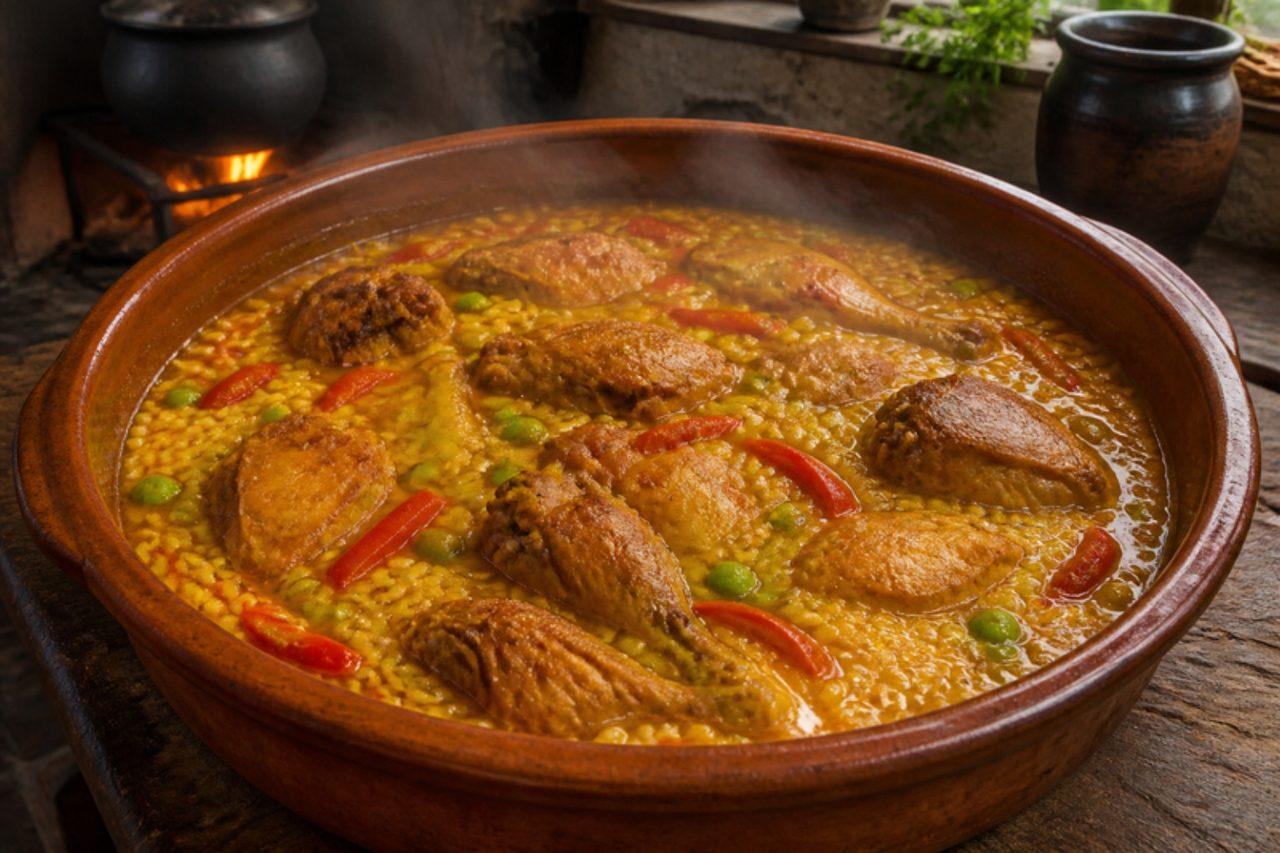
Arroz con pitu de caleyaSoupy rice with chicken
A pitu de caleya is a cockerel raised free in the lanes, or caleyas, of rural Asturias; its firm, flavourful meat needs long stewing, and families around Villaviciosa and Grado still cook it for feast days. The stew is often finished as a soupy rice, so the deep chicken juices go into every grain. Use the best free-range chicken you can find. The braise includes dry white wine; replace it with extra stock and a squeeze of lemon if you want it alcohol-free. Chef's tip: brown the chicken slowly and deeply; that colour is where the flavour of the whole pot comes from.
 Spanish