
AI-generated image
Jingalov hats
Wild greens flatbread
Zhingyalov khats: Artsakh flatbread stuffed with wild greens


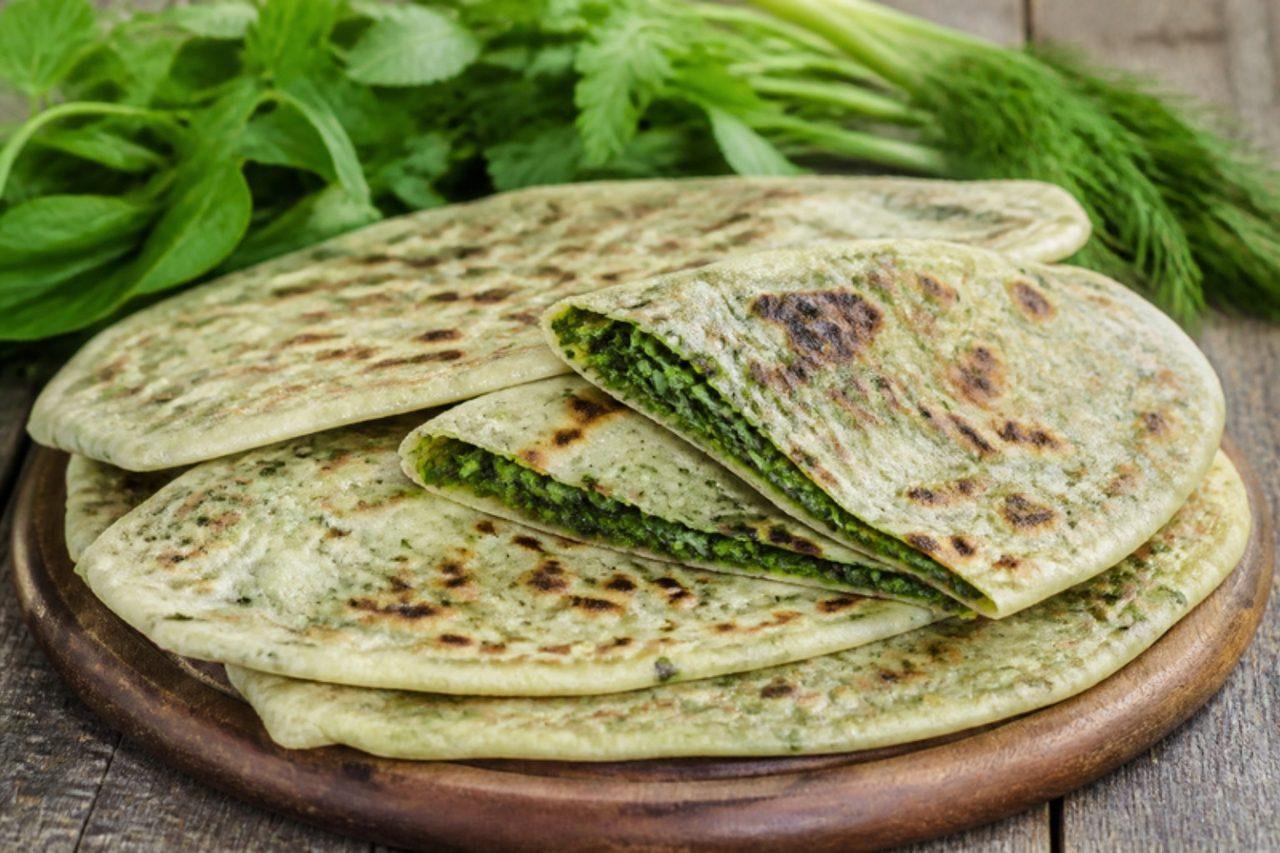
Jingalov hats comes from Artsakh (Nagorno-Karabakh), where women in Stepanakert markets would roll the dough around armfuls of greens and cook the flat parcels on a hot saj in front of the queue. The filling is nothing but herbs and leaves, ten to twenty kinds when spring greens are at their best: sorrel, spinach, dill, coriander, spring onion, beet leaves, mint and nettle, wilted with oil and salt. The bread is eaten hot from the griddle at Easter and through Lent, folded in half and dripping with green juices. Displaced families now sell it in Yerevan, where it has become a street-food symbol of home. Chef's tip: mix at least six different greens and keep some sharp ones such as sorrel or lemon juice in the mix; with spinach alone the filling tastes flat.
- Total time
- 65 min
- Difficulty
- medium
- Serves
- 6
Ingredients
For the dough
- 14 oz plain flour
- 1 cup warm water
- 1 tsp salt
For the filling
- 7 oz spinachwashed and dried
- 3 ½ oz sorrel or chard
- 1 ⅜ oz dill
- 1 ⅜ oz coriander
- 1 oz parsley
- ½ oz mint leaves
- 4 tbsp sunflower oil
- 1 tbsp lemon juice (optional)if not using sorrel
- 1 tsp salt
- ½ tsp chilli flakes (optional)
Shop this recipe on Amazon
Spices & pantry
Fresh ingredients (8)
Links open Amazon in a new tab. As an Amazon Associate, WhatToEat.Today earns from qualifying purchases.
Method
0/8 doneStep 1: Mix 14 oz plain flour, 1 tsp salt and 1 cup warm water into a soft dough and knead for 8 minutes, until smooth and supple, softer than bread dough. Cover and rest for 30 minutes.
8 minStep 2: While it rests, chop 7 oz spinach, 3 ½ oz sorrel or chard, 3 ½ oz beetroot leaves or more chard, 1 ⅜ oz dill, 1 ⅜ oz coriander, 1 oz parsley, ½ oz mint leaves and 6 spring onions very finely; a big knife works better than a processor, which turns them to paste.
Step 3: Put all the greens in a large bowl with 4 tbsp sunflower oil, 1 tsp salt, ½ tsp chilli flakes and 1 tbsp lemon juice. Squeeze with your hands for a minute so they wilt and release a little juice; the pile should shrink by about a third.
Step 4: Divide the dough into 6 balls. Roll one into a thin oval about 30 x 20 cm. Spread a sixth of the greens over one half, leaving a 2 cm border.
Step 5: Fold the empty half over, then pinch the edges together, folding them over themselves so they are well sealed. Press gently with your palm to spread the filling and flatten the parcel to about 1 cm thick.
Step 6: Heat a large dry frying pan or griddle over a medium-high heat. Cook one parcel at a time for 2–3 minutes per side, until the dough has charred brown spots, puffs in places and the greens inside turn bright and steaming.
5 minStep 7: One mistake is overfilling or using wet greens: the juice leaks, burns on the pan and the bread tears. Dry the leaves well after washing and keep the layer no thicker than 2 cm.
Step 8: Stack the cooked breads on a plate under a towel while you cook the rest. Serve hot, folded in half.
20 min
Nutrition per serving
- Calories
- 275 kcal
- Protein
- 8 g
- Carbs
- 48 g
- Fat
- 8 g
- Fibre
- 5 g
Nutrition values are estimates.
KrazyBadal
Good to know
- How long does jingalov hats take?
- About 65 minutes in total: 40 minutes to prepare and 25 minutes to cook.
- How many people does it serve?
- 6 as written. Change the servings above the ingredients and every amount scales to match.
- Is it vegan?
- Yes. It has no meat, fish, dairy or eggs.
- What can I use instead of plain flour?
- Self-raising flour, same amount (then leave out the baking powder).
- What can I use instead of coriander?
- Flat-leaf parsley with a little mint.
Reviews
No reviews yet. Be the first to cook it.
Rate this recipe
Sign in to rate and review this recipe.
You might also like
SalufPuffy flatbread
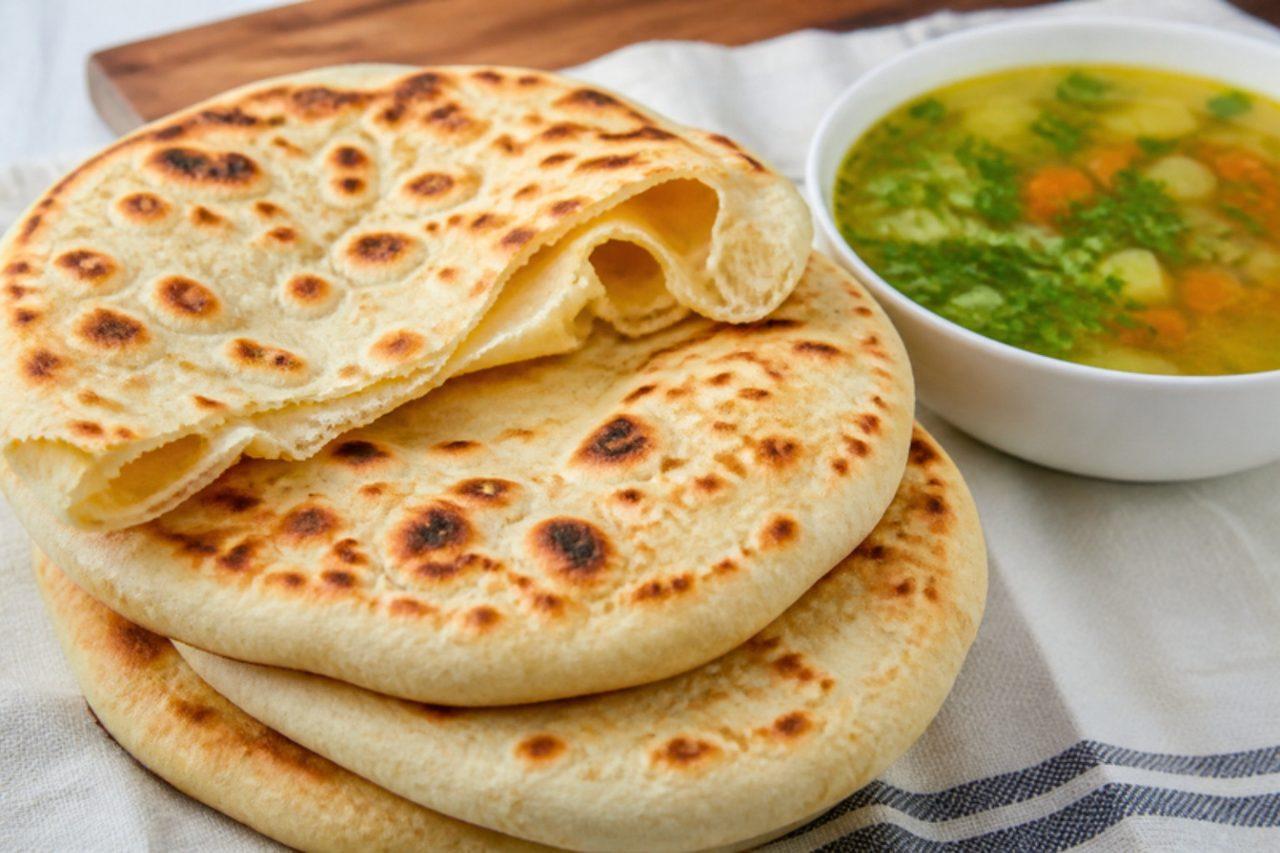
Saluf is the everyday bread of Yemenite Israelis, slapped onto a hot pan or taboon in Rosh HaAyin and Sha'arayim in Rehovot and eaten with marak temani, hilbe and zhug. It is soft and blistered, thicker than pita and with no pocket, made to tear and dunk. Home cooks often roll it too thin, which gives a cracker; it should be about 1 cm thick so it stays pillowy. Chef's tip: cook it under a lid on a very hot dry pan for the first minute, which traps steam and puffs it the way a taboon does.
 Israeli


ChipaCheese bread rings
In Paraguay you hear 'chipa, chipa!' called by vendors with big baskets on buses and street corners, and every family bakes it for Holy Week, when chipa is the food of Good Friday. Cassava starch, a little cornmeal, butter, eggs and a lot of hard cheese are kneaded into a dough scented with aniseed, shaped into rings or small rolls and baked in a hot oven, traditionally a domed clay tatakua. It's chewy, crisp outside and best warm with cocido (toasted yerba tea). Chef's tip: the dough should feel soft and slightly greasy; add milk a spoon at a time, as too much makes the chipa spread flat.
 Paraguayan

Akki rottiRice flour flatbread
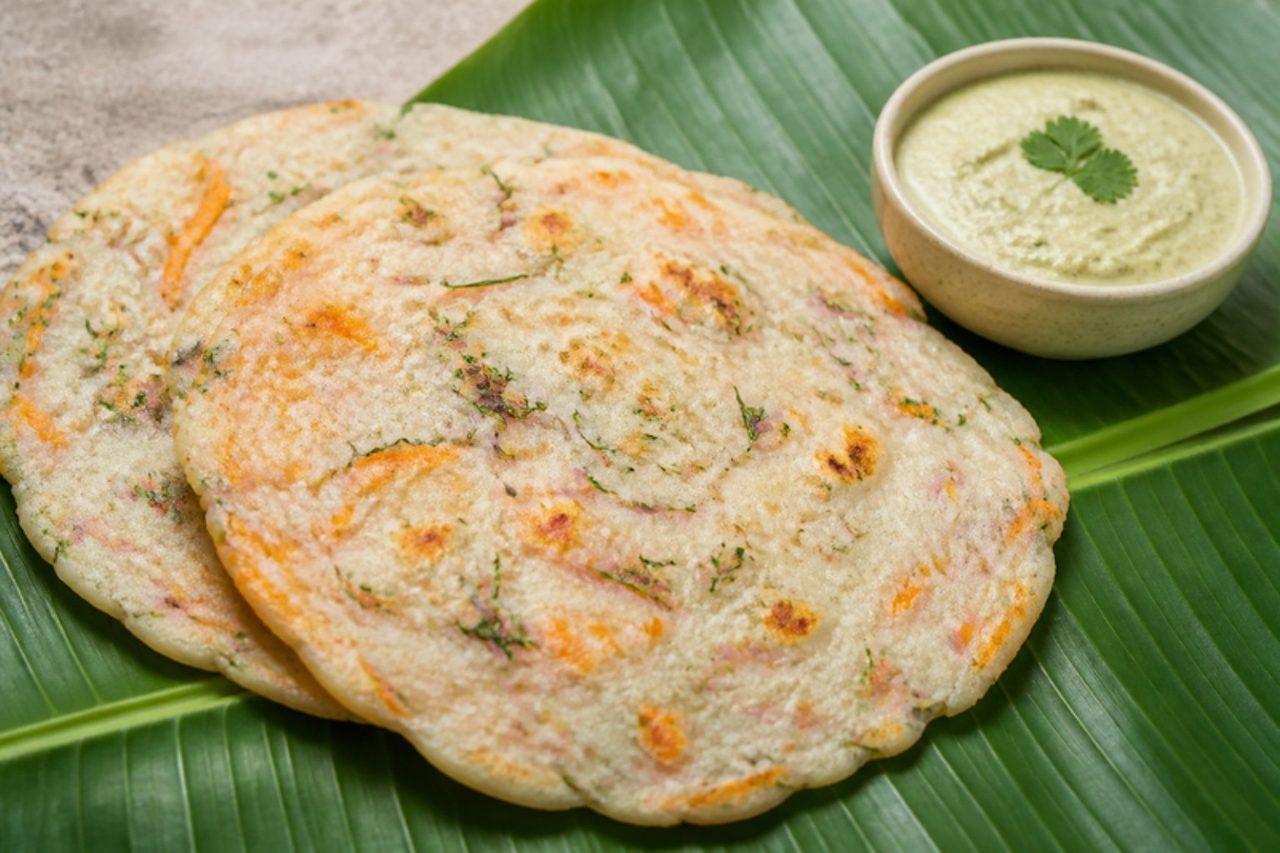
Akki rotti is the breakfast of Bengaluru and the old Mysore country: rice flour mixed with grated vegetables, dill, coconut and green chilli, patted out thin by hand straight onto a cold pan, then cooked until speckled and crisp at the edges. Every home has its own mix; dill (sabbasige soppu) is the classic flavour, but cucumber, carrot or fenugreek all turn up. It is eaten hot off the pan with coconut chutney or a dab of ghee and spicy chutney powder, and it is naturally gluten-free. Chef's tip: work with two pans in turn, patting the next rotti onto a cooled pan while the first one cooks; patting onto a hot pan burns your fingers and gives an uneven rotti.
 Indian