
 Indian
 Vegan
 Gluten free
Jolpai achar
Indian olive pickle
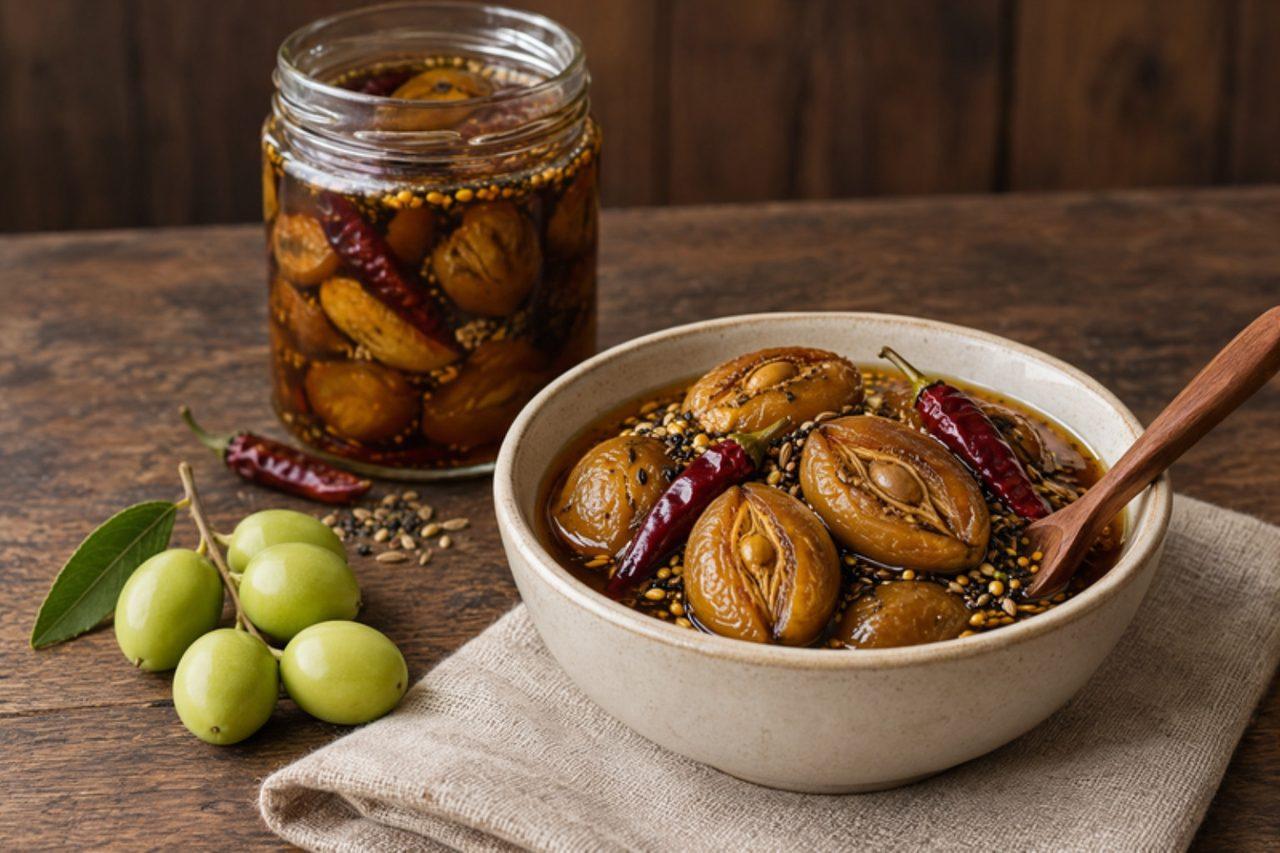
জলপাইয়ের আচার: boiled and crushed Indian olives cooked with jaggery, mustard oil and panch phoron into a glossy winter pickle
Jolpai, the small, hard, sour Indian olive, appears in Bengal and Bangladesh markets from October to December, and no winter afternoon is complete without a jar of jolpai achar warming in the sun. It is no relation to the Mediterranean olive: it is tart and astringent, almost like a green plum. The olives are boiled, lightly crushed so the flesh splits from the stone, then cooked in mustard oil with panch phoron, dried chilli and plenty of jaggery. The pickle is sticky, sweet-sour and slightly tannic, with soft flesh to nibble off the stones. Eat it with khichuri on a cold evening, with dal-bhaat, or straight from the jar as a snack. The common mistake is under-boiling: the olives must be soft enough to press flat, or the syrup cannot get in and they stay bitter. It is done when the syrup is thick and shiny and clings to the olives. Very sweet and acidic, it keeps a month in a cool cupboard in winter and 3 months in the fridge. Abroad, look for frozen jolpai in Bangladeshi grocers; firm, sour green plums are the closest substitute. Chef's tip: keep a few olives whole and only scored; they give a nicer bite.
- Prep
- 15 min
- Cook
- 35 min
- Difficulty
- Easy
- Serves
- 15
- Per serving
- 140 kcal
Ingredients
For the olives
- 1 ⅛ lb Indian olives (jolpai)fresh or frozen; or firm, sour green plums
- 4 ¼ cups water
- 1 tsp ground turmeric
- 1 ½ tsp salt
For the pickle
- 4 tbsp mustard oil
- 2 tsp panch phoron
- 1 tsp red chilli powder
- 9 oz jaggerygrated
- ¾ cup water
Tick what you have; the rest goes in the basket.
Method
0/8 doneStep 1: Prepare the jar: wash jar and lid in hot soapy water, rinse well, then stand the jar upside down in a 250°F oven for 10 minutes (or boil jar and lid for 10 minutes and let them dry upside down). Let it cool completely; jar, lid, bowls and spoons must be bone dry, because a single drop of water is the usual reason a pickle goes mouldy.
Step 2: Wash the 1 ⅛ lb Indian olives (jolpai). Bring 4 ¼ cups water to the boil with 1 tsp ground turmeric and half the ¾ tsp salt, add the olives and simmer on a medium heat until soft enough to squash between your fingers, 10–12 minutes.
12 minStep 3: Drain and spread out to cool and dry. Press each olive lightly with the flat of a knife or a pestle so it splits and loosens from the stone, leaving a few just scored.
10 minStep 4: Dry-roast half the 1 tsp panch phoron in a pan over a medium heat until fragrant, about 1 minute. Cool and grind.
2 minStep 5: Heat 4 tbsp mustard oil in a heavy pan over a medium-high heat until it smokes lightly, then lower to medium. Add the remaining 1 tsp panch phoron and 4 dried red chillies and stir until crackling.
2 minStep 6: Add the olives, the remaining ¾ tsp salt and 1 tsp red chilli powder and stir-fry for 3 minutes until glossy.
3 minStep 7: Add 9 oz jaggery and ¾ cup water. Cook on a medium-low heat, stirring often, for 12–15 minutes, until the syrup thickens, turns shiny and clings to the olives. Stir in the ground panch phoron.
15 minStep 8: Cool completely, then spoon into the dry jar. Keep a month in a cool cupboard in winter or 3 months in the fridge, with a dry spoon every time. Throw it away if mould appears, it fizzes or it smells fermented.
KrazyBadal
Reviews
No reviews yet. Be the first to cook it.
Rate this recipe
Sign in to rate and review this recipe.
You might also like
Chana masala
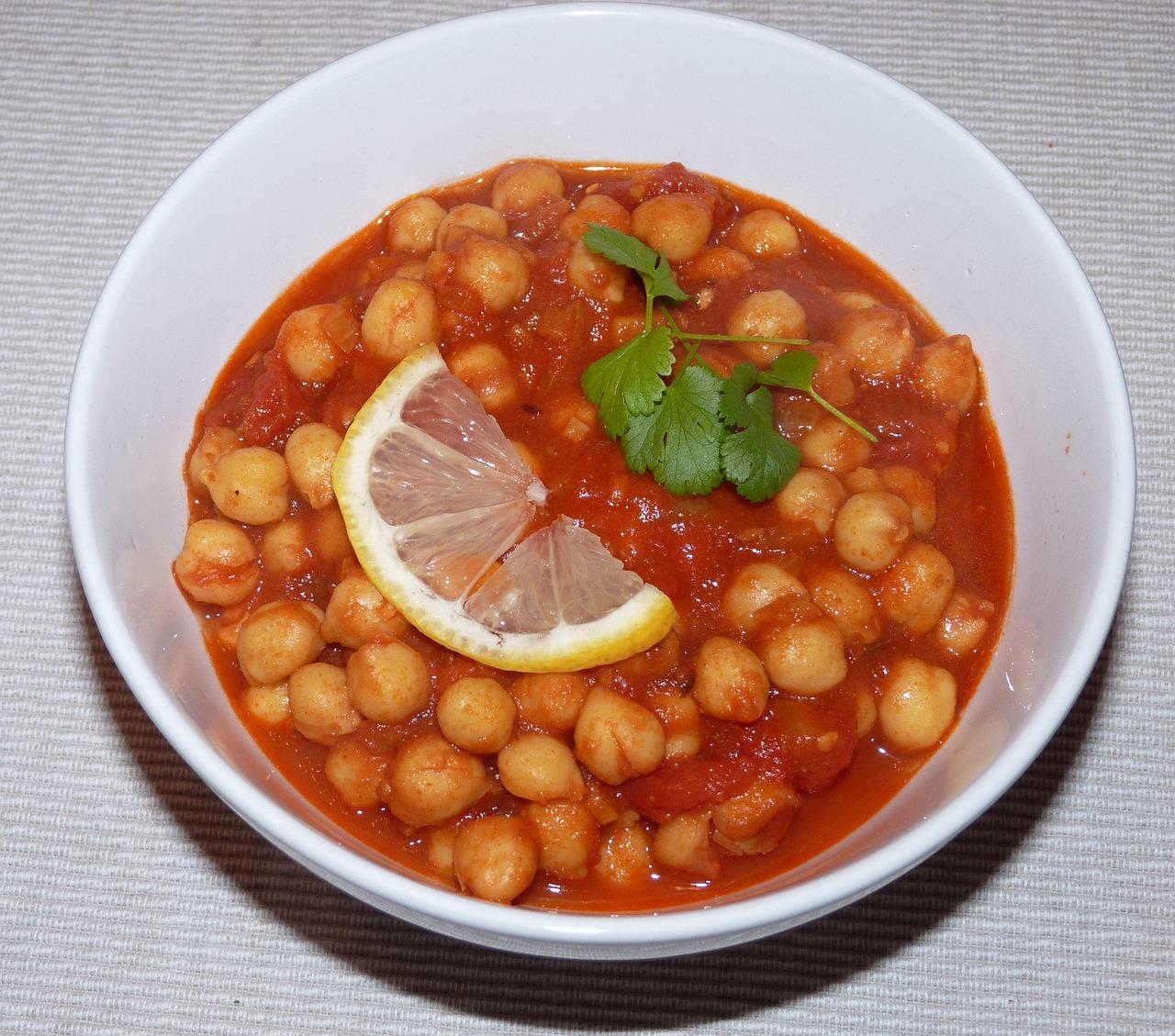
A North Indian staple that comes together from the store cupboard. Toasted cumin, slow-softened onion and a good spoonful of garam masala give tinned chickpeas real depth. Serve with rice, naan or a stack of warm rotis.
Kaju curryCashew curry
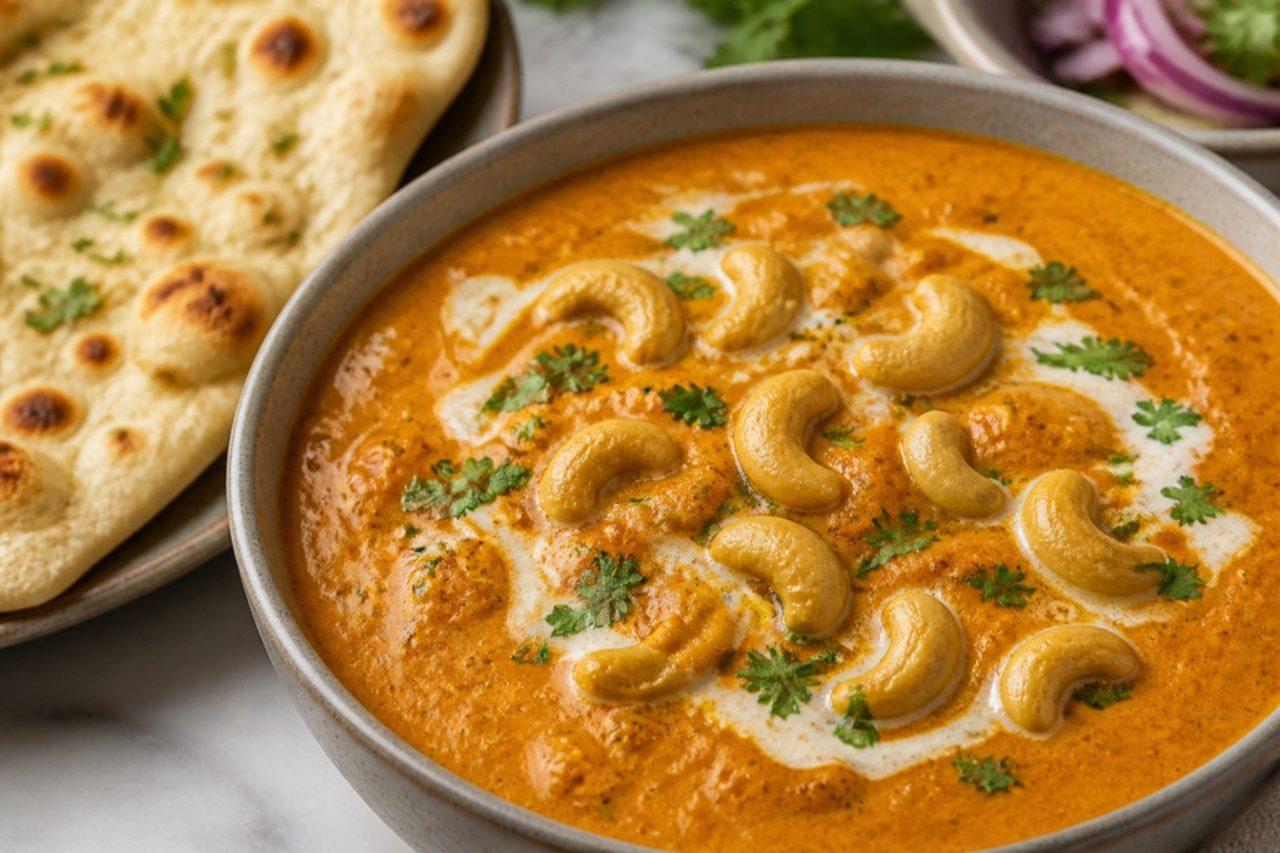
Walk along any wedding buffet in Pune, Mumbai or Ahmedabad and there is usually a chafing dish of kaju curry near the paneer, with guests going back for seconds. Whole cashews are fried in ghee until golden, which makes them crunchy outside and buttery inside, then folded into a rich onion and tomato gravy thickened with more cashews, finished with cream and kasuri methi. The gravy is orange, smooth and rounded with a touch of sweetness; it should taste of roasted nuts and gentle spice, not fire. Gujarati restaurants often serve a spicier Kathiyawadi version, but the wedding style here is the mild one. Eat it with butter naan, tandoori roti or jeera rice. Common mistake: adding the fried cashews too early; they soak up the gravy and turn soft, so fold them in just before serving. Chef's tip: keep a few fried cashews back and scatter them on top at the table so every spoonful has some crunch.

Bagara bainganBaby aubergines in peanut sesame sauce
Bagara baingan is a Hyderabadi wedding dish of small aubergines cooked whole in a dark, tangy gravy of roasted peanuts, sesame, dried coconut and tamarind. Unlike a Gujarati stuffed brinjal, the aubergines here are only quartered at the base and fried until silky, then left to soak up a thin-but-rich sauce that is finished with a tempering, the 'baghar' that gives the dish its name. It's sour, nutty and gently spiced, and is served with biryani, bagara rice or plain rice. Chef's tip: choose small, glossy purple aubergines that feel heavy for their size; soft, light ones are full of seeds and turn mushy before the gravy has a chance to cling.