
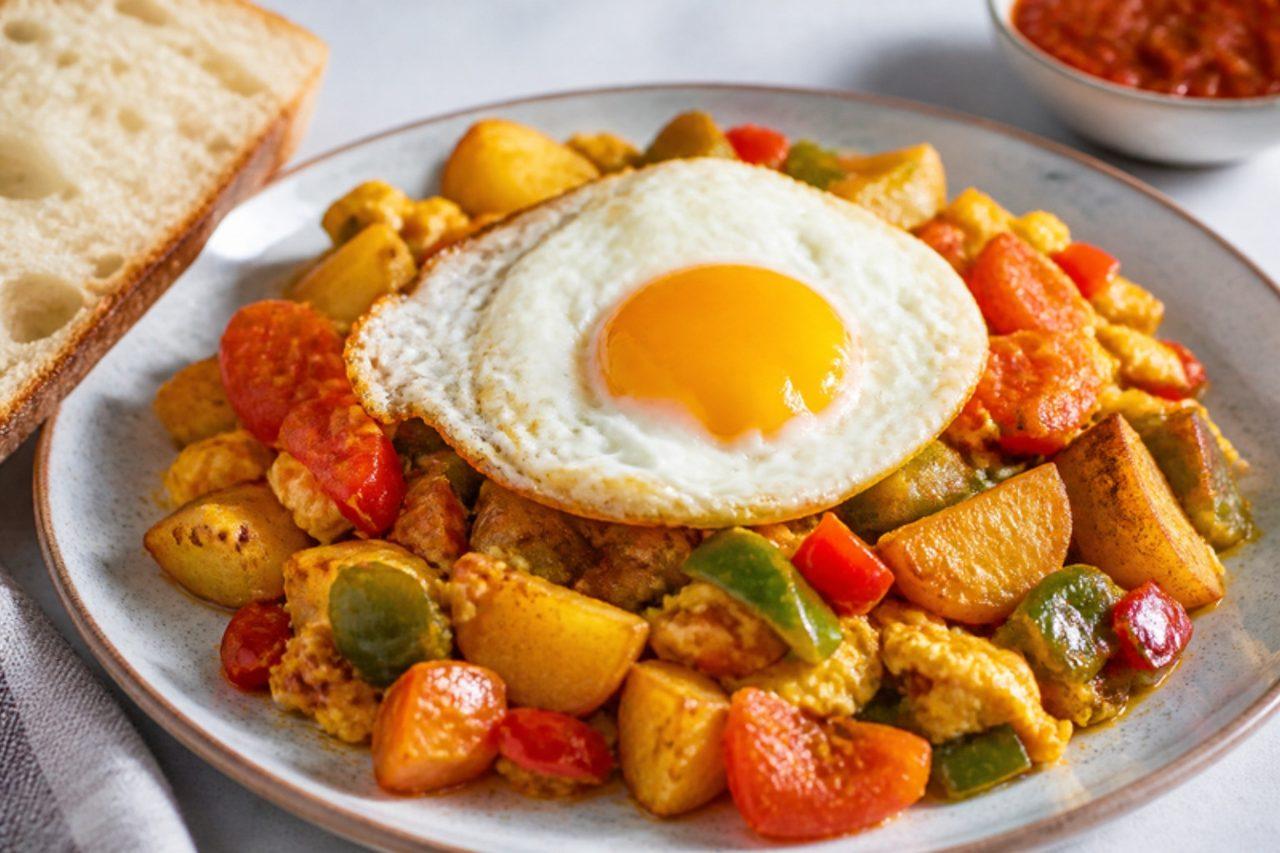
AI-generated image
Kafteji
Fried vegetables with egg
Tunis street-food plate of fried vegetables chopped with egg and harissa


Kafteji is a Tunis sandwich-shop classic: fried peppers, tomato, squash and potato chopped together on a board with a cleaver, mixed with harissa and fried eggs, and eaten from a plate or stuffed into a baguette at lunchtime. Stalls near Bab Souika and the central market make it to order, and the sound of the chopping is part of the show. Chef's tip: fry each vegetable separately; they cook at different speeds, and crowding them makes everything greasy and soft.
- Total time
- 55 min
- Difficulty
- medium
- Serves
- 4
Ingredients
- 2 cups sunflower oil for frying
- 2 potatoesin 1.5 cm dice
- 10 ½ oz pumpkin or butternut squashin 1.5 cm dice
- 2 green peppersin strips
- 2 tomatoeshalved
- 4 eggs
- 2 tsp harissa
- ½ tsp ground caraway
- 1 tsp salt
- 1 baguette (optional)
Shop this recipe on Amazon
What you'll need
Fresh ingredients (4)
Links open Amazon in a new tab. As an Amazon Associate, WhatToEat.Today earns from qualifying purchases.
Method
0/5 doneStep 1: Heat 2 cups sunflower oil for frying in a deep pan to 350°F. Fry 2 potatoes for 8–10 minutes until golden and tender; lift out. Fry 10 ½ oz pumpkin or butternut squash for 5–6 minutes until soft and lightly coloured; lift out.
16 minStep 2: Fry 2 green peppers for 3–4 minutes until blistered, then 2 tomatoes, cut side down, for 2–3 minutes until soft. Drain everything well on kitchen paper.
7 minStep 3: Pour off all but 2 tbsp of oil into a frying pan and fry 4 eggs over a medium heat until the whites set but the yolks are still soft.
4 minStep 4: Pile the vegetables and eggs on a large board with 2 tsp harissa, ½ tsp ground caraway and 1 tsp salt. Chop and mix with a big knife or mezzaluna until it is a rough mash with pieces still visible. Common mistake: blending it smooth — kafteji should have texture.
Step 5: Serve warm on plates or in split 1 baguette.
Nutrition per serving
- Calories
- 380 kcal
- Protein
- 10 g
- Carbs
- 30 g
- Fat
- 25 g
- Fibre
- 5 g
Nutrition values are estimates.
KrazyBadal
Good to know
- How long does kafteji take?
- About 55 minutes in total: 20 minutes to prepare and 35 minutes to cook.
- How many people does it serve?
- 4 as written. Change the servings above the ingredients and every amount scales to match.
- Is it vegetarian?
- Yes. It has no meat or fish.
- Is it very spicy?
- It has some heat. Use less chilli for a milder version, or more if you like it hot.
- What can I use instead of potatoes?
- Sweet potato, same weight (sweeter, cooks a little faster).
- What can I use instead of tomatoes?
- Tinned chopped tomatoes: a 400g tin for about 6 tomatoes (in cooked dishes, not salads).
Reviews
No reviews yet. Be the first to cook it.
Rate this recipe
Sign in to rate and review this recipe.
You might also like

Caramelised clay-pot tofu and mushroomsBraised tofu and mushrooms
Kho is the slow braise of the Mekong Delta: food simmered in a little clay pot (nồi đất) with dark caramel and seasoning until the sauce is sticky and the flavours go deep. This vegetarian cousin of cá kho tộ (braised fish) uses golden tofu and meaty mushrooms in place of fish, cooked in coconut water, as cooks do in the south, and finished with plenty of black pepper. Serve it bubbling in its pot with steamed rice and a sour soup or plain boiled vegetables. Chef's tip: take the caramel (nước màu) to a deep mahogany, darker than you think, just before it smokes; pale caramel only tastes sweet, while dark caramel gives the bittersweet, smoky flavour of a real kho.
 Vietnamese


BsissaRoasted barley flour with olive oil
A tin of bsissa sits in many Tunisian kitchen cupboards, from Tunis flats to farmhouses in the south: a finely ground flour of roasted barley, roasted chickpeas and spices such as coriander, fennel and aniseed. In the morning a few spoonfuls are worked with olive oil and something sweet into a nutty, crumbly paste, or stirred with water into a thick drink, and it keeps you going until lunch. Travellers and pilgrims once carried it for the road. Roasting your own flour takes 15 minutes and makes a jar that lasts weeks. Sugar and dates keep it vegan; some families use honey. Chef's tip: roast the flours separately over a low heat and stir constantly; the moment they smell like toasted biscuits and turn light tan, tip them out of the pan.

Banatage (tuna potato croquettes)
Golden, crunchy outside and soft inside, banatage are mashed-potato croquettes hiding a spoon of tuna, parsley and harissa, rolled in breadcrumbs and fried. They come out during Ramadan beside the brik and chorba, are tucked into lunchboxes and are a favourite with children all over Tunisia. Leftover mash works well, as long as it is firm. Serve them hot with lemon wedges, a salad or a dab of harissa. Chef's tip: dry the boiled potatoes in the hot pan for a minute before mashing; wet, watery mash is the usual mistake and makes croquettes that split open in the oil.