
AI-generated image
Kalakand
Milk cake
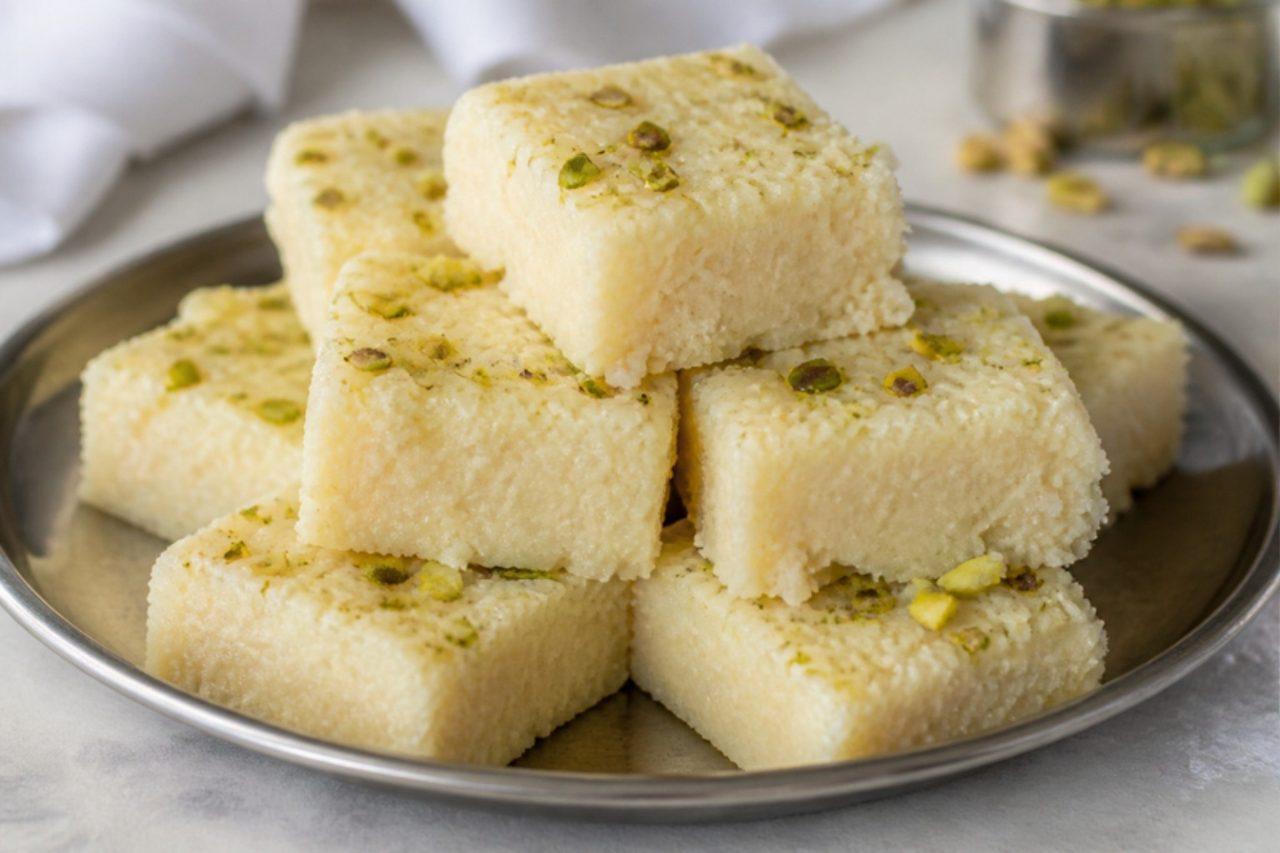
कलाकंद: soft, grainy Alwar-style milk cake of fresh chhena cooked into reduced milk and sugar, set and topped with pistachios (plus 3 hours setting)


Alwar in Rajasthan built its reputation on kalakand, and the town's sweet shops still sell it by the slab, moist and crumbly, somewhere between fudge and fresh cheese. The texture comes from two dairy elements cooked together: fresh chhena, curdled with lemon so it stays in fine, soft crumbs, and full-fat milk reduced to a thick cream. Sugar loosens it, then it is cooked down until it just holds together and spread to set. It tastes of sweet milk and cardamom, with tiny grains that melt as you chew. It is a favourite for Diwali, Raksha Bandhan and any good news. Serve it at room temperature, cut into squares. Chef's tip: stop cooking while it still looks a little moist; kalakand firms up a lot as it cools, and overcooking turns it dry and chewy.
- Total time
- 60 min
- Difficulty
- medium
- Serves
- 8
Ingredients
For the chhena
- 4 ¼ cups full-fat milk
- 2 tbsp lemon juicemixed with 2 tbsp water
For the kalakand
- 4 ¼ cups full-fat milk
- 4 oz sugar
- ½ tsp ground green cardamom
- 1 tsp gheefor greasing
- 2 tbsp pistachiosslivered
Shop this recipe on Amazon
What you'll need
Spices & pantry
Fresh ingredients (2)
Links open Amazon in a new tab. As an Amazon Associate, WhatToEat.Today earns from qualifying purchases.
Method
0/6 doneStep 1: Pour 4 ¼ cups full-fat milk into a wide, heavy kadhai and bring to the boil over a medium-high heat. Lower to a steady simmer and reduce for 30–35 minutes, stirring and scraping the sides every few minutes, until it is about one-third of its volume and thick like custard.
35 minStep 2: Meanwhile, bring 4 ¼ cups full-fat milk to the boil in another pan, turn off the heat and wait 1 minute. Add 2 tbsp lemon juice a little at a time, stirring gently, just until the milk splits into soft curds and pale greenish whey.
5 minStep 3: Pour the curds into a muslin-lined sieve, rinse with cold water to wash off the lemon, and squeeze lightly. Keep the chhena moist and crumbly, not pressed dry. Common mistake: boiling the milk hard after adding acid; the curds tighten and the kalakand turns rubbery.
Step 4: Add the chhena to the reduced milk and stir over a medium-low heat for 5 minutes. Add 4 oz sugar; the mixture loosens. Keep stirring for 8–10 minutes until it thickens again, comes together and just starts to leave the sides of the pan but still looks moist.
15 minStep 5: Stir in ½ tsp ground green cardamom. Grease an 18 cm tray with 1 tsp ghee, spread the mixture about 2.5 cm thick and level it gently without pressing hard.
Step 6: Scatter over 2 tbsp pistachios and press them in lightly. Leave to set at room temperature for 3 hours, then cut into 16 squares. Keep in the fridge for up to 4 days and bring to room temperature to serve.
Nutrition per serving
- Calories
- 260 kcal
- Protein
- 11 g
- Carbs
- 25 g
- Fat
- 13 g
- Fibre
- 0 g
Nutrition values are estimates.
KrazyBadal
Good to know
- How long does kalakand take?
- About 60 minutes in total: 15 minutes to prepare and 45 minutes to cook.
- How many people does it serve?
- 8 as written. Change the servings above the ingredients and every amount scales to match.
- Is it vegetarian?
- Yes. It has no meat or fish.
- Is it gluten free?
- Yes, as written. Check the labels on stock, sauces and spice mixes, which sometimes contain gluten.
- What can I use instead of full-fat milk?
- Oat, soy or almond milk, same amount (use unsweetened for savoury dishes).
- What can I use instead of lemon juice?
- Lime juice, same amount.
Reviews
No reviews yet. Be the first to cook it.
Rate this recipe
Sign in to rate and review this recipe.
You might also like
Paneer biryaniRice and moong dal in coconut milk
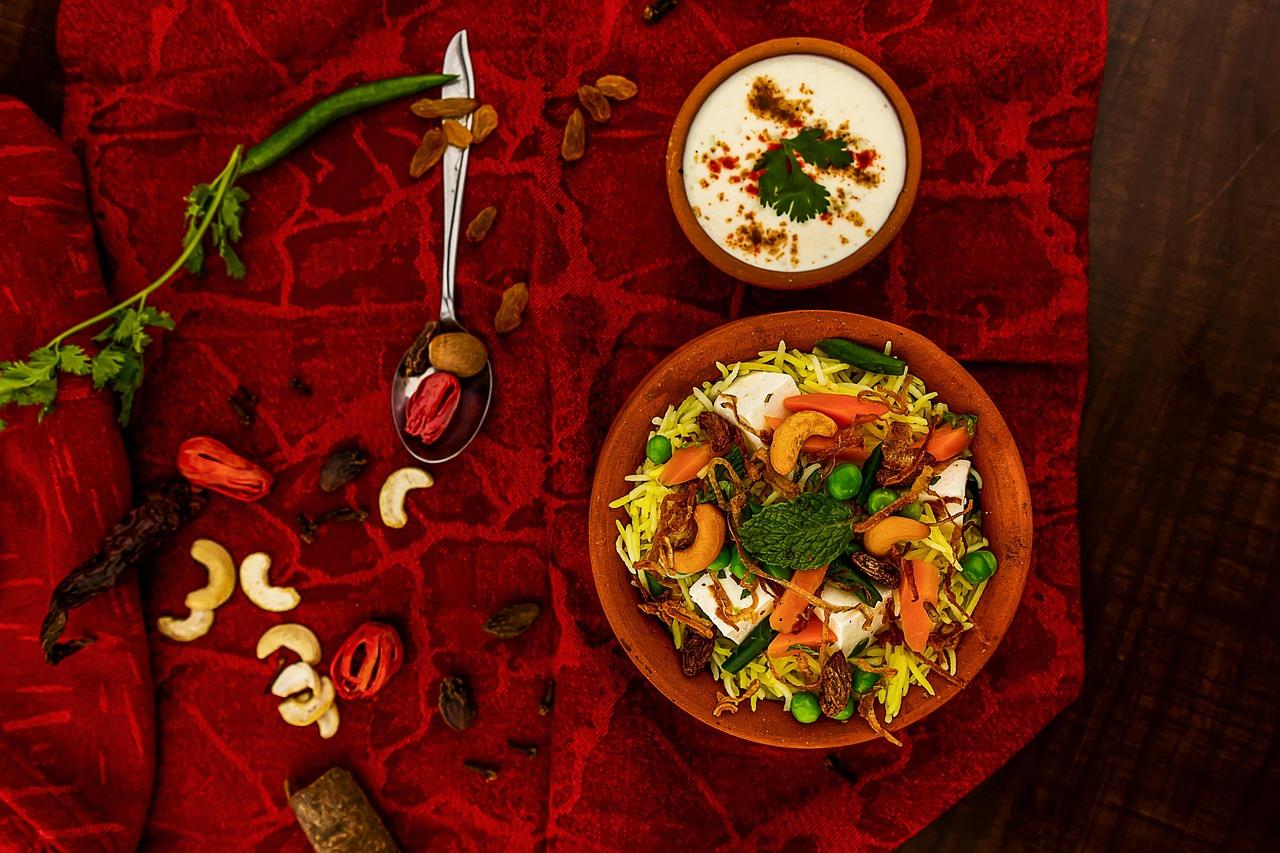
A mild, creamy biryani: rice and husked green gram roasted in ghee, then cooked in coconut milk with peas, carrots, potatoes, peanuts and cashews, and finished with soft fried paneer and a fresh coriander yogurt. Serve hot, garnished with more fried cashews and paneer.


Sabudana khichdiSago with peanuts and potato
Sabudana khichdi is the dish that sees Maharashtra through every vrat (fast), from Navratri to Ekadashi, but it's so good that people eat it any day of the week. Soaked sago pearls are tossed in a pan with crushed roasted peanuts, cubes of potato, cumin and green chilli until each pearl turns glassy and separate, then finished with lemon and coriander. It's soft, chewy, nutty and gently hot. Fasting rules vary from family to family, so check yours; this version uses rock salt and no asafoetida, onion or garlic. Traditionally it's cooked in ghee; use ghee instead of oil if you aren't keeping it vegan. Chef's tip: soak the sago in just enough water to cover by the height of the pearls themselves, no more; too much water is the reason khichdi turns into one sticky lump.


Bagara bainganBaby aubergines in peanut sesame sauce
Bagara baingan is a Hyderabadi wedding dish of small aubergines cooked whole in a dark, tangy gravy of roasted peanuts, sesame, dried coconut and tamarind. Unlike a Gujarati stuffed brinjal, the aubergines here are only quartered at the base and fried until silky, then left to soak up a thin-but-rich sauce that is finished with a tempering, the 'baghar' that gives the dish its name. It's sour, nutty and gently spiced, and is served with biryani, bagara rice or plain rice. Chef's tip: choose small, glossy purple aubergines that feel heavy for their size; soft, light ones are full of seeds and turn mushy before the gravy has a chance to cling.
Perfect for:Raksha Bandhan