
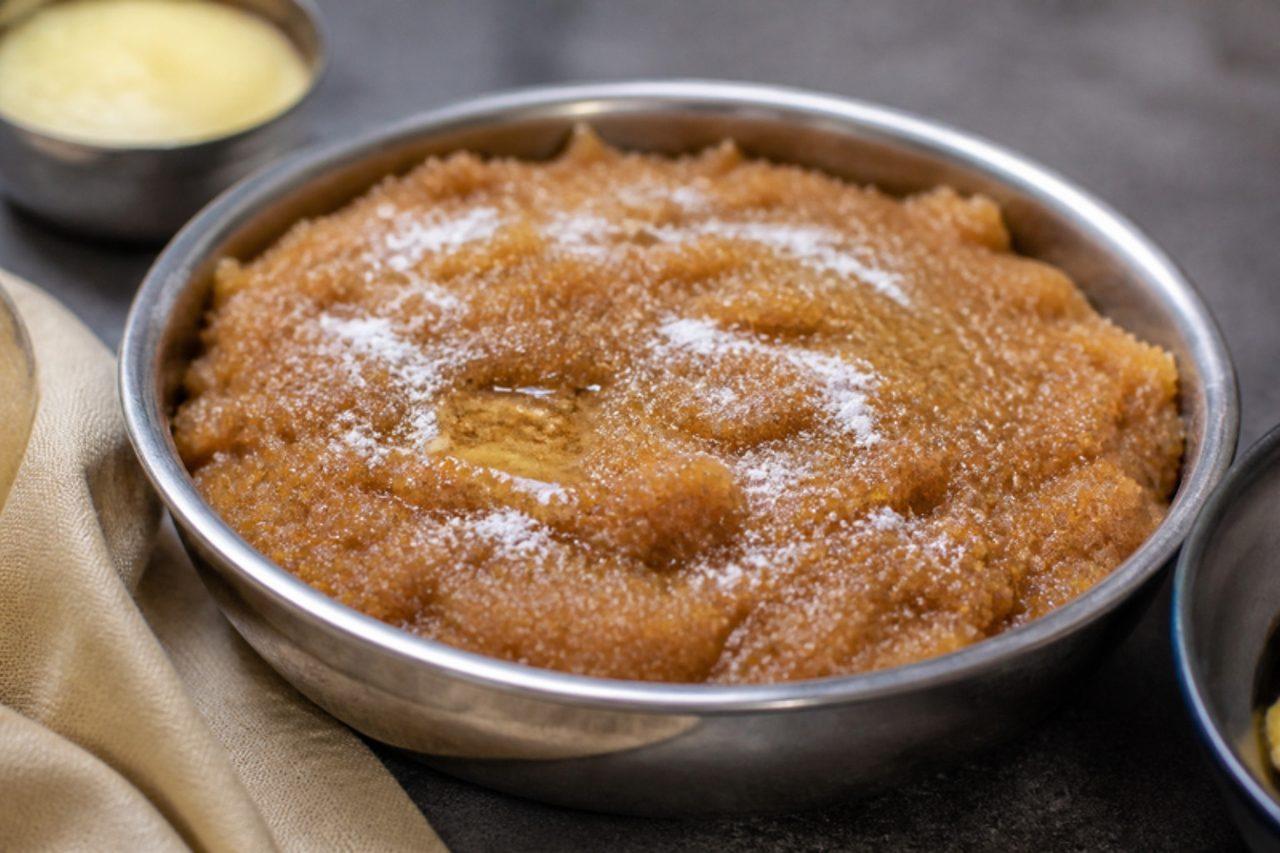
AI-generated image
Kansar
Wheat and sugar sweet
કંસાર: the grainy wheat-and-sugar sweet a Gujarati bride and groom feed each other, finished with hot ghee and bura
 Indian
At a Gujarati wedding the first mouthful the new couple share is kansar: the bride's mother sets a thali in front of them and each feeds the other a pinch, a ritual called kansar jamadvo. The same sweet turns up for a griha pravesh, a new job or any shubh occasion at home. It is made from jada ghau no lot (coarse, almost gritty wheat flour), roasted in ghee and steamed in sugared water until every grain swells and stays separate, so it is crumbly and loose rather than a set halwa. It is never sweet enough on its own: at the table everyone pours over a spoon of hot melted ghee and sprinkles bura (powdered sugar) to taste. Serve it warm, with dal, bhaat, a shaak and kadhi for a festive lunch. Common mistake: stirring it like sheera once the water goes in. Kansar has to be left covered on a low flame to steam, and only fluffed with a fork; beating it turns it into paste. Chef's tip: if you cannot find kansar flour, use 150 g coarse rava (sooji) mixed with 50 g ordinary atta, which gives the same loose, grainy texture.
- Total time
- 30 min
- Difficulty
- easy
- Serves
- 4
Ingredients
For the kansar
- 7 oz coarse wheat flour (jada ghau no lot)kansar flour; sieve out any fine dust only if very floury
- 4 tbsp ghee
- 2 ½ cups water
- 4 oz sugar
- ½ tsp ground green cardamom
- 1 pinch saffron strands (optional)
To serve
- 4 tbsp gheemelted and hot
- 4 tbsp bura (powdered sugar)
- 8 almonds (optional)slivered
Shop this recipe on Amazon
What you'll need
Links open Amazon in a new tab. As an Amazon Associate, WhatToEat.Today earns from qualifying purchases.
Method
0/6 doneStep 1: Put 2 ½ cups water, 4 oz sugar and 1 pinch saffron strands in a pan and bring to the boil over a medium heat, stirring until the sugar dissolves. Keep it at a bare simmer.
4 minStep 2: Heat 4 tbsp ghee in a heavy kadhai over a medium-low heat and add 7 oz coarse wheat flour (jada ghau no lot). Roast, stirring constantly, for 8–10 minutes until it smells nutty, turns a pale biscuit colour and the ghee starts to look loose around the grains.
10 minStep 3: Turn the heat to low and pour in the hot sugar water in a slow stream, standing back because it splutters hard. Stir once, just to bring it together.
1 minStep 4: Cover with a tight lid and cook on the lowest heat for 10–12 minutes, without stirring, until the water is absorbed and the grains are soft when pressed. A heavy tava under the kadhai stops the base catching.
12 minStep 5: Take off the lid, sprinkle in ½ tsp ground green cardamom and fluff the kansar with a fork so the grains separate. Leave it uncovered off the heat for 2 minutes; it should look crumbly and moist, not wet.
2 minStep 6: Serve warm in small mounds. At the table pour over a spoonful of hot 4 tbsp ghee and sprinkle 4 tbsp bura (powdered sugar) to taste, and scatter 8 almonds if you like.
Nutrition per serving
- Calories
- 430 kcal
- Protein
- 5 g
- Carbs
- 58 g
- Fat
- 21 g
- Fibre
- 4 g
Nutrition values are estimates.
KrazyBadal
Good to know
- How long does kansar take?
- About 30 minutes in total: 5 minutes to prepare and 25 minutes to cook.
- How many people does it serve?
- 4 as written. Change the servings above the ingredients and every amount scales to match.
- Is it vegetarian?
- Yes. It has no meat or fish.
- What can I use instead of ghee?
- Butter, same amount (keep the heat a little lower, butter burns sooner).
- What can I use instead of sugar?
- Caster sugar, same amount.
Reviews
No reviews yet. Be the first to cook it.
Rate this recipe
Sign in to rate and review this recipe.
You might also like

SakarpadaSweet fried dough diamonds
Sakarpada (shakarpara) are little sweet diamonds of a rich dough made with ghee, milk and sugar, fried until golden and crunchy. They are a Diwali favourite with tea, and the cubes go into bhusu too. They keep for weeks in an air-tight tin.
Paneer biryaniRice and moong dal in coconut milk
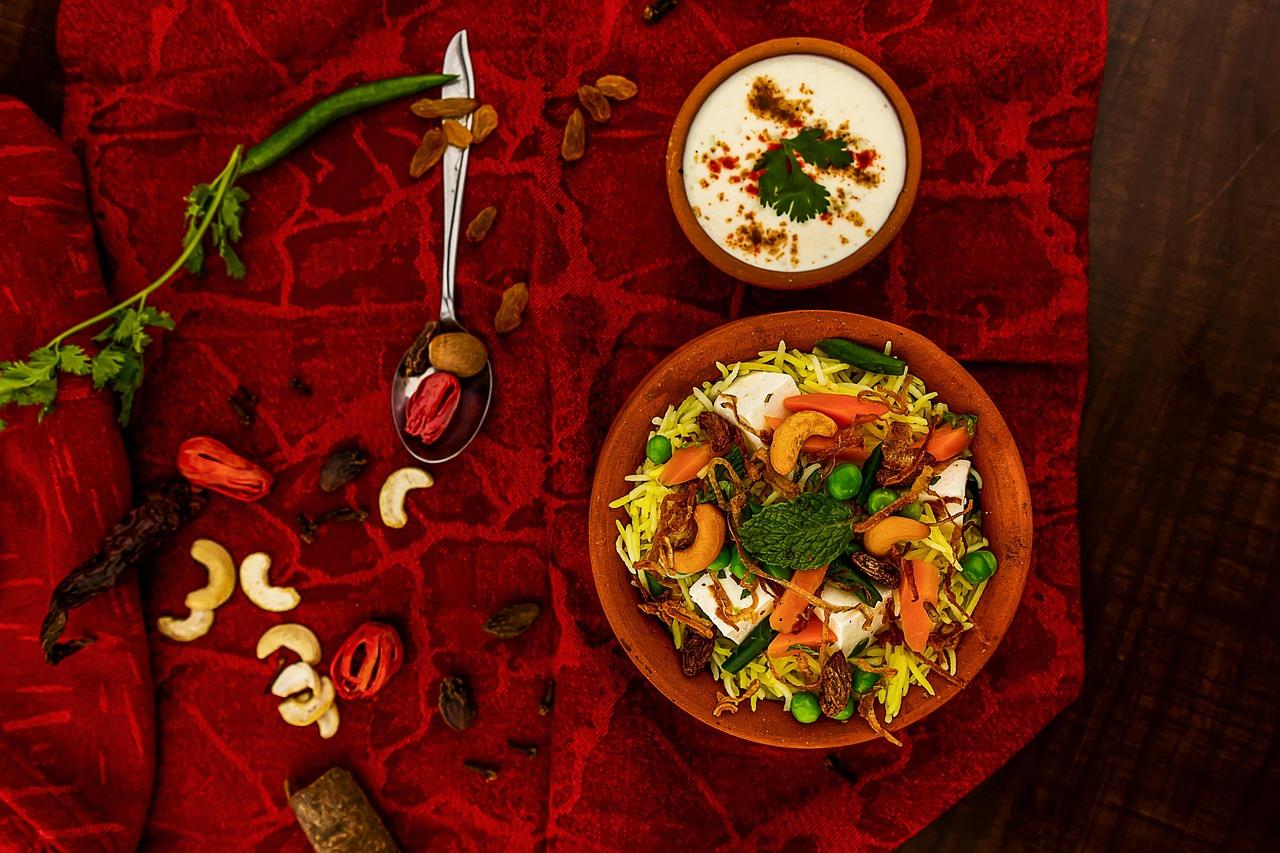
A mild, creamy biryani: rice and husked green gram roasted in ghee, then cooked in coconut milk with peas, carrots, potatoes, peanuts and cashews, and finished with soft fried paneer and a fresh coriander yogurt. Serve hot, garnished with more fried cashews and paneer.


Sabudana khichdiSago with peanuts and potato
Sabudana khichdi is the dish that sees Maharashtra through every vrat (fast), from Navratri to Ekadashi, but it's so good that people eat it any day of the week. Soaked sago pearls are tossed in a pan with crushed roasted peanuts, cubes of potato, cumin and green chilli until each pearl turns glassy and separate, then finished with lemon and coriander. It's soft, chewy, nutty and gently hot. Fasting rules vary from family to family, so check yours; this version uses rock salt and no asafoetida, onion or garlic. Traditionally it's cooked in ghee; use ghee instead of oil if you aren't keeping it vegan. Chef's tip: soak the sago in just enough water to cover by the height of the pearls themselves, no more; too much water is the reason khichdi turns into one sticky lump.
