
AI-generated image
Katsuo no tataki
Seared bonito
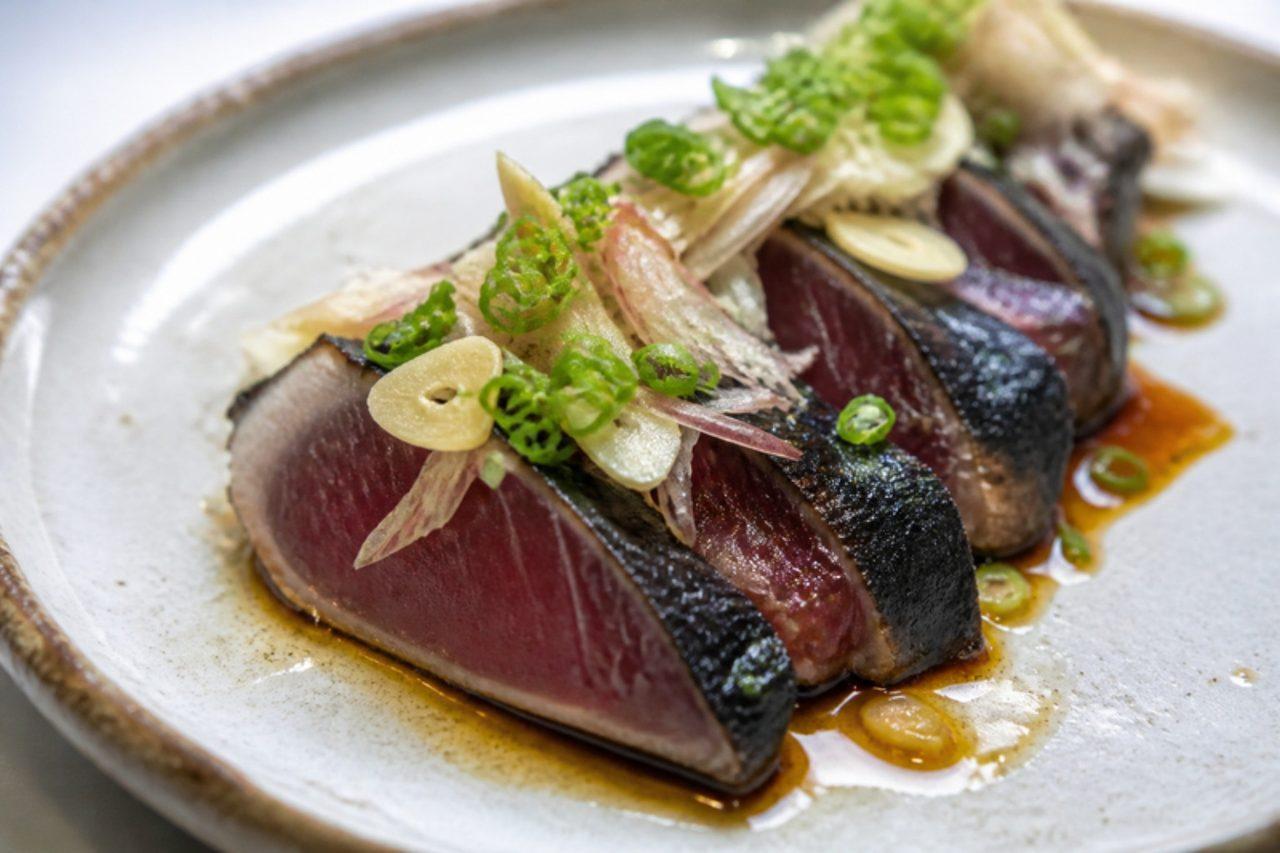
鰹のたたき: bonito seared hot and fast outside, cool and raw within, under garlic, onion and ponzu

Kochi, on the Pacific coast of Shikoku, is Japan's bonito town. At Hirome Market in the city centre, cooks sear whole loins over roaring straw fires and slice them to order, served thick with garlic slices, onion and ponzu or just a pinch of salt. Bonito has two seasons there: the leaner first catch of spring and the fattier fish returning south in autumn. At home a very hot dry pan, or a blowtorch, gives the same charred skin around a cool red centre. Use very fresh, sushi-grade fish from a trusted fishmonger; not for pregnant women, young children or anyone with a weakened immune system. Chef's tip: slice it thick, about 1 cm, as they do in Kochi; thin slices lose the contrast between the smoky crust and the soft middle.
- Total time
- 25 min
- Difficulty
- easy
- Serves
- 4
Ingredients
For the fish
- 14 oz sushi-grade skin-on bonito loin (katsuo)or sushi-grade skipjack or albacore
- ½ tsp flaky sea salt
- 1 tsp vegetable oil
- 1 ⅛ lb ice cubes
- 4 ¼ cups cold water
To serve
- ½ red or white onionvery thinly sliced
- 3 cloves garlicvery thinly sliced
- 3 spring onionsfinely sliced
- 1 tsp gingergrated
- 6 shiso leaves (optional)
- ¼ cup ponzuor 50 ml soy sauce mixed with 30 ml lemon or yuzu juice
Shop this recipe on Amazon
Fresh ingredients (4)
Links open Amazon in a new tab. As an Amazon Associate, WhatToEat.Today earns from qualifying purchases.
Method
0/9 doneStep 1: Soak the sliced ½ red or white onion in cold water for 10 minutes to soften its bite, then drain and squeeze dry in a clean tea towel.
10 minStep 2: Mix 1 ⅛ lb ice cubes and 4 ¼ cups cold water in a large bowl so the iced water is ready before you start cooking.
1 minStep 3: Use very fresh, sushi-grade fish from a trusted fishmonger; not for pregnant women, young children or anyone with a weakened immune system. Pat 14 oz sushi-grade skin-on bonito loin (katsuo) very dry with kitchen paper, rub the skin with 1 tsp vegetable oil and season all over with half the ½ tsp flaky sea salt.
2 minStep 4: Heat a heavy frying pan over the highest heat until it smokes. Lay the fish skin side down and press it flat with a spatula until the skin is blistered and charred in places.
1 minStep 5: Turn the loin and sear each remaining side for 20 to 30 seconds, only until a thin grey band forms at the edge. The centre should stay deep red. Common mistake: searing over medium heat; the heat creeps into the middle and you get a grey, half-cooked slab instead of a thin crust.
2 minStep 6: Drop the loin straight into the iced water for 1 minute to stop the cooking, no longer, then lift it out and pat it completely dry.
1 minStep 7: Cut the loin across the grain into slices about 1 cm thick with a sharp knife, using long single strokes.
2 minStep 8: Lay 6 shiso leaves on a cold plate if you have it, arrange the slices on top, and scatter over the onion, 3 cloves garlic, 3 spring onions and 1 tsp ginger. Sprinkle with the rest of the salt.
2 minStep 9: Spoon ¼ cup ponzu over the fish just before serving, and eat straight away while the crust is still smoky. Keep it in the fridge and eat within a few hours.
1 min
Nutrition per serving
- Calories
- 150 kcal
- Protein
- 26 g
- Carbs
- 5 g
- Fat
- 2 g
- Fibre
- 1 g
Nutrition values are estimates.
KrazyBadal
Good to know
- How long does katsuo no tataki take?
- About 25 minutes in total: 15 minutes to prepare and 10 minutes to cook.
- How many people does it serve?
- 4 as written. Change the servings above the ingredients and every amount scales to match.
- What can I use instead of red or white onion?
- 2 shallots per onion.
- What can I use instead of garlic?
- ½ tsp garlic paste or ⅛ tsp garlic powder per clove.
Reviews
No reviews yet. Be the first to cook it.
Rate this recipe
Sign in to rate and review this recipe.
You might also like

Moreton Bay bugsSlipper lobster with garlic butter
Moreton Bay bugs are the flat, shovel-nosed slipper lobsters caught off the Queensland coast around Brisbane and the Sunshine Coast, and for Queenslanders they are a summer treat, split and grilled at the beach house. The tail meat is sweet and rich, somewhere between lobster and prawn. Buy them raw, frozen or fresh, from a fishmonger and ask them to halve them if you like. A common mistake is overcooking, which makes the meat rubbery; it is ready the moment it turns white. Chef's tip: grill flesh side down first to mark it, then turn and baste in the shell.
 Australian


Yaki onigiriGrilled rice balls
Yaki onigiri (焼きおにぎり) are rice balls grilled until they form a crisp, toasty crust, then brushed with soy sauce glaze. They are eaten all over Japan, at izakaya, at barbecues and from the freezer section, as a snack or with miso soup. The inside stays soft and steamy while the outside crackles. Best eaten hot, straight from the pan. Chef's tip: let the shaped rice balls dry for 10 minutes before they go in the pan. A drier surface forms a better crust and won't stick, and the glaze goes on only at the end so it doesn't burn.


Miso soup
Miso soup (味噌汁) is drunk every day in homes all over Japan, at breakfast as well as dinner, beside a bowl of rice. The base is dashi; this vegan version uses kombu and dried shiitake instead of bonito, which gives it a deep, rounded flavour. Silken tofu and wakame seaweed are the classic fillings. It takes ten minutes; just remember not to boil the miso. Chef's tip: add the miso at the very end and never let it boil. Boiling kills the miso's fresh, fermented aroma; Japanese cooks say the soup should only 'smile', with the surface barely trembling.