
AI-generated image
Khoresh-e sib
Apple and lamb stew
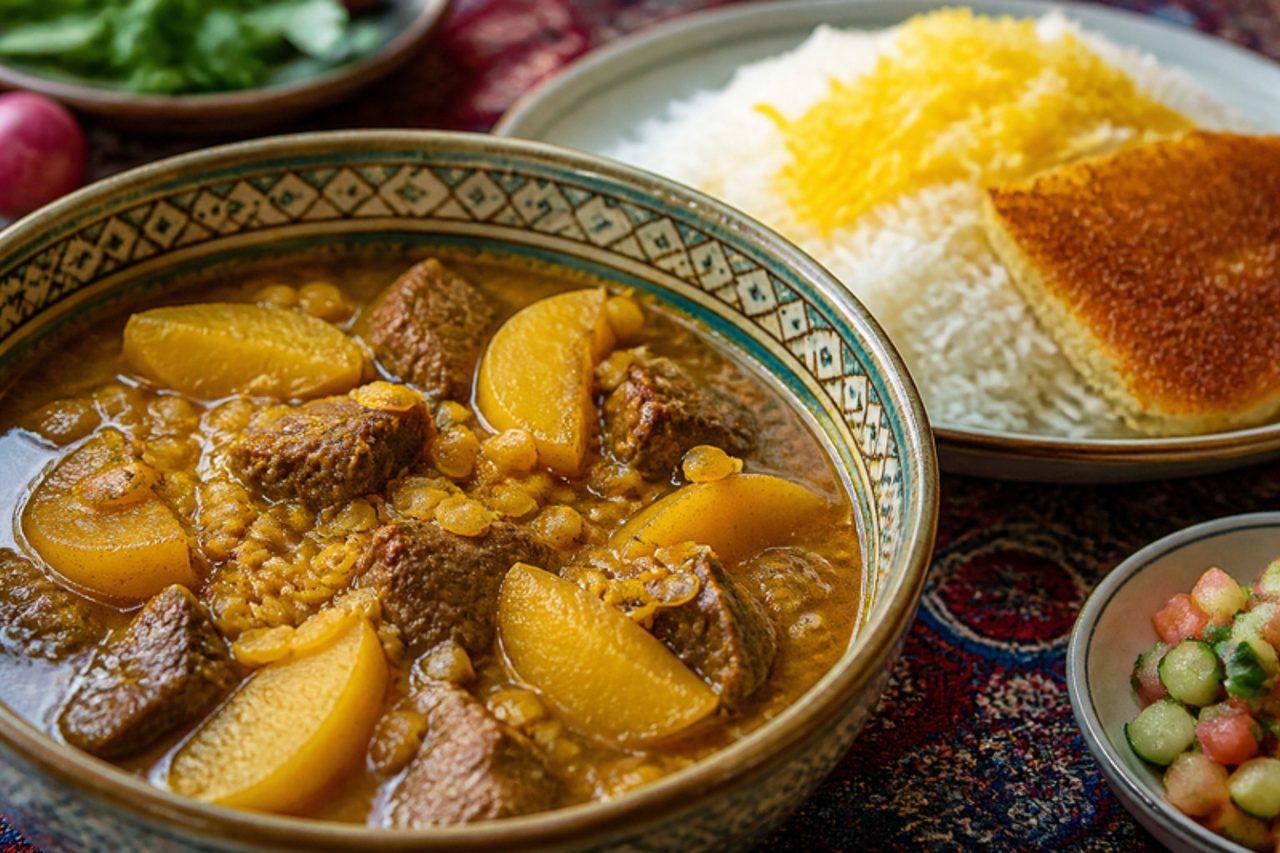
خورش سیب (khoresh-e sib): tart apple and lamb stew with split peas and saffron


Khoresh-e sib belongs to the autumn apple harvest in Iran's northwest and is cooked in homes across the country through winter, a cheaper cousin of the quince stew. Lamb and yellow split peas cook in a saffron broth, then fried wedges of sour green apple go in at the end so they soften without breaking, giving a stew that is tangy, faintly sweet and very golden. Serve it with chelow and a little torshi. The common slip is using soft eating apples, which melt into the sauce; choose hard, sour ones such as Granny Smith. Chef's tip: a short splash of vinegar with the apples sharpens the whole pot without extra sugar.
- Total time
- 110 min
- Difficulty
- medium
- Serves
- 4
Ingredients
- 16 oz lamb shouldercut into 3 cm cubes
- 2 onionsfinely sliced
- 5 tbsp sunflower oil
- 1 tsp ground turmeric
- ¼ tsp ground cinnamon
- 2 ⅞ oz yellow split peasrinsed and soaked for 1 hour
- 3 ¼ cups water
- 3 sour green applespeeled, cored and cut into 8 wedges each
- ¼ tsp saffron threadsground and steeped in 3 tbsp hot water
- 1 tbsp vinegar
- 1 tsp sugar
- 1 ½ tsp salt
Shop this recipe on Amazon
Spices & pantry
Fresh ingredients (4)
Links open Amazon in a new tab. As an Amazon Associate, WhatToEat.Today earns from qualifying purchases.
Method
0/7 doneStep 1: Heat 2 tablespoons of 2 tbsp sunflower oil in a heavy pot over a medium heat and fry 2 onions until golden.
12 minStep 2: Add 16 oz lamb shoulder, 1 tsp ground turmeric and ¼ tsp ground cinnamon and brown on all sides.
6 minStep 3: Add 3 ¼ cups water and 1 ½ tsp salt, bring to the boil, skim, then cover and simmer for 40 minutes.
40 minStep 4: Add the drained 2 ⅞ oz yellow split peas and simmer until the peas are soft and the lamb is almost tender.
25 minStep 5: Heat the rest of 3 tbsp sunflower oil in a frying pan over a medium heat and fry 3 sour green apples until golden on both sides but still firm.
8 minStep 6: Lay the apples in the stew with ¼ tsp saffron threads, 1 tbsp vinegar and 1 tsp sugar. Cover and simmer very gently until a knife slides into the apple easily. Shake the pot rather than stir.
15 minStep 7: Taste for salt and sourness and serve with rice.
Nutrition per serving
- Calories
- 450 kcal
- Protein
- 29 g
- Carbs
- 33 g
- Fat
- 23 g
- Fibre
- 7 g
Nutrition values are estimates.
KrazyBadal
Good to know
- How long does khoresh-e sib take?
- About 110 minutes in total: 20 minutes to prepare and 90 minutes to cook.
- How many people does it serve?
- 4 as written. Change the servings above the ingredients and every amount scales to match.
- Is it gluten free?
- Yes, as written. Check the labels on stock, sauces and spice mixes, which sometimes contain gluten.
- What can I use instead of onions?
- 2 shallots per onion.
- What can I use instead of ground turmeric?
- Leave it out (it mostly adds colour).
Reviews
No reviews yet. Be the first to cook it.
Rate this recipe
Sign in to rate and review this recipe.
You might also like

Sayur lodehVegetables in coconut milk
Sayur lodeh is everyday cooking in Central Java, made in big pots in Solo and Semarang kitchens and ladled over rice, with lontong rice cakes at Lebaran, or alongside opor and sambal goreng on festive tables. It's soupy rather than thick: a fragrant broth of coconut milk, galangal, lemongrass and lime leaf that carries chunks of aubergine, long beans, chayote and sweetcorn, plus tempeh and tofu to make it a meal. The flavour is mellow and slightly sweet, so the heat comes from sambal on the side. Chef's tip: keep the pot at a gentle simmer once the coconut milk goes in and stir now and then — a rolling boil splits the coconut milk into oily curds.
 Indonesian


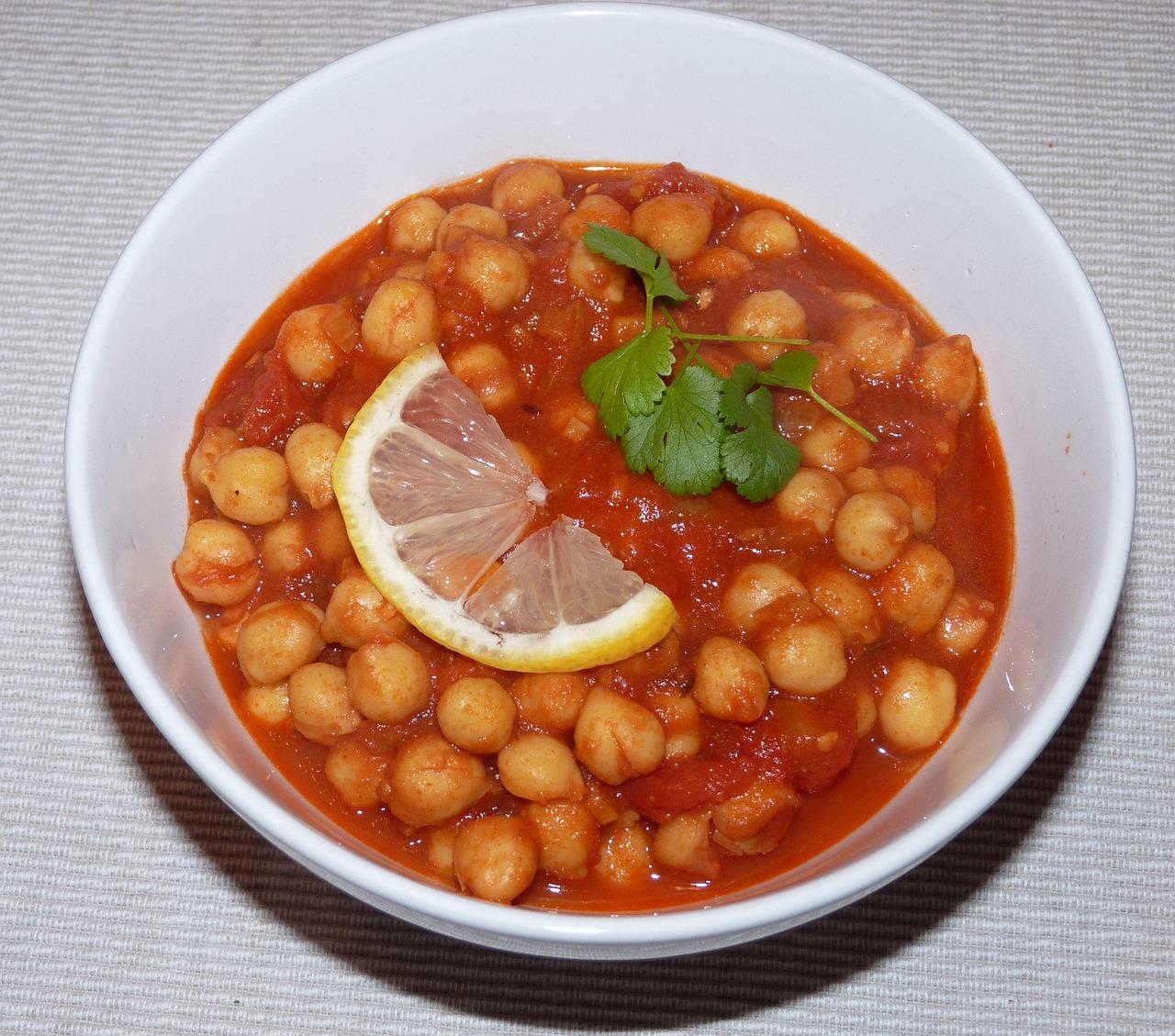
Chana masala
A North Indian staple that comes together from the store cupboard. Toasted cumin, slow-softened onion and a good spoonful of garam masala give tinned chickpeas real depth. Serve with rice, naan or a stack of warm rotis.
 Indian

Bagara bainganBaby aubergines in peanut sesame sauce
Bagara baingan is a Hyderabadi wedding dish of small aubergines cooked whole in a dark, tangy gravy of roasted peanuts, sesame, dried coconut and tamarind. Unlike a Gujarati stuffed brinjal, the aubergines here are only quartered at the base and fried until silky, then left to soak up a thin-but-rich sauce that is finished with a tempering, the 'baghar' that gives the dish its name. It's sour, nutty and gently spiced, and is served with biryani, bagara rice or plain rice. Chef's tip: choose small, glossy purple aubergines that feel heavy for their size; soft, light ones are full of seeds and turn mushy before the gravy has a chance to cling.