
 Indian
 Gluten free
Khurchan
Scraped milk skin sweet
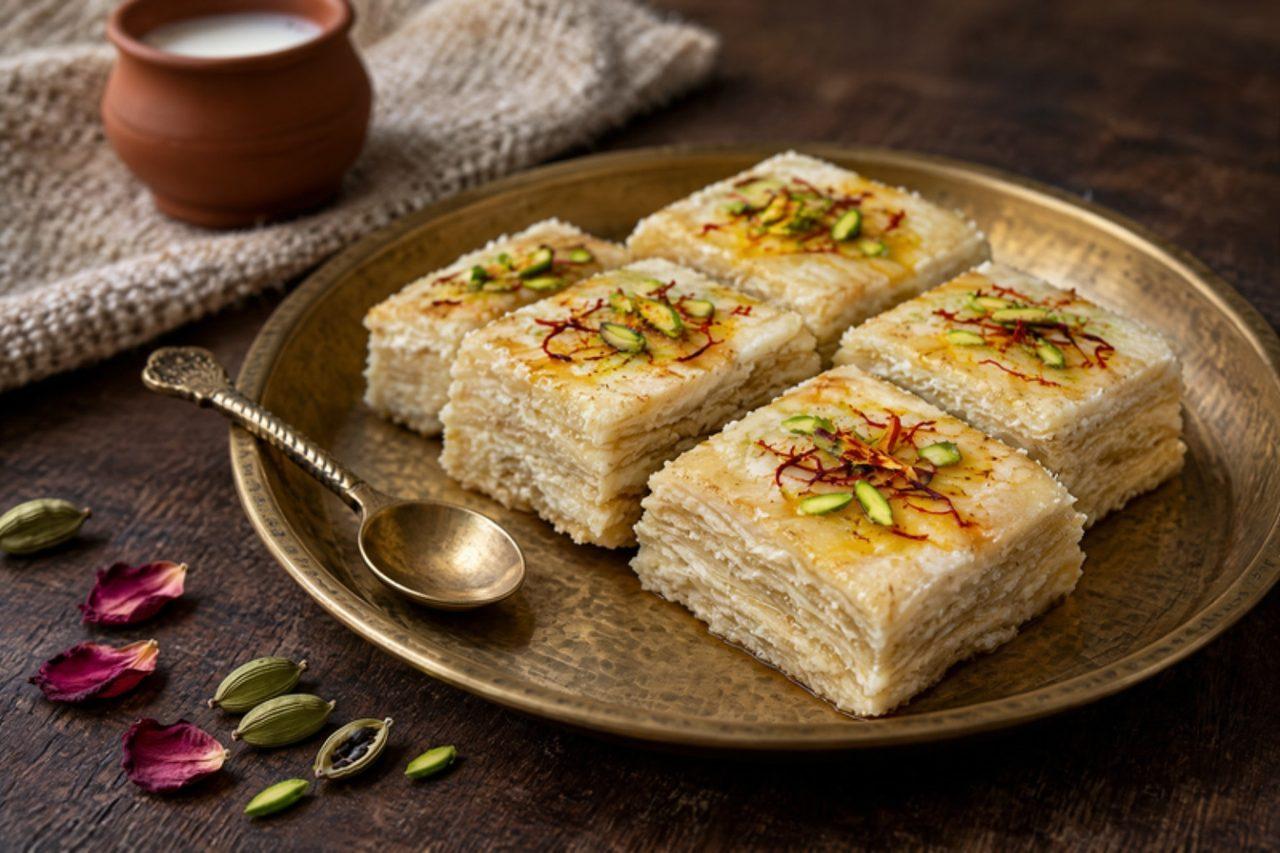
खुरचन: Mathura and Old Delhi layers of milk skin scraped from the kadhai and stacked with sugar
Khurchan means 'scrapings', and in Mathura and the sweet lanes of Old Delhi it is made by simmering milk in a wide iron kadhai and lifting off the skin that forms, layer after layer, then stacking the sheets with a sprinkle of sugar and cardamom. It is a winter sweet, sold in small squares, and offered at Janmashtami in Krishna's town. It takes patience, not skill. The common mistake is letting the milk boil, which breaks the skin; keep it just steaming, never bubbling. Chef's tip: fan the surface of the milk gently with a paper plate between layers; the cooler air makes the skin form faster and thicker.
- Prep
- 5 min
- Cook
- 120 min
- Difficulty
- Hard
- Serves
- 6
- Per serving
- 260 kcal
Ingredients
For the khurchan
- 8 ¼ cups full-fat milk
- 2 ⅛ oz caster sugar
- ½ tsp ground cardamom
- ½ oz pistachiosthinly sliced
- 1 pinch saffron strands (optional)
Tick what you have; the rest goes in the basket.
Method
0/5 doneStep 1: Pour 8 ¼ cups full-fat milk into a wide, heavy kadhai or frying pan and bring it to a gentle steam over medium heat, not a boil.
10 minStep 2: Turn the heat to low so the milk only steams and trembles. After 6–8 minutes a thick skin forms; push it gently to the side of the pan with a flat spatula, where it will cling.
8 minStep 3: Keep collecting skin every 5–6 minutes, pushing each layer onto the sides, until about a fifth of the milk is left, about 1½ hours. Do not stir.
90 minStep 4: Mix 2 ⅛ oz caster sugar and ½ tsp ground cardamom. Scrape the dried skin from the sides with a flat spatula and lay the sheets in a small tray, sprinkling sugar between layers and spooning a little of the remaining thick milk over.
10 minStep 5: Top with ½ oz pistachios and 1 pinch saffron strands, cool, then chill 2 hours until set. Cut into squares; keep in the fridge and eat within 3 days.
5 min
KrazyBadal
Reviews
No reviews yet. Be the first to cook it.
Rate this recipe
Sign in to rate and review this recipe.
You might also like
Chana masala
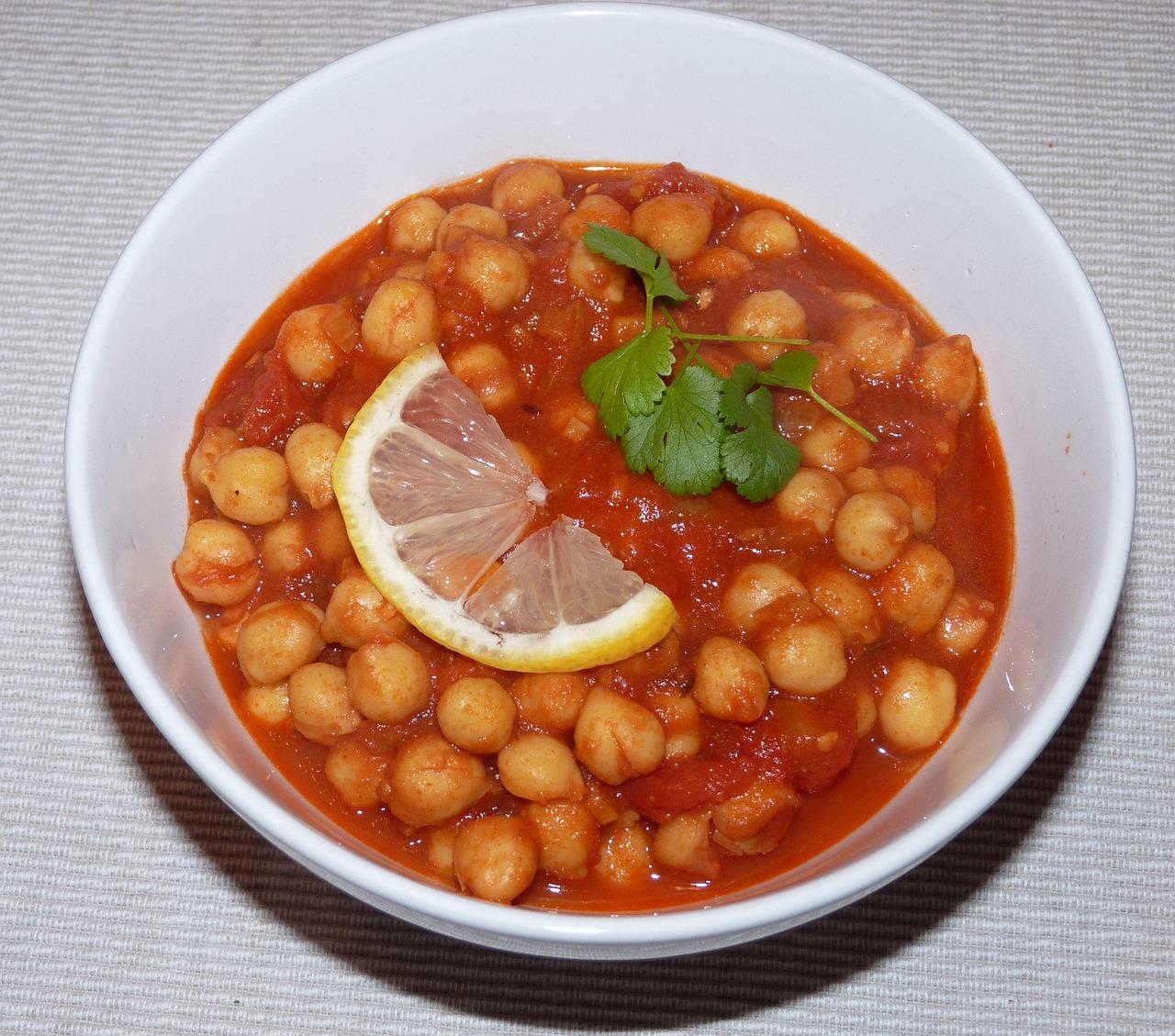
A North Indian staple that comes together from the store cupboard. Toasted cumin, slow-softened onion and a good spoonful of garam masala give tinned chickpeas real depth. Serve with rice, naan or a stack of warm rotis.

Kaju curryCashew curry
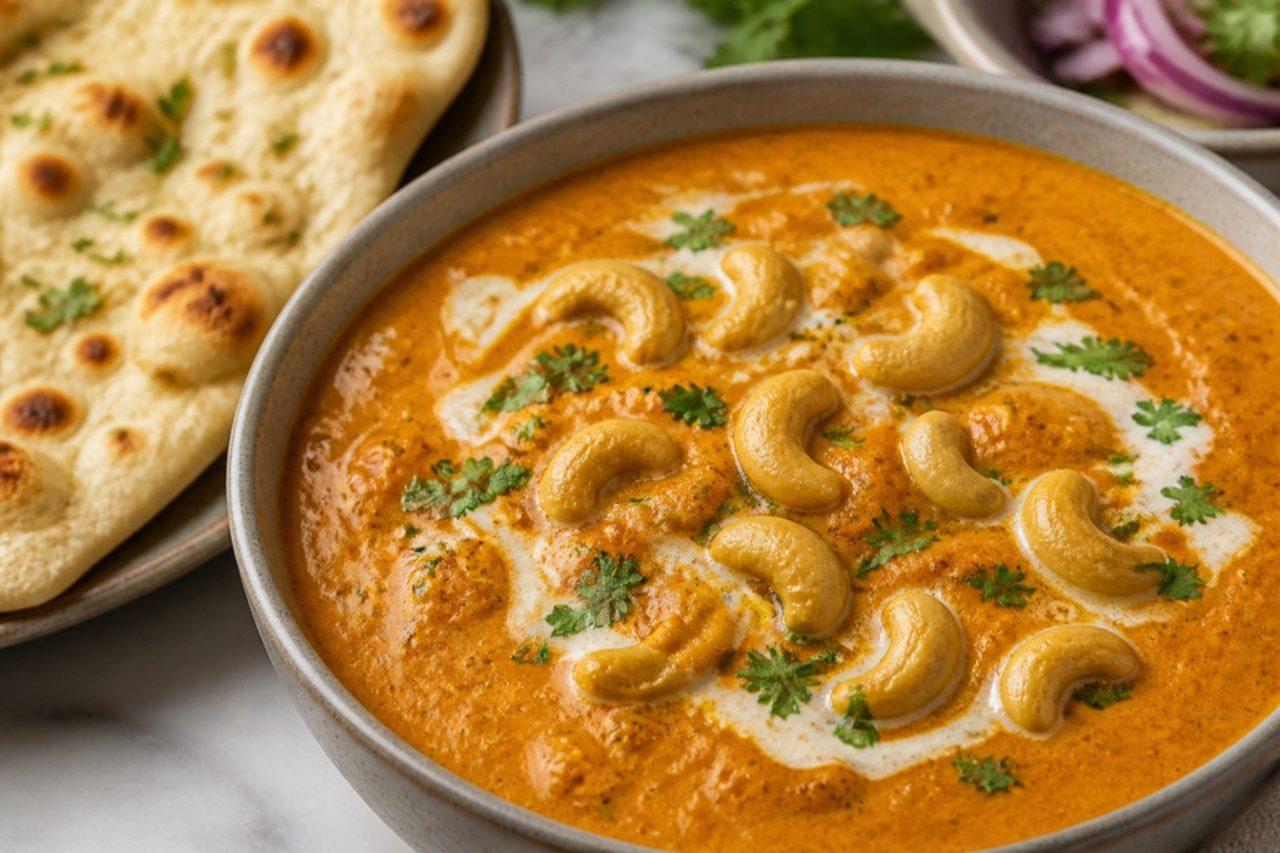
Walk along any wedding buffet in Pune, Mumbai or Ahmedabad and there is usually a chafing dish of kaju curry near the paneer, with guests going back for seconds. Whole cashews are fried in ghee until golden, which makes them crunchy outside and buttery inside, then folded into a rich onion and tomato gravy thickened with more cashews, finished with cream and kasuri methi. The gravy is orange, smooth and rounded with a touch of sweetness; it should taste of roasted nuts and gentle spice, not fire. Gujarati restaurants often serve a spicier Kathiyawadi version, but the wedding style here is the mild one. Eat it with butter naan, tandoori roti or jeera rice. Common mistake: adding the fried cashews too early; they soak up the gravy and turn soft, so fold them in just before serving. Chef's tip: keep a few fried cashews back and scatter them on top at the table so every spoonful has some crunch.

Bagara bainganBaby aubergines in peanut sesame sauce
Bagara baingan is a Hyderabadi wedding dish of small aubergines cooked whole in a dark, tangy gravy of roasted peanuts, sesame, dried coconut and tamarind. Unlike a Gujarati stuffed brinjal, the aubergines here are only quartered at the base and fried until silky, then left to soak up a thin-but-rich sauce that is finished with a tempering, the 'baghar' that gives the dish its name. It's sour, nutty and gently spiced, and is served with biryani, bagara rice or plain rice. Chef's tip: choose small, glossy purple aubergines that feel heavy for their size; soft, light ones are full of seeds and turn mushy before the gravy has a chance to cling.