
 Japanese
 Vegan
 Gluten free
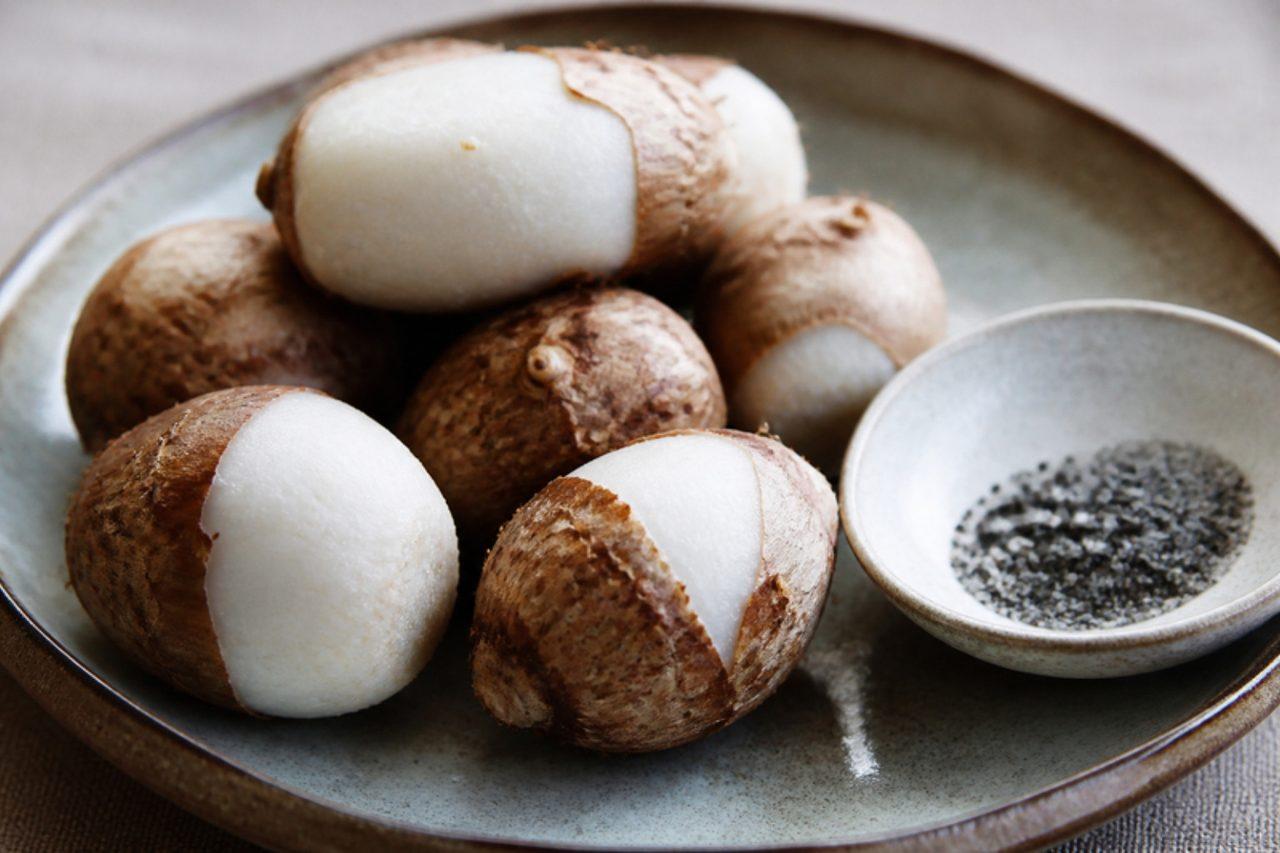
Kinukatsugi (steamed baby taro)
Small taro steamed in their skins, slipped out and dipped in sesame salt
In Kyoto and the Kansai region the harvest moon is also called imo meigetsu, the "potato moon", and steamed baby taro are set out beside the moon-viewing dumplings as thanks for the new crop. The name kinukatsugi recalls the silk veils that court ladies once wore over their heads, because the brown skin is peeled halfway so the white taro peeps out beneath it. Squeeze the base and the soft, slippery, nutty flesh pops out, ready to dip in sesame salt. Serve as a snack with green tea or as a side to grilled fish. Taro must always be cooked through, and its raw skin can make hands itch, so wear gloves while you trim it. Chef's tip: cut a shallow ring round the middle of each taro before steaming, so the top half of the skin lifts off neatly.
- Prep
- 10 min
- Cook
- 20 min
- Difficulty
- Easy
- Serves
- 4
- Per serving
- 125 kcal
Ingredients
- 1 ⅓ lb small taro (satoimo)about 12, each the size of a large egg
- 1 tsp flaky sea salt
- 1 tbsp toasted black sesame seeds (optional)
Shop this recipe on Amazon
What you'll need
Spices & pantry
Links open Amazon in a new tab. As an Amazon Associate we earn from qualifying purchases.
Method
0/5 doneStep 1: Wearing gloves, scrub 1 ⅓ lb small taro (satoimo) under running water with a stiff brush to remove the soil and hairy fibres, then pat dry.
4 minStep 2: Trim a thin slice off the base of each so it stands up, and cut a shallow ring through the skin round the middle of each taro.
4 minStep 3: Steam over a high heat for 15–20 minutes, until a skewer slides into the centre with no resistance. Common mistake: taking them out too early. Undercooked taro is hard and leaves a scratchy feeling in the throat.
18 minStep 4: While they steam, grind 1 tsp flaky sea salt with 1 tbsp toasted black sesame seeds in a mortar until roughly crushed.
2 minStep 5: Peel off the top half of the skin above the cut, leaving the bottom half on as a "veil". Serve hot, with the sesame salt for dipping.
2 min
Nutrition per serving
- Calories
- 125 kcal
- Protein
- 2 g
- Carbs
- 27 g
- Fat
- 1 g
- Fibre
- 4 g
Nutrition values are estimates.
KrazyBadal
Good to know
- How long does kinukatsugi (steamed baby taro) take?
- About 30 minutes in total: 10 minutes to prepare and 20 minutes to cook.
- How many people does it serve?
- 4 as written. Change the servings above the ingredients and every amount scales to match.
- Is it vegan?
- Yes. It has no meat, fish, dairy or eggs.
- Is it gluten free?
- Yes, as written. Check the labels on stock, sauces and spice mixes, which sometimes contain gluten.
Reviews
No reviews yet. Be the first to cook it.
Rate this recipe
Sign in to rate and review this recipe.
You might also like

Yaki onigiriGrilled rice balls
Yaki onigiri (焼きおにぎり) are rice balls grilled until they form a crisp, toasty crust, then brushed with soy sauce glaze. They are eaten all over Japan, at izakaya, at barbecues and from the freezer section, as a snack or with miso soup. The inside stays soft and steamy while the outside crackles. Best eaten hot, straight from the pan. Chef's tip: let the shaped rice balls dry for 10 minutes before they go in the pan. A drier surface forms a better crust and won't stick, and the glaze goes on only at the end so it doesn't burn.

Miso soup
Miso soup (味噌汁) is drunk every day in homes all over Japan, at breakfast as well as dinner, beside a bowl of rice. The base is dashi; this vegan version uses kombu and dried shiitake instead of bonito, which gives it a deep, rounded flavour. Silken tofu and wakame seaweed are the classic fillings. It takes ten minutes; just remember not to boil the miso. Chef's tip: add the miso at the very end and never let it boil. Boiling kills the miso's fresh, fermented aroma; Japanese cooks say the soup should only 'smile', with the surface barely trembling.
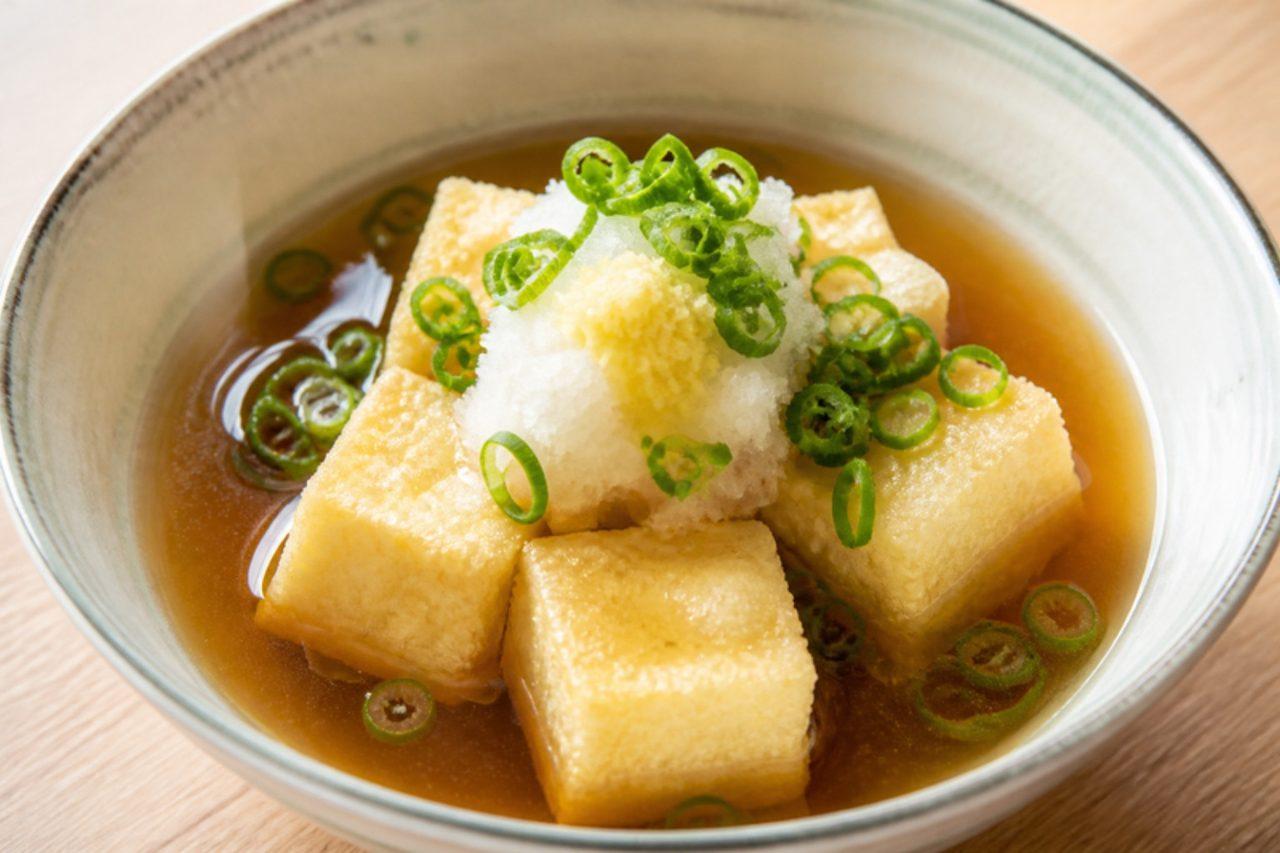
Agedashi tofuFried tofu in warm broth
Agedashi tofu (揚げ出し豆腐) is a classic izakaya dish eaten all over Japan: cubes of soft tofu dusted in potato starch, fried until they form a thin, crisp shell, then bathed in a hot, savoury broth. The coating turns silky as it soaks up the sauce while the tofu inside stays creamy. Usually topped with bonito flakes; here it's grated daikon, ginger and spring onion with a kombu-shiitake broth instead. Chef's tip: coat the tofu in starch right before it goes into the oil, not ahead of time; if it sits, the starch turns damp and the coating fries up gummy instead of crisp.