
 Indian
 Gluten free
Kopra pak
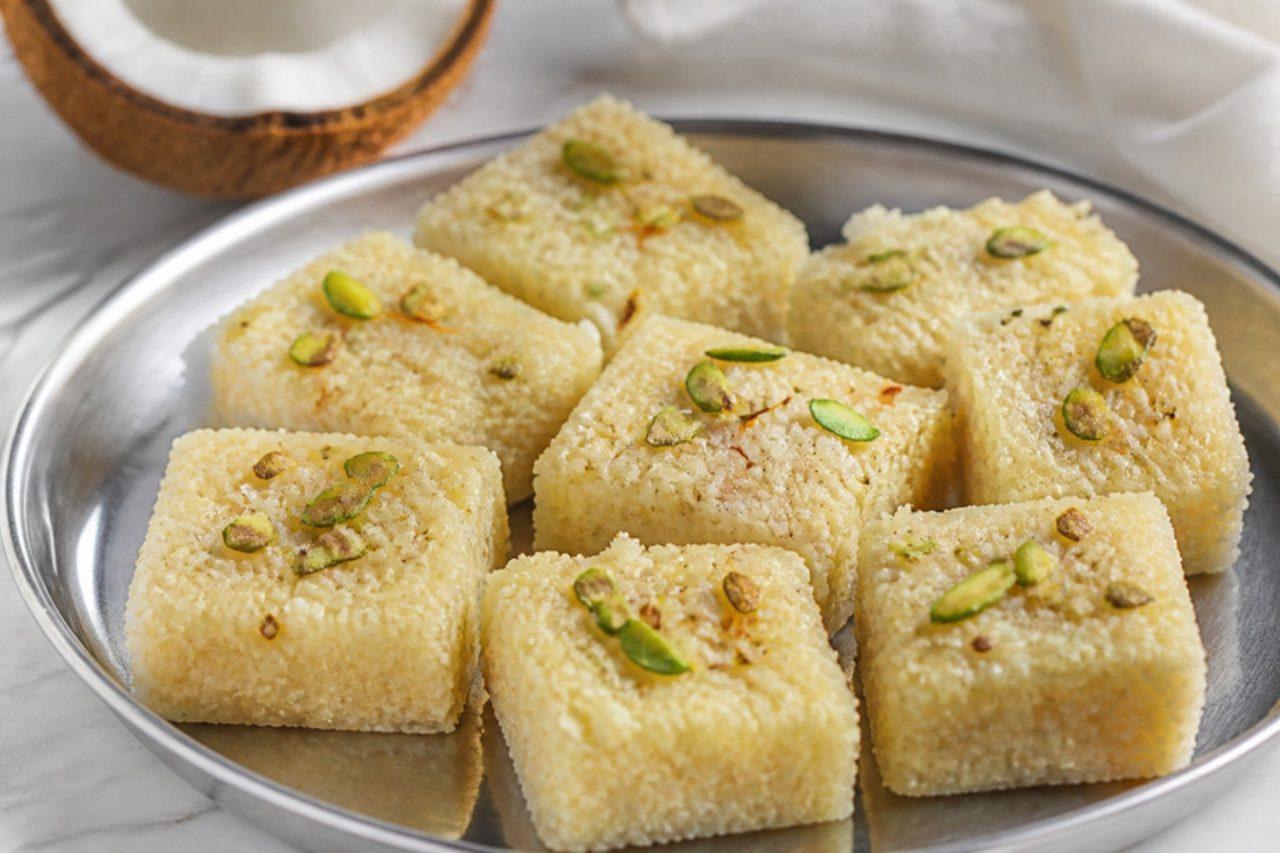
Fresh coconut fudge
કોપરા પાક: freshly grated coconut cooked with milk and sugar into a soft, moist, cardamom-scented Gujarati barfi with a saffron glow
Kopra pak is the sweet a Gujarati home makes when a coconut has been broken for a puja and there is too much to use. It is ready in under an hour: fresh coconut is cooked with milk until the milk is soaked up, then with sugar until the mixture comes away from the pan, and it is spread in a thali to set. The result is soft and moist, with the clean, milky sweetness of fresh coconut and a little chew, quite different from dry desiccated barfi. It appears at Diwali, Sharad Purnima and on Bestu Varas, and as prasad after Satyanarayan katha. Use only the white part of the coconut for a pale barfi. Chef's tip: grate the coconut finely or pulse it briefly; coarse shreds make a loose barfi that crumbles when you cut it.
- Prep
- 10 min
- Cook
- 30 min
- Difficulty
- Easy
- Serves
- 8
- Per serving
- 210 kcal
Ingredients
- 1 tbsp gheeplus a little for greasing
- 9 oz fresh coconutbrown skin removed, finely grated (about 1 coconut)
- ¾ cup full-fat milk
- 5 ½ oz sugar
- ½ tsp ground green cardamom
- 1 pinch saffron strands (optional)soaked in 1 tsp warm milk
- 1 tbsp pistachios (optional)slivered
Tick what you have; the rest goes in the basket.
Method
0/6 doneStep 1: Grease an 18 cm tray or thali with a little ghee and set aside.
Step 2: Heat the 1 tbsp ghee in a heavy non-stick kadhai over a low heat, add 9 oz fresh coconut and stir for 3 minutes until fragrant but still white.
3 minStep 3: Pour in ¾ cup full-fat milk and cook over a medium heat, stirring often, for 8–10 minutes until the milk has been absorbed and the coconut looks moist but not wet.
10 minStep 4: Add 5 ½ oz sugar; the mixture turns loose and syrupy. Keep stirring over a medium-low heat for 10–12 minutes until it thickens, gathers into one mass and leaves the sides of the pan. A pinch rolled between your fingers should form a soft ball that doesn't stick. Common mistake: taking it off too early; it will never set and stays sticky.
12 minStep 5: Stir in ½ tsp ground green cardamom and 1 pinch saffron strands, then spread in the greased tray about 1.5 cm thick and level the top with the back of a greased bowl. Scatter over 1 tbsp pistachios and press in.
2 minStep 6: Mark into diamonds while still warm, then leave for 1 hour to set before cutting through. Keep in the fridge for up to 5 days.
KrazyBadal
Reviews
No reviews yet. Be the first to cook it.
Rate this recipe
Sign in to rate and review this recipe.
You might also like
Chana masala
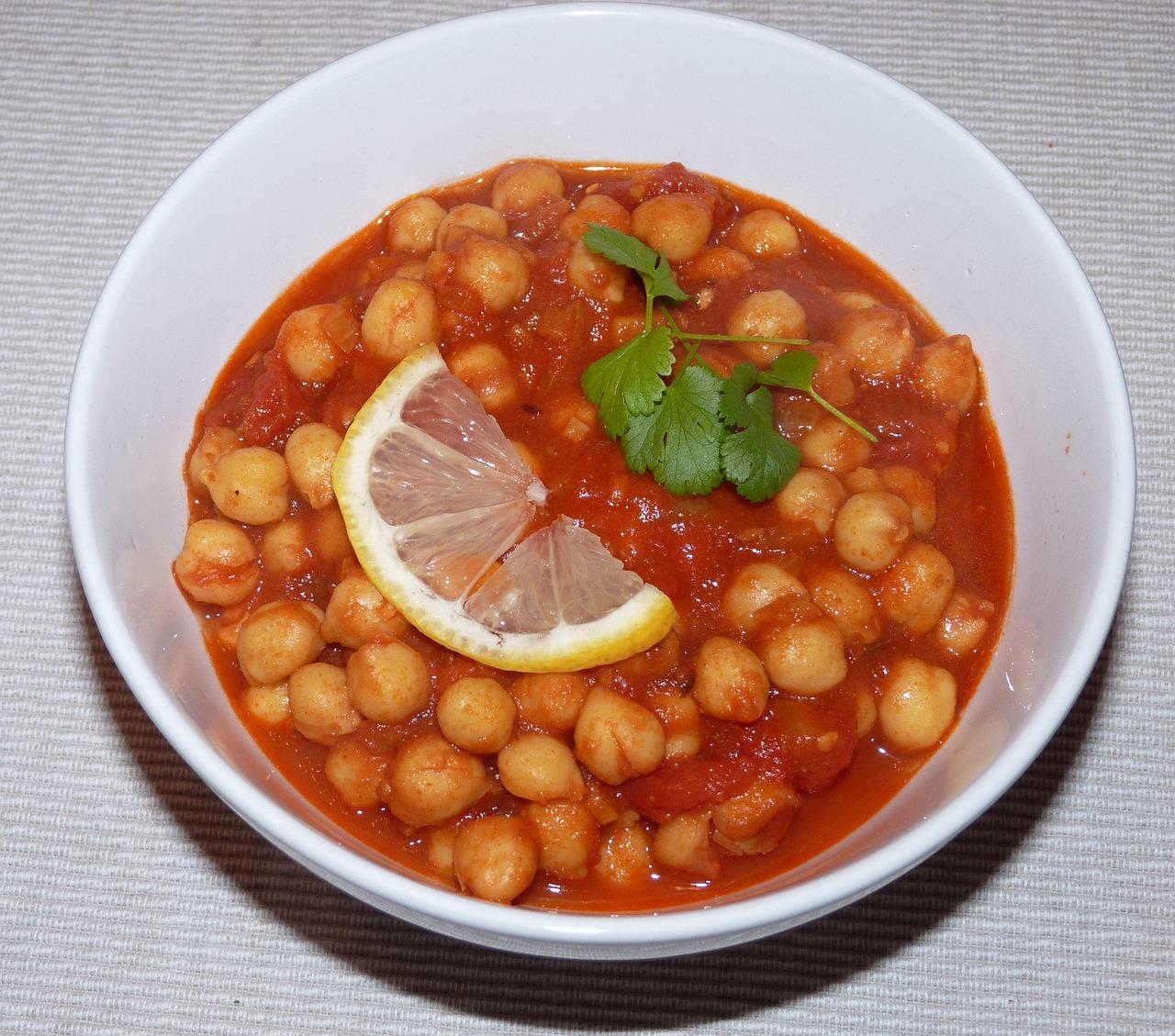
A North Indian staple that comes together from the store cupboard. Toasted cumin, slow-softened onion and a good spoonful of garam masala give tinned chickpeas real depth. Serve with rice, naan or a stack of warm rotis.

Kaju curryCashew curry
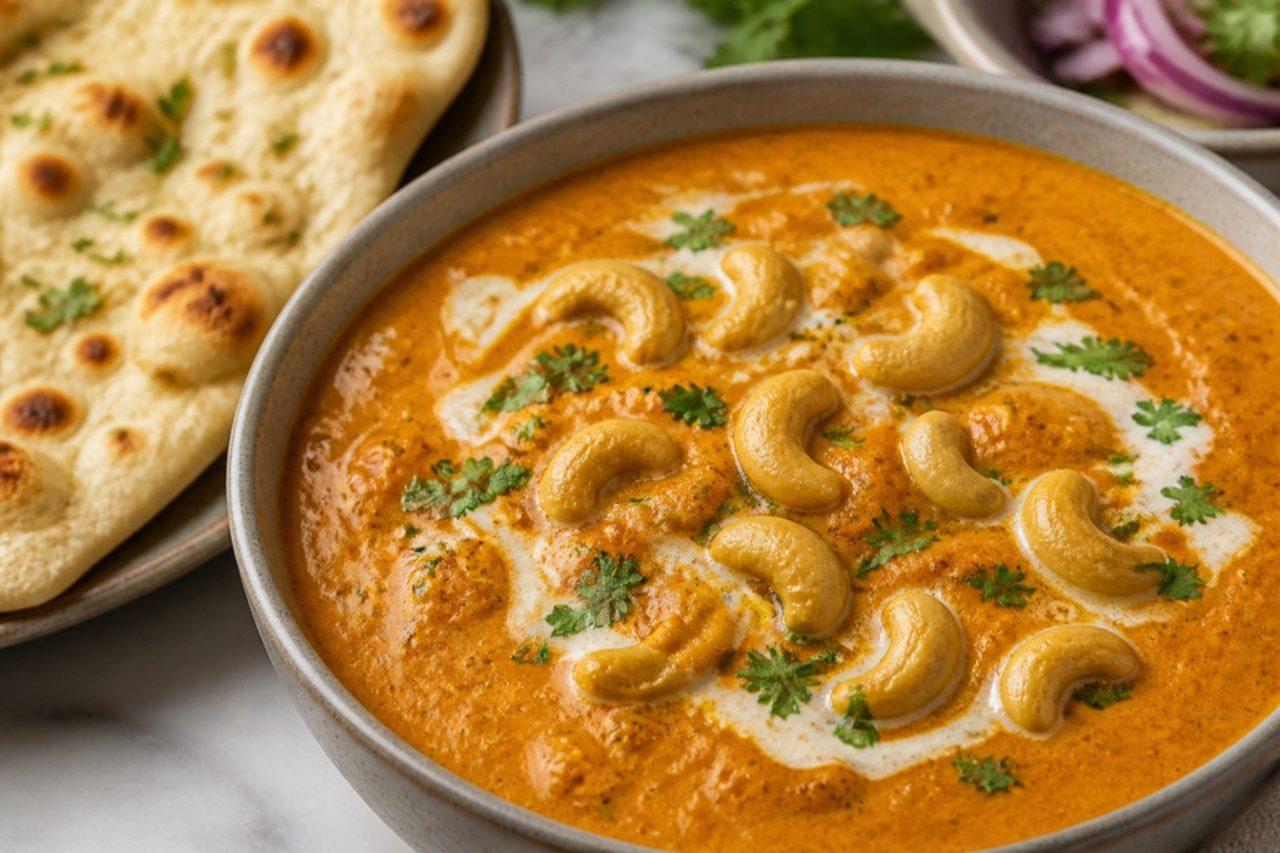
Walk along any wedding buffet in Pune, Mumbai or Ahmedabad and there is usually a chafing dish of kaju curry near the paneer, with guests going back for seconds. Whole cashews are fried in ghee until golden, which makes them crunchy outside and buttery inside, then folded into a rich onion and tomato gravy thickened with more cashews, finished with cream and kasuri methi. The gravy is orange, smooth and rounded with a touch of sweetness; it should taste of roasted nuts and gentle spice, not fire. Gujarati restaurants often serve a spicier Kathiyawadi version, but the wedding style here is the mild one. Eat it with butter naan, tandoori roti or jeera rice. Common mistake: adding the fried cashews too early; they soak up the gravy and turn soft, so fold them in just before serving. Chef's tip: keep a few fried cashews back and scatter them on top at the table so every spoonful has some crunch.

Bagara bainganBaby aubergines in peanut sesame sauce
Bagara baingan is a Hyderabadi wedding dish of small aubergines cooked whole in a dark, tangy gravy of roasted peanuts, sesame, dried coconut and tamarind. Unlike a Gujarati stuffed brinjal, the aubergines here are only quartered at the base and fried until silky, then left to soak up a thin-but-rich sauce that is finished with a tempering, the 'baghar' that gives the dish its name. It's sour, nutty and gently spiced, and is served with biryani, bagara rice or plain rice. Chef's tip: choose small, glossy purple aubergines that feel heavy for their size; soft, light ones are full of seeds and turn mushy before the gravy has a chance to cling.
Perfect for:Raksha Bandhan