
AI-generated image
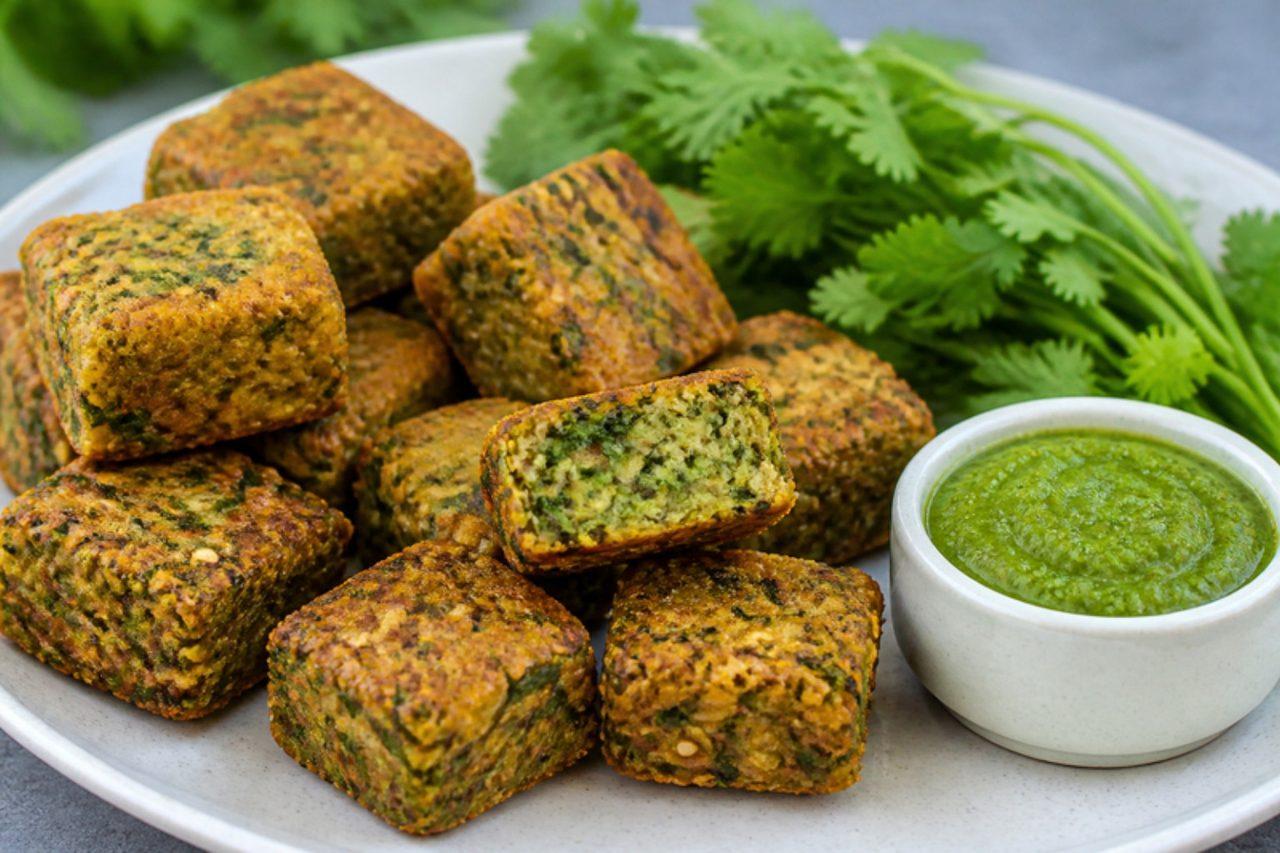
Kothimbir vadi
Coriander and gram flour fritters
कोथिंबीर वडी: Pune and Nashik's steamed-then-fried coriander and gram-flour squares



When the winter coriander in the Nashik markets comes in huge, fragrant bunches for a few rupees, Maharashtrian kitchens make kothimbir vadi. A batter that is mostly fresh coriander, held together with gram flour and sesame, is steamed into a cake, cut into squares, then shallow-fried until each piece has a crunchy shell and a soft, herby middle. It's a tea-time snack in Pune homes, a side on the festive thali and a favourite in tiffin boxes because it's good at room temperature. Serve with green chutney or tomato ketchup. Chef's tip: dry the coriander well after washing; wet leaves make the batter loose and the vadi soggy.
- Total time
- 55 min
- Difficulty
- medium
- Serves
- 4
Ingredients
For the vadi
- 4 oz fresh coriander, leaves and tender stemswashed, dried and finely chopped
- 4 oz gram flour
- 2 tbsp rice flour
- 1 tbsp white sesame seeds
- ½ tsp ground turmeric
- 1 tsp red chilli powder
- 1 tsp ground cumin
- 1 tsp sugar
- 1 tsp salt
- 1 tbsp groundnut oilplus extra for the tin
- ¼ cup waterabout
For frying
- 4 tbsp groundnut oil
- 1 tbsp white sesame seeds (optional)
Shop this recipe on Amazon
Spices & pantry
Fresh ingredients (2)
Links open Amazon in a new tab. As an Amazon Associate, WhatToEat.Today earns from qualifying purchases.
Method
0/7 doneStep 1: Mix 4 oz fresh coriander, leaves and tender stems, 4 oz gram flour, 2 tbsp rice flour, 1 tbsp white sesame seeds, 1 tbsp green chilli, ginger and garlic paste, ½ tsp ground turmeric, 1 tsp red chilli powder, 1 tsp ground cumin, 1 tsp sugar, 1 tsp salt and 1 tbsp groundnut oil in a bowl.
Step 2: Add ¼ cup water a tablespoon at a time and mix to a thick, sticky dough-like batter, like a very stiff cake batter. Common mistake: adding too much water at once. The coriander releases moisture as you mix, and a runny batter gives a heavy, wet vadi.
Step 3: Grease an 18 cm round tin or thali. Spread the batter in it about 2 cm thick and smooth the top with a wet spoon.
Step 4: Steam over boiling water, covered, on a medium heat for 18–20 minutes, until the cake has firmed up and a knife pushed into the centre comes out clean.
20 minStep 5: Leave it to cool completely, at least 20 minutes, so it sets firm enough to slice cleanly. Cut into 3 cm squares or diamonds. At this stage the squares keep in the fridge for 2 days.
20 minStep 6: Heat 4 tbsp groundnut oil in a wide frying pan over a medium heat. Lay in the squares, sprinkle with 1 tbsp white sesame seeds if using, and fry for 3–4 minutes a side until deep golden and crisp, with the sesame toasted.
8 minStep 7: Drain on kitchen paper and serve warm with green chutney.
Nutrition per serving
- Calories
- 240 kcal
- Protein
- 8 g
- Carbs
- 20 g
- Fat
- 15 g
- Fibre
- 5 g
Nutrition values are estimates.
KrazyBadal
Good to know
- How long does kothimbir vadi take?
- About 55 minutes in total: 20 minutes to prepare and 35 minutes to cook.
- How many people does it serve?
- 4 as written. Change the servings above the ingredients and every amount scales to match.
- Is it vegan?
- Yes. It has no meat, fish, dairy or eggs.
- Is it gluten free?
- Yes, as written. Check the labels on stock, sauces and spice mixes, which sometimes contain gluten.
- Can I make it ahead?
- Yes. It keeps well, so you can cook it earlier in the day or the day before and reheat it.
- What can I use instead of fresh coriander, leaves and tender stems?
- Flat-leaf parsley with a little mint (for people who dislike coriander too).
- What can I use instead of white sesame seeds?
- Poppy seeds or finely chopped pumpkin seeds, same amount.
Reviews
No reviews yet. Be the first to cook it.
Rate this recipe
Sign in to rate and review this recipe.
You might also like

Yaki onigiriGrilled rice balls
Yaki onigiri (焼きおにぎり) are rice balls grilled until they form a crisp, toasty crust, then brushed with soy sauce glaze. They are eaten all over Japan, at izakaya, at barbecues and from the freezer section, as a snack or with miso soup. The inside stays soft and steamy while the outside crackles. Best eaten hot, straight from the pan. Chef's tip: let the shaped rice balls dry for 10 minutes before they go in the pan. A drier surface forms a better crust and won't stick, and the glaze goes on only at the end so it doesn't burn.
 Japanese

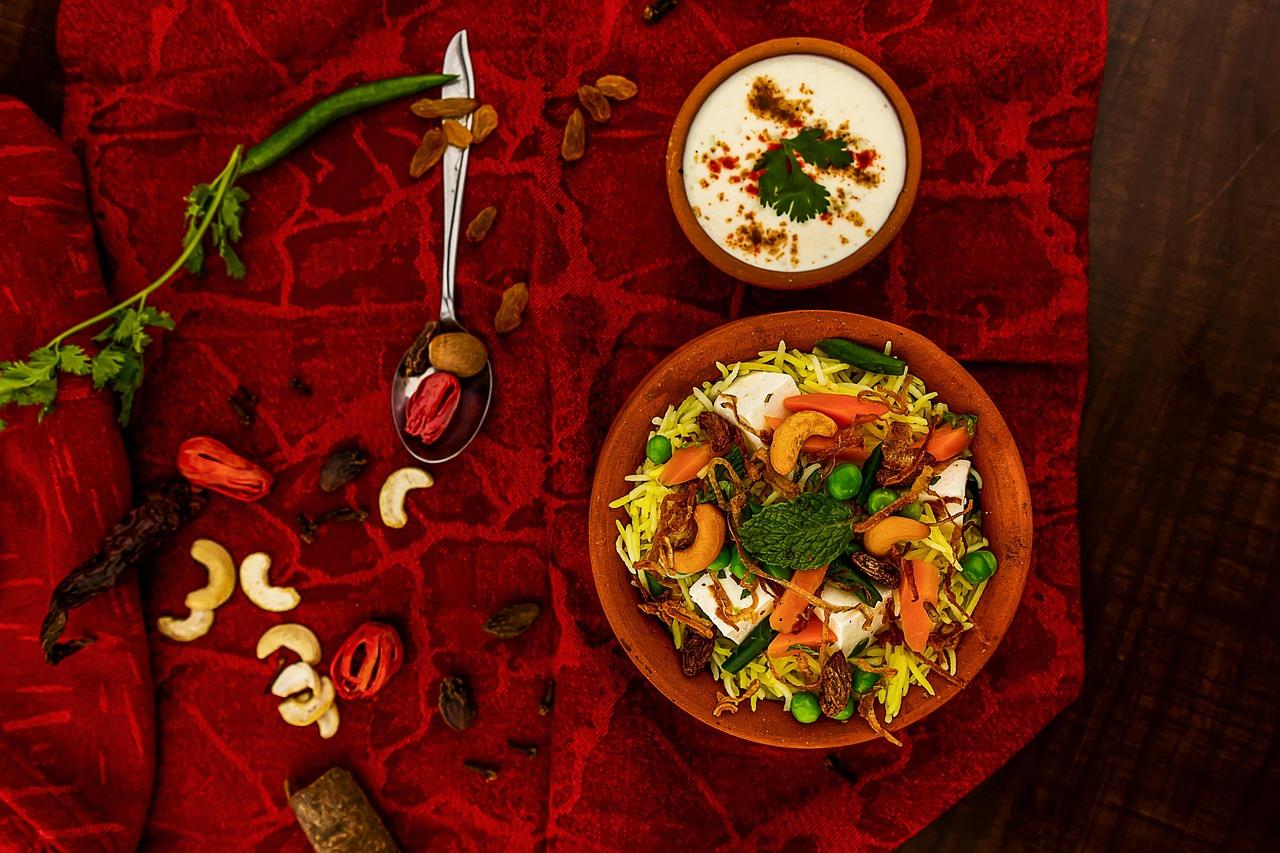
Paneer biryaniRice and moong dal in coconut milk
A mild, creamy biryani: rice and husked green gram roasted in ghee, then cooked in coconut milk with peas, carrots, potatoes, peanuts and cashews, and finished with soft fried paneer and a fresh coriander yogurt. Serve hot, garnished with more fried cashews and paneer.


Sabudana khichdiSago with peanuts and potato
Sabudana khichdi is the dish that sees Maharashtra through every vrat (fast), from Navratri to Ekadashi, but it's so good that people eat it any day of the week. Soaked sago pearls are tossed in a pan with crushed roasted peanuts, cubes of potato, cumin and green chilli until each pearl turns glassy and separate, then finished with lemon and coriander. It's soft, chewy, nutty and gently hot. Fasting rules vary from family to family, so check yours; this version uses rock salt and no asafoetida, onion or garlic. Traditionally it's cooked in ghee; use ghee instead of oil if you aren't keeping it vegan. Chef's tip: soak the sago in just enough water to cover by the height of the pearls themselves, no more; too much water is the reason khichdi turns into one sticky lump.
Perfect for:Tea-time