
AI-generated image
Kway chap
粿汁 guǒzhī: Chaozhou-Shantou rice sheets in dark braising broth with pork, tofu and egg
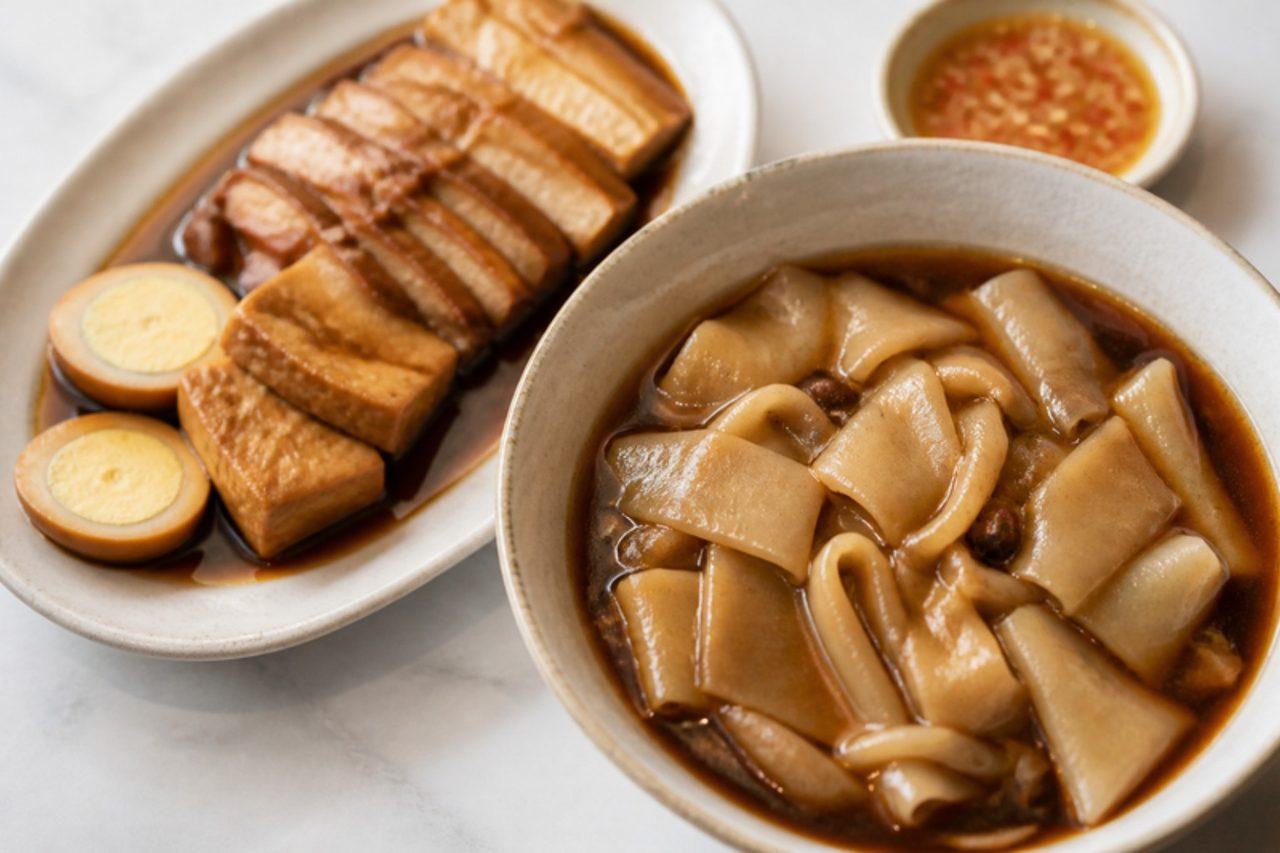
Breakfast in Shantou and Chaozhou often means a steaming bowl of kway chap from a market stall: squares of rice sheet simmered until soft and silky in a dark, gently spiced broth, with braised pork belly, tofu and eggs on the side. Teochew emigrants carried it to Singapore, where it became a hawker centre favourite, but the original is simpler, cheaper and very comforting on a cool morning. The broth tastes of soy, star anise and cinnamon, slightly sweet, and the rice sheets drink it up. Eat it with chilli vinegar, pickled mustard greens and plenty of white pepper. Chef's tip: braise the pork the night before; the flavours settle and you can lift the hardened fat off the top.
- Total time
- 60 min
- Difficulty
- medium
- Serves
- 4
Ingredients
For the braise
For the rice sheets
To serve
Method
0/10 doneStep 1: Soak 9 oz dried rice sheets (kway) or wide flat rice noodles in a bowl of warm water for 20 minutes while you start the braise, until the pieces are pliable.
20 minStep 2: Put 1 ⅓ lb pork belly in a pot of cold water, bring to the boil and blanch for 3 minutes. Drain and rinse off the scum.
8 minStep 3: Heat 1 tbsp neutral oil in a heavy pot over a medium heat and fry 6 cloves garlic, ⅔ oz galangal, 2 star anise, 1 cinnamon stick and 3 cloves for 1 minute until fragrant. Add 2 tbsp brown sugar and stir until it melts and bubbles.
2 minStep 4: Add the pork and toss to coat, then pour in 3 tbsp dark soy sauce, 3 tbsp light soy sauce and 5 cups water. Bring to the boil, cover and simmer gently over a low heat for 30 minutes.
30 minStep 5: Meanwhile, boil 4 eggs for 8 minutes, cool them in cold water and peel.
10 minStep 6: Add the eggs and 10 ½ oz firm tofu to the braise and simmer, uncovered, for 15 minutes more, turning them now and then, until the pork is tender when pierced and the eggs are evenly brown.
15 minStep 7: Bring 3 ¼ cups chicken stock or water to the boil in a separate pan. Drain the rice sheets and add them with 3 ladles of the braising liquid. Simmer over a medium heat for 4–6 minutes, stirring often so the sheets don't clump, until they are soft and the broth has thickened slightly.
6 minStep 8: Taste the broth and add more braising liquid if you want it darker and saltier. Don't simmer the rice sheets longer than needed; a common mistake is cooking them to mush.
Step 9: Ladle the rice sheets and broth into bowls and dust with ½ tsp ground white pepper. Slice the pork, halve the eggs and cut the tofu, and serve them on a plate alongside with a spoonful of braising liquid over the top.
Step 10: Finish with fried shallots and coriander, and put out the chilli vinegar and pickled mustard greens for everyone to add.
Nutrition per serving
- Calories
- 640 kcal
- Protein
- 30 g
- Carbs
- 62 g
- Fat
- 30 g
- Fibre
- 2 g
Nutrition values are estimates.
KrazyBadal
Good to know
- How long does kway chap take?
- About 60 minutes in total: 15 minutes to prepare and 45 minutes to cook.
- How many people does it serve?
- 4 as written. Change the servings above the ingredients and every amount scales to match.
- What can I use instead of garlic?
- ½ tsp garlic paste or ⅛ tsp garlic powder per clove.
- What can I use instead of star anise?
- ½ tsp aniseeds or fennel seeds per star.
Reviews
No reviews yet. Be the first to cook it.
Rate this recipe
Sign in to rate and review this recipe.
You might also like

Soto Banjar
Along the rivers of Banjarmasin in South Kalimantan, breakfast often means soto Banjar eaten at a wooden riverside warung, sometimes after a dawn trip to the floating market. Unlike the turmeric sotos of Java, this broth is pale and clear, perfumed with the sweet spices that traders brought up the river centuries ago: cinnamon, cloves, star anise, cardamom and nutmeg. Shredded chicken, glass noodles, carrot and a boiled egg go into the bowl with rice cakes, and lime and a little chilli sharpen it at the table. Chef's tip: toast the whole spices in the pan for a minute before the paste goes in; it brings out their sweetness without the dusty edge of ground spice.


Miso soup
Miso soup (味噌汁) is drunk every day in homes all over Japan, at breakfast as well as dinner, beside a bowl of rice. The base is dashi; this vegan version uses kombu and dried shiitake instead of bonito, which gives it a deep, rounded flavour. Silken tofu and wakame seaweed are the classic fillings. It takes ten minutes; just remember not to boil the miso. Chef's tip: add the miso at the very end and never let it boil. Boiling kills the miso's fresh, fermented aroma; Japanese cooks say the soup should only 'smile', with the surface barely trembling.


Roasted tomato and basil soup
Roasting the tomatoes with onion and garlic concentrates their sweetness and gives the soup a gentle smokiness you can't get from a tin. Lovely with a grilled cheese sandwich.
