
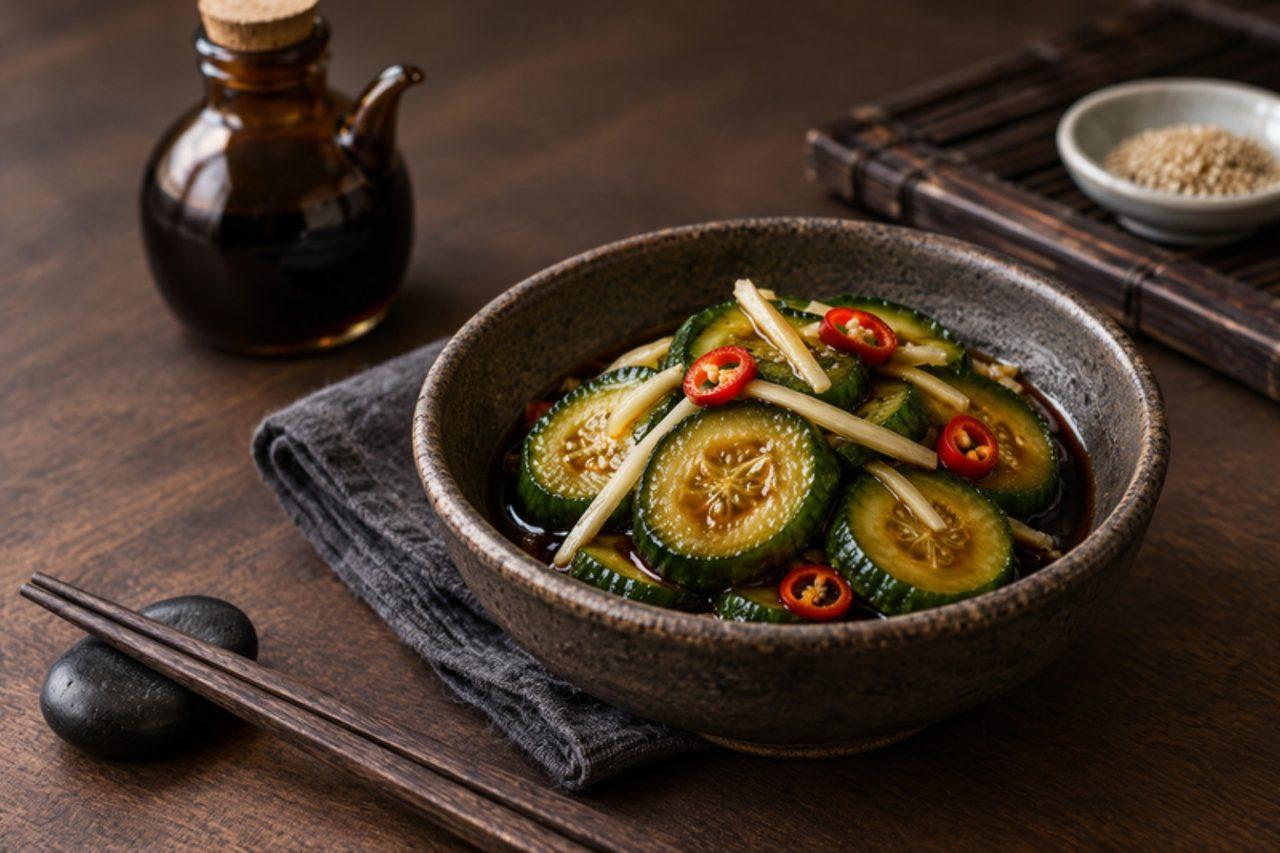
AI-generated image
Kyuri no shoyuzuke
Soy-pickled cucumber
きゅうりの醤油漬け: cucumber rounds scalded twice in soy, ginger and chilli for a crunchy, glossy pickle to eat with rice


When summer gardens across Japan produce more cucumbers than anyone can eat, grandmothers make this: thick cucumber rounds scalded in a pot of soy sauce, vinegar, sugar, ginger and chilli, then left to soak. It appears in July and August beside white rice and miso soup, rolled into onigiri, and on the table at rural inns as the small dish everyone reaches for. It is deeply savoury, a little sweet, with a ginger and chilli warmth and a surprising snap, because the cucumbers are drained and scalded again instead of simmered. The common mistake is boiling the cucumbers in the liquid: they go soft and olive-coloured. Instead, pour the boiling liquid over, drain it off, reheat it, and pour it back, twice; each round draws out water and keeps the crunch. They are ready when the rounds are glossy dark brown, slightly wrinkled at the edges and crunchy right through. Use firm, small-seeded cucumbers such as Japanese or Lebanese; large salad cucumbers with big seeds go soggy. Chef's tip: add a strip of kombu in the last round and a handful of toasted sesame seeds when you serve, for deeper flavour.
- Total time
- 30 min
- Difficulty
- easy
- Serves
- 8
Ingredients
For the cucumbers
- 1 ¾ lb Japanese or Lebanese cucumbersabout 6–8 small, firm cucumbers
- 0.6 oz fine sea salt2% of the cucumber weight
For the soy pickling liquid
- ½ cup soy sauce
- 3 ½ tbsp rice vinegar
- 2 ⅛ oz sugar
- 1 oz fresh gingercut into fine matchsticks
- 1 dried red chilliseeds removed, in rings
- ⅛ oz kombu (optional)a 5 cm square, cut into strips
- 1 tbsp toasted sesame seeds (optional)
Shop this recipe on Amazon
What you'll need
Fresh ingredients (2)
Links open Amazon in a new tab. As an Amazon Associate, WhatToEat.Today earns from qualifying purchases.
Method
0/6 doneStep 1: Clean the jar or container and lid: wash in hot soapy water, rinse, then dry in a 250°F oven for 10 minutes (or pour boiling water over and in it and air-dry upside down). Let it cool; it must be completely dry.
Step 2: Wash the 1 ¾ lb Japanese or Lebanese cucumbers, trim the ends and cut into 7 mm rounds. Toss with 0.6 oz fine sea salt and leave for 30 minutes, until they bend and water pools in the bowl. Squeeze firmly and put in a heatproof bowl.
10 minStep 3: Bring ½ cup soy sauce, 3 ½ tbsp rice vinegar, 2 ⅛ oz sugar, 1 oz fresh ginger and 1 dried red chilli to a boil in a pan over a medium heat, stirring until the sugar dissolves, about 2 minutes.
2 minStep 4: Pour the boiling liquid over the cucumbers, stir, and leave 10 minutes, until they darken and give up more water. Tip everything into a sieve over the pan, then boil the liquid again for 2 minutes; it will be more watery now.
4 minStep 5: Pour it back over the cucumbers, leave 10 minutes, then drain and reboil once more for 2 minutes, adding ⅛ oz kombu if using. Pour over a third time. The cucumbers should look glossy and brown and still snap.
4 minStep 6: Cool completely, then pack cucumbers and liquid into the clean jar and refrigerate. Good after 1 hour, best the next day; keeps 1–2 weeks in the fridge. Scatter 1 tbsp toasted sesame seeds over to serve. Throw away if it fizzes, turns slimy, grows mould or smells off.
Nutrition per serving
- Calories
- 45 kcal
- Protein
- 2 g
- Carbs
- 10 g
- Fat
- 0 g
- Fibre
- 1 g
Nutrition values are estimates.
KrazyBadal
Good to know
- How long does kyuri no shoyuzuke take?
- About 30 minutes in total: 20 minutes to prepare and 10 minutes to cook.
- How many people does it serve?
- 8 as written. Change the servings above the ingredients and every amount scales to match.
- Is it vegan?
- Yes. It has no meat, fish, dairy or eggs.
- Can I make it ahead?
- Yes. It keeps well, so you can cook it earlier in the day or the day before and reheat it.
- What can I use instead of japanese or lebanese cucumbers?
- Courgette, same weight (in salads, use young ones).
- What can I use instead of soy sauce?
- Tamari, same amount (gluten free).
Reviews
No reviews yet. Be the first to cook it.
Rate this recipe
Sign in to rate and review this recipe.
You might also like

Yaki onigiriGrilled rice balls
Yaki onigiri (焼きおにぎり) are rice balls grilled until they form a crisp, toasty crust, then brushed with soy sauce glaze. They are eaten all over Japan, at izakaya, at barbecues and from the freezer section, as a snack or with miso soup. The inside stays soft and steamy while the outside crackles. Best eaten hot, straight from the pan. Chef's tip: let the shaped rice balls dry for 10 minutes before they go in the pan. A drier surface forms a better crust and won't stick, and the glaze goes on only at the end so it doesn't burn.


Miso soup
Miso soup (味噌汁) is drunk every day in homes all over Japan, at breakfast as well as dinner, beside a bowl of rice. The base is dashi; this vegan version uses kombu and dried shiitake instead of bonito, which gives it a deep, rounded flavour. Silken tofu and wakame seaweed are the classic fillings. It takes ten minutes; just remember not to boil the miso. Chef's tip: add the miso at the very end and never let it boil. Boiling kills the miso's fresh, fermented aroma; Japanese cooks say the soup should only 'smile', with the surface barely trembling.
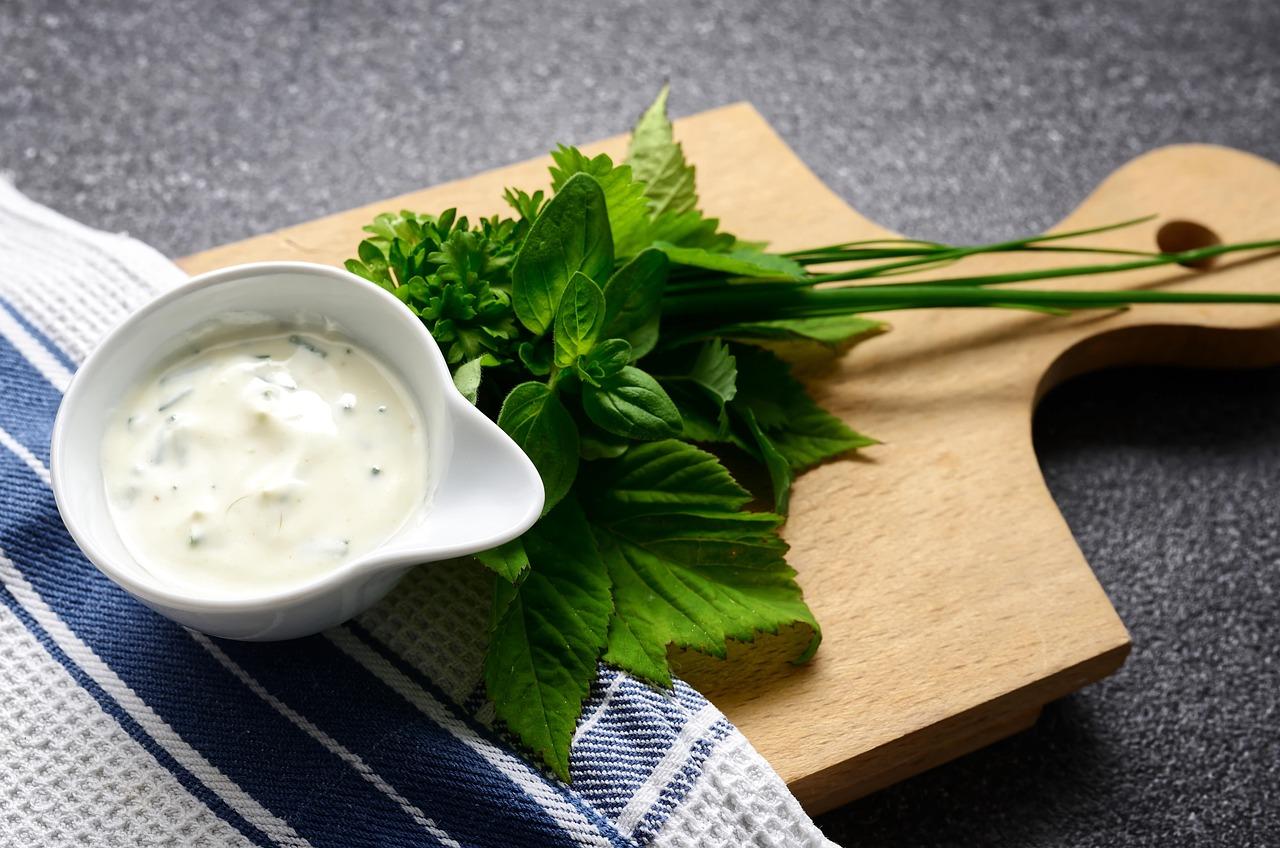
Sour cream dip
A simple, tangy dip made with thick home-made cottage cheese (hung yogurt) or ready-made sour cream, seasoned with garlic, chilli, black pepper and vinegar. Serve it cold with crisps, nachos and jacket potatoes. The book's other dips use this as their 'sour cream'.
