
AI-generated image
Lauki kofta
Bottle gourd balls in gravy
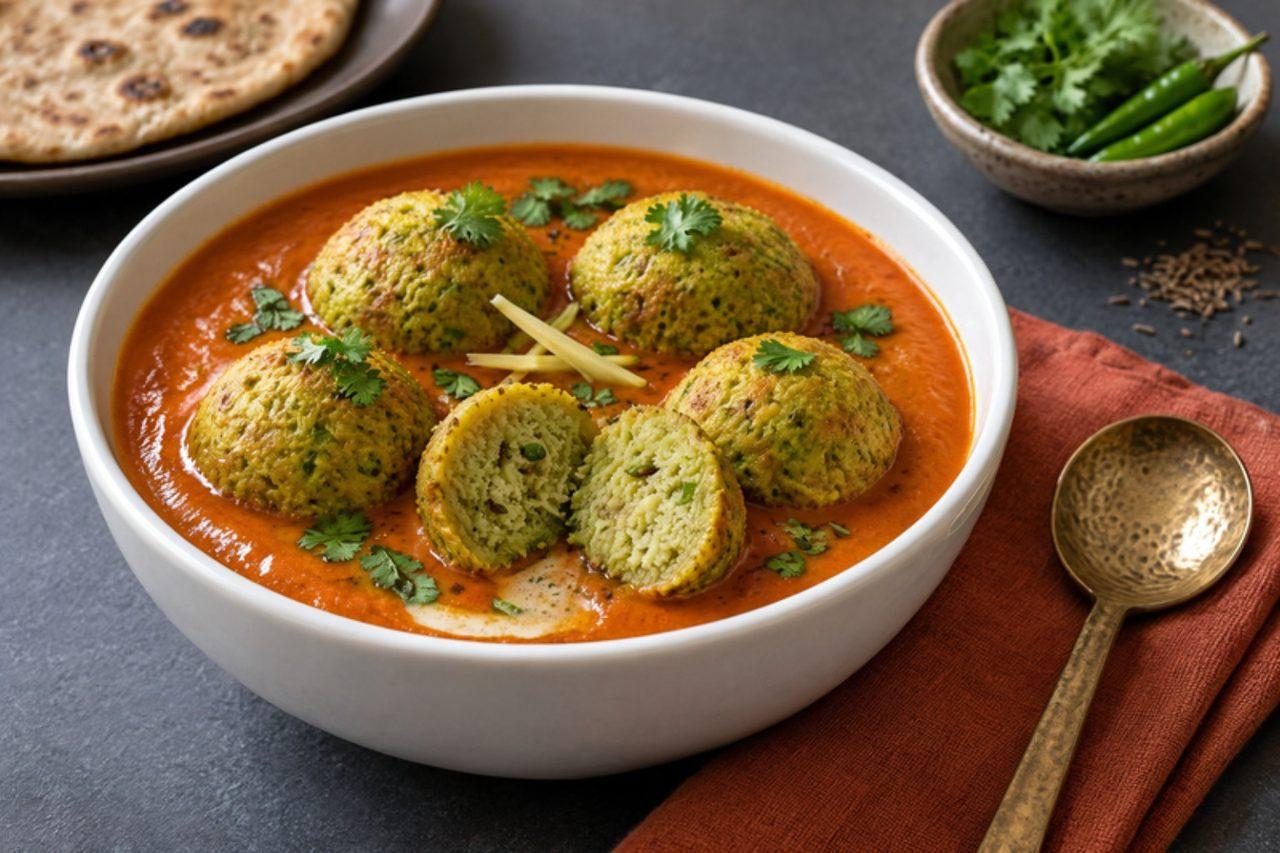
लौकी कोफ्ता: grated bottle-gourd and gram-flour balls fried and simmered in an onion-tomato gravy



Lauki kofta is how North Indian mothers in Punjab and Uttar Pradesh smuggle the humble bottle gourd onto a party table: the gourd is grated and squeezed, bound with gram flour, fried into soft balls and slipped into an onion-tomato gravy. It is a Sunday-lunch and dinner-party curry with phulka, jeera rice or laccha paratha. The classic mistake is not squeezing the lauki hard enough; wet mixture splutters in the oil and the koftas fall apart. Chef's tip: save the squeezed lauki juice and use it in place of water in the gravy, so none of its flavour is wasted.
- Total time
- 65 min
- Difficulty
- medium
- Serves
- 4
Ingredients
For the koftas
- 1 ⅓ lb bottle gourd (lauki)peeled and grated
- ¾ tsp salt
- 2 ½ oz gram flour (besan)
- 1 green chillifinely chopped
- 1 tsp gingergrated
- 2 tbsp fresh corianderchopped
- 2 cups oil for deep-frying
For the gravy
- 2 tbsp oil
- ½ tsp cumin seeds
- 1 bay leaf
- 2 onionspuréed
- 1 tbsp ginger-garlic paste
- 3 tomatoespuréed
- 1 ½ tsp Kashmiri chilli powder
- 2 tsp ground coriander
- ¼ tsp ground turmeric
- ¾ tsp salt
- 1 ¼ cups reserved lauki juice or water
- ½ tsp garam masala
- 1 tsp kasuri methicrushed
Shop this recipe on Amazon
Spices & pantry
Fresh ingredients (6)
Links open Amazon in a new tab. As an Amazon Associate, WhatToEat.Today earns from qualifying purchases.
Method
0/8 doneStep 1: Toss 1 ⅓ lb bottle gourd (lauki) with ¾ tsp salt, leave 5 minutes, then squeeze handful by handful very hard, saving the juice.
8 minStep 2: Mix the squeezed lauki with 2 ½ oz gram flour (besan), 1 green chilli, 1 tsp ginger and 2 tbsp fresh coriander into a soft mixture that holds its shape. Roll into 16 walnut-sized balls with damp hands.
8 minStep 3: Heat 2 cups oil for deep-frying in a kadhai, no more than a third of its depth, over medium heat. Test with a pinch of mixture: it should rise in 2–3 seconds with steady bubbles. Never leave the oil unattended.
5 minStep 4: Fry the koftas in batches for 4–5 minutes, turning, until deep golden and firm. Drain on paper.
12 minStep 5: For the gravy, heat 2 tbsp oil, add ½ tsp cumin seeds and 1 bay leaf, then 2 onions and cook 8 minutes until the raw smell goes and they turn light brown. Add 1 tbsp ginger-garlic paste for 1 minute.
9 minStep 6: Add 3 tomatoes, 1 ½ tsp Kashmiri chilli powder, 2 tsp ground coriander, ¼ tsp ground turmeric and ¾ tsp salt and cook 7–8 minutes until the oil separates.
8 minStep 7: Pour in 1 ¼ cups reserved lauki juice or water and simmer 5 minutes. Add ½ tsp garam masala and 1 tsp kasuri methi.
5 minStep 8: Slide in the koftas just before serving and simmer 2 minutes, so they warm through without going soggy.
2 min
Nutrition per serving
- Calories
- 290 kcal
- Protein
- 8 g
- Carbs
- 26 g
- Fat
- 18 g
- Fibre
- 6 g
Nutrition values are estimates.
KrazyBadal
Good to know
- How long does lauki kofta take?
- About 65 minutes in total: 25 minutes to prepare and 40 minutes to cook.
- How many people does it serve?
- 4 as written. Change the servings above the ingredients and every amount scales to match.
- Is it vegan?
- Yes. It has no meat, fish, dairy or eggs.
- Is it gluten free?
- Yes, as written. Check the labels on stock, sauces and spice mixes, which sometimes contain gluten.
- What can I use instead of green chilli?
- A pinch of chilli flakes per chilli.
- What can I use instead of fresh coriander?
- Flat-leaf parsley with a little mint (for people who dislike coriander too).
Reviews
No reviews yet. Be the first to cook it.
Rate this recipe
Sign in to rate and review this recipe.
You might also like

Sayur lodehVegetables in coconut milk
Sayur lodeh is everyday cooking in Central Java, made in big pots in Solo and Semarang kitchens and ladled over rice, with lontong rice cakes at Lebaran, or alongside opor and sambal goreng on festive tables. It's soupy rather than thick: a fragrant broth of coconut milk, galangal, lemongrass and lime leaf that carries chunks of aubergine, long beans, chayote and sweetcorn, plus tempeh and tofu to make it a meal. The flavour is mellow and slightly sweet, so the heat comes from sambal on the side. Chef's tip: keep the pot at a gentle simmer once the coconut milk goes in and stir now and then — a rolling boil splits the coconut milk into oily curds.
 Indonesian



Sabudana khichdiSago with peanuts and potato
Sabudana khichdi is the dish that sees Maharashtra through every vrat (fast), from Navratri to Ekadashi, but it's so good that people eat it any day of the week. Soaked sago pearls are tossed in a pan with crushed roasted peanuts, cubes of potato, cumin and green chilli until each pearl turns glassy and separate, then finished with lemon and coriander. It's soft, chewy, nutty and gently hot. Fasting rules vary from family to family, so check yours; this version uses rock salt and no asafoetida, onion or garlic. Traditionally it's cooked in ghee; use ghee instead of oil if you aren't keeping it vegan. Chef's tip: soak the sago in just enough water to cover by the height of the pearls themselves, no more; too much water is the reason khichdi turns into one sticky lump.

Bagara bainganBaby aubergines in peanut sesame sauce
Bagara baingan is a Hyderabadi wedding dish of small aubergines cooked whole in a dark, tangy gravy of roasted peanuts, sesame, dried coconut and tamarind. Unlike a Gujarati stuffed brinjal, the aubergines here are only quartered at the base and fried until silky, then left to soak up a thin-but-rich sauce that is finished with a tempering, the 'baghar' that gives the dish its name. It's sour, nutty and gently spiced, and is served with biryani, bagara rice or plain rice. Chef's tip: choose small, glossy purple aubergines that feel heavy for their size; soft, light ones are full of seeds and turn mushy before the gravy has a chance to cling.