
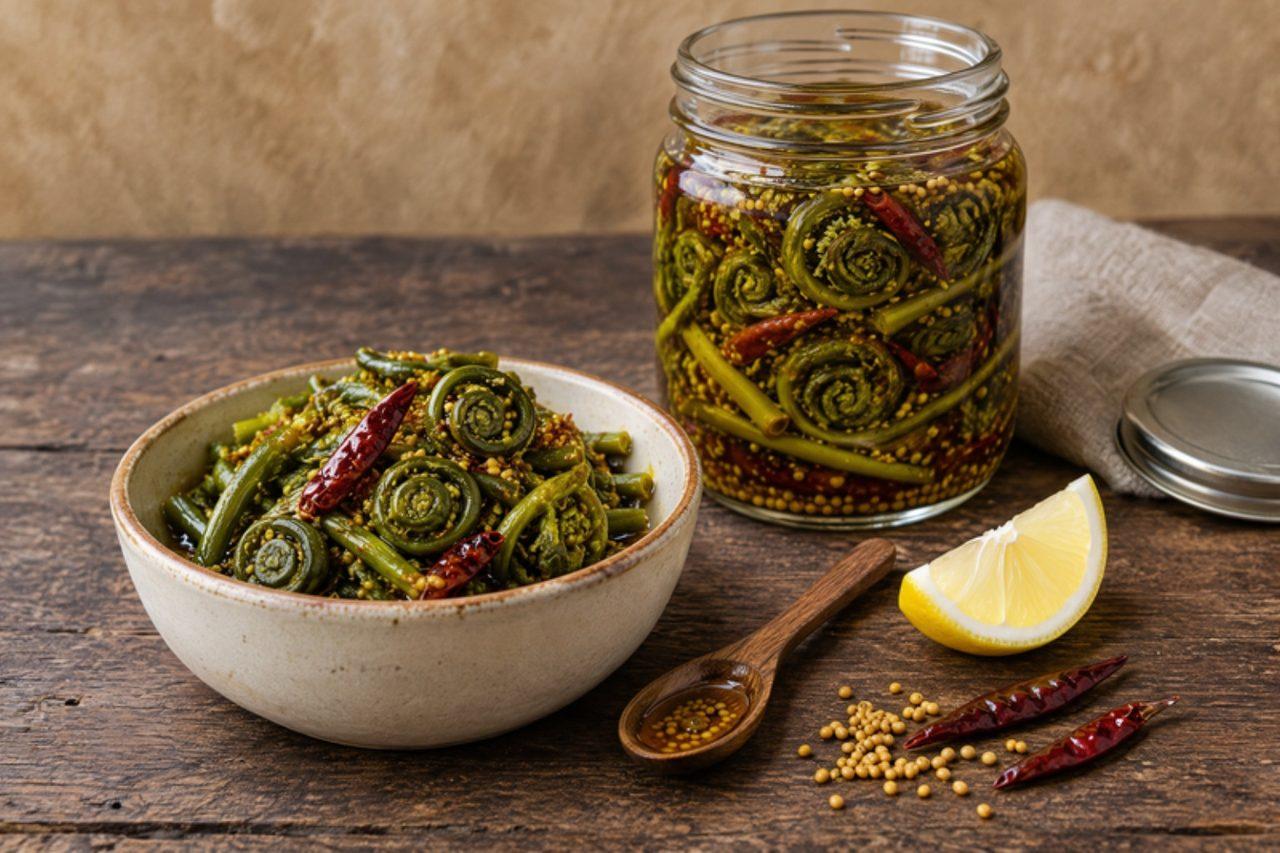
AI-generated image
Lingad ka achar
Fiddlehead fern pickle
लिंगड़ का अचार: wild fiddlehead fern shoots, blanched and pickled with mustard seed, chilli and lemon



In Kullu, Mandi and Kangra, the monsoon brings lingad, the curled young shoots of the vegetable fern that grows along streams and terrace edges. Villagers pick them in the morning and sell them by the bundle; what is not stir-fried with potato goes into a small jar of pickle to stretch the short season. The shoots are blanched, dressed with mustard oil, crushed mustard seed, red chilli and lemon, and the result is green, crisp and faintly like asparagus with a nutty mustard heat. It is eaten with siddu, rice and madra, or simply with a hot roti. Outside the Himalaya, use ostrich fern fiddleheads, which appear in spring in North America and Europe. Fern shoots must always be cooked; raw or undercooked fiddleheads can upset the stomach badly. Common mistake: only flash-blanching them; boil for the full time. It is ready after a night in the fridge, when the coils have dulled to olive and taste tangy. Keep it in the fridge for up to 10 days; discard if you see mould, slime or smell anything off. Chef's tip: rub off the brown papery scales between your palms under running water before you weigh them.
- Total time
- 40 min
- Difficulty
- medium
- Serves
- 8
Ingredients
For the pickle
- 10 ½ oz lingad (fiddlehead fern shoots)or ostrich fern fiddleheads; tightly coiled ones only
- 1 tbsp saltfor the boiling water
- 1 ½ tbsp brown mustard seedscoarsely crushed
- 1 tsp red chilli powder
- ½ tsp ground turmeric
- 1 ½ tsp salt
- 3 tbsp lemon juice
- 4 tbsp mustard oil
Shop this recipe on Amazon
Fresh ingredients (1)
Links open Amazon in a new tab. As an Amazon Associate, WhatToEat.Today earns from qualifying purchases.
Method
0/6 doneStep 1: Rub the brown scales off the 10 ½ oz lingad (fiddlehead fern shoots) under running water, snap off the tough ends, and cut any long stems into 4 cm pieces. Wash in two changes of water.
15 minStep 2: Boil in 2 litres of fresh water with 1 tbsp salt over a high heat for 12–15 minutes, until the coils are tender right through and olive green; this full boil is essential for fiddleheads. Drain and spread on a cloth to dry for an hour.
15 minStep 3: Wash a 500 ml jar in hot soapy water, rinse and dry it in a 250°F oven for 10 minutes; cool.
10 minStep 4: Heat 4 tbsp mustard oil in a small pan until it smokes, turn off the heat, cool for 2 minutes, then stir in 1 ½ tbsp brown mustard seeds, 1 tsp red chilli powder and ½ tsp ground turmeric; they should sizzle gently, not burn.
3 minStep 5: Toss the fern shoots with the spiced oil, 1 ½ tsp salt and 3 tbsp lemon juice in a dry bowl until evenly coated.
2 minStep 6: Pack into the jar, press down, close and refrigerate overnight. It is ready when it tastes tangy and the mustard has turned pungent. Keep in the fridge up to 10 days, dry spoon each time; discard if mould, slime or an off smell appears.
Nutrition per serving
- Calories
- 75 kcal
- Protein
- 2 g
- Carbs
- 3 g
- Fat
- 7 g
- Fibre
- 2 g
Nutrition values are estimates.
KrazyBadal
Good to know
- How long does lingad ka achar take?
- About 40 minutes in total: 25 minutes to prepare and 15 minutes to cook.
- How many people does it serve?
- 8 as written. Change the servings above the ingredients and every amount scales to match.
- Is it vegan?
- Yes. It has no meat, fish, dairy or eggs.
- Is it gluten free?
- Yes, as written. Check the labels on stock, sauces and spice mixes, which sometimes contain gluten.
- Can I make it ahead?
- Yes. It keeps well, so you can cook it earlier in the day or the day before and reheat it.
- What can I use instead of brown mustard seeds?
- Cumin seeds, same amount (different flavour, same crackle).
- What can I use instead of red chilli powder?
- Cayenne, half the amount (hotter).
Reviews
No reviews yet. Be the first to cook it.
Rate this recipe
Sign in to rate and review this recipe.
You might also like

SakarpadaSweet fried dough diamonds
Sakarpada (shakarpara) are little sweet diamonds of a rich dough made with ghee, milk and sugar, fried until golden and crunchy. They are a Diwali favourite with tea, and the cubes go into bhusu too. They keep for weeks in an air-tight tin.
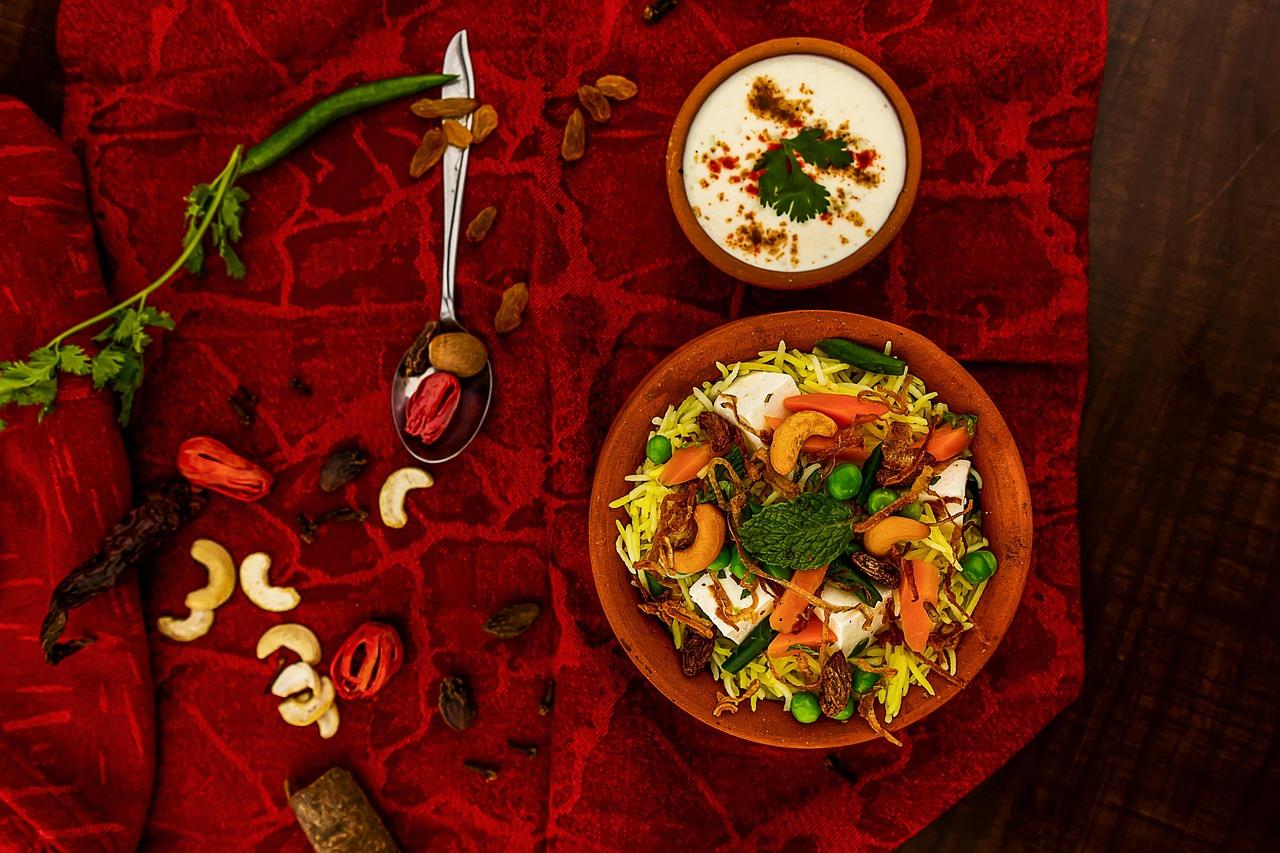
Paneer biryaniRice and moong dal in coconut milk
A mild, creamy biryani: rice and husked green gram roasted in ghee, then cooked in coconut milk with peas, carrots, potatoes, peanuts and cashews, and finished with soft fried paneer and a fresh coriander yogurt. Serve hot, garnished with more fried cashews and paneer.


Sabudana khichdiSago with peanuts and potato
Sabudana khichdi is the dish that sees Maharashtra through every vrat (fast), from Navratri to Ekadashi, but it's so good that people eat it any day of the week. Soaked sago pearls are tossed in a pan with crushed roasted peanuts, cubes of potato, cumin and green chilli until each pearl turns glassy and separate, then finished with lemon and coriander. It's soft, chewy, nutty and gently hot. Fasting rules vary from family to family, so check yours; this version uses rock salt and no asafoetida, onion or garlic. Traditionally it's cooked in ghee; use ghee instead of oil if you aren't keeping it vegan. Chef's tip: soak the sago in just enough water to cover by the height of the pearls themselves, no more; too much water is the reason khichdi turns into one sticky lump.
