
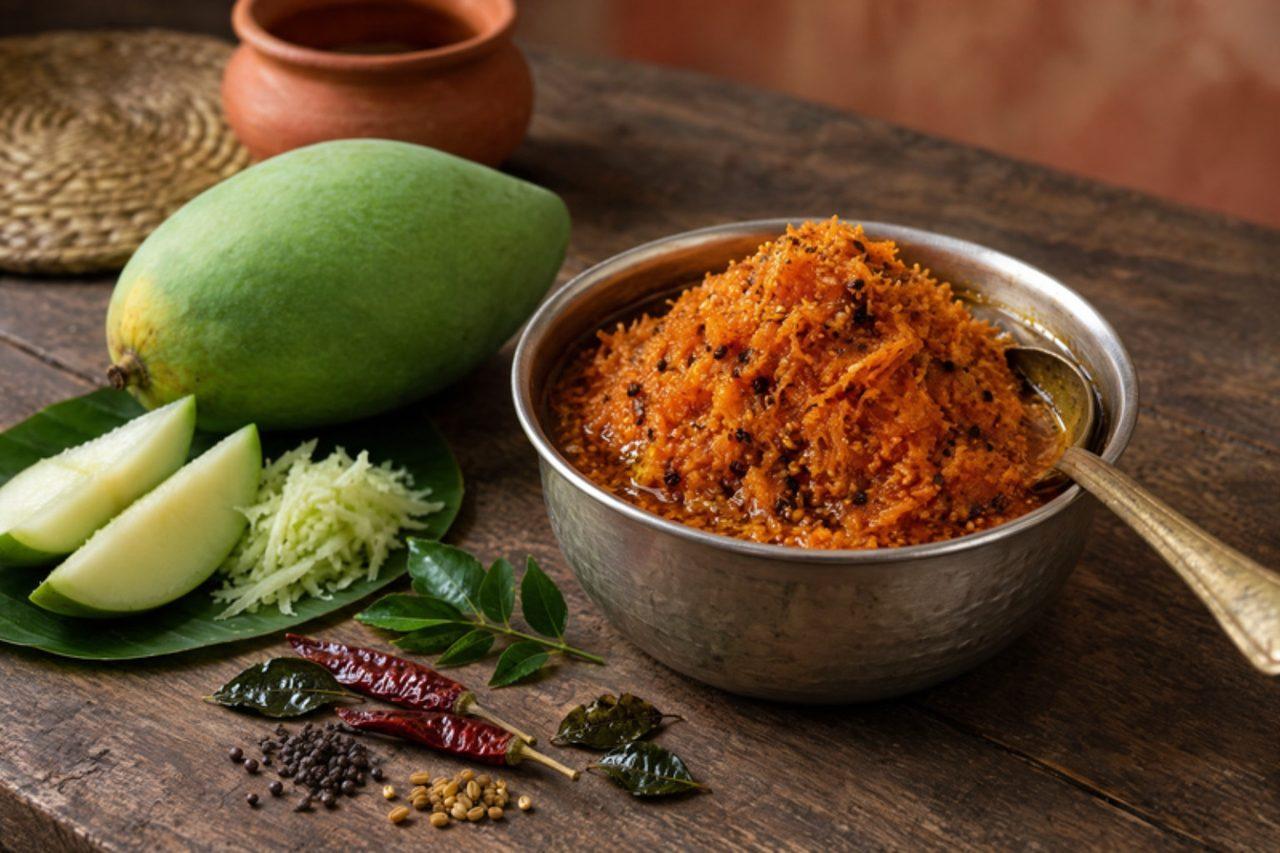
AI-generated image
Maangai thokku
Grated raw mango pickle
மாங்காய் தொக்கு: grated raw mango slow-cooked in gingelly oil with chilli, roasted fenugreek and hing until jammy



Thokku is the Tamil word for a pickle cooked down to a thick, spoonable mass, and maangai thokku is the one every Tamil Nadu home makes in April and May when the hard, sour Kili mooku (parrot-beak) mangoes are cheap. Grated mango is simmered in nallennai (gingelly oil) with chilli powder, salt and hing until it turns dark, glossy and jam-like, then finished with roasted fenugreek powder. It is sour first, then hot, with a nutty sesame taste and a little bitterness at the end. It is a classic partner for curd rice, a spoonful inside a dosa, or a travel companion with idli and lemon rice for train journeys. The usual mistake is grating the mango too fine or stirring it too little: a fine pulp sticks and burns. Use the large holes of the grater and keep stirring once it thickens. It is done when the mango has darkened, comes away from the pan in one mass and the oil oozes out around the edge. Kept in a dry jar under a film of oil it lasts about 2 weeks in a cool cupboard and 2 months in the fridge. Chef's tip: a teaspoon of jaggery at the end rounds off very sour mangoes without making the thokku sweet.
- Total time
- 50 min
- Difficulty
- medium
- Serves
- 20
Ingredients
For the thokku
- 2 raw green mangoesabout 500 g, firm and sour, such as Kili mooku or Totapuri
- ½ cup gingelly (sesame) oil
- 1 tsp mustard seeds
- ½ tsp gluten-free asafoetida
- ½ tsp ground turmeric
- 3 tbsp red chilli powderhalf Kashmiri, half hot
- 1 ½ tbsp salt
- 1 tsp fenugreek seeds
- 1 tsp jaggery (optional)grated
Shop this recipe on Amazon
What you'll need
Spices & pantry
Fresh ingredients (1)
Links open Amazon in a new tab. As an Amazon Associate, WhatToEat.Today earns from qualifying purchases.
Method
0/8 doneStep 1: Prepare the jar: wash jar and lid in hot soapy water, rinse well, then stand the jar upside down in a 250°F oven for 10 minutes (or boil jar and lid for 10 minutes and let them dry upside down). Let it cool completely; jar, lid, bowls and spoons must be bone dry, because a single drop of water is the usual reason a pickle goes mouldy.
Step 2: Wash the 2 raw green mangoes and dry it completely. Peel it if the skin is thick (thin skin can stay), then grate it on the large holes of a box grater down to the stone.
12 minStep 3: Dry-roast 1 tsp fenugreek seeds in a small pan over a medium-low heat until reddish-brown and fragrant, about 2 minutes. Cool and grind to a powder.
3 minStep 4: Heat ½ cup gingelly (sesame) oil in a heavy pan over a medium heat. Add 1 tsp mustard seeds; when it crackles, lower the heat and add ½ tsp gluten-free asafoetida and ½ tsp ground turmeric for a few seconds.
2 minStep 5: Add the grated mango and 1 ½ tbsp salt and stir. Cook on a medium heat, stirring every minute or two, until the mango softens and releases its juice and then the juice cooks away, about 10 minutes.
10 minStep 6: Add 3 tbsp red chilli powder and keep cooking on a medium-low heat, stirring constantly now, for another 10–12 minutes, until the thokku is dark red, comes away from the pan in one mass and oil seeps out around the edge.
12 minStep 7: Turn off the heat and stir in the fenugreek powder and 1 tsp jaggery if using. Taste: it should be boldly salty, sour and hot.
1 minStep 8: Cool completely, then pack into the dry jar and smooth the top so a film of oil covers it. Keep 2 weeks in a cool cupboard or up to 2 months in the fridge, always with a clean dry spoon. Discard if mould spots appear or it smells fermented or off.
Nutrition per serving
- Calories
- 80 kcal
- Protein
- 0 g
- Carbs
- 5 g
- Fat
- 7 g
- Fibre
- 1 g
Nutrition values are estimates.
KrazyBadal
Good to know
- How long does maangai thokku take?
- About 50 minutes in total: 20 minutes to prepare and 30 minutes to cook.
- How many people does it serve?
- 20 as written. Change the servings above the ingredients and every amount scales to match.
- Is it vegan?
- Yes. It has no meat, fish, dairy or eggs.
- Is it gluten free?
- Yes, as written. Check the labels on stock, sauces and spice mixes, which sometimes contain gluten.
- Is it very spicy?
- It has some heat. Use less chilli for a milder version, or more if you like it hot.
- Can I make it ahead?
- Yes. It keeps well, so you can cook it earlier in the day or the day before and reheat it.
- What can I use instead of raw green mangoes?
- Tinned mango pulp, same weight.
- What can I use instead of mustard seeds?
- Cumin seeds, same amount (different flavour, same crackle).
Reviews
No reviews yet. Be the first to cook it.
Rate this recipe
Sign in to rate and review this recipe.
You might also like

SakarpadaSweet fried dough diamonds
Sakarpada (shakarpara) are little sweet diamonds of a rich dough made with ghee, milk and sugar, fried until golden and crunchy. They are a Diwali favourite with tea, and the cubes go into bhusu too. They keep for weeks in an air-tight tin.
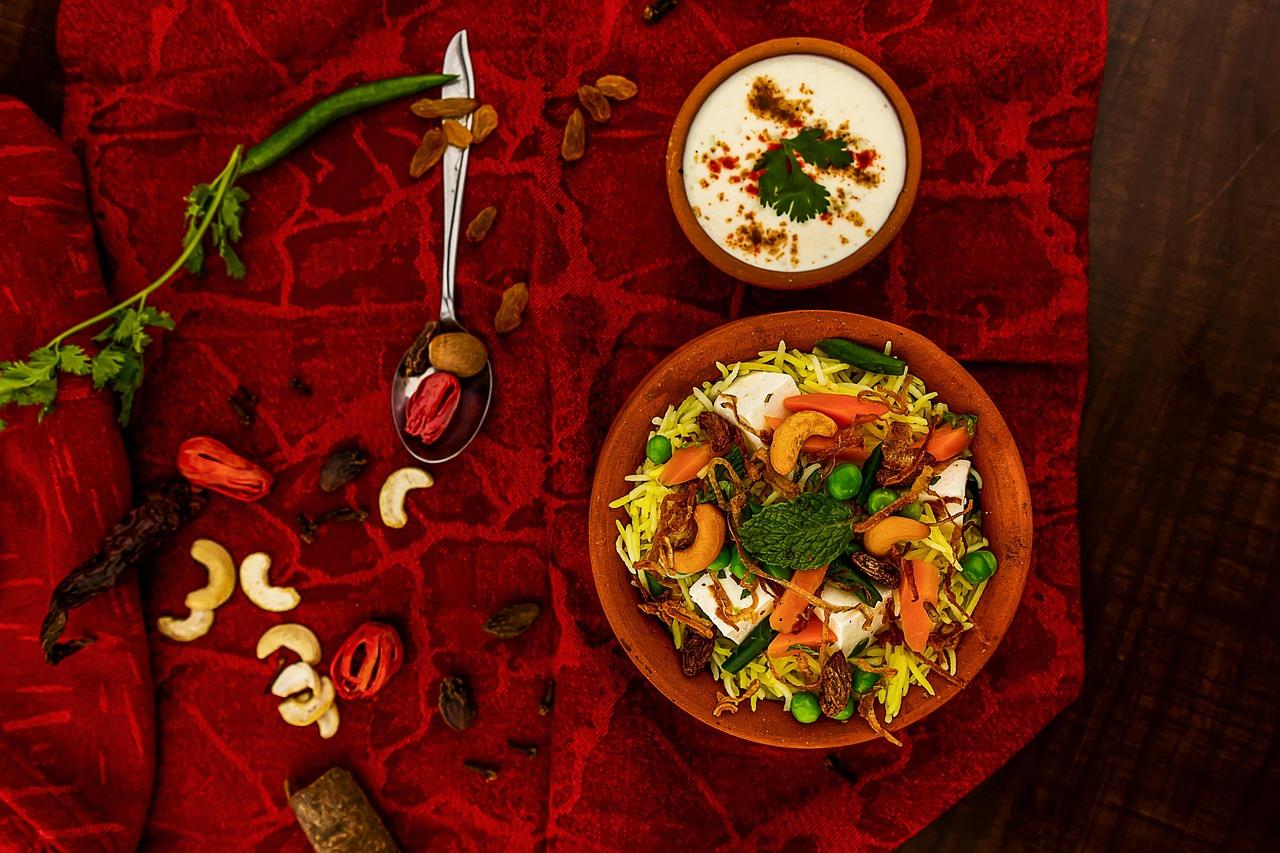
Paneer biryaniRice and moong dal in coconut milk
A mild, creamy biryani: rice and husked green gram roasted in ghee, then cooked in coconut milk with peas, carrots, potatoes, peanuts and cashews, and finished with soft fried paneer and a fresh coriander yogurt. Serve hot, garnished with more fried cashews and paneer.


Sabudana khichdiSago with peanuts and potato
Sabudana khichdi is the dish that sees Maharashtra through every vrat (fast), from Navratri to Ekadashi, but it's so good that people eat it any day of the week. Soaked sago pearls are tossed in a pan with crushed roasted peanuts, cubes of potato, cumin and green chilli until each pearl turns glassy and separate, then finished with lemon and coriander. It's soft, chewy, nutty and gently hot. Fasting rules vary from family to family, so check yours; this version uses rock salt and no asafoetida, onion or garlic. Traditionally it's cooked in ghee; use ghee instead of oil if you aren't keeping it vegan. Chef's tip: soak the sago in just enough water to cover by the height of the pearls themselves, no more; too much water is the reason khichdi turns into one sticky lump.
