

AI-generated image
Manok pansoh
Bamboo-cooked chicken
Manok pansoh — Iban chicken cooked in bamboo with lemongrass and tapioca leaves (oven method)


Iban longhouses in Sarawak cook manok pansoh for Gawai, the harvest festival at the start of June: chicken pieces packed into lengths of fresh bamboo with lemongrass, ginger, shallots and tapioca leaves, plugged with leaves and leaned over an open fire. No stock or water goes in; the chicken steams in its own juices, which turn into a clear, herby broth that tastes faintly of green bamboo. At home a lidded casserole wrapped in banana leaf gets you very close. Serve it with plain rice, and with the broth spooned over. Chef's tip: bruise the lemongrass and ginger hard with a pestle before packing; with no added liquid, crushed aromatics are what flavour the juices.
- Total time
- 90 min
- Difficulty
- medium
- Serves
- 4
Ingredients
- 2 ⅝ lb chicken thighs and drumsticksbone-in, cut into small pieces
- 4 stalks lemongrassbruised and cut into 5 cm lengths
- 1 ¾ oz fresh gingersliced and bruised
- 1 oz galangalsliced
- 8 shallotslightly crushed
- 6 cloves garliccrushed
- 4 bird's eye chilliesbruised
- 7 oz tapioca (cassava) leavesfresh or frozen; or kale or spinach (see step 1)
- 2 tsp salt
- 2 banana leavesor a sheet of baking paper
- 2 fresh bamboo sections (optional)about 60 cm, if cooking over a fire
- 1 turmeric leaf (optional)shredded
Shop this recipe on Amazon
Fresh ingredients (5)
Links open Amazon in a new tab. As an Amazon Associate, WhatToEat.Today earns from qualifying purchases.
Method
0/8 doneStep 1: Tapioca leaves contain natural cyanide-forming compounds and must never be eaten raw. Boil fresh or frozen 7 oz tapioca (cassava) leaves in plenty of water for 10 minutes, drain, squeeze dry and chop coarsely. If using kale or spinach instead, just wash and chop.
10 minStep 2: Heat the oven to 350°F (325°F fan).
Step 3: In a bowl, toss 2 ⅝ lb chicken thighs and drumsticks with 2 tsp salt, 4 stalks lemongrass, 1 ¾ oz fresh ginger, 1 oz galangal, 8 shallots, 6 cloves garlic, 4 bird's eye chillies and the turmeric leaf if using. Use a separate board for the raw chicken and wash it straight after.
Step 4: Line a heavy casserole with 2 banana leaves, glossy side up. Layer in the chicken and aromatics alternately with the tapioca leaves, pressing down firmly. Add no water.
Step 5: Fold the leaves over the top, cover with a tight lid (or a sheet of foil and then the lid) to trap the steam, and cook in the oven for 60 minutes.
60 minStep 6: Lift the lid: the chicken should be sitting in plenty of clear juices. Check the largest piece reaches 165°F (165 °F) near the bone and the juices run clear; if not, return for 10 minutes. Opening the pot too often during cooking is a common mistake; every peek lets out the steam that does the cooking.
10 minStep 7: Taste the juices and add a pinch of salt if needed. Serve the chicken, leaves and broth over rice.
Step 8: For the traditional fire method: pack the mixture into the 2 fresh bamboo sections, plug the open end with a twist of tapioca or banana leaf and lean it over a wood fire at a 45° angle, turning every 10 minutes, for 50–60 minutes until the outside is charred and the chicken reaches 165°F. Tip it out carefully; the steam inside is very hot.
Nutrition per serving
- Calories
- 410 kcal
- Protein
- 44 g
- Carbs
- 9 g
- Fat
- 22 g
- Fibre
- 4 g
Nutrition values are estimates.
KrazyBadal
Good to know
- How long does manok pansoh take?
- About 90 minutes in total: 20 minutes to prepare and 70 minutes to cook.
- How many people does it serve?
- 4 as written. Change the servings above the ingredients and every amount scales to match.
- Is it gluten free?
- Yes, as written. Check the labels on stock, sauces and spice mixes, which sometimes contain gluten.
- What can I use instead of fresh ginger?
- ¼ tsp ground ginger per tbsp fresh (add it with the spices).
- What can I use instead of shallots?
- Half an onion per 2 shallots.
Reviews
No reviews yet. Be the first to cook it.
Rate this recipe
Sign in to rate and review this recipe.
You might also like
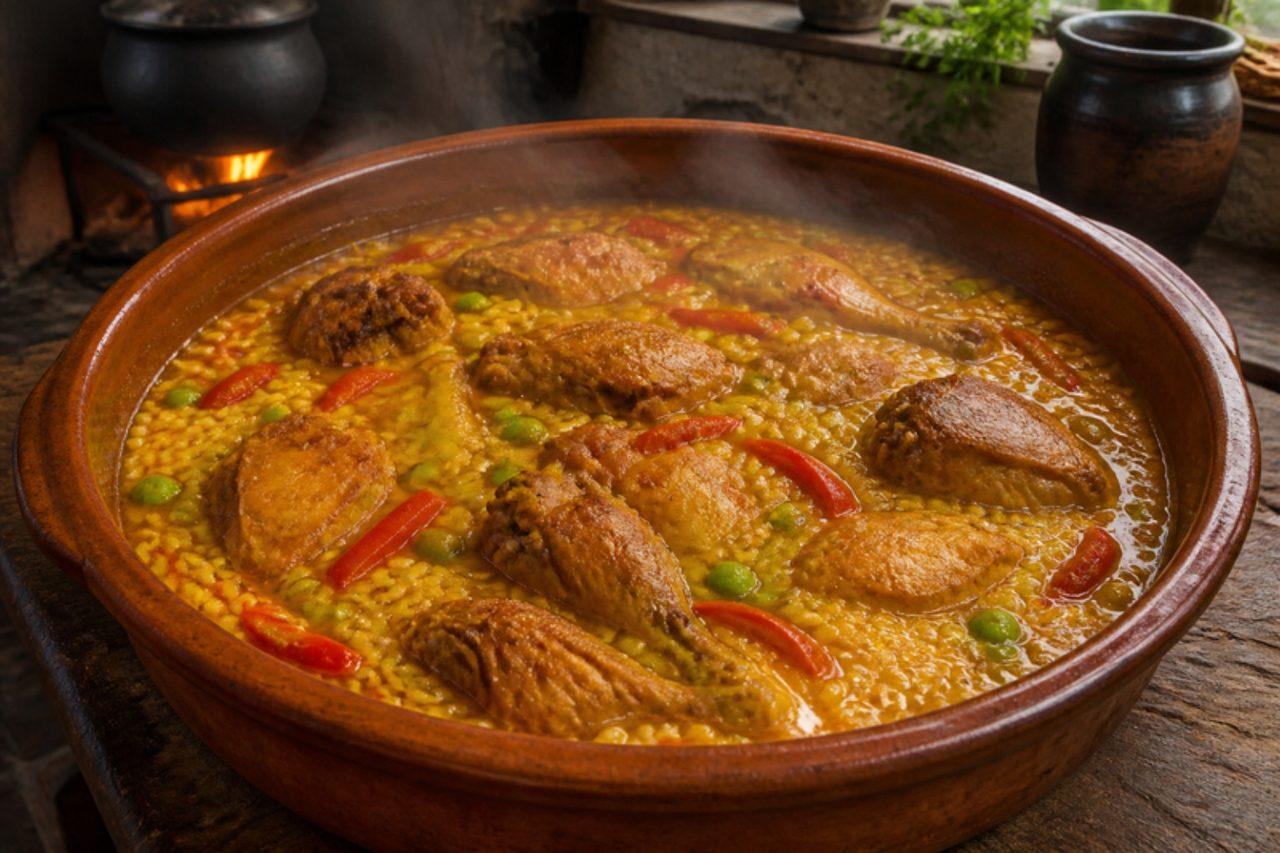
Arroz con pitu de caleyaSoupy rice with chicken
A pitu de caleya is a cockerel raised free in the lanes, or caleyas, of rural Asturias; its firm, flavourful meat needs long stewing, and families around Villaviciosa and Grado still cook it for feast days. The stew is often finished as a soupy rice, so the deep chicken juices go into every grain. Use the best free-range chicken you can find. The braise includes dry white wine; replace it with extra stock and a squeeze of lemon if you want it alcohol-free. Chef's tip: brown the chicken slowly and deeply; that colour is where the flavour of the whole pot comes from.
 Spanish

LaksamRice noodles in coconut fish gravy
Kota Bharu's morning market has its own noodle: laksam, thick sheets of steamed rice batter rolled up like little carpets and sliced into wheels. They are drowned in a pale, creamy gravy of pounded fish and coconut milk, then heaped with raw herbs and vegetables (ulam): cucumber, long beans, bean sprouts, daun kesum and torch ginger flower, with a spoonful of fiery chilli and budu, the region's fermented anchovy sauce. The result is soft and slippery, rich and cool at the same time. Locals eat it for breakfast or as a mid-morning snack. Chef's tip: pound the cooked fish with the shallots instead of blending it smooth; the gravy should feel faintly textured, like a thin porridge.

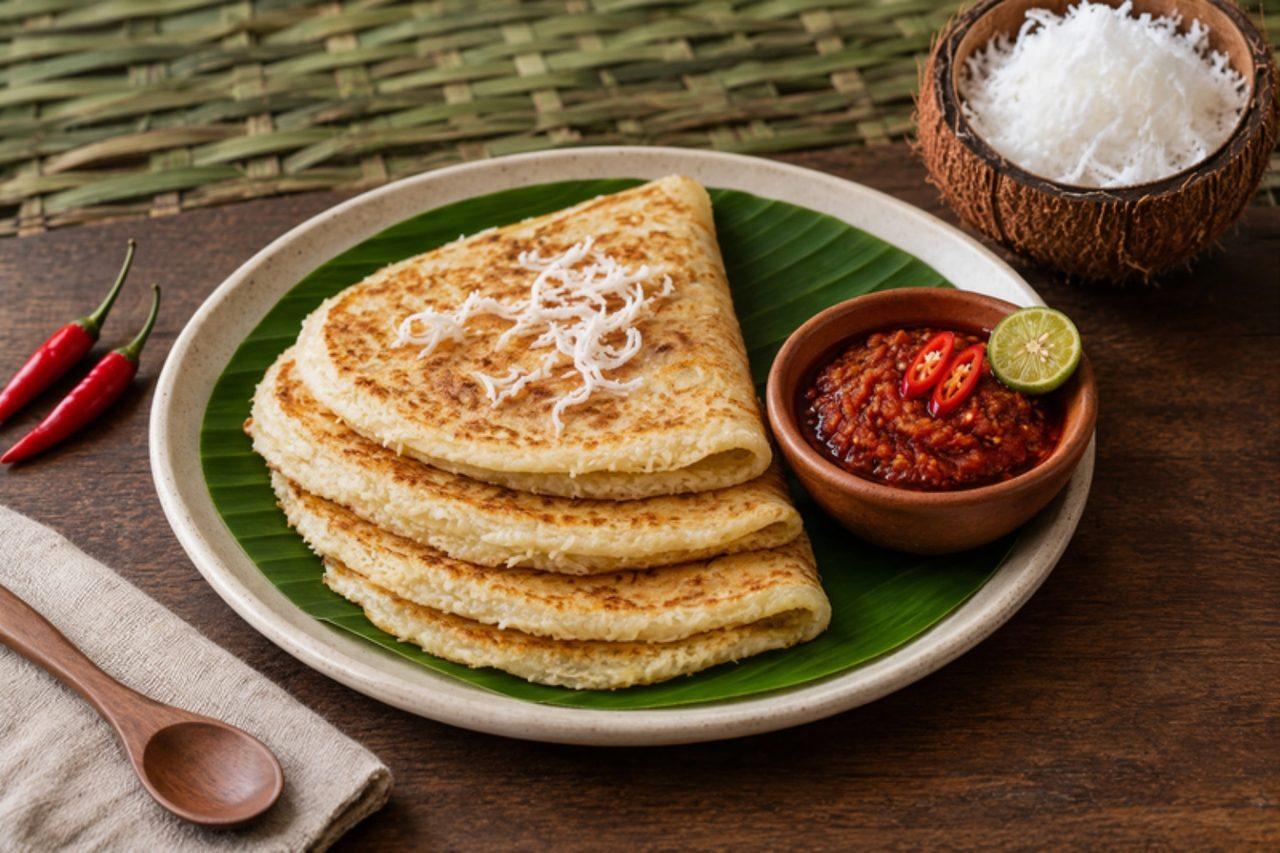
Lempeng kelapaThin coconut pancakes
On Malaysia's east coast, in Terengganu and Kelantan, lempeng is the morning flatbread nobody buys because every home can make it in minutes: flour, freshly grated coconut, salt and water, spread thin on a griddle. It is eaten warm, torn and dipped into sambal tumis or last night's fish or vegetable curry. The mistake is a thick batter; it should spread on its own into a thin round, or the middle stays doughy. Chef's tip: let the batter rest for 10 minutes so the coconut softens and the flour hydrates, which gives lempeng that bend without tearing.
