
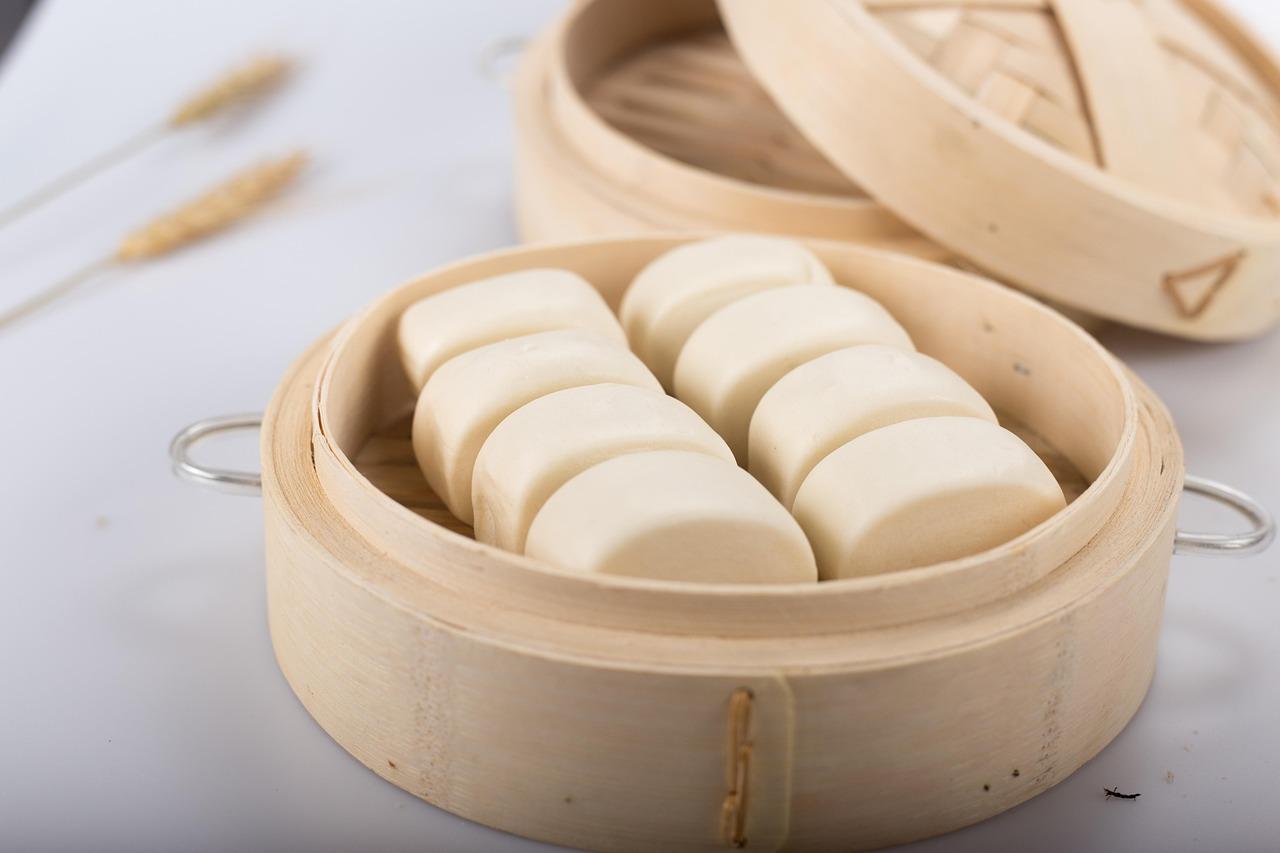
Mantou (plain steamed buns)
馒头 · the soft white steamed wheat bun that is everyday bread across northern China


From Shandong to Shaanxi, mantou are what bread is elsewhere: plain, slightly sweet steamed wheat buns bought by the bagful each morning and eaten with porridge, pickles, braised dishes or a fried egg. A good one is snowy white, smooth-skinned and springy, with a fine, close crumb that tears in soft layers. The common mistake is lifting the lid the moment the heat goes off: the sudden cold air makes the skins wrinkle and collapse, so let them stand covered for 5 minutes first. Leftovers are sliced and pan-fried, or split and filled with anything from braised tofu to chilli sauce. Chef's tip: knead much longer than you think, then knead again after the rise; the second knead pushes out the big air bubbles and gives that silky skin.
- Total time
- 115 min
- Difficulty
- medium
- Serves
- 8
Ingredients
- 1 ⅛ lb plain flourplus extra for dusting
- ⅛ oz instant yeast
- ⅔ oz sugar
- 1 cup lukewarm water
- 1 tsp vegetable oil
Shop this recipe on Amazon
Spices & pantry
Links open Amazon in a new tab. As an Amazon Associate, WhatToEat.Today earns from qualifying purchases.
Method
0/8 doneStep 1: Mix 1 ⅛ lb plain flour, ⅛ oz instant yeast and ⅔ oz sugar in a large bowl. Pour in 1 cup lukewarm water gradually, stirring with chopsticks into shaggy flakes, then add 1 tsp vegetable oil and knead for 10–12 minutes until the dough is smooth, firm and no longer sticks to your hands.
Step 2: Cover the bowl and leave in a warm place for about 1 hour, until doubled. Poke it with a floured finger: the hole should stay.
60 minStep 3: Turn the dough out on a lightly floured surface and knead for another 5 minutes to push out all the large air bubbles. A cut through the dough should show a fine, even texture with no holes.
Step 4: Roll the dough into a long log about 5 cm thick and cut it into 8 equal pieces. For round buns, tuck each piece's edges underneath and roll it on the worktop under a cupped hand until the top is smooth and taut.
Step 5: Set each bun on a small square of baking paper in a steamer basket, leaving 3 cm between them. Cover and leave for 20 minutes, until they feel light and puffy and spring back slowly when pressed.
20 minStep 6: Put the steamer over a wok or pan of cold water, bring to the boil over a high heat, then turn to medium and steam for 15 minutes from when the steam starts. Don't open the lid while they cook.
15 minStep 7: Turn off the heat and leave the lid on for 5 minutes before lifting it, so the buns don't shrink and wrinkle.
5 minStep 8: Serve warm. Keep cooled buns in a bag for 2 days or freeze them; re-steam from frozen for 10 minutes.
Nutrition per serving
- Calories
- 230 kcal
- Protein
- 7 g
- Carbs
- 48 g
- Fat
- 1 g
- Fibre
- 2 g
Nutrition values are estimates.
KrazyBadal
Good to know
- How long does mantou (plain steamed buns) take?
- About 115 minutes in total: 100 minutes to prepare and 15 minutes to cook.
- How many people does it serve?
- 8 as written. Change the servings above the ingredients and every amount scales to match.
- Is it vegan?
- Yes. It has no meat, fish, dairy or eggs.
- Can I make it ahead?
- Yes. It keeps well, so you can cook it earlier in the day or the day before and reheat it.
- What can I use instead of plain flour?
- Self-raising flour, same amount (then leave out the baking powder).
- What can I use instead of sugar?
- Caster sugar, same amount.
Reviews
No reviews yet. Be the first to cook it.
Rate this recipe
Sign in to rate and review this recipe.
You might also like

ChipaCheese bread rings
In Paraguay you hear 'chipa, chipa!' called by vendors with big baskets on buses and street corners, and every family bakes it for Holy Week, when chipa is the food of Good Friday. Cassava starch, a little cornmeal, butter, eggs and a lot of hard cheese are kneaded into a dough scented with aniseed, shaped into rings or small rolls and baked in a hot oven, traditionally a domed clay tatakua. It's chewy, crisp outside and best warm with cocido (toasted yerba tea). Chef's tip: the dough should feel soft and slightly greasy; add milk a spoon at a time, as too much makes the chipa spread flat.
 Paraguayan

SalufPuffy flatbread
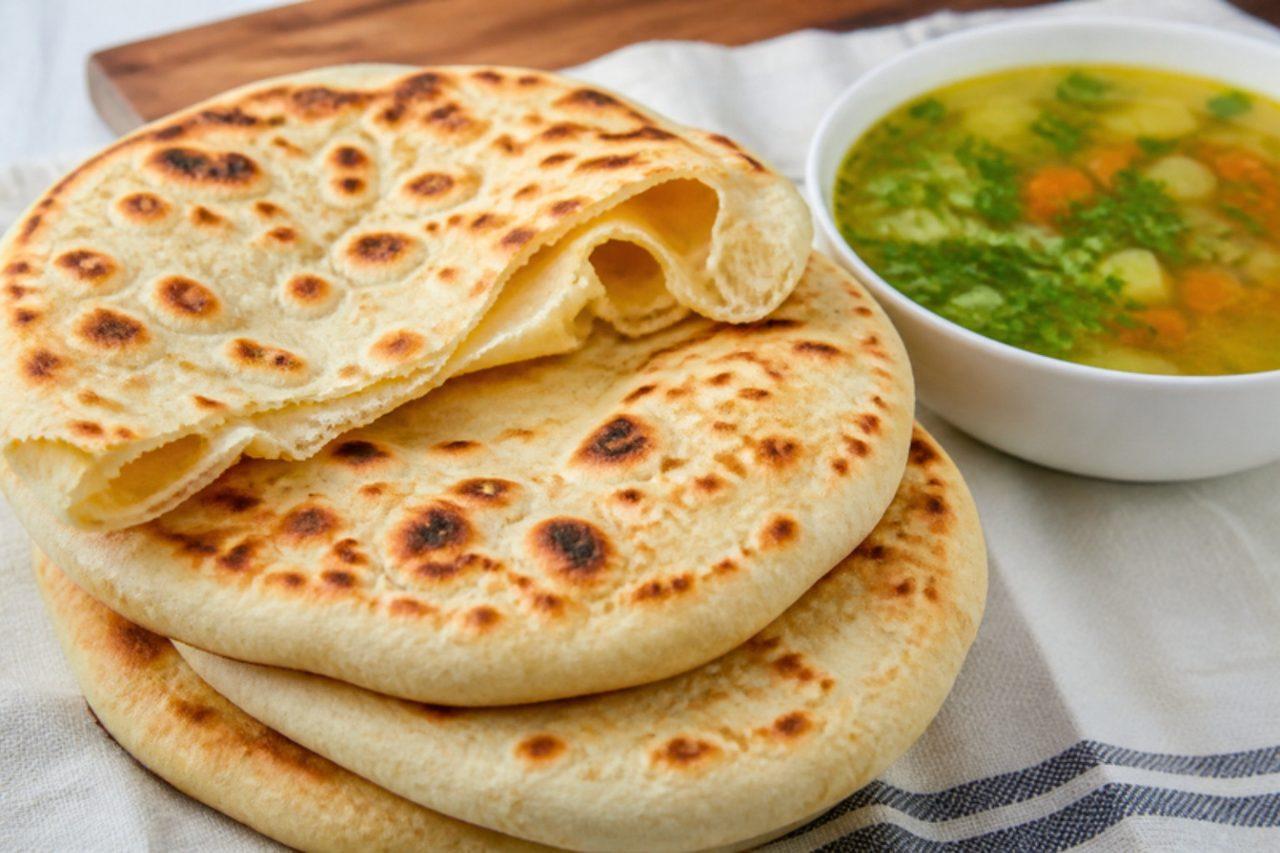
Saluf is the everyday bread of Yemenite Israelis, slapped onto a hot pan or taboon in Rosh HaAyin and Sha'arayim in Rehovot and eaten with marak temani, hilbe and zhug. It is soft and blistered, thicker than pita and with no pocket, made to tear and dunk. Home cooks often roll it too thin, which gives a cracker; it should be about 1 cm thick so it stays pillowy. Chef's tip: cook it under a lid on a very hot dry pan for the first minute, which traps steam and puffs it the way a taboon does.
 Israeli

Akki rottiRice flour flatbread
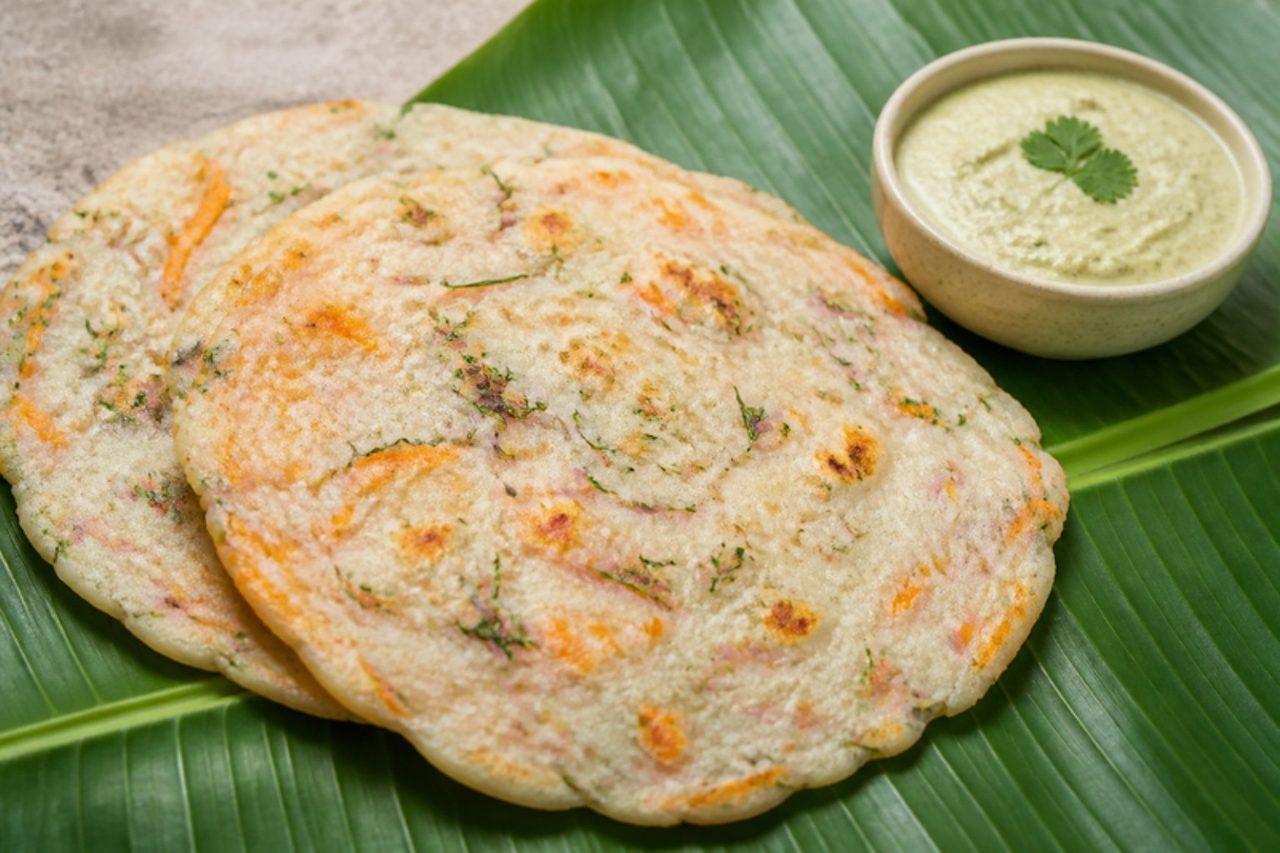
Akki rotti is the breakfast of Bengaluru and the old Mysore country: rice flour mixed with grated vegetables, dill, coconut and green chilli, patted out thin by hand straight onto a cold pan, then cooked until speckled and crisp at the edges. Every home has its own mix; dill (sabbasige soppu) is the classic flavour, but cucumber, carrot or fenugreek all turn up. It is eaten hot off the pan with coconut chutney or a dab of ghee and spicy chutney powder, and it is naturally gluten-free. Chef's tip: work with two pans in turn, patting the next rotti onto a cooled pan while the first one cooks; patting onto a hot pan burns your fingers and gives an uneven rotti.
 Indian