
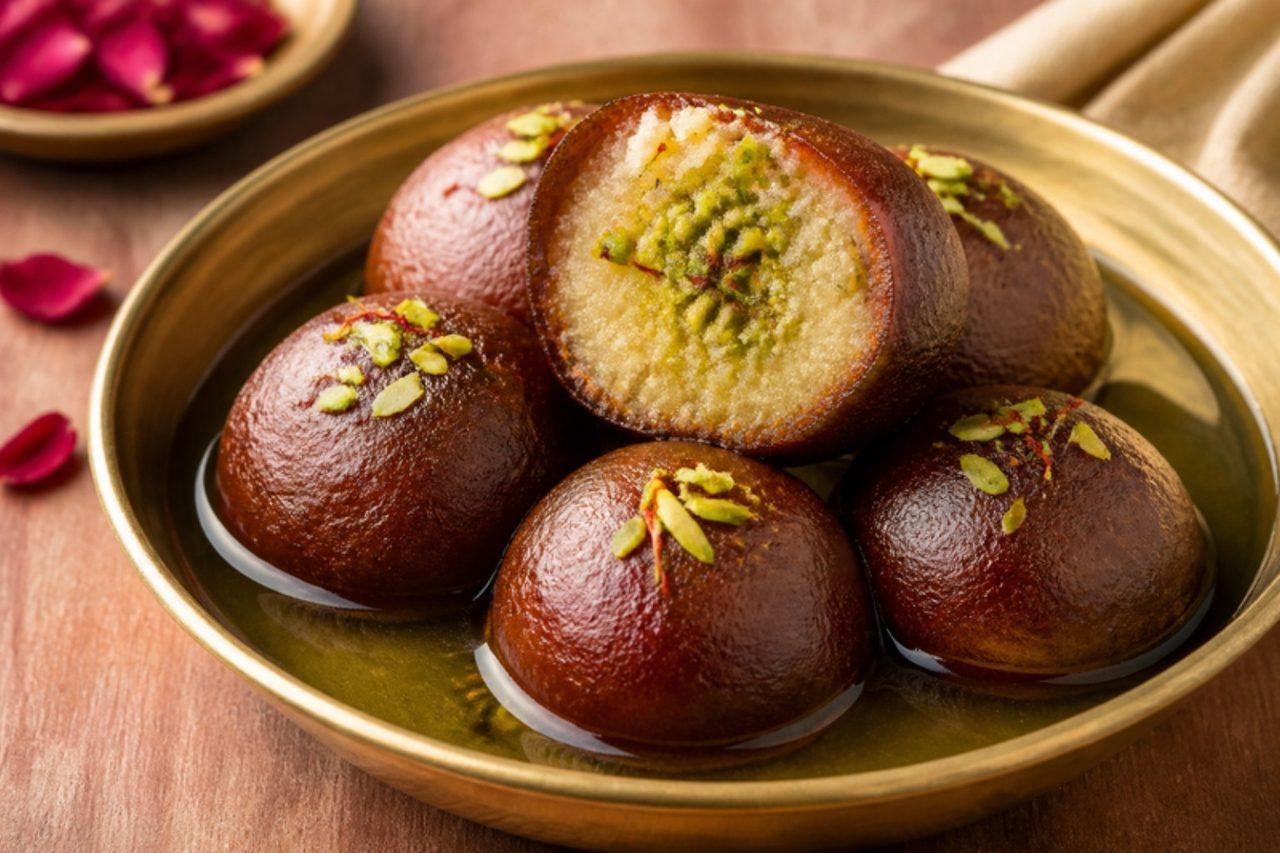
AI-generated image
Mawa bati
Milk solid dumplings
Malwa's large, dark khoya dumplings (मावा बाटी) with a hidden pistachio and saffron centre, soaked in cardamom syrup
 Indian
Ask a halwai in Ujjain, Indore or Ratlam for something festive and they will point to mawa bati: a fist-sized cousin of gulab jamun, made richer with more khoya, fried slowly to a near-mahogany shell and stuffed with nuts, saffron and cardamom. It turns up on wedding menus across Malwa and in sweet-shop boxes at Diwali, usually served warm with a spoonful of its own syrup. Cutting one open to find the green-gold filling is half the pleasure. Chef's tip: fry on a really gentle heat, with the oil barely shimmering; the bati should take a full 12–15 minutes to darken, which is how the middle cooks through.
- Total time
- 70 min
- Difficulty
- medium
- Serves
- 10
Ingredients
For the syrup
- 14 oz sugar
- 1 ¾ cups water
- 4 green cardamom podslightly crushed
- ¼ tsp saffron threads
For the dough
- 9 oz khoya (mawa)soft, crumbled or grated
- 1 ¾ oz paneerfinely grated
- 1 ⅜ oz plain flour
- ⅛ tsp bicarbonate of soda
- 2 tbsp whole milkas needed
For the filling
- 2 tbsp pistachiosfinely chopped
- 2 tbsp almondsfinely chopped
- 1 tbsp sugar
- ½ tsp ground cardamom
- ⅛ tsp saffron threadscrushed with a drop of milk
For frying
- 2 ½ cups ghee or vegetable oil
Shop this recipe on Amazon
What you'll need
Spices & pantry
Fresh ingredients (2)
Links open Amazon in a new tab. As an Amazon Associate, WhatToEat.Today earns from qualifying purchases.
Method
0/7 doneStep 1: Put 14 oz sugar, 1 ¾ cups water, 4 green cardamom pods and ¼ tsp saffron threads in a wide pan and bring to the boil on medium, stirring until the sugar dissolves. Simmer for 6–7 minutes until slightly sticky between finger and thumb but not yet forming a thread. Keep warm on the lowest heat.
10 minStep 2: Mix 2 tbsp pistachios, 2 tbsp almonds, 1 tbsp sugar, ½ tsp ground cardamom and ⅛ tsp saffron threads into a crumbly paste and roll into 10 small pea-sized balls.
Step 3: In a large bowl, rub 9 oz khoya (mawa) and 1 ¾ oz paneer with the heel of your hand for 3–4 minutes until completely smooth and no grains remain. Add 1 ⅜ oz plain flour and ⅛ tsp bicarbonate of soda and knead gently, adding 2 tbsp whole milk a few drops at a time, until the dough is soft and supple, like a smooth play dough.
5 minStep 4: Divide into 10 portions. Flatten one into a cup in your palm, set a filling ball inside, close it and roll between your palms into a smooth oval or ball with no cracks at all. Cracks are the usual mistake: they split open in the oil and drink syrup unevenly, so roll again with a dab of milk if you see any.
Step 5: Heat 2 ½ cups ghee or vegetable oil in a kadai on low to about 275°F: a small piece of dough should rise slowly with a few lazy bubbles. Slide in 4–5 bati and keep the oil gently moving with a spoon rather than touching them for the first 2 minutes.
3 minStep 6: Fry for 12–15 minutes, turning often, until they swell a little and turn an even deep reddish-brown, darker than gulab jamun. If they colour in under 8 minutes, the oil is too hot and the centre will stay raw.
15 minStep 7: Drain for 30 seconds and drop into the warm (not boiling) syrup. Repeat with the rest. Soak for at least 2 hours, turning once, until heavy and syrup-soaked to the middle. Serve warm, halved to show the filling.
120 min
Nutrition per serving
- Calories
- 330 kcal
- Protein
- 6 g
- Carbs
- 45 g
- Fat
- 14 g
Nutrition values are estimates.
KrazyBadal
Good to know
- How long does mawa bati take?
- About 70 minutes in total: 35 minutes to prepare and 35 minutes to cook.
- How many people does it serve?
- 10 as written. Change the servings above the ingredients and every amount scales to match.
- Is it vegetarian?
- Yes. It has no meat or fish.
- What can I use instead of sugar?
- Caster sugar, same amount.
- What can I use instead of green cardamom pods?
- A pinch of ground cardamom per 2 pods.
Reviews
No reviews yet. Be the first to cook it.
Rate this recipe
Sign in to rate and review this recipe.
You might also like
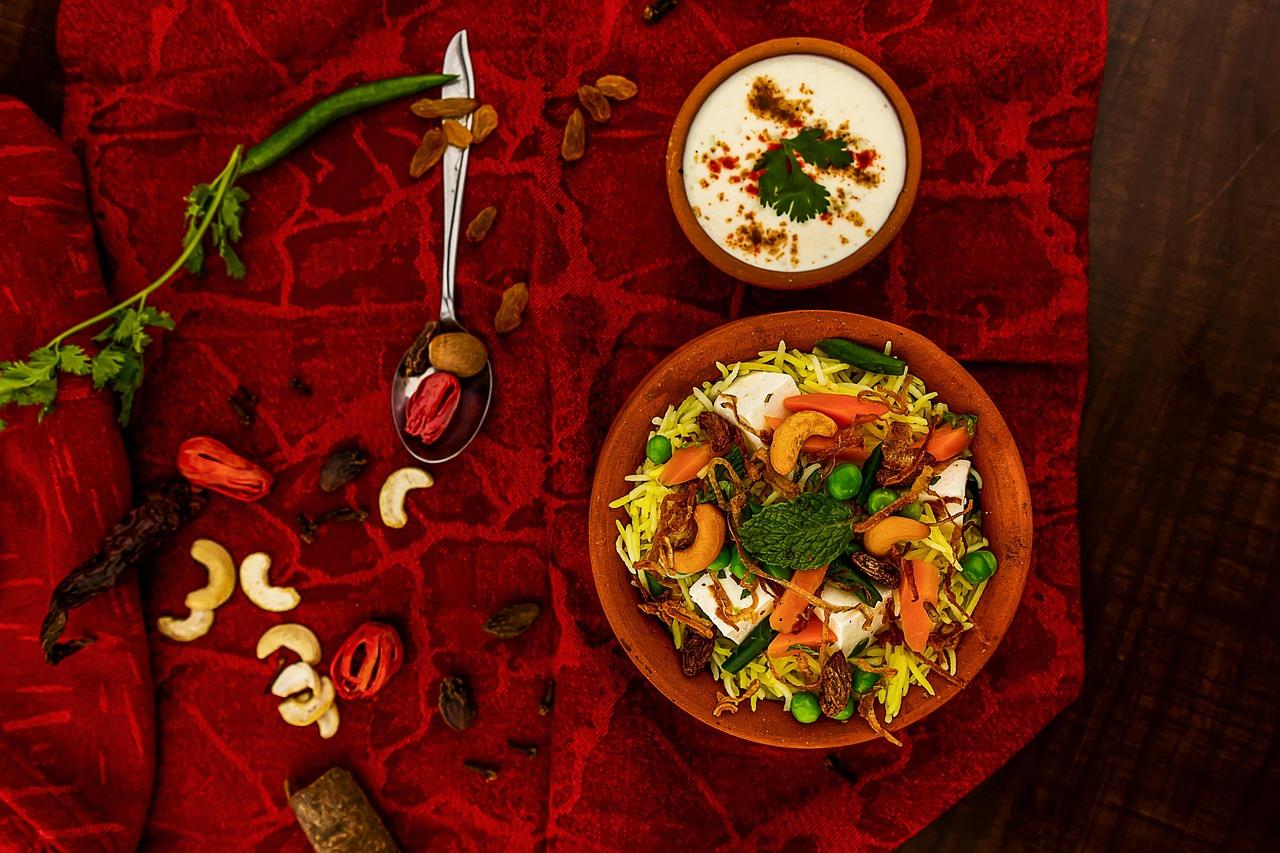
Paneer biryaniRice and moong dal in coconut milk
A mild, creamy biryani: rice and husked green gram roasted in ghee, then cooked in coconut milk with peas, carrots, potatoes, peanuts and cashews, and finished with soft fried paneer and a fresh coriander yogurt. Serve hot, garnished with more fried cashews and paneer.


Sabudana khichdiSago with peanuts and potato
Sabudana khichdi is the dish that sees Maharashtra through every vrat (fast), from Navratri to Ekadashi, but it's so good that people eat it any day of the week. Soaked sago pearls are tossed in a pan with crushed roasted peanuts, cubes of potato, cumin and green chilli until each pearl turns glassy and separate, then finished with lemon and coriander. It's soft, chewy, nutty and gently hot. Fasting rules vary from family to family, so check yours; this version uses rock salt and no asafoetida, onion or garlic. Traditionally it's cooked in ghee; use ghee instead of oil if you aren't keeping it vegan. Chef's tip: soak the sago in just enough water to cover by the height of the pearls themselves, no more; too much water is the reason khichdi turns into one sticky lump.


Bagara bainganBaby aubergines in peanut sesame sauce
Bagara baingan is a Hyderabadi wedding dish of small aubergines cooked whole in a dark, tangy gravy of roasted peanuts, sesame, dried coconut and tamarind. Unlike a Gujarati stuffed brinjal, the aubergines here are only quartered at the base and fried until silky, then left to soak up a thin-but-rich sauce that is finished with a tempering, the 'baghar' that gives the dish its name. It's sour, nutty and gently spiced, and is served with biryani, bagara rice or plain rice. Chef's tip: choose small, glossy purple aubergines that feel heavy for their size; soft, light ones are full of seeds and turn mushy before the gravy has a chance to cling.