
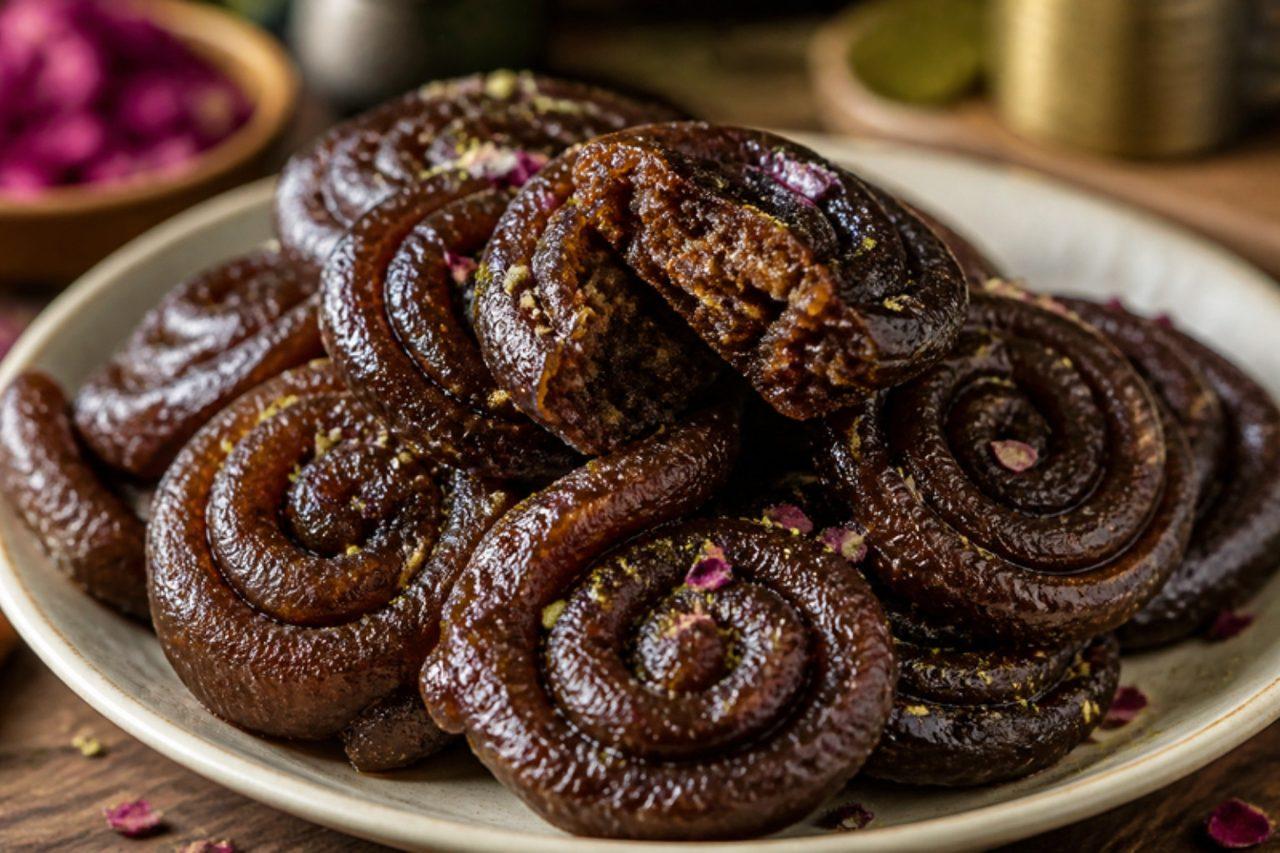
AI-generated image
Mawa jalebi
Milk solid jalebi
Jabalpur's dark, soft khoya jalebi (मावा जलेबी), shaped by hand and soaked in rose-cardamom syrup
 Indian
Mawa jalebi, sometimes called khoya jalebi, belongs to Jabalpur and the towns of the Mahakoshal region of Madhya Pradesh, where sweet shops sell them stacked like dark brown coils. Unlike the crisp batter jalebi piped into hot oil, these are rolled from a soft khoya dough into ropes, coiled by hand and fried slowly, so they come out tender and almost fudgy inside a thin caramelised skin. They are eaten warm on winter mornings and bought by the kilo for weddings. Chef's tip: roll the ropes no thicker than a pencil; thicker coils look generous but stay doughy at the core.
- Total time
- 75 min
- Difficulty
- medium
- Serves
- 7
Ingredients
For the syrup
- 14 oz sugar
- 1 ¼ cups water
- ½ tsp ground cardamom
- 1 tsp rose water
For the dough
- 7 oz khoya (mawa)soft, crumbled
- 1 ¾ oz paneerfinely grated
- 1 ⅜ oz plain flour
- 1 tbsp cornflour or arrowroot
- ⅛ tsp bicarbonate of soda
- 2 tbsp whole milkas needed
For frying
- 2 ½ cups ghee or vegetable oil
Shop this recipe on Amazon
What you'll need
Spices & pantry
Fresh ingredients (2)
Links open Amazon in a new tab. As an Amazon Associate, WhatToEat.Today earns from qualifying purchases.
Method
0/5 doneStep 1: Boil 14 oz sugar and 1 ¼ cups water on medium, stirring until dissolved, then simmer for 8–9 minutes to a one-string syrup: a drop pulled between finger and thumb forms a single short thread. Stir in ½ tsp ground cardamom and 1 tsp rose water and keep warm.
10 minStep 2: Rub 7 oz khoya (mawa) and 1 ¾ oz paneer together on a plate with the heel of your hand for 4–5 minutes until smooth and creamy, without any grain. Add 1 ⅜ oz plain flour, 1 tbsp cornflour or arrowroot and ⅛ tsp bicarbonate of soda and knead lightly, with drops of 2 tbsp whole milk, into a soft, crack-free dough.
6 minStep 3: Divide into 14 pieces. Roll each under your fingers into a rope about 25 cm long and as thick as a pencil, then coil it into a flat spiral or a loose figure of eight, tucking the end under. Keep the shaped ones covered with a damp cloth.
Step 4: Heat 2 ½ cups ghee or vegetable oil in a wide kadai on low to medium-low, about 300°F, until a pinch of dough rises slowly with fine bubbles. Fry 4–5 coils at a time for 8–10 minutes, turning gently, until a deep chocolate brown all over. Frying hot is the classic mistake: the outside darkens in two minutes while the inside stays raw.
25 minStep 5: Drain briefly and soak in the warm syrup for 8–10 minutes, turning once, until glossy and soft. Lift onto a plate; they are best warm the same day.
10 min
Nutrition per serving
- Calories
- 360 kcal
- Protein
- 7 g
- Carbs
- 52 g
- Fat
- 14 g
Nutrition values are estimates.
KrazyBadal
Good to know
- How long does mawa jalebi take?
- About 75 minutes in total: 35 minutes to prepare and 40 minutes to cook.
- How many people does it serve?
- 7 as written. Change the servings above the ingredients and every amount scales to match.
- Is it vegetarian?
- Yes. It has no meat or fish.
- What can I use instead of sugar?
- Caster sugar, same amount.
- What can I use instead of paneer?
- Firm tofu, pressed and cubed (vegan; season it well).
Reviews
No reviews yet. Be the first to cook it.
Rate this recipe
Sign in to rate and review this recipe.
You might also like

SakarpadaSweet fried dough diamonds
Sakarpada (shakarpara) are little sweet diamonds of a rich dough made with ghee, milk and sugar, fried until golden and crunchy. They are a Diwali favourite with tea, and the cubes go into bhusu too. They keep for weeks in an air-tight tin.
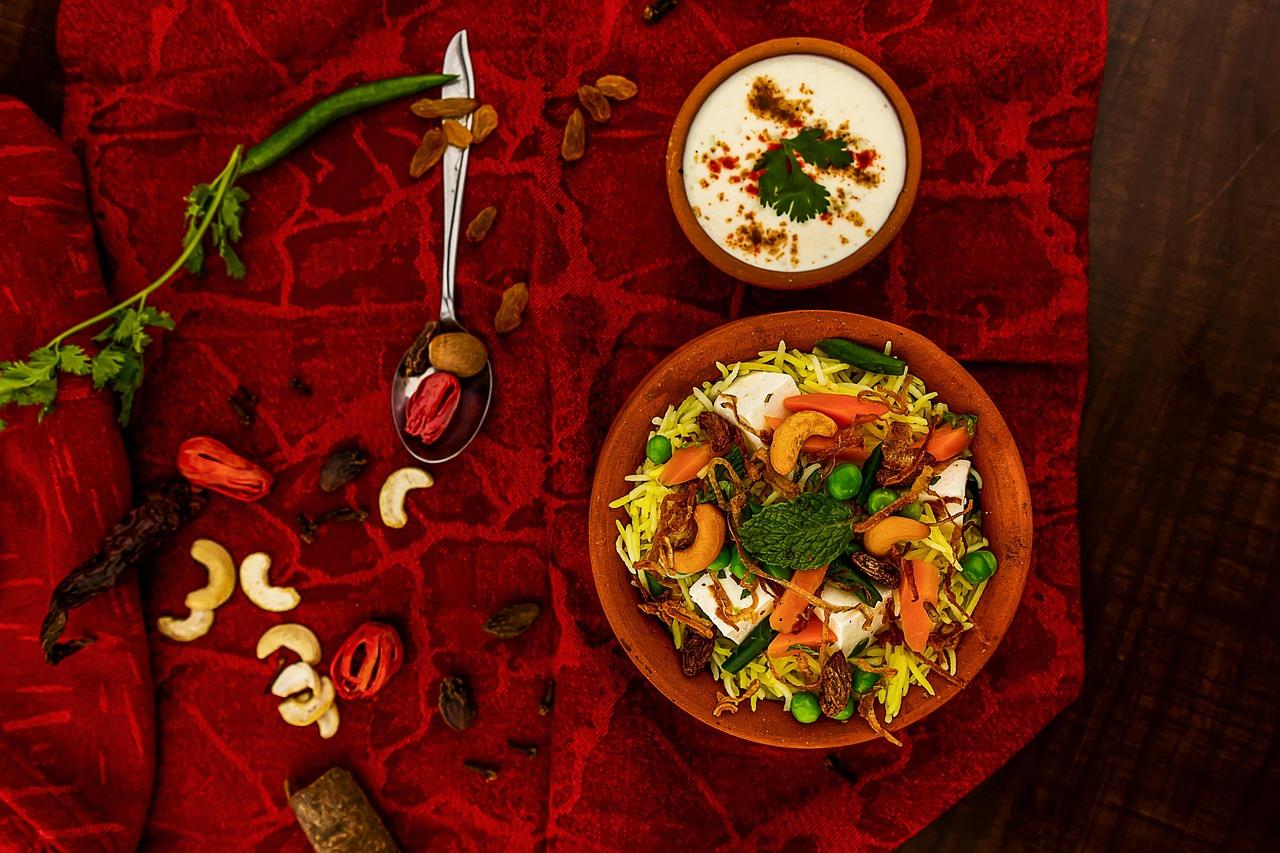
Paneer biryaniRice and moong dal in coconut milk
A mild, creamy biryani: rice and husked green gram roasted in ghee, then cooked in coconut milk with peas, carrots, potatoes, peanuts and cashews, and finished with soft fried paneer and a fresh coriander yogurt. Serve hot, garnished with more fried cashews and paneer.


Sabudana khichdiSago with peanuts and potato
Sabudana khichdi is the dish that sees Maharashtra through every vrat (fast), from Navratri to Ekadashi, but it's so good that people eat it any day of the week. Soaked sago pearls are tossed in a pan with crushed roasted peanuts, cubes of potato, cumin and green chilli until each pearl turns glassy and separate, then finished with lemon and coriander. It's soft, chewy, nutty and gently hot. Fasting rules vary from family to family, so check yours; this version uses rock salt and no asafoetida, onion or garlic. Traditionally it's cooked in ghee; use ghee instead of oil if you aren't keeping it vegan. Chef's tip: soak the sago in just enough water to cover by the height of the pearls themselves, no more; too much water is the reason khichdi turns into one sticky lump.
