
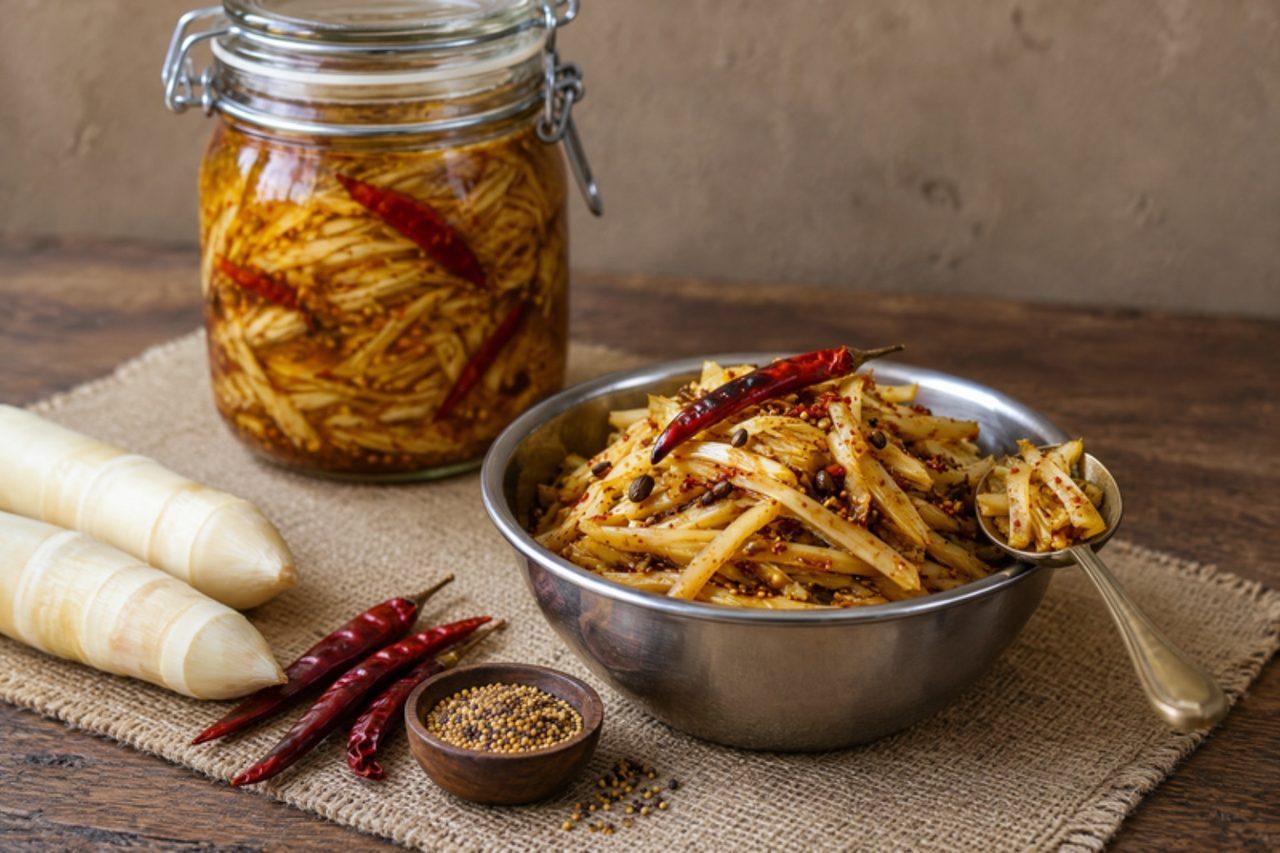
AI-generated image
Mesu
Fermented bamboo shoot pickle
मेसु: young bamboo shoots fermented in a jar into a sour pickle, then tempered with chilli



Lepcha and Nepali households in Sikkim shred tender bamboo shoots in the monsoon, when they push up fresh, and pack them tightly into glass jars or hollow bamboo to sour for one to two weeks. The finished mesu is eaten as a sharp pickle with rice and dal through the rest of the year. A common mistake is leaving shoots above the brine, which invites mould; press them down hard so the liquid always covers them. Keep the jar at 20–28 °C out of direct sun and taste from day 7: it is ready when pleasantly sour and pale yellow. Discard the batch if you see fuzzy, pink or black mould, if it smells putrid rather than sour, or if the shoots feel slimy. Chef's tip: short of time, buy ready-fermented bamboo shoot from a Northeast or Asian grocer and go straight to the tempering.
- Total time
- 40 min
- Difficulty
- easy
- Serves
- 10
Ingredients
For fermenting
- 1 ⅛ lb fresh tender bamboo shootspeeled
- 2 tsp salt
For tempering (per 200 g mesu)
- 2 tbsp mustard oil
- 3 dried red chilliesbroken
- 1 tsp red chilli powder
- ¼ tsp ground turmeric
Shop this recipe on Amazon
Links open Amazon in a new tab. As an Amazon Associate, WhatToEat.Today earns from qualifying purchases.
Method
0/6 doneStep 1: Boil the peeled 1 ⅛ lb fresh tender bamboo shoots in plenty of water for 10 minutes to remove bitterness, drain and cool. Shred them finely.
15 minStep 2: Toss the shreds with 2 tsp salt and pack tightly into a sterilised glass jar, pressing down until liquid rises above them. Leave 3 cm headspace and close loosely.
10 minStep 3: Leave at 20–82°F for 7–14 days, pressing down daily with a clean spoon so the shoots stay submerged. It is ready when it smells cleanly sour; discard if you see coloured or fuzzy mould, sliminess or a rotten smell.
Step 4: To temper 200 g, heat 2 tbsp mustard oil in a small pan until it smokes lightly, then cool for 30 seconds.
2 minStep 5: Add 3 dried red chillies, 1 tsp red chilli powder and ¼ tsp ground turmeric, stir for a few seconds, then tip in the squeezed mesu and fry for 2–3 minutes until the edges dry slightly.
3 minStep 6: Cool and store in a clean jar in the fridge; use a dry spoon and eat within a month.
Nutrition per serving
- Calories
- 45 kcal
- Protein
- 1 g
- Carbs
- 3 g
- Fat
- 3 g
- Fibre
- 2 g
Nutrition values are estimates.
KrazyBadal
Good to know
- How long does mesu take?
- About 40 minutes in total: 30 minutes to prepare and 10 minutes to cook.
- How many people does it serve?
- 10 as written. Change the servings above the ingredients and every amount scales to match.
- Is it vegan?
- Yes. It has no meat, fish, dairy or eggs.
- Is it gluten free?
- Yes, as written. Check the labels on stock, sauces and spice mixes, which sometimes contain gluten.
- Is it very spicy?
- It has some heat. Use less chilli for a milder version, or more if you like it hot.
- Can I make it ahead?
- Yes. It keeps well, so you can cook it earlier in the day or the day before and reheat it.
- What can I use instead of red chilli powder?
- Cayenne, half the amount (hotter).
- What can I use instead of ground turmeric?
- Leave it out (it mostly adds colour).
Reviews
No reviews yet. Be the first to cook it.
Rate this recipe
Sign in to rate and review this recipe.
You might also like

SakarpadaSweet fried dough diamonds
Sakarpada (shakarpara) are little sweet diamonds of a rich dough made with ghee, milk and sugar, fried until golden and crunchy. They are a Diwali favourite with tea, and the cubes go into bhusu too. They keep for weeks in an air-tight tin.
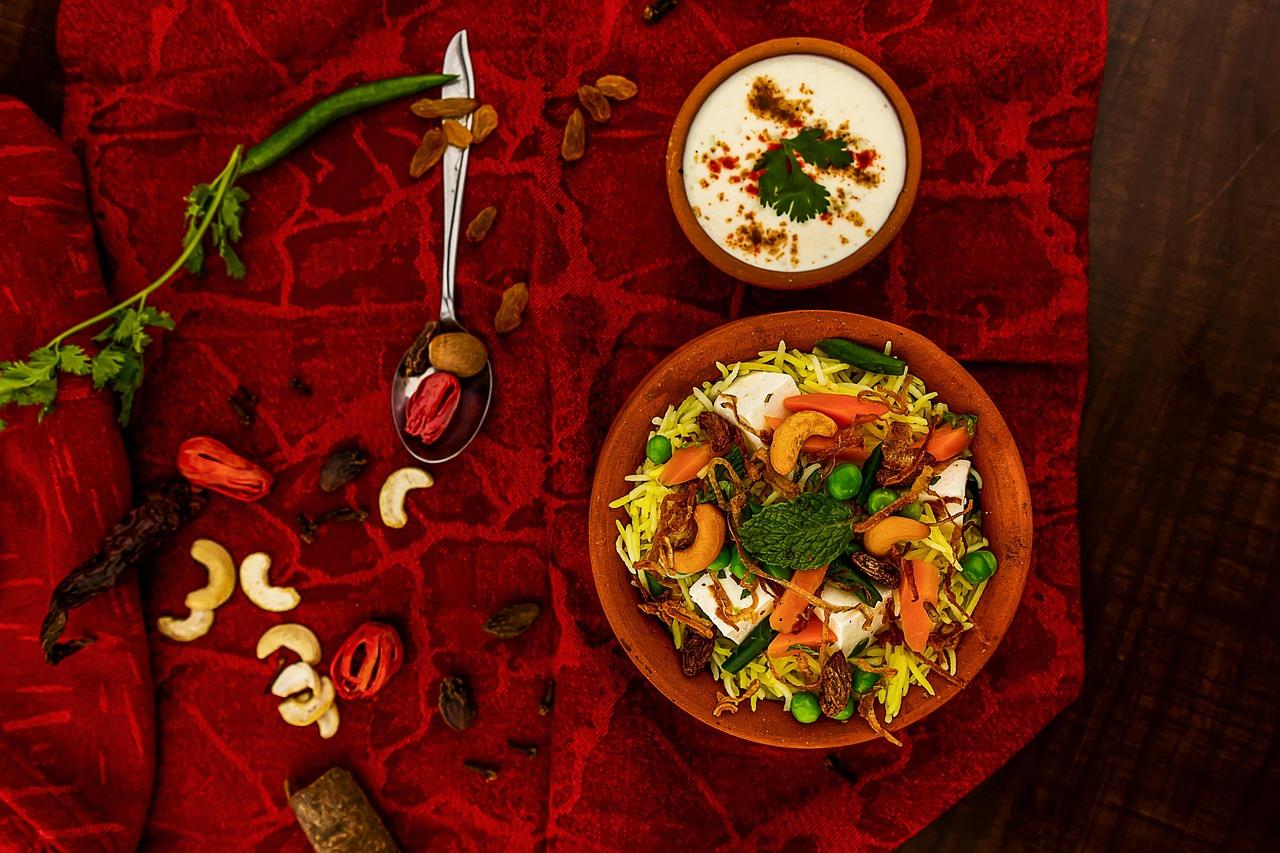
Paneer biryaniRice and moong dal in coconut milk
A mild, creamy biryani: rice and husked green gram roasted in ghee, then cooked in coconut milk with peas, carrots, potatoes, peanuts and cashews, and finished with soft fried paneer and a fresh coriander yogurt. Serve hot, garnished with more fried cashews and paneer.


Sabudana khichdiSago with peanuts and potato
Sabudana khichdi is the dish that sees Maharashtra through every vrat (fast), from Navratri to Ekadashi, but it's so good that people eat it any day of the week. Soaked sago pearls are tossed in a pan with crushed roasted peanuts, cubes of potato, cumin and green chilli until each pearl turns glassy and separate, then finished with lemon and coriander. It's soft, chewy, nutty and gently hot. Fasting rules vary from family to family, so check yours; this version uses rock salt and no asafoetida, onion or garlic. Traditionally it's cooked in ghee; use ghee instead of oil if you aren't keeping it vegan. Chef's tip: soak the sago in just enough water to cover by the height of the pearls themselves, no more; too much water is the reason khichdi turns into one sticky lump.
