
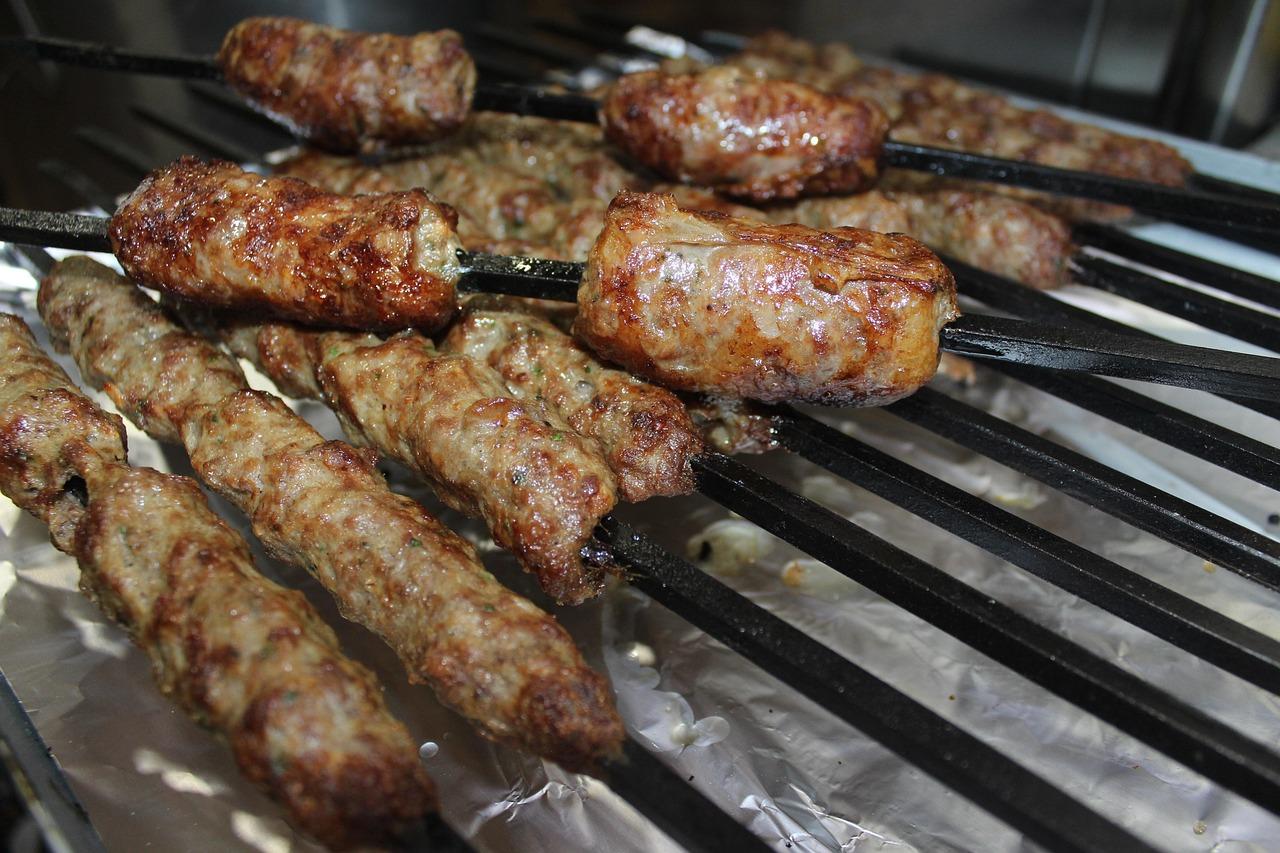
Mici
Mititei: Romanian skinless grilled sausages of beef, lamb and garlic


Every Romanian park, beer garden and May Day picnic smells of mici, the little skinless rolls of minced beef and lamb that sizzle on charcoal grills from Bucharest's Obor market to the Black Sea coast. The mince is beaten with garlic, thyme, a strong beef stock and a little bicarbonate of soda, which makes them springy and juicy inside with a crusty outside. They come in tens, with plenty of mustard, fresh bread and sometimes chips. The usual error is cooking them straight after mixing: the mince needs a night in the fridge for the bicarbonate and garlic to work. Chef's tip: shape them with oiled hands on an oiled tray, and grill them no thicker than your thumb so the middle cooks before the outside burns.
- Total time
- 40 min
- Difficulty
- medium
- Serves
- 6
Ingredients
For the mici
To serve
Shop this recipe on Amazon
What you'll need
Spices & pantry
Fresh ingredients (2)
Links open Amazon in a new tab. As an Amazon Associate, WhatToEat.Today earns from qualifying purchases.
Method
0/6 doneStep 1: Put 1 ½ lb beef mince and 10 ½ oz lamb mince in a large bowl with 6 garlic cloves, 2 tsp dried thyme, 1 tsp sweet paprika, ½ tsp ground cumin, ¼ tsp ground allspice, 1 tsp ground black pepper and 2 tsp salt.
Step 2: Dissolve 1 tsp bicarbonate of soda in half of the stock and pour it over the meat. Knead with your hand for 5 minutes, adding the rest of ¾ cup cold beef stock a little at a time, until the mixture is very soft, sticky and pale.
5 minStep 3: Cover and chill in the fridge for at least 8 hours, ideally overnight. Never leave it out at room temperature while it rests.
480 minStep 4: Rub a tray and your hands with some of 1 tbsp sunflower oil. Shape the cold mixture into rolls 10 cm long and 2.5 cm thick (about 18). Chill on the tray for 20 minutes so they hold together on the grill.
20 minStep 5: Heat a charcoal grill or ridged griddle pan until very hot, then brush with the rest of 1 tbsp sunflower oil. Grill the mici for 10–12 minutes, turning every 2–3 minutes, until browned all over and firm.
12 minStep 6: Check one: the middle should be juicy with no pink, and 160°F on a thermometer. Rest for 2 minutes, then serve hot with 6 tbsp mustard and fresh bread (gluten-free if needed).
2 min
Nutrition per serving
- Calories
- 360 kcal
- Protein
- 26 g
- Carbs
- 2 g
- Fat
- 28 g
- Fibre
- 0 g
Nutrition values are estimates.
KrazyBadal
Good to know
- How long does mici take?
- About 40 minutes in total: 25 minutes to prepare and 15 minutes to cook.
- How many people does it serve?
- 6 as written. Change the servings above the ingredients and every amount scales to match.
- Is it gluten free?
- Yes, as written. Check the labels on stock, sauces and spice mixes, which sometimes contain gluten.
- Can I make it ahead?
- Yes. It keeps well, so you can cook it earlier in the day or the day before and reheat it.
- What can I use instead of garlic cloves?
- ½ tsp garlic paste or ⅛ tsp garlic powder per clove.
- What can I use instead of bicarbonate of soda?
- Baking powder, three times the amount (the bake may taste slightly different).
Reviews
No reviews yet. Be the first to cook it.
Rate this recipe
Sign in to rate and review this recipe.
You might also like

Pork souvlaki
This is a pork recipe. Walk through any Greek town after dark, from Athens to Thessaloniki, and the smell of souvlaki stands drifts down the street; cubes of pork shoulder grilled on thin skewers are the country's favourite cheap supper, eaten standing up or at a plastic-table taverna. At home you marinate the meat in lemon, olive oil, garlic and dried oregano, grill it hard and fast, and pile it on warm pitta with tzatziki, tomato and red onion. Chef's tip: cut the pork into even 2.5 cm cubes and leave a little fat on; lean loin dries out, shoulder stays juicy over high heat.
 Greek
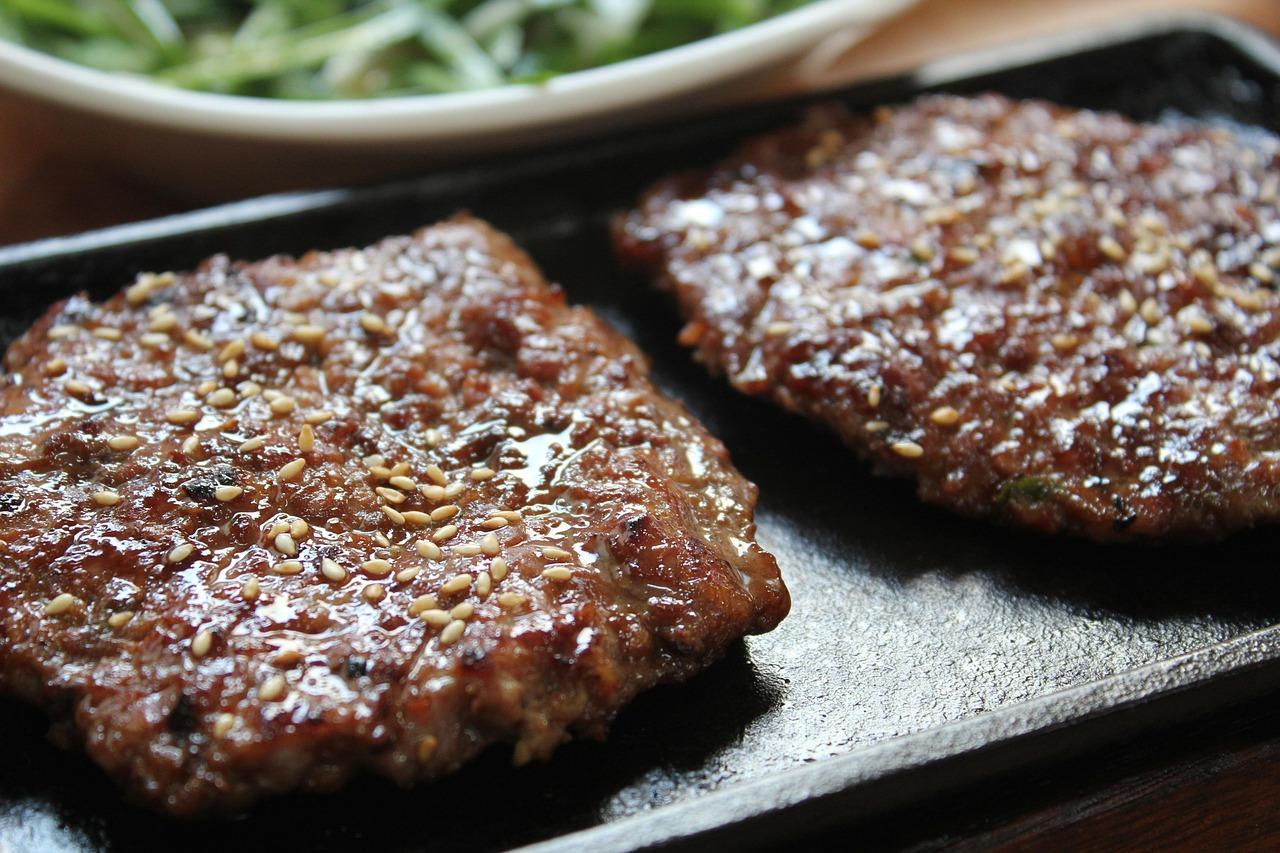
Tteokgalbi
Tteokgalbi is rib meat chopped finely, pressed back into neat slabs and grilled, so it's soft enough to eat without struggling with a bone. Two places in South Jeolla claim it: Damyang, the bamboo county, where all-beef patties come with rice steamed in bamboo tubes, and Gwangju's Songjeong district, whose restaurant street near the railway station mixes beef with pork. This home version uses minced beef and pork, seasoned with soy, garlic and pear, then brushed with a soy and honey glaze as it cooks. Serve with rice, lettuce and a few banchan; leftovers are good cold in a lunchbox. Chef's tip: slap the mince against the bowl for a few minutes; it turns sticky and the patties hold together on the grill without any breadcrumbs.
 Korean
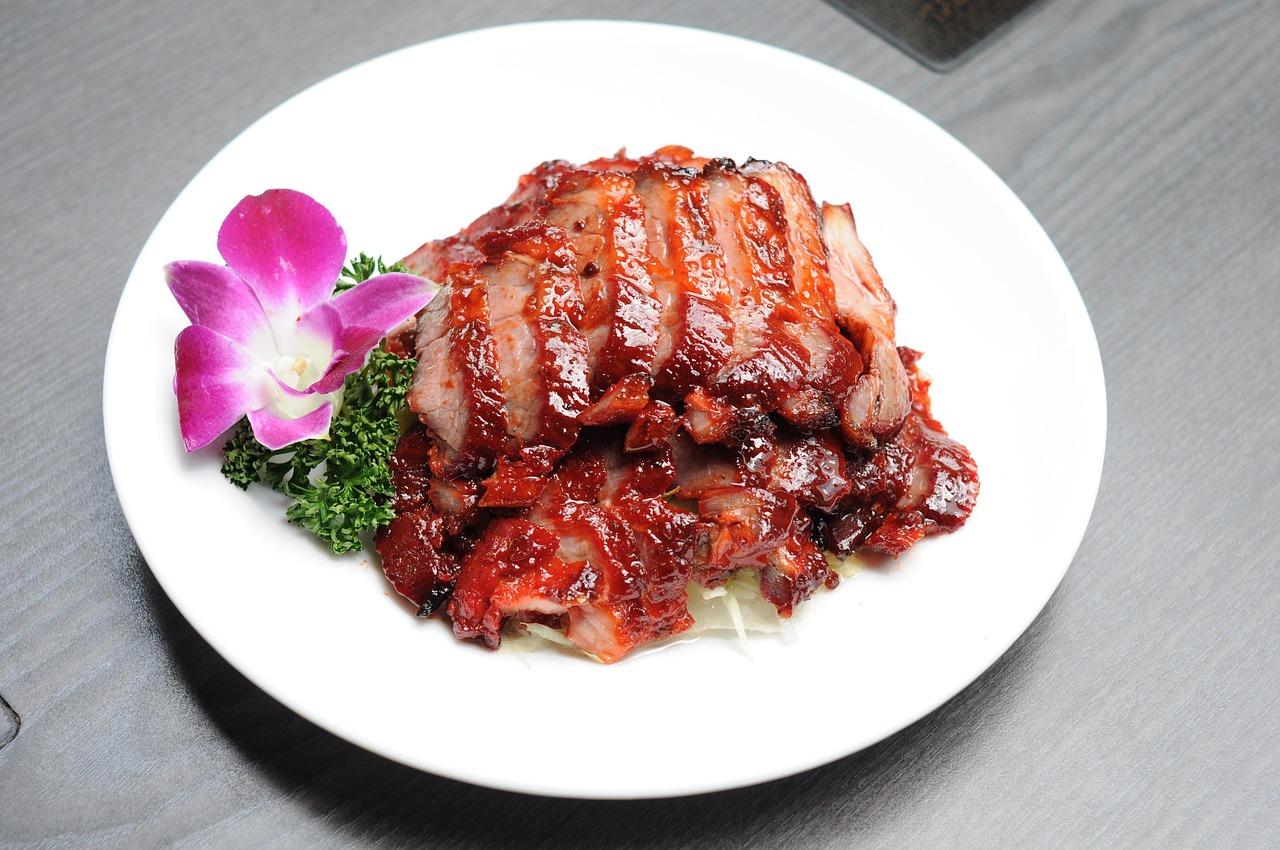
Char siu
Hanging in long glossy strips in the windows of Guangzhou's siu mei shops, char siu is the roast pork Cantonese families pick up on the way home to put on rice, noodles or into steamed buns. The outside is lacquered, sweet and a little charred at the edges; the inside stays juicy, savoury and faintly scented with five-spice. Shoulder (pork butt) is the cut to use, because its marbling keeps the strips moist through a hot oven. Marinate it overnight in the fridge, roast it the next day and eat it warm with steamed rice and blanched greens, or cold in fried rice and noodle soups. Chef's tip: save the honey for the last ten minutes; brushed on at the start it burns black long before the pork is cooked.
 Chinese