
 Indian
 Gluten free
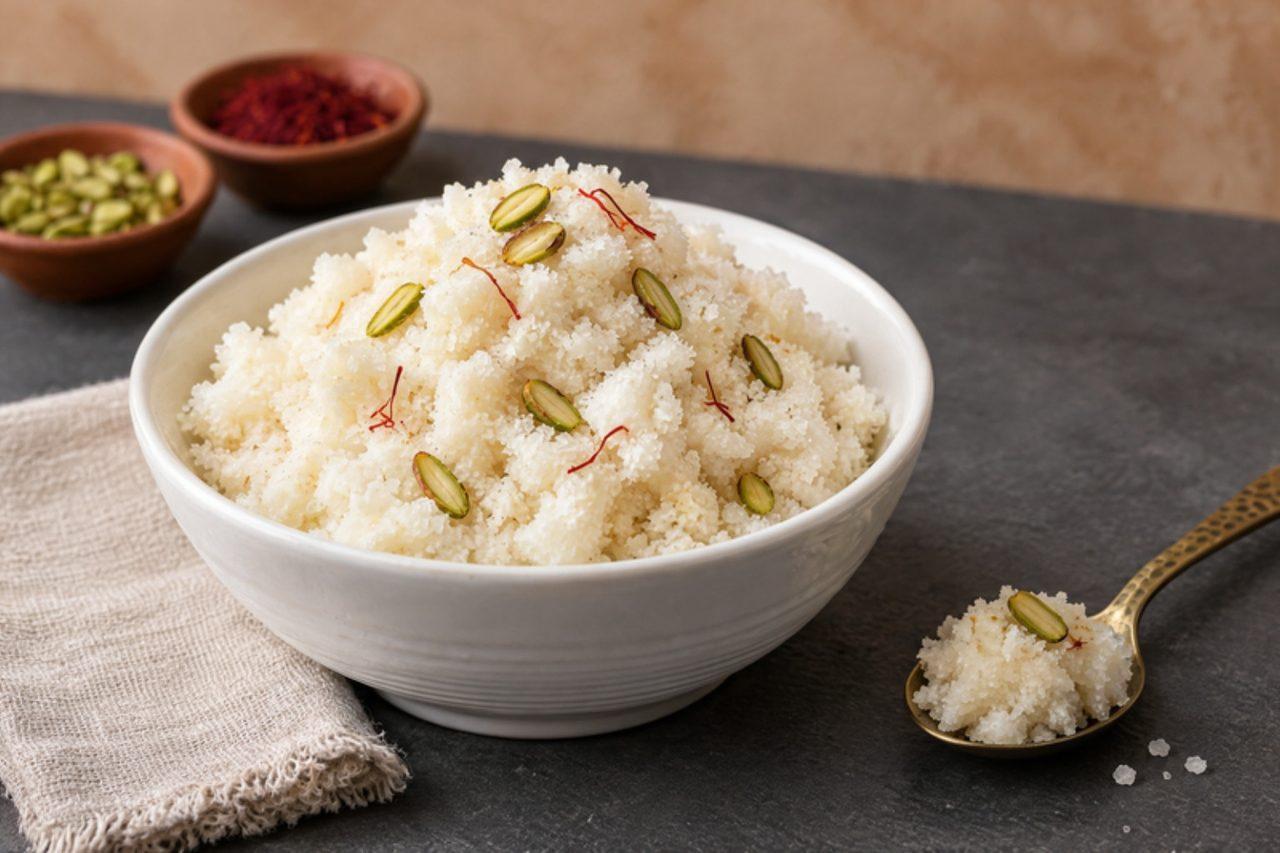
Mishri mawa
Sweet milk flakes
मिश्री मावा: milk reduced with sugar until it sets into loose, crystal-white melting flakes, a Jaipur classic
Mishri mawa is the pride of Jaipur's old sweet shops near Johari Bazaar: full-fat milk boiled down slowly with sugar and a little alum until it splits into tiny, sparkling grains, then set loosely so it breaks into soft flakes that melt on the tongue. It is bought for Diwali, weddings and when guests arrive from far away. Unlike kalakand, it is very white and only lightly set, with saffron and cardamom. The common mistake is letting the milk catch at the bottom; even a little scorching turns it beige and smoky. Chef's tip: use a wide, heavy pan and scrape the base and sides with a flat spatula every minute once the milk has halved.
- Prep
- 5 min
- Cook
- 110 min
- Difficulty
- Hard
- Serves
- 8
- Per serving
- 260 kcal
Ingredients
For the mawa
- 8 ¼ cups full-fat milk
- ⅛ tsp alum (phitkari), or lemon juicedissolved in 1 tbsp water
- 4 oz sugar
- ½ tsp ground cardamom
- 10 saffron strandssoaked in 1 tbsp warm milk
- 2 tbsp pistachiosslivered
- 1 sheet edible silver leaf (vark), vegetarian-certified (optional)
Tick what you have; the rest goes in the basket.
Method
0/6 doneStep 1: Bring 8 ¼ cups full-fat milk to a boil in a wide, heavy pan, stirring so it doesn't catch.
12 minStep 2: Simmer on medium heat for about 50 minutes, stirring and scraping the base and sides every few minutes, until reduced by half.
50 minStep 3: Stir in ⅛ tsp alum (phitkari), or lemon juice; the milk will turn grainy with tiny curds. Keep simmering for 25–30 minutes, scraping often, until it is thick and only a little milky liquid remains.
30 minStep 4: Add 4 oz sugar; the mix will loosen. Cook for 10–12 minutes more on low heat, stirring gently so the grains stay whole, until it thickens again and the ghee from the milk just starts to show at the edges.
12 minStep 5: Stir in ½ tsp ground cardamom and 10 saffron strands, spread loosely in a bowl or tray about 3 cm deep and leave to set for 2 hours.
2 minStep 6: Scatter 2 tbsp pistachios and lay on 1 sheet edible silver leaf (vark), vegetarian-certified if you like. Serve in rough spoonfuls; keep chilled and eat within 3 days.
2 min
KrazyBadal
Reviews
No reviews yet. Be the first to cook it.
Rate this recipe
Sign in to rate and review this recipe.
You might also like
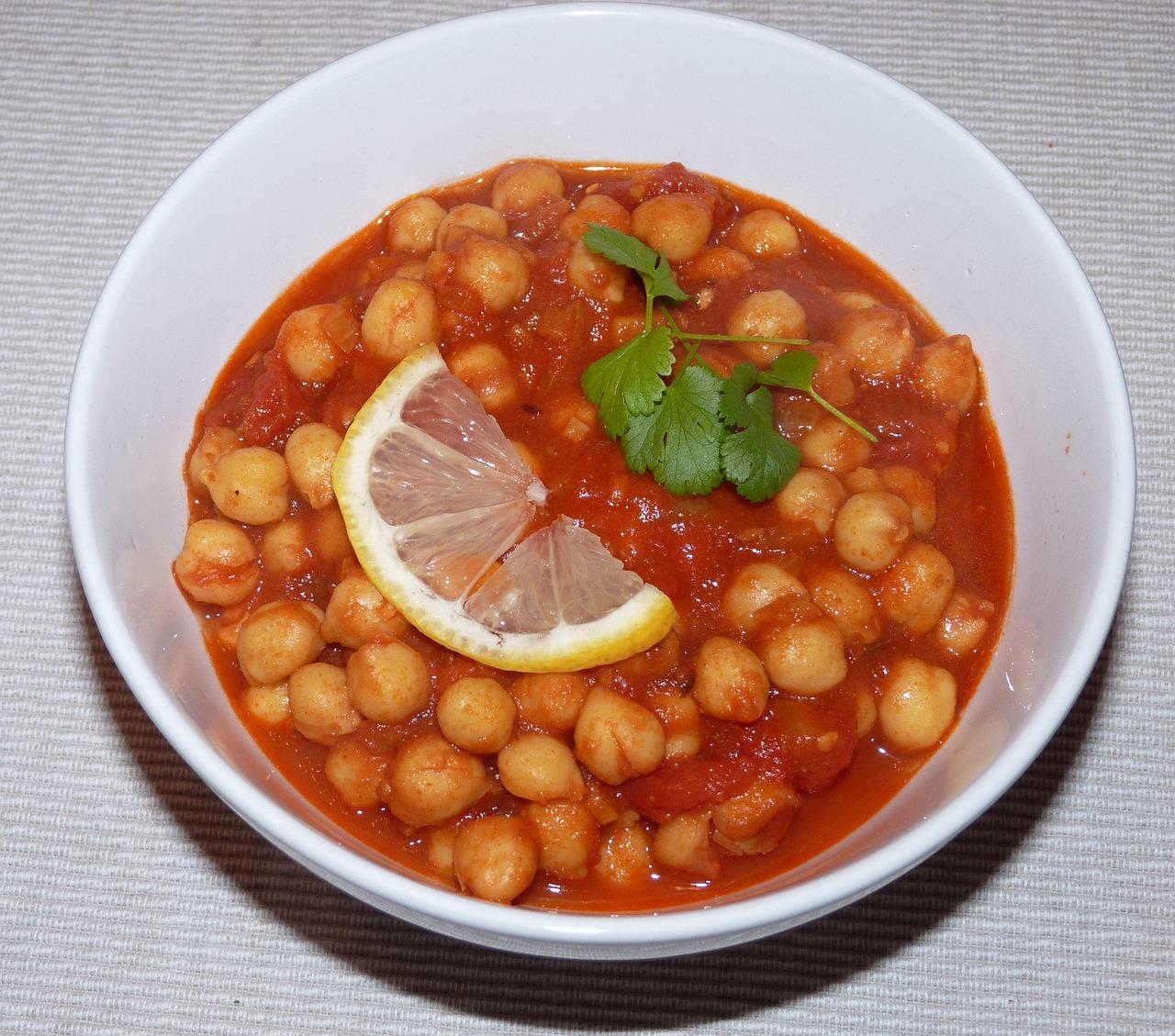
Chana masala
A North Indian staple that comes together from the store cupboard. Toasted cumin, slow-softened onion and a good spoonful of garam masala give tinned chickpeas real depth. Serve with rice, naan or a stack of warm rotis.

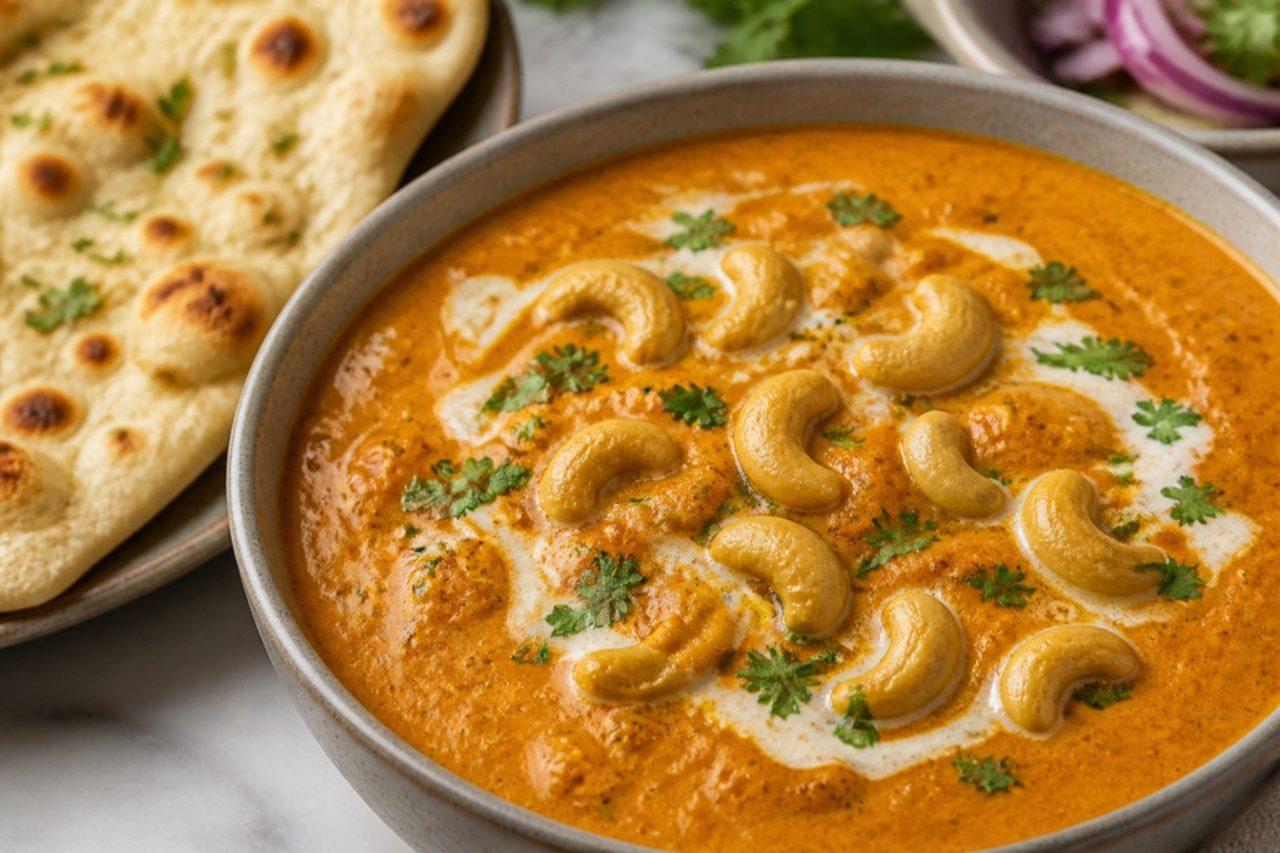
Kaju curryCashew curry
Walk along any wedding buffet in Pune, Mumbai or Ahmedabad and there is usually a chafing dish of kaju curry near the paneer, with guests going back for seconds. Whole cashews are fried in ghee until golden, which makes them crunchy outside and buttery inside, then folded into a rich onion and tomato gravy thickened with more cashews, finished with cream and kasuri methi. The gravy is orange, smooth and rounded with a touch of sweetness; it should taste of roasted nuts and gentle spice, not fire. Gujarati restaurants often serve a spicier Kathiyawadi version, but the wedding style here is the mild one. Eat it with butter naan, tandoori roti or jeera rice. Common mistake: adding the fried cashews too early; they soak up the gravy and turn soft, so fold them in just before serving. Chef's tip: keep a few fried cashews back and scatter them on top at the table so every spoonful has some crunch.

Bagara bainganBaby aubergines in peanut sesame sauce
Bagara baingan is a Hyderabadi wedding dish of small aubergines cooked whole in a dark, tangy gravy of roasted peanuts, sesame, dried coconut and tamarind. Unlike a Gujarati stuffed brinjal, the aubergines here are only quartered at the base and fried until silky, then left to soak up a thin-but-rich sauce that is finished with a tempering, the 'baghar' that gives the dish its name. It's sour, nutty and gently spiced, and is served with biryani, bagara rice or plain rice. Chef's tip: choose small, glossy purple aubergines that feel heavy for their size; soft, light ones are full of seeds and turn mushy before the gravy has a chance to cling.