
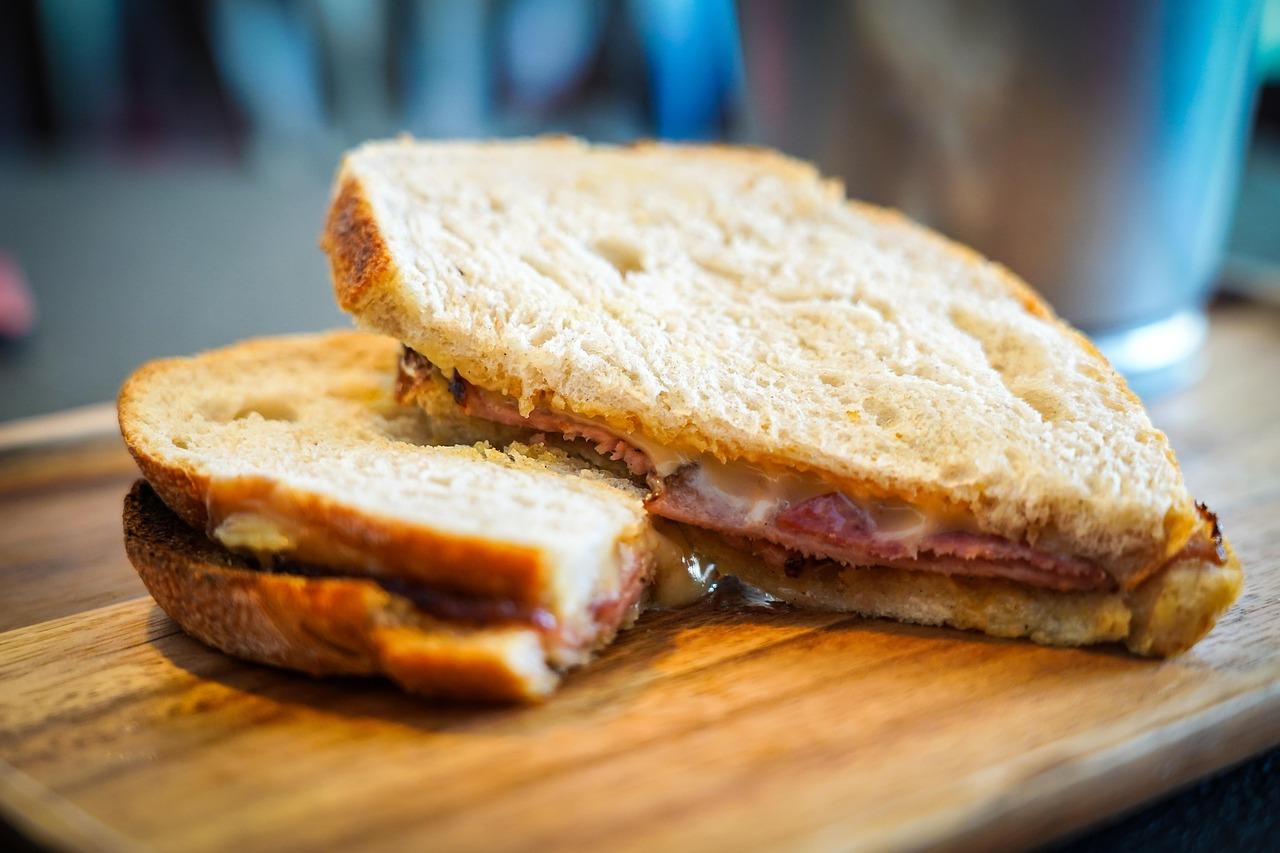
Misto quente
Ham and cheese toastie
Misto quente: Brazil's pressed toasted ham and cheese sandwich from the padaria counter

Order a misto quente at any padaria counter in Brazil and it arrives in minutes, pressed flat and golden in a hot sandwich iron, with a glass of orange juice or a pingado coffee. It is the go-to breakfast, school snack and late-night bite from São Paulo to Salvador. The filling is simple sliced cooked ham, which is pork, and melting cheese such as mozzarella or the local queijo prato between slices of soft white bread. Chef's tip: butter the outside of the bread, not the inside, for an even, crisp crust.
- Total time
- 8 min
- Difficulty
- easy
- Serves
- 1
Ingredients
Ingredients
- ⅓ oz buttersoftened
Shop this recipe on Amazon
Fresh ingredients (1)
Links open Amazon in a new tab. As an Amazon Associate, WhatToEat.Today earns from qualifying purchases.
Method
0/4 doneStep 1: Spread the ⅓ oz butter on one side of each slice of 2 slices soft white sandwich bread.
1 minStep 2: Lay one slice butter side down, top with the 2 slices mozzarella or queijo prato and 2 slices cooked ham (pork) and close with the other slice, butter side up.
1 minStep 3: Press in a sandwich toaster, or cook in a frying pan over a medium-low heat with a heavy pan on top, for about 3 minutes a side. A high heat is the usual mistake: the bread burns before the cheese melts.
6 minStep 4: It is ready when both sides are golden and crisp and the cheese is melted and the ham hot through. Cut in half and serve straight away.
0 min
Nutrition per serving
- Calories
- 420 kcal
- Protein
- 22 g
- Carbs
- 30 g
- Fat
- 23 g
- Fibre
- 1 g
Nutrition values are estimates.
KrazyBadal
Good to know
- How long does misto quente take?
- About 8 minutes in total: 2 minutes to prepare and 6 minutes to cook.
- How many people does it serve?
- 1 as written. Change the servings above the ingredients and every amount scales to match.
- What can I use instead of butter?
- The same weight of ghee or coconut oil (for frying and most baking).
Reviews
No reviews yet. Be the first to cook it.
Rate this recipe
Sign in to rate and review this recipe.
You might also like
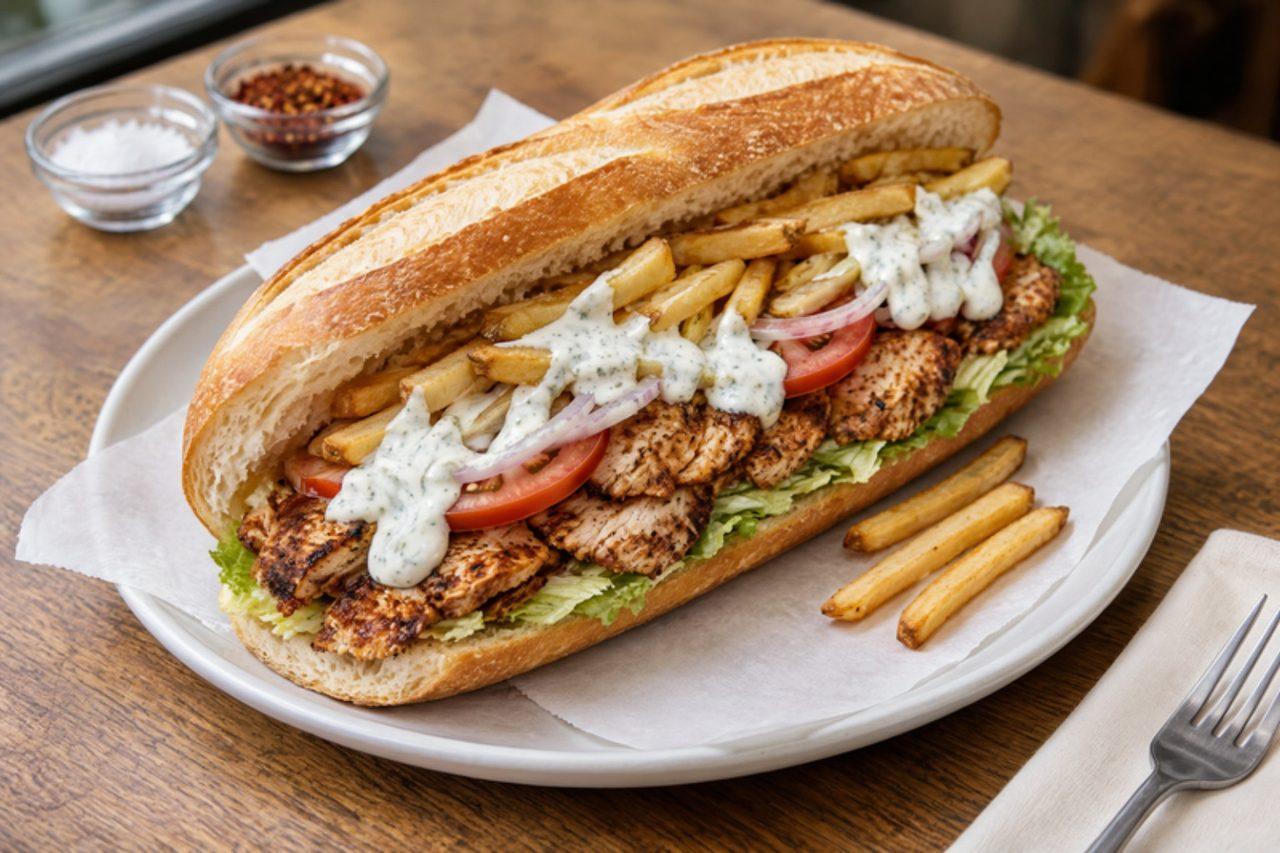
Sandwich grecKebab baguette
In Paris, a "grec" is the late-night kebab sandwich named after the Greek-run shops that first sold it in the Latin Quarter. On rue de la Huchette and rue Saint-André-des-Arts near Saint-Michel, students queue after a night out for crusty bread or pitta stuffed with meat shaved from a turning spit, lettuce, tomato and onion, a garlicky white sauce, and, the Paris touch, a handful of fries pushed right inside. This home version marinates chicken thighs in spiced yoghurt, sears them hard and slices them thin, with oven fries. It contains milk, egg (in the mayonnaise) and wheat. Chef's tip: slice the meat thinly across the grain after resting; thick chunks don't feel like a grec.
 French
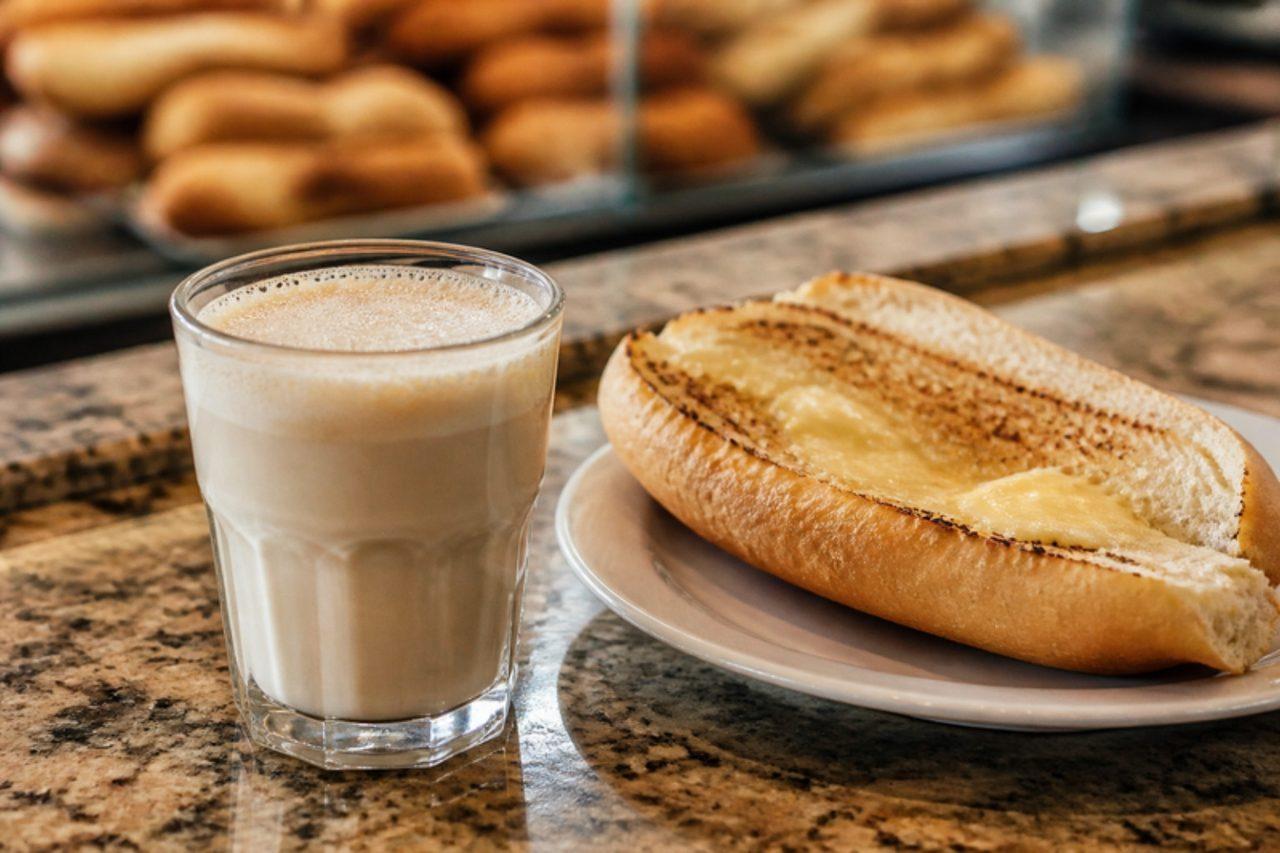
PingadoHot milk with coffee
Order 'um pingado' at the balcão of any São Paulo padaria at 7 in the morning and the attendant pours hot milk into a ridged glass tumbler (the copo americano) and 'drips' in a splash of strong coffee, hence the name. It is milkier and gentler than a média (half coffee, half milk), creamy and lightly sweet, usually drunk standing up with a pão na chapa, a toasted buttered roll. At home you need strong filter coffee and milk heated until steaming. Scalding the milk is the frequent mistake, as boiled milk tastes flat and forms a skin. Chef's tip: froth the hot milk for a few seconds with a whisk or by pouring it back and forth between two jugs before adding the coffee, as padaria machines do.

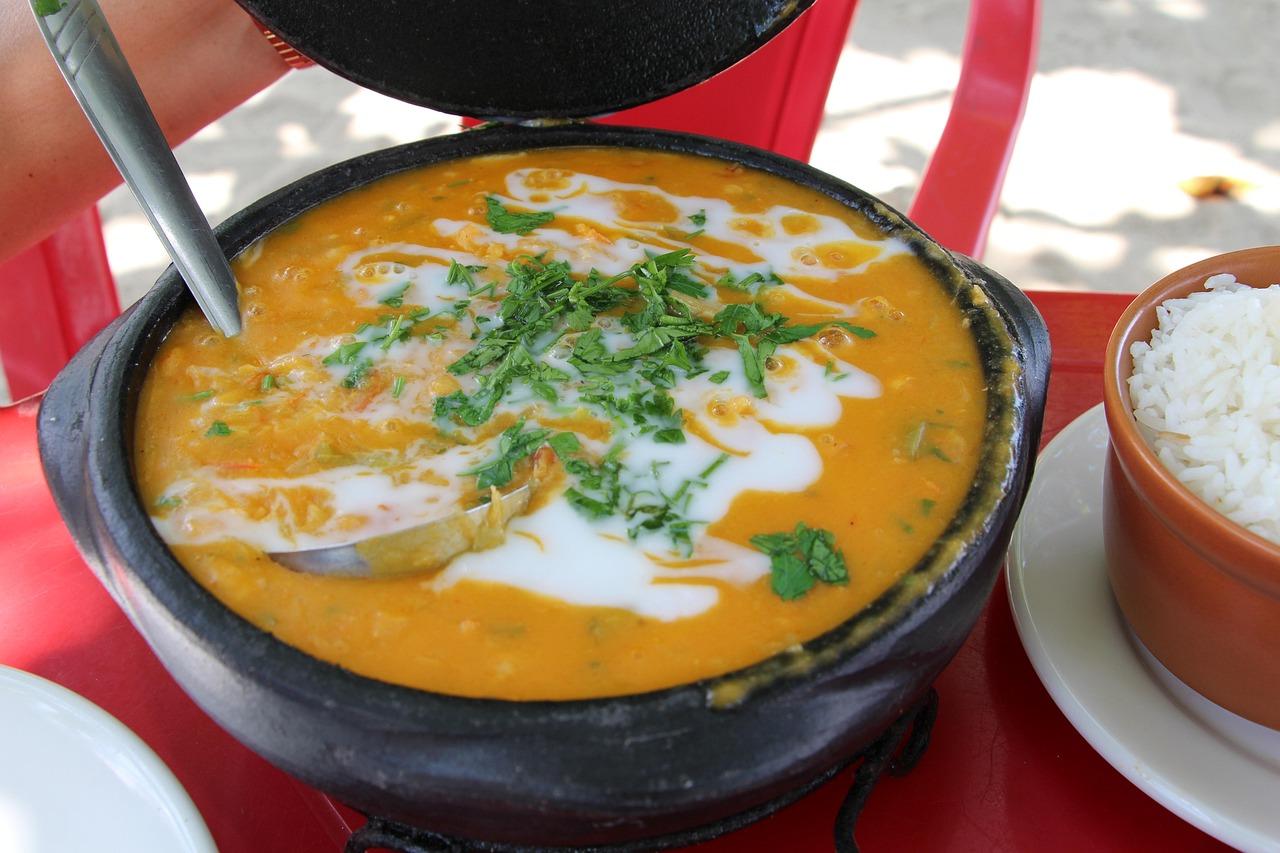
Bobó de camarãoPrawns in cassava and coconut purée
Velvety, coral-coloured and rich with coconut, bobó de camarão is what Bahian families put on the table when there is something to celebrate, and beach restaurants from Praia do Forte to Itacaré serve it in clay pots with white rice and farofa. Cassava is boiled until it falls apart, blended with coconut milk into a smooth cream, then folded into prawns cooked with onion, tomato, peppers and a slick of dendê oil. The result is somewhere between a stew and a thick sauce, sweet from the prawns and gently earthy from the cassava. A frequent mistake is boiling the prawns in the purée for too long, which leaves them tough and curled; they go in at the very end. Cassava must always be cooked right through, never eaten raw: cut out the woody core and boil it until a knife meets no resistance. Chef's tip: blend the cassava while it is still hot, with some of its cooking water; cold cassava turns gluey in the blender.