
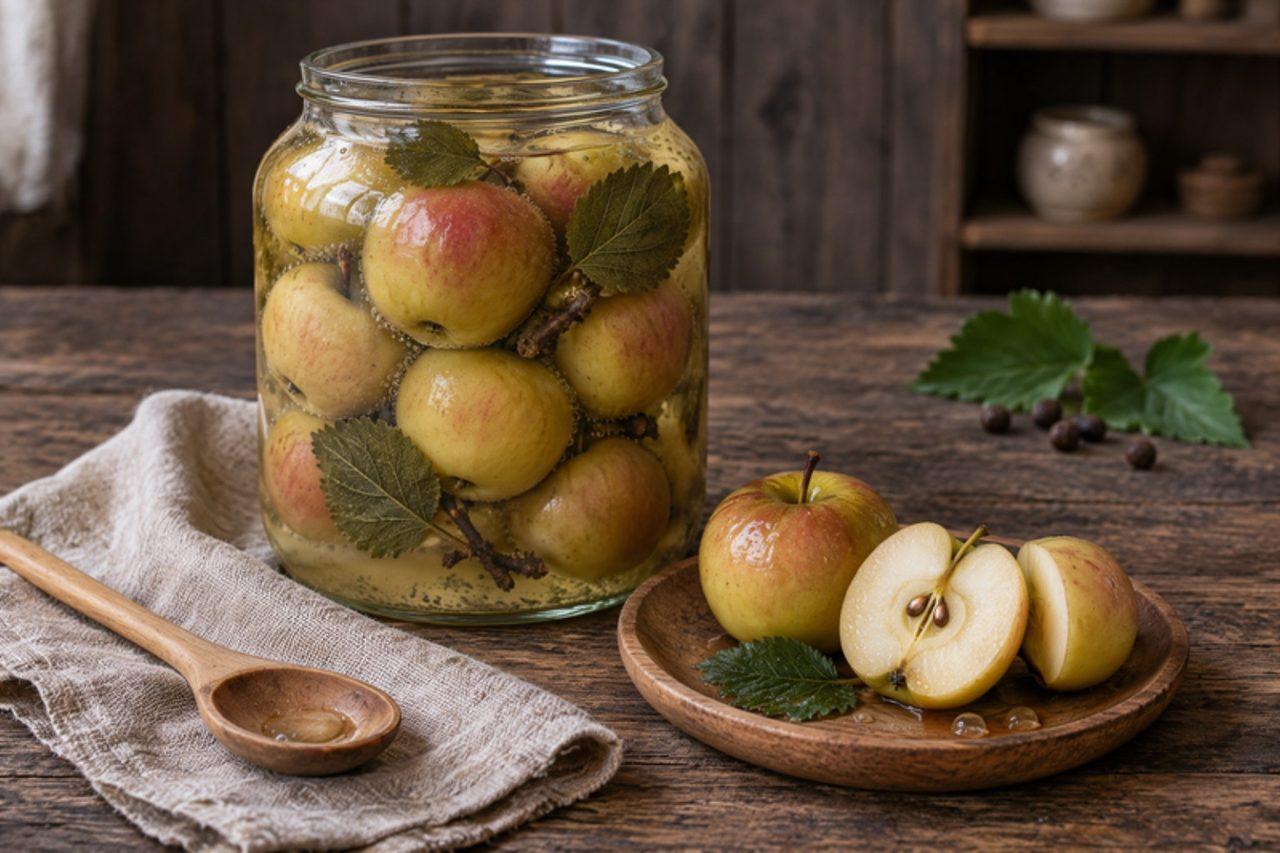
AI-generated image
Mochenye yabloki
Fermented apples
Мочёные яблоки: whole sour apples fermented for a month in rye and honey brine with blackcurrant leaves, crisp and fizzy

In the villages of central Russia, around Ryazan, Tula and Kursk, late autumn meant packing an oak barrel with whole Antonovka apples between layers of blackcurrant and cherry leaves, then pouring over a brine of water, salt, honey and a little rye flour. A month later, in the cold of the cellar, they had become mochenye yabloki: still crisp, very juicy, tart and lightly sweet, with a faint fizz on the tongue and an aroma close to cider. Through the winter they come out with roast goose or duck, on the zakuski table beside sauerkraut and salted cucumbers, and as a snack with tea. Like any lactic ferment they produce a trace of alcohol, well under 1% while young. The most common mistake is using soft, sweet dessert apples, which go mealy and fall apart; choose hard, sour, late-season apples without a single bruise and pack them tightly. They are ready when the brine is cloudy and smells pleasantly sour and a slice tastes tangy right to the core. Chef's tip: lay a clean cabbage leaf on top under the weight; it keeps the apples down and catches any surface yeast.
- Total time
- 50 min
- Difficulty
- easy
- Serves
- 12
Ingredients
For the apples
- 6 ⅝ lb firm, sour applesabout 12; Antonovka, or Bramley, Granny Smith or another hard tart variety; no bruises
- 30 blackcurrant leavesor cherry leaves; or a mix with a few vine leaves
- 4 mint or tarragon sprigs (optional)
- 1 large white cabbage leaf (optional)
For the brine (1.5% salt)
Shop this recipe on Amazon
Spices & pantry
Fresh ingredients (2)
Links open Amazon in a new tab. As an Amazon Associate, WhatToEat.Today earns from qualifying purchases.
Method
0/9 doneStep 1: Scrub a 5 litre glass jar, ceramic crock or food-grade bucket, a plate that fits inside and a weight (a jar filled with water) in hot soapy water, then rinse with boiling water and leave to drain dry.
Step 3: Let the brine cool to about 104°F, then stir in the 4 oz honey until dissolved. Leave to cool completely and settle, about 2 hours.
Step 4: Wash the 6 ⅝ lb firm, sour apples in cold water and leave them whole with their stalks; discard any with bruises or broken skin, as they will rot the batch. Rinse the 30 blackcurrant leaves.
10 minStep 5: Line the bottom of the crock with a third of the leaves. Pack in a layer of apples stalks up, add more leaves and a sprig of 4 mint or tarragon sprigs if using, and repeat, finishing with leaves.
15 minStep 6: Pour the cooled brine over, leaving the sediment behind if you prefer clearer brine, until the apples are covered by 4–5 cm. Lay the 1 large white cabbage leaf leaf on top if using, then the plate and the weight, so nothing floats above the surface.
Step 7: Leave at a cool room temperature (15–68°F) for 7–10 days. The apples soak up a lot of brine in the first days, so check daily and top up with fresh 1.5% brine (15 g salt per litre of boiled, cooled water) to keep them covered. Bubbles, a cloudy brine and a clean, sour smell are good signs; a flat white film (kahm yeast) is harmless, so skim it off with a clean spoon.
Step 8: Move the covered crock to a cold place at 2–6 °C, such as the fridge or a cold cellar, and leave for 4–6 weeks more. They are ready when the flesh tastes tangy and juicy right through and the brine is lightly fizzy.
Step 9: Serve whole or in wedges, lifting them out with clean tongs. They keep 3–4 months in the fridge as long as they stay under the brine. Discard the batch if you see fuzzy mould in green, black or pink, the apples turn slimy or mushy, or it smells rotten instead of sour. If you bottle the leftover brine to drink, keep it in the fridge and open the bottle daily to release pressure.
Nutrition per serving
- Calories
- 125 kcal
- Protein
- 1 g
- Carbs
- 32 g
- Fat
- 0 g
- Fibre
- 5 g
Nutrition values are estimates.
KrazyBadal
Good to know
- How long does mochenye yabloki take?
- About 50 minutes in total: 40 minutes to prepare and 10 minutes to cook.
- How many people does it serve?
- 12 as written. Change the servings above the ingredients and every amount scales to match.
- Is it vegetarian?
- Yes. It has no meat or fish.
- Can I make it ahead?
- Yes. It keeps well, so you can cook it earlier in the day or the day before and reheat it.
- What can I use instead of honey?
- Maple syrup or golden syrup, same amount.
Reviews
No reviews yet. Be the first to cook it.
Rate this recipe
Sign in to rate and review this recipe.
You might also like
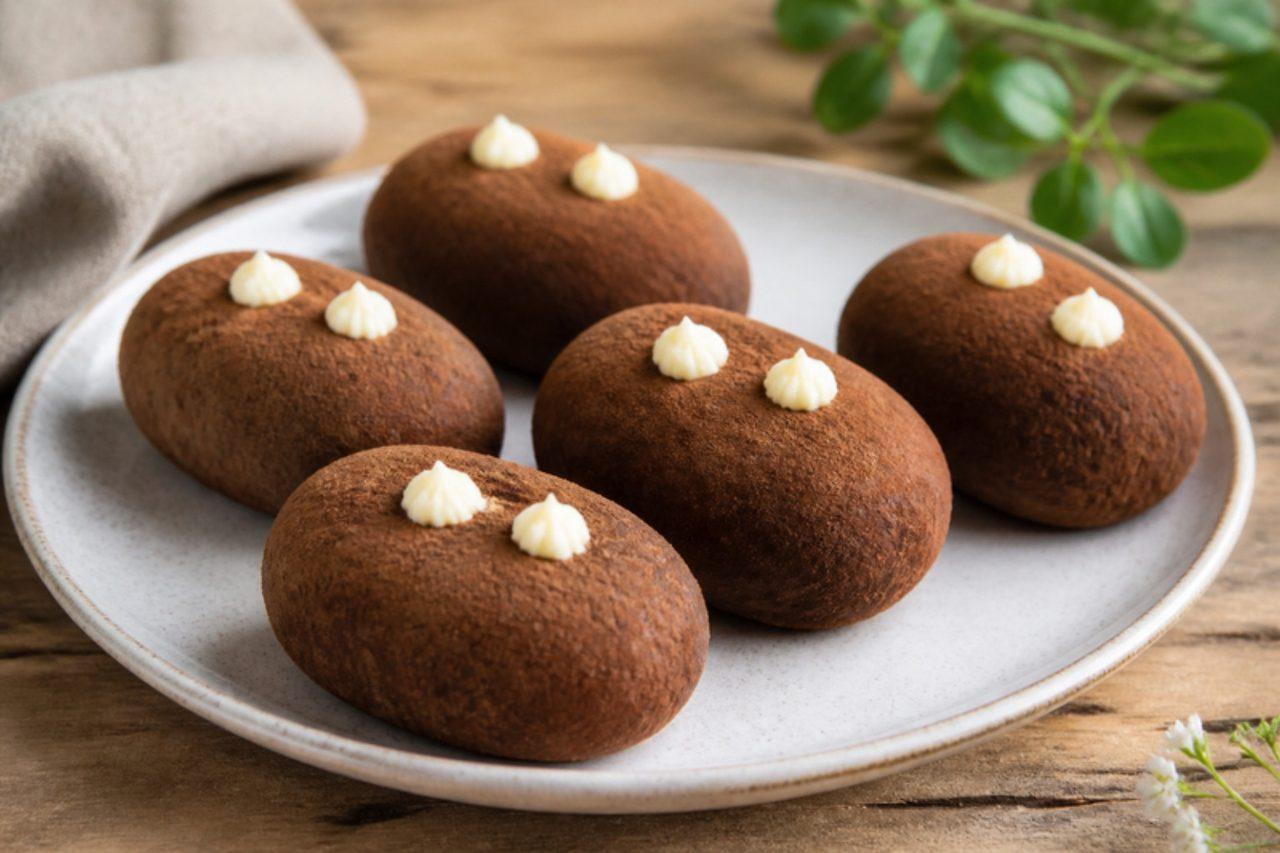
Kartoshka cakeCocoa and cake crumb truffles
Soviet cafés and school canteens sold these knobbly brown 'potatoes' for a few kopecks, and they began as a thrifty way to use up sponge and biscuit trimmings at the bakery. Crumbs are bound with butter and sweetened condensed milk, flavoured with cocoa and vanilla, shaped into little potatoes, rolled in cocoa and finished with two dabs of pale butter cream for the sprouts. They are fudgy and dense like a brownie truffle, need no oven, and children love making them. Traditional bakers added a spoonful of rum, an optional extra for adult batches only; this version is alcohol-free with vanilla. The usual slip is coarse crumbs, which make the potatoes crack, so blitz them as fine as sand. Chef's tip: chill the shaped potatoes for at least 20 minutes so they hold their shape and slice cleanly.

TacachoMashed roasted green plantain balls
Tacacho is the breakfast of the Peruvian Amazon, from Tarapoto to Iquitos: green plantains roasted over coals, mashed with fat and salt and shaped into balls. There it comes with cecina (smoked pork) and is mashed with lard and crackling; this vegan tacacho uses good oil and a pinch of smoked paprika for the same savoury, smoky depth. The balls are dense, chewy and starchy, crisp at the edges where the plantain charred, and they are eaten hot with a fiery chilli sauce or alongside stews. Use plantains that are fully green and firm. Chef's tip: mash the plantains while they are still very hot; as green plantain cools its starch sets and it won't bind into a smooth ball.
 Peruvian


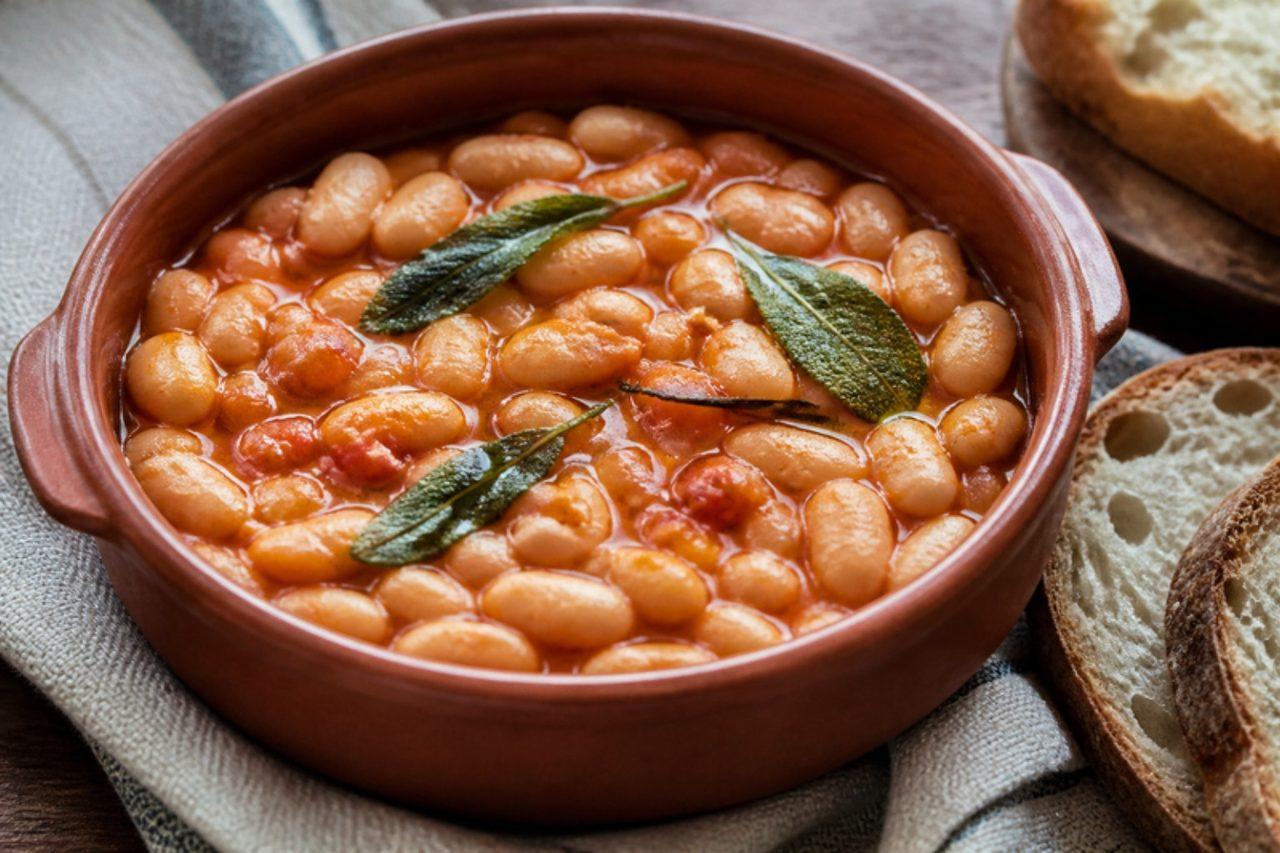
Fagioli all'uccellettoCannellini beans with sage and tomato
Florentines are nicknamed mangiafagioli, bean-eaters, and this is the dish that earned it: creamy cannellini simmered in olive oil with whole sage leaves, crushed garlic and a little tomato. The name, 'little-bird style', comes from the sage and garlic once used to cook small game birds, though there has never been a bird in the pot. In trattorie it sits next to grilled meat as a side; served with crusty bread and greens it makes a full vegetarian supper. The beans should be soft and glossy in a thick, rust-coloured sauce. Chef's tip: let the sage and garlic sizzle gently in the oil before the tomato goes in; that scented oil is the whole flavour of the dish.
 Italian