Skip to content

Recipes with firm

5 recipes that use firm, with photos, step-by-step instructions and cook times. The quickest, Kapusta provansal, takes 35 minutes. It is most often cooked with sugar, allspice berries and baking soda.

Got a few things in the fridge? Search by everything you have

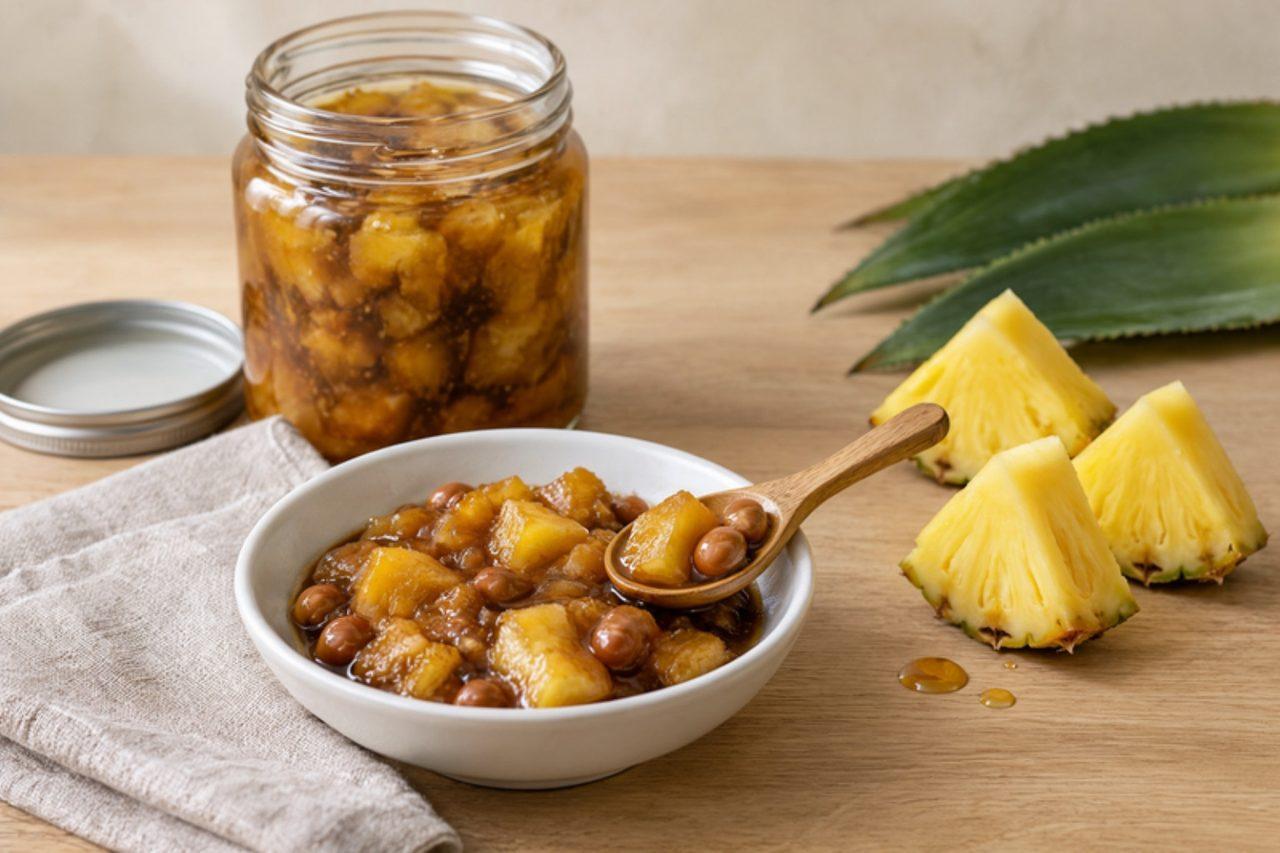
Pineapple soybean paste

Hakka households in Miaoli, Hsinchu and Pingtung are frugal and patient, and pineapple soybean paste (ong lai dau jiong) shows both. In early summer, when Taiwan's pineapples are plentiful, the fruit is cut into wedges and layered in jars with salted soybean koji and sugar, then left in a cool corner for months. The pineapple softens and goes golden-brown, the beans melt into a thick sauce, and the whole jar turns sweet, salty and tangy with a soft funk like miso. Spooned over steamed fish with ginger and scallion, stirred into braised bitter melon or tossed through stir-fried greens and wood ear, it is a back-pocket seasoning for everyday Hakka meals and bento. Common mistake: using very ripe, juicy pineapple; the fruit breaks into mush and the extra water dilutes the salt. Choose firm, just-ripe fruit and dry it after cutting. It is ready when the pineapple has turned amber and translucent and the beans are soft, after 1–3 months. Chef's tip: read the koji label — many brands are dusted with wheat flour, so it is not reliably gluten free.

by KrazyBadal 0 views

Mochenye yabloki

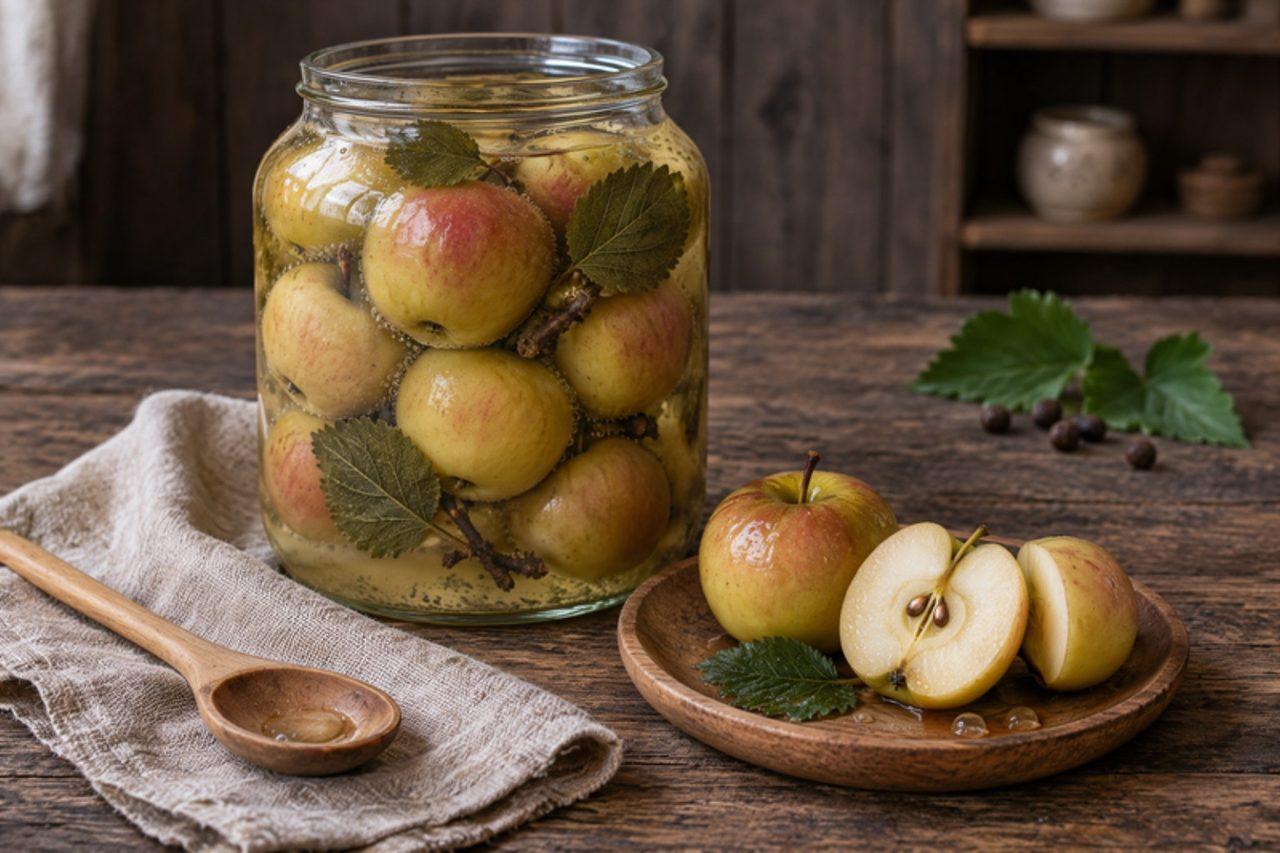
In the villages of central Russia, around Ryazan, Tula and Kursk, late autumn meant packing an oak barrel with whole Antonovka apples between layers of blackcurrant and cherry leaves, then pouring over a brine of water, salt, honey and a little rye flour. A month later, in the cold of the cellar, they had become mochenye yabloki: still crisp, very juicy, tart and lightly sweet, with a faint fizz on the tongue and an aroma close to cider. Through the winter they come out with roast goose or duck, on the zakuski table beside sauerkraut and salted cucumbers, and as a snack with tea. Like any lactic ferment they produce a trace of alcohol, well under 1% while young. The most common mistake is using soft, sweet dessert apples, which go mealy and fall apart; choose hard, sour, late-season apples without a single bruise and pack them tightly. They are ready when the brine is cloudy and smells pleasantly sour and a slice tastes tangy right to the core. Chef's tip: lay a clean cabbage leaf on top under the weight; it keeps the apples down and catches any surface yeast.

by KrazyBadal 0 views

Kapusta provansal

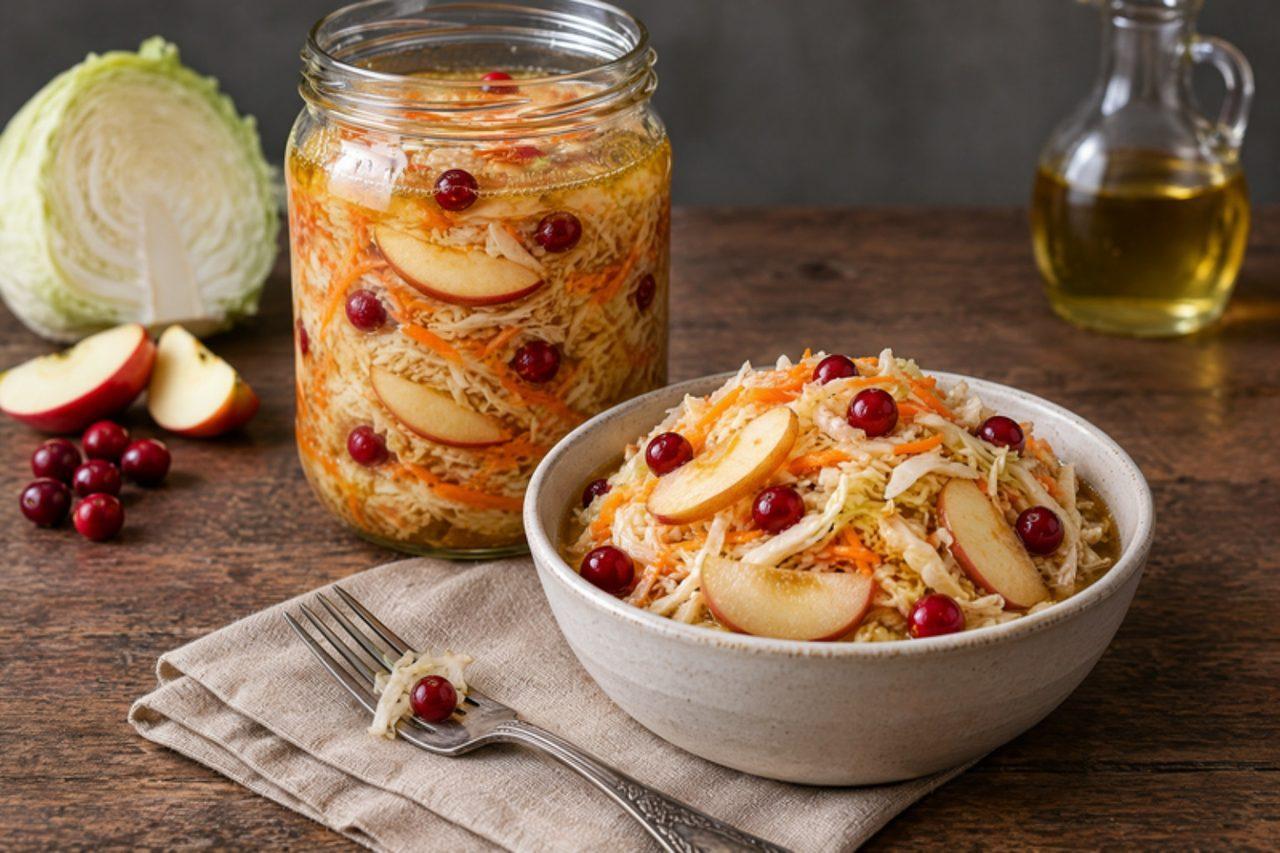
Kapusta provansal has nothing to do with Provence: the grand name is a Soviet-era flourish for a bright marinated cabbage salad that turns up on festive tables from Moscow to Novosibirsk, especially at New Year and through the autumn when the cabbage is crisp and sweet. Coarsely cut cabbage, grated carrot, apple wedges and red cranberries are packed into a jar under a hot marinade of water, sugar, vinegar, sunflower oil, bay and allspice. By the next day it is crunchy, juicy, sweet and sour, with tart pops of berry and a gentle spiced warmth, and it sits happily beside boiled potatoes, kotlety, salted herring or roast chicken. The commonest mistake is slicing the cabbage very finely, which goes limp under the hot marinade; cut it into rough 3 cm squares and crush it only lightly with the salt. It is ready when the cabbage has turned slightly translucent but still snaps and the carrot has coloured the brine pale orange. Chef's tip: add a few strips of red pepper and a crushed garlic clove to the jar for colour and depth.

by KrazyBadal 0 views

Parwal ki mithai

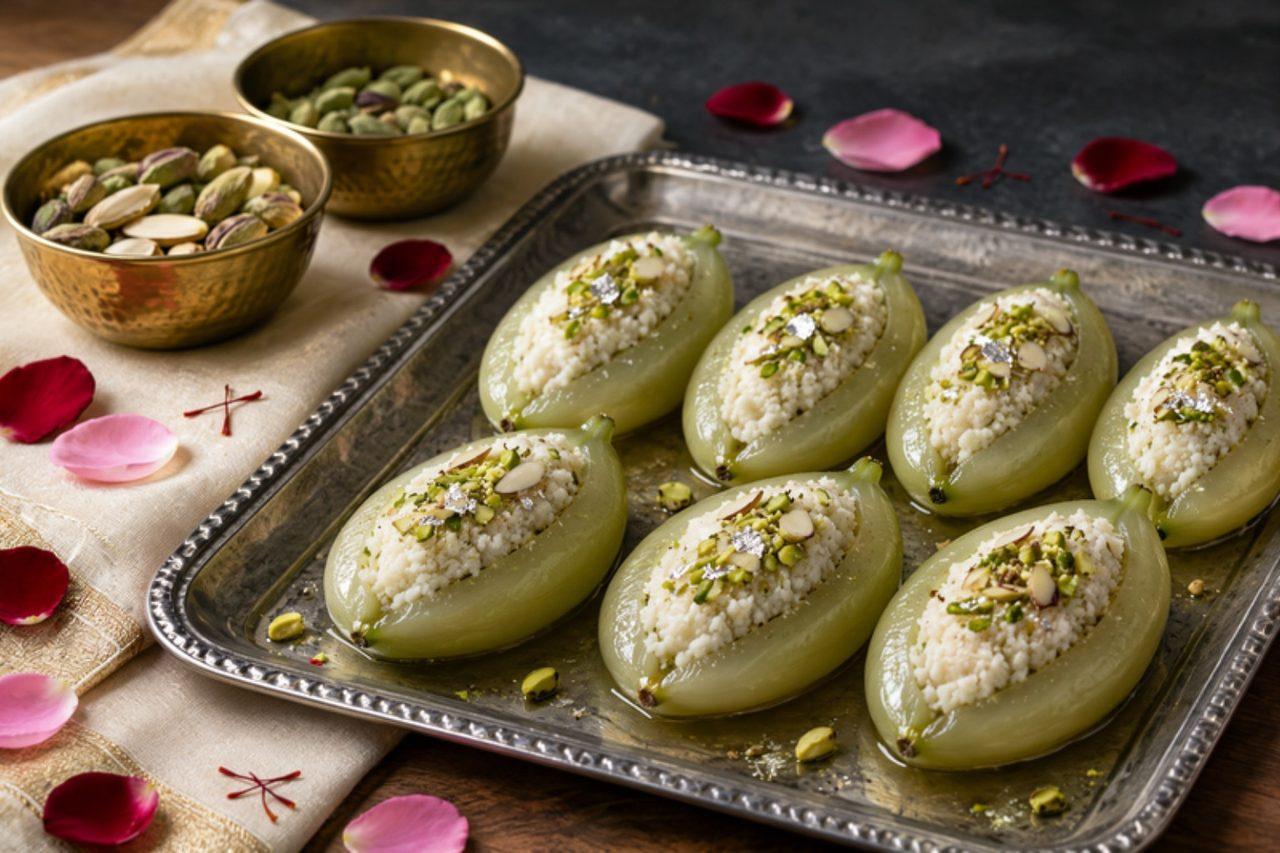
Parwal ki mithai surprises anyone who knows pointed gourd only as a curry vegetable: in Bihar and eastern Uttar Pradesh sweet makers peel the gourds, candy them in syrup until translucent, then fill them with sweetened mawa and nuts. They sit in shop windows at Diwali, Chhath and weddings, often glinting with silver leaf. The common mistake is undercooking the gourds before candying, which leaves them crunchy and vegetal; blanch until a knife slides in easily. Silver leaf (vark) is optional; choose one certified vegetarian. Chef's tip: scrape out every seed carefully, because even a few hard seeds spoil the soft bite.

by KrazyBadal 0 views

Apricot preserve

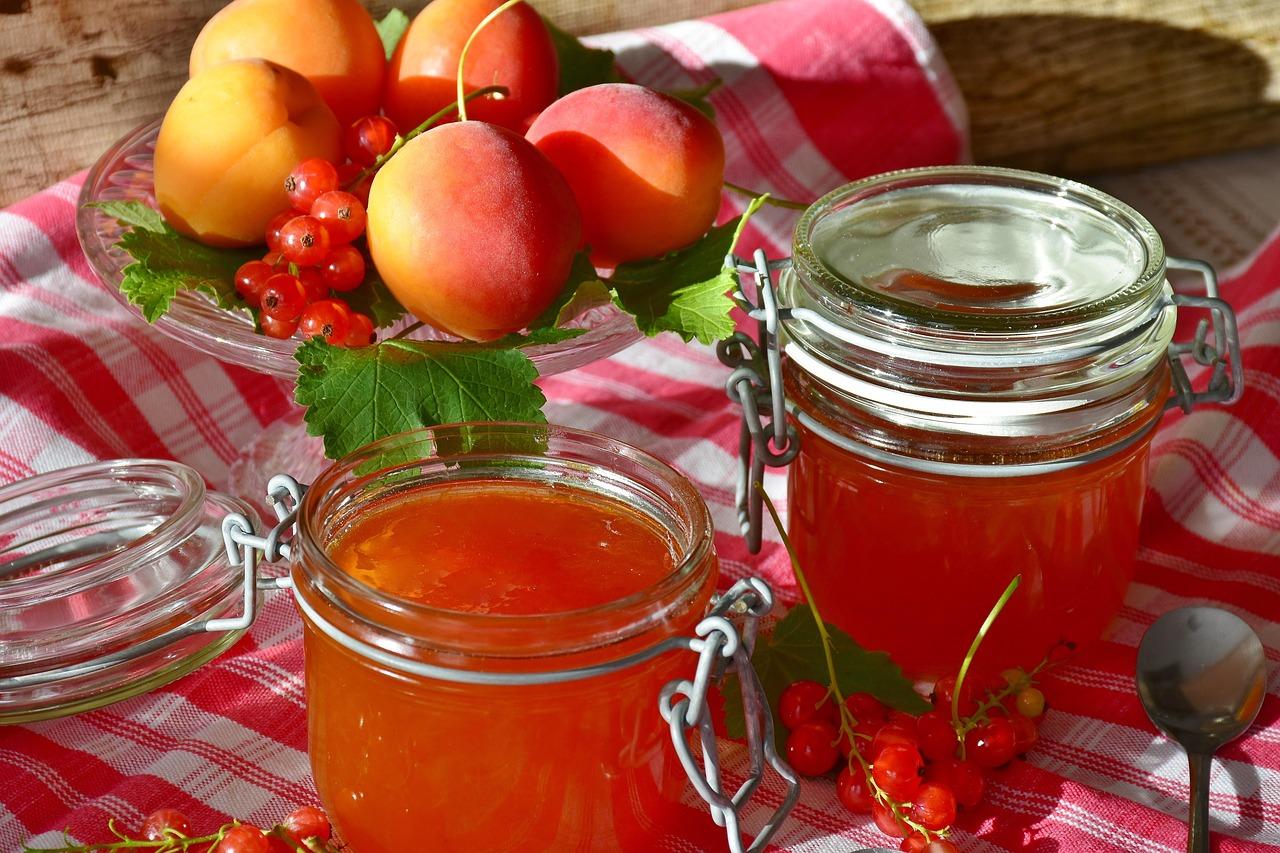
The apricot is Armenia's national fruit, and in July families in the Ararat Valley villages around Artashat and Masis cook whole ones slowly in syrup so they keep their shape and turn translucent, sometimes slipping a peeled kernel back inside each fruit. The jars come out on winter evenings, served in tiny glass bowls with black tea or coffee. A common mistake is boiling the fruit hard, which breaks it into jam. Chef's tip: cook in short spells, resting the pan overnight between them; the syrup seeps in slowly and the apricots stay whole and glossy. Bitter kernels contain a natural toxin, so use sweet almonds instead.

by KrazyBadal 0 views

Goes well with firm