
AI-generated image
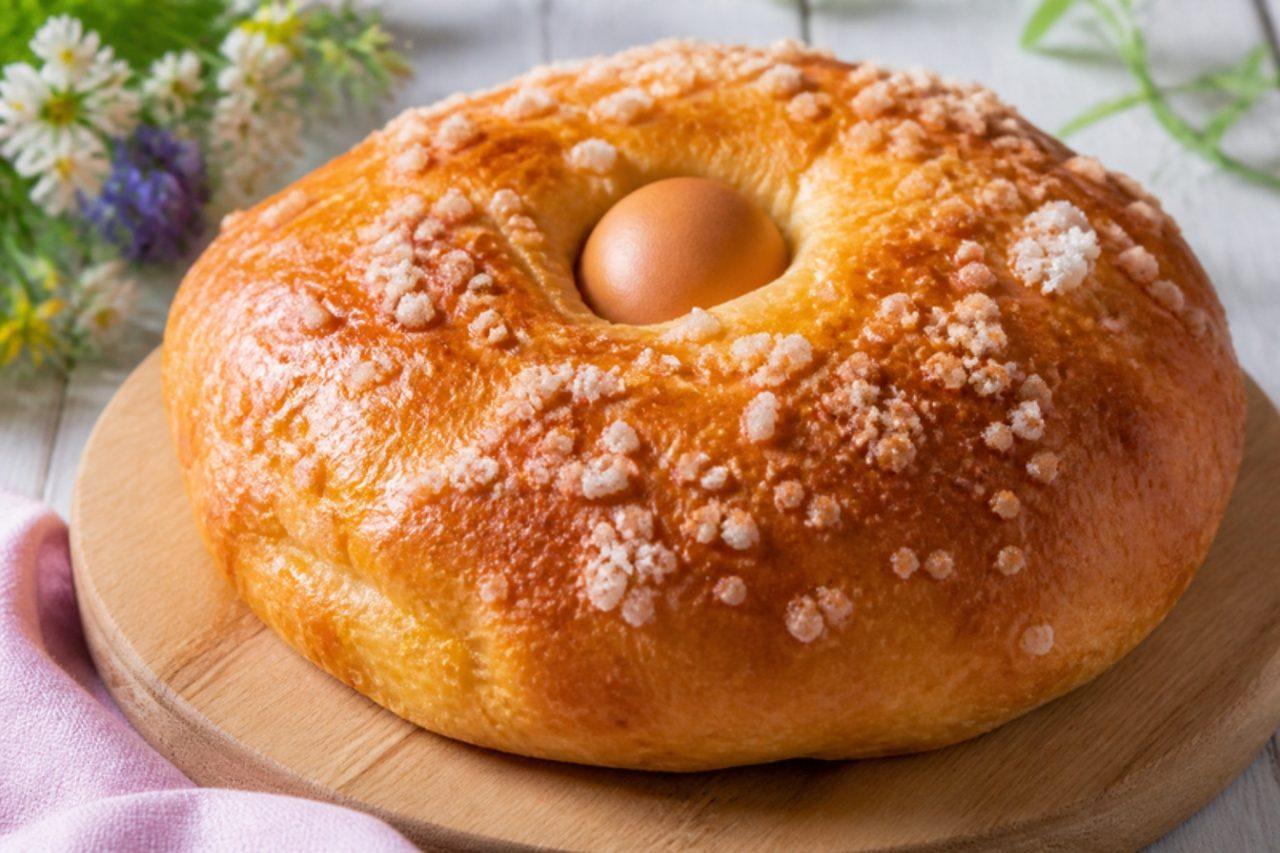
Mona de Pascua
Easter brioche with egg
Mona de Pascua: the Valencian Easter brioche crowned with an egg and sugar

On Easter Monday, families across the Valencian Community head out to the countryside or the beach to "menjar-se la mona": they eat an orange-scented sweet brioche, often with a whole egg baked on top, and children crack the egg on a friend's forehead. The bun is soft and fluffy, glazed and sprinkled with sugar or coloured aniseed sprinkles. Here the eggs are hard-boiled first, so they are cooked through whatever the size of your bun. A common mistake is adding all the flour at once to a sticky dough; it softens as you knead, so hold back the last 50 g until you've kneaded for a few minutes. Chef's tip: make the starter the evening before and the dough on the day; the slow start gives a lighter crumb that stays soft for two days.
- Total time
- 70 min
- Difficulty
- hard
- Serves
- 8
Ingredients
For the starter
- 3 ½ oz strong white bread flour
- ¼ cup lukewarm water
- ⅞ oz fresh yeastor 9 g fast-action dried yeast
For the dough
- 14 oz strong white bread flour
- 3 ⅞ oz caster sugar
- ½ tsp salt
- 3 eggsat room temperature
- ¼ cup whole milklukewarm
- 1 orange zestfrom 1 large orange
- 1 tsp orange blossom water (optional)
To finish
- 4 eggshard-boiled for 10 minutes and cooled, in their shells
- 1 eggbeaten, for brushing
- 3 tbsp granulated sugar
- 2 tbsp coloured sugar sprinkles (optional)
Shop this recipe on Amazon
Spices & pantry
Fresh ingredients (5)
Links open Amazon in a new tab. As an Amazon Associate, WhatToEat.Today earns from qualifying purchases.
Method
0/8 doneStep 1: For the starter, dissolve ⅞ oz fresh yeast in ¼ cup lukewarm water and mix with 3 ½ oz strong white bread flour to a soft ball. Cover and leave until doubled and spongy, about 1 hour (or overnight in the fridge).
60 minStep 2: In a large bowl or mixer, combine 14 oz strong white bread flour, 3 ⅞ oz caster sugar and ½ tsp salt. Add the starter, 3 eggs, ¼ cup whole milk, 1 orange zest and the orange blossom water if using. Mix to a sticky dough.
5 minStep 3: Knead for 5 minutes, then add ½ cup sunflower oil or mild olive oil a spoonful at a time, kneading until each addition is absorbed. Carry on for 10 to 15 minutes more, until the dough is glossy, elastic and stretches into a thin, see-through sheet.
18 minStep 4: Cover and leave in a warm place until doubled, 1½ to 2 hours.
105 minStep 5: Divide into 4 pieces and shape each into a smooth ball, tucking the edges underneath. Place on lined trays, flatten slightly to about 2 cm thick and press a hard-boiled egg firmly into the centre of each. You can lay two thin strips of dough across the egg in a cross.
Step 6: Cover loosely and prove until puffy and nearly doubled, 1 to 1½ hours. Heat the oven to 350°F (325°F fan).
75 minStep 7: Brush the buns (not the eggs) with 1 egg and sprinkle generously with 3 tbsp granulated sugar, plus coloured sprinkles if you like.
Step 8: Bake for 20 to 25 minutes, until deep golden; the base should sound hollow when tapped and the centre should read about 194°F. Cover loosely with foil if they brown too fast. Place the 4 eggs back in the fridge if the monas won't be eaten within 2 hours, and eat within 2 days.
22 min
Nutrition per serving
- Calories
- 430 kcal
- Protein
- 12 g
- Carbs
- 62 g
- Fat
- 15 g
- Fibre
- 2 g
Nutrition values are estimates.
KrazyBadal
Good to know
- How long does mona de Pascua take?
- About 70 minutes in total: 45 minutes to prepare and 25 minutes to cook.
- How many people does it serve?
- 8 as written. Change the servings above the ingredients and every amount scales to match.
- Is it vegetarian?
- Yes. It has no meat or fish.
- Can I make it ahead?
- Yes. It keeps well, so you can cook it earlier in the day or the day before and reheat it.
- What can I use instead of strong white bread flour?
- Plain flour, same amount (the dough will be softer and rise a little less).
- What can I use instead of strong white bread flour?
- Plain flour, same amount (the dough will be softer and rise a little less).
Reviews
No reviews yet. Be the first to cook it.
Rate this recipe
Sign in to rate and review this recipe.
You might also like
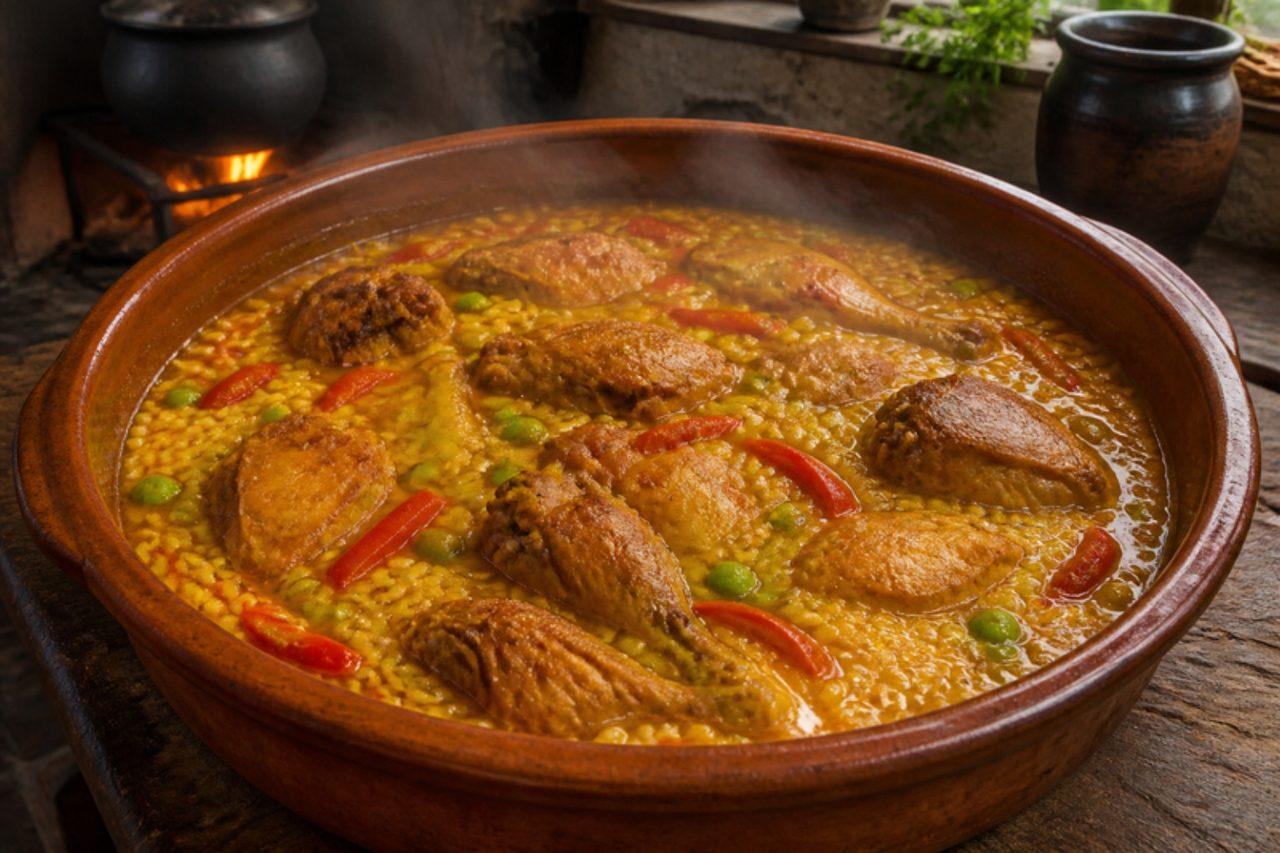
Arroz con pitu de caleyaSoupy rice with chicken
A pitu de caleya is a cockerel raised free in the lanes, or caleyas, of rural Asturias; its firm, flavourful meat needs long stewing, and families around Villaviciosa and Grado still cook it for feast days. The stew is often finished as a soupy rice, so the deep chicken juices go into every grain. Use the best free-range chicken you can find. The braise includes dry white wine; replace it with extra stock and a squeeze of lemon if you want it alcohol-free. Chef's tip: brown the chicken slowly and deeply; that colour is where the flavour of the whole pot comes from.
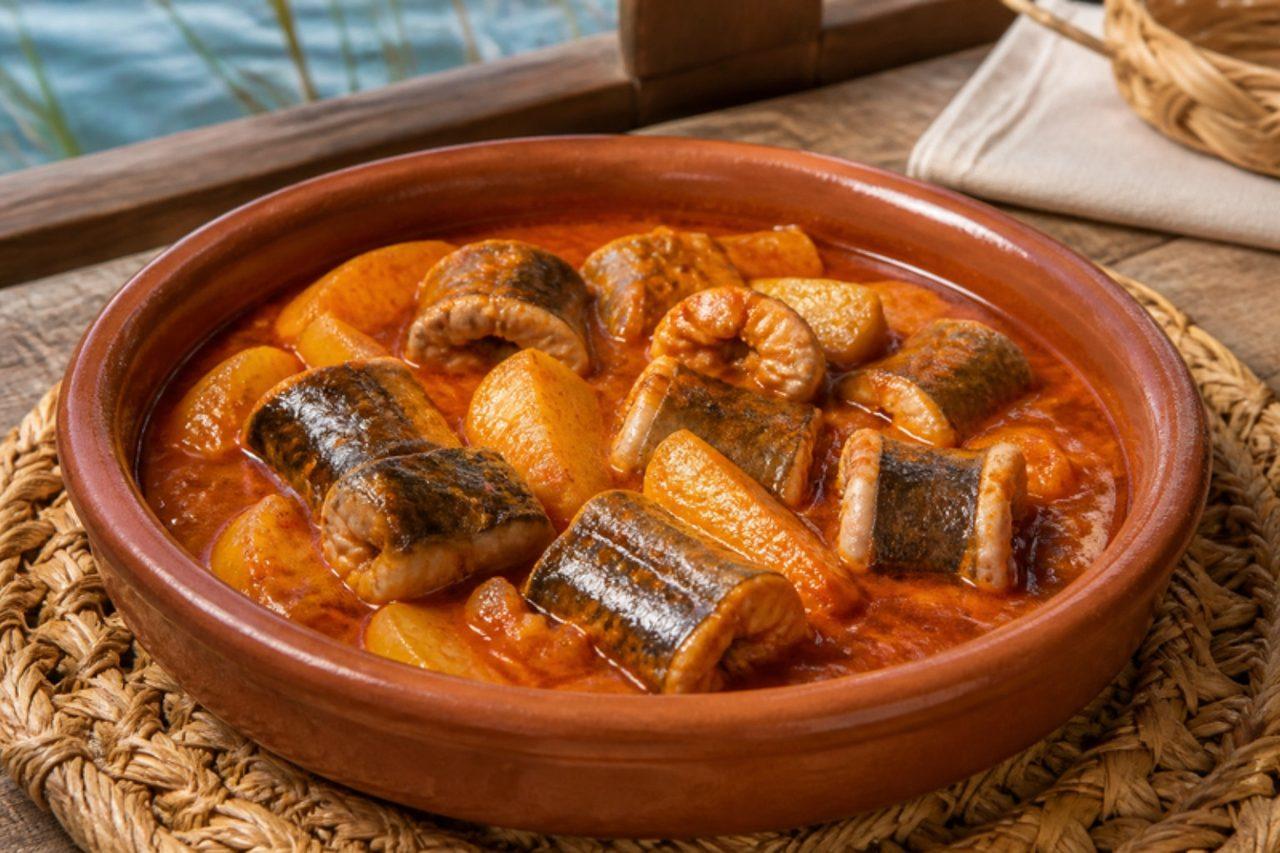
All i pebreEel and potato paprika stew
In El Palmar and the other villages around the Albufera lagoon south of Valencia, the restaurants that are famous for paella serve something older first: all i pebre, "garlic and pepper", a brick-red stew of lagoon eel and potatoes thickened with a pounded almond and fried-bread picada. It is rich, garlicky and gently hot, eaten with bread to mop up the sauce. Ask your fishmonger to skin and cut the eel, and handle it with gloves: raw eel blood is irritating, though harmless once cooked. If you can't find eel, monkfish or hake works well. A common mistake is letting the paprika burn; it turns bitter in seconds, so add it off the heat. Chef's tip: break the potatoes with a knife instead of cutting cleanly; the rough edges release starch and thicken the sauce.

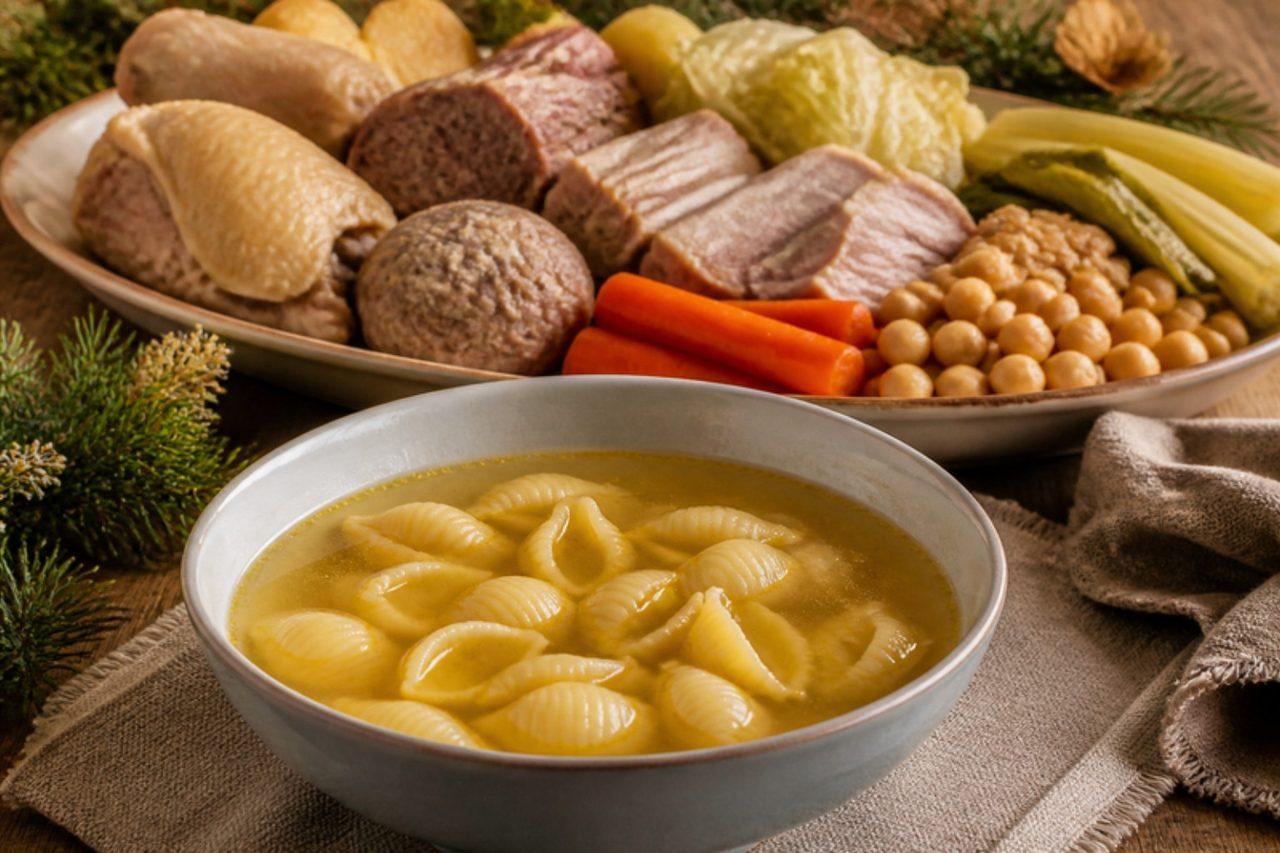
Escudella i carn d'ollaChristmas soup with giant pasta
This contains pork (pork belly and pork mince). On Christmas Day, Catalan families sit down to escudella i carn d'olla, served in two courses: first the broth with giant snail-shaped galets pasta, then the carn d'olla, a platter of the meats, chickpeas and vegetables that made it, including the pilota, a large herby meatball. The pot simmers for hours, and the leftovers become the next day's canelons. Chef's tip: start the meats in cold water and skim patiently as it comes to the boil; it is the only way to a clear, golden broth.