
AI-generated image
Nadru yakhni
Lotus stem in yogurt gravy
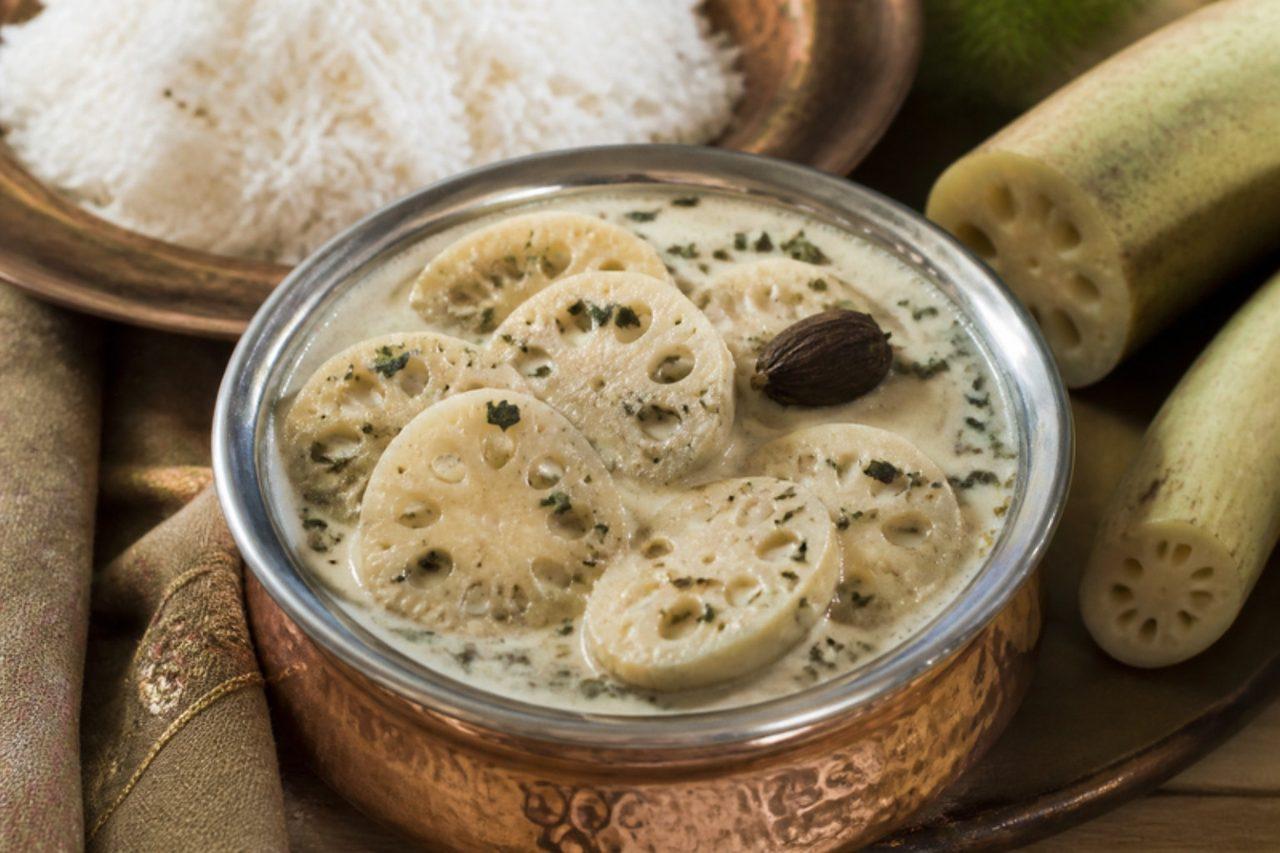
Nadru yakhni: Kashmiri lotus stem in a fennel and dry-ginger yogurt gravy


Lotus stem, called nadru in Kashmiri, is pulled from the shallow waters of the Dal and Anchar lakes around Srinagar, and Kashmiri Pandit families treat it as something close to a festive vegetable. Yakhni is their pale, onion-free yogurt gravy, scented with fennel, dry ginger and black cardamom instead of tomato or chilli. The lotus slices stay faintly crunchy and show their lacy holes in a creamy, ivory sauce. It turns up at Herath (Shivratri) meals and at Sunday lunches, always with a mound of plain steamed rice. Chef's tip: pick firm, pale stems with closed ends; the ends keep mud out of the hollow channels, so you rinse far less.
- Total time
- 55 min
- Difficulty
- medium
- Serves
- 4
Ingredients
For the lotus stem
- 14 oz lotus stem (nadru)peeled and sliced on the diagonal, 1 cm thick
- ½ tsp saltfor boiling
- 4 ¼ cups waterfor boiling
For the yakhni
- 3 tbsp mustard oil
- 4 green cardamom podslightly crushed
- 3 cloves
- 1 cinnamon stick5 cm
- 14 oz full-fat plain yogurtat room temperature
- 2 tsp ground fennel
- 1 tsp salt
- 1 cup water
- 1 tsp dried mintcrumbled
Shop this recipe on Amazon
Spices & pantry
Fresh ingredients (1)
Links open Amazon in a new tab. As an Amazon Associate, WhatToEat.Today earns from qualifying purchases.
Method
0/8 doneStep 1: Trim both ends of the 14 oz lotus stem (nadru), peel with a vegetable peeler and cut into diagonal slices. Rinse the slices under running water, pushing a chopstick through any channels that still hold mud.
Step 2: Bring 4 ¼ cups water and ½ tsp salt to the boil, add the lotus slices and cook over a medium heat for 12–15 minutes, until a knife slides in with only slight resistance. The slices should still have a little bite. Drain.
15 minStep 3: Whisk 14 oz full-fat plain yogurt with 2 tsp ground fennel and 1 tsp ground dry ginger (sonth) in a bowl until completely smooth, with no lumps of yogurt left.
Step 4: Heat 3 tbsp mustard oil in a heavy pan over a high heat until it just smokes, then turn the heat to medium and let it cool for a minute. Add 2 black cardamom pods, 4 green cardamom pods, 3 cloves, 1 cinnamon stick and 2 bay leaves and stir for 30 seconds, until the cardamom puffs and smells smoky. Add ¼ tsp gluten-free asafoetida (hing) for 5 seconds.
3 minStep 5: Take the pan off the heat and pour in the yogurt mixture, stirring constantly in one direction. The most common mistake is adding yogurt to a pan that is still on high heat: it splits into grainy curds within seconds.
1 minStep 6: Return the pan to a low-medium heat and keep stirring for 6–8 minutes, until the yogurt comes up to a gentle boil, turns glossy and stops looking thin and watery. Once it has boiled it will no longer curdle.
8 minStep 7: Add 1 cup water, 1 tsp salt and the boiled lotus stem. Simmer uncovered over a low heat for 15 minutes, stirring now and then, until the gravy is creamy, ivory-coloured and thick enough to coat the back of a spoon.
15 minStep 8: Crumble in 1 tsp dried mint, stir and switch off. Rest for 5 minutes so the lotus soaks up the gravy, then serve with plain steamed rice.
1 min
Nutrition per serving
- Calories
- 230 kcal
- Protein
- 7 g
- Carbs
- 20 g
- Fat
- 14 g
- Fibre
- 4 g
Nutrition values are estimates.
KrazyBadal
Good to know
- How long does nadru yakhni take?
- About 55 minutes in total: 15 minutes to prepare and 40 minutes to cook.
- How many people does it serve?
- 4 as written. Change the servings above the ingredients and every amount scales to match.
- Is it vegetarian?
- Yes. It has no meat or fish.
- Is it gluten free?
- Yes, as written. Check the labels on stock, sauces and spice mixes, which sometimes contain gluten.
- What can I use instead of green cardamom pods?
- A pinch of ground cardamom per 2 pods.
- What can I use instead of cloves?
- Ground cloves, ¼ tsp for every 3 whole cloves.
Reviews
No reviews yet. Be the first to cook it.
Rate this recipe
Sign in to rate and review this recipe.
You might also like

Sayur lodehVegetables in coconut milk
Sayur lodeh is everyday cooking in Central Java, made in big pots in Solo and Semarang kitchens and ladled over rice, with lontong rice cakes at Lebaran, or alongside opor and sambal goreng on festive tables. It's soupy rather than thick: a fragrant broth of coconut milk, galangal, lemongrass and lime leaf that carries chunks of aubergine, long beans, chayote and sweetcorn, plus tempeh and tofu to make it a meal. The flavour is mellow and slightly sweet, so the heat comes from sambal on the side. Chef's tip: keep the pot at a gentle simmer once the coconut milk goes in and stir now and then — a rolling boil splits the coconut milk into oily curds.
 Indonesian



SakarpadaSweet fried dough diamonds
Sakarpada (shakarpara) are little sweet diamonds of a rich dough made with ghee, milk and sugar, fried until golden and crunchy. They are a Diwali favourite with tea, and the cubes go into bhusu too. They keep for weeks in an air-tight tin.
Paneer biryaniRice and moong dal in coconut milk
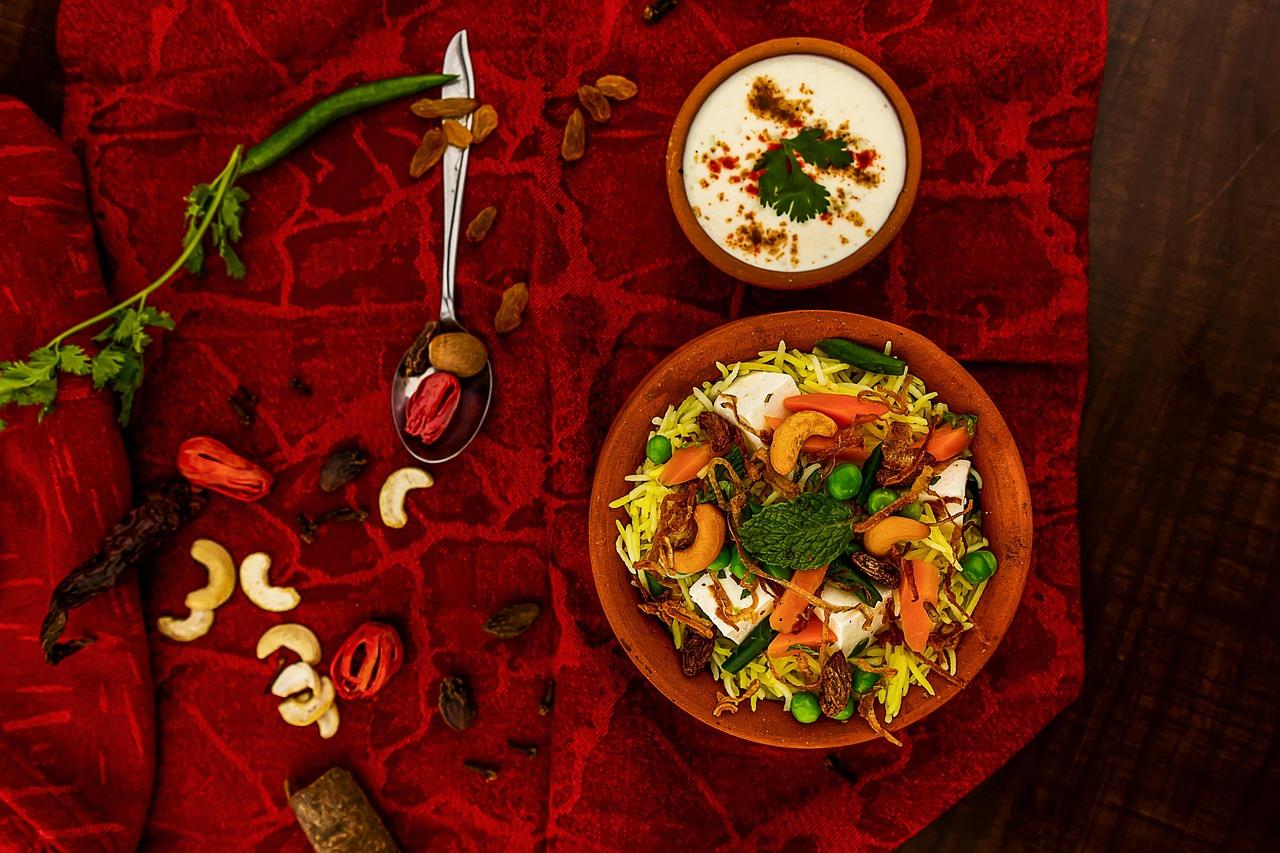
A mild, creamy biryani: rice and husked green gram roasted in ghee, then cooked in coconut milk with peas, carrots, potatoes, peanuts and cashews, and finished with soft fried paneer and a fresh coriander yogurt. Serve hot, garnished with more fried cashews and paneer.