
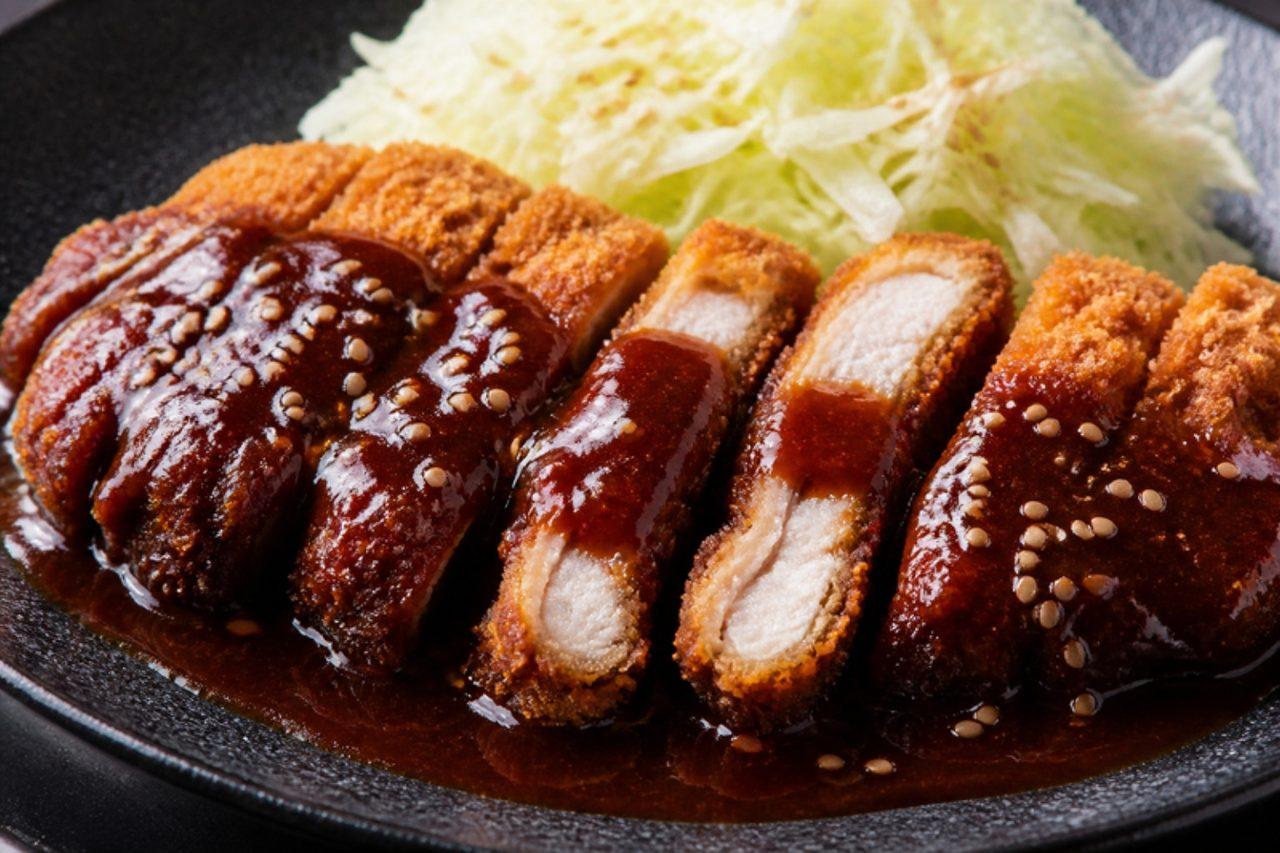
Miso katsu (Nagoya pork cutlet with red miso sauce)
味噌カツ: a crisp panko pork cutlet under a glossy, sweet sauce of dark red miso
Dark soybean miso, such as the hatcho miso made in nearby Okazaki, gives Nagoya food its deep brown colour and rich, slightly bitter flavour. Miso katsu is the city's best-known way to use it: a fried pork cutlet covered in a thick, sweet miso sauce. It is served in lunch restaurants on a bed of shredded cabbage with rice and miso soup, or sliced over rice as a bowl. The sauce is glossy and savoury, a little like a darker, sweeter barbecue sauce. Chef's tip: snip through the strip of fat and sinew along the edge of each chop every 2 cm before coating it, so the cutlet stays flat in the oil and cooks evenly.
- Total time
- 40 min
- Difficulty
- medium
- Serves
- 2
Ingredients
For the miso sauce
For the cutlets
To serve
Method
0/10 doneStep 1: Make the sauce: put the 4 tbsp red miso (hatcho or other dark soybean miso), 3 tbsp sugar, 2 tbsp mirin and ½ cup water or dashi in a small pan and whisk until smooth. Simmer over a low heat, stirring, for 4 to 5 minutes until it is glossy and thick enough to coat a spoon. Mirin contains a little alcohol; for an alcohol-free sauce use 2 tablespoons of water and 1 extra teaspoon of sugar instead.
5 minStep 2: Stir in the 1 tbsp toasted white sesame seeds and keep the sauce warm on the lowest heat.
Step 3: Soak the shredded 7 oz white cabbage in iced water for 5 minutes to crisp it, then drain well.
5 minStep 4: Snip the fat along the edge of each 2 boneless pork loin chops chop every 2 cm. Press the meat down gently with the heel of your hand and season both sides with ½ tsp salt and ¼ tsp black pepper.
Step 5: Put the 3 tbsp plain flour, 1 egg and 2 ⅛ oz panko breadcrumbs in three shallow dishes. Coat each chop in flour, shaking off the excess, then dip in egg and press firmly into the panko on both sides.
3 minStep 6: Heat the 3 cups vegetable oil, for deep-frying in a deep pan to 350°F (a breadcrumb should sizzle steadily and rise straight away). Never fill the pan more than a third full.
6 minStep 7: Lower in the cutlets one or two at a time and fry for 5 to 6 minutes, turning once, until deep golden and the centre reaches 145°F/145 °F. Keep the oil between 160 and 350°F.
6 minStep 8: Drain on a rack for 3 minutes; the pork finishes cooking as it rests and the crust stays crisp.
3 minStep 9: Slice each cutlet into 2 cm strips and lay it on the cabbage, with 14 oz hot cooked Japanese rice alongside. Spoon the hot miso sauce over the top. Common mistake: pouring the sauce over long before serving. The crust goes soggy within minutes, so sauce it at the table if you can.
Step 10: Serve with a little 1 tsp Japanese hot mustard (karashi) on the side, if you like.
Nutrition per serving
- Calories
- 980 kcal
- Protein
- 44 g
- Carbs
- 108 g
- Fat
- 40 g
- Fibre
- 5 g
Nutrition values are estimates.
KrazyBadal
Good to know
- How long does miso katsu (Nagoya pork cutlet with red miso sauce) take?
- About 40 minutes in total: 15 minutes to prepare and 25 minutes to cook.
- How many people does it serve?
- 2 as written. Change the servings above the ingredients and every amount scales to match.
- What can I use instead of sugar?
- Caster sugar, same amount.
- What can I use instead of mirin?
- Rice vinegar with ½ tsp sugar per tbsp.
Reviews
No reviews yet. Be the first to cook it.
Rate this recipe
Sign in to rate and review this recipe.
You might also like
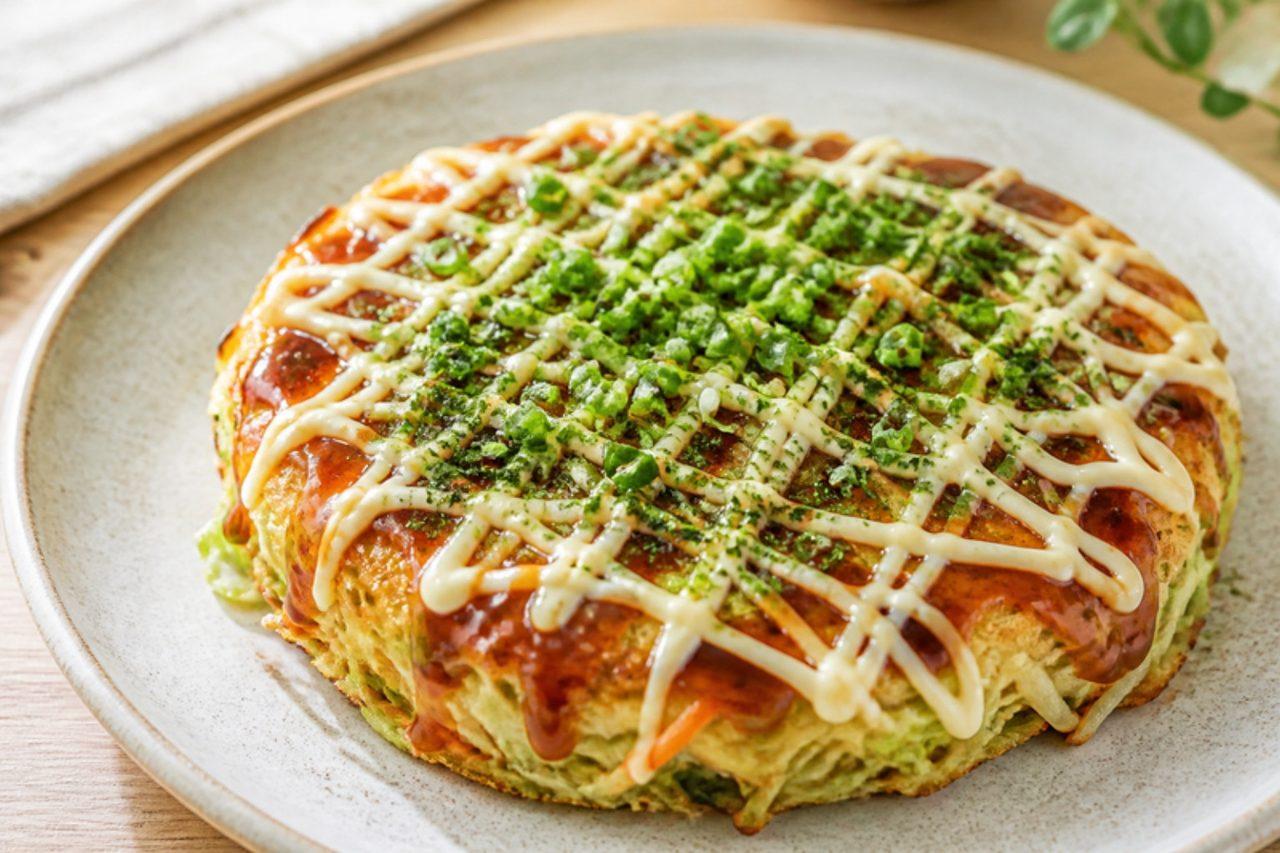
Okonomiyaki
Okonomiyaki (お好み焼き, 'grilled as you like it') is the pride of Osaka, where it's cooked on hot iron griddles in lively restaurants. Finely shredded cabbage is folded into a light batter with egg and spring onion, then fried into a thick, soft pancake with a crisp outside. It's painted with a fruity brown sauce and zigzagged with mayonnaise. Bonito flakes are usual on top; this vegetarian version uses seaweed flakes and pickled ginger instead. Chef's tip: don't press the pancake down with your spatula while it cooks. Osaka cooks leave it alone so the cabbage steams inside and stays light and fluffy; pressing squeezes out the air.

Miso soup
Miso soup (味噌汁) is drunk every day in homes all over Japan, at breakfast as well as dinner, beside a bowl of rice. The base is dashi; this vegan version uses kombu and dried shiitake instead of bonito, which gives it a deep, rounded flavour. Silken tofu and wakame seaweed are the classic fillings. It takes ten minutes; just remember not to boil the miso. Chef's tip: add the miso at the very end and never let it boil. Boiling kills the miso's fresh, fermented aroma; Japanese cooks say the soup should only 'smile', with the surface barely trembling.

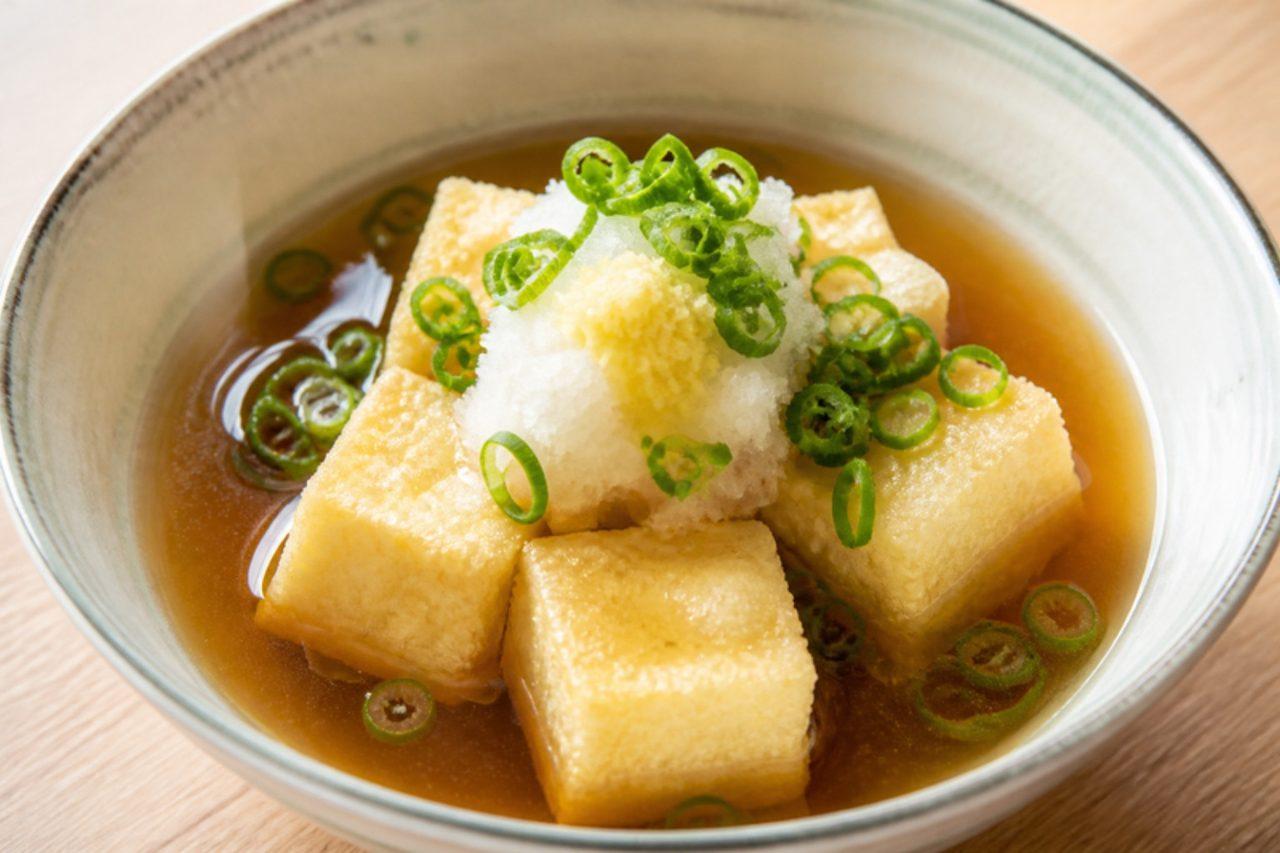
Agedashi tofu
Agedashi tofu (揚げ出し豆腐) is a classic izakaya dish eaten all over Japan: cubes of soft tofu dusted in potato starch, fried until they form a thin, crisp shell, then bathed in a hot, savoury broth. The coating turns silky as it soaks up the sauce while the tofu inside stays creamy. Usually topped with bonito flakes; here it's grated daikon, ginger and spring onion with a kombu-shiitake broth instead. Chef's tip: coat the tofu in starch right before it goes into the oil, not ahead of time; if it sits, the starch turns damp and the coating fries up gummy instead of crisp.