
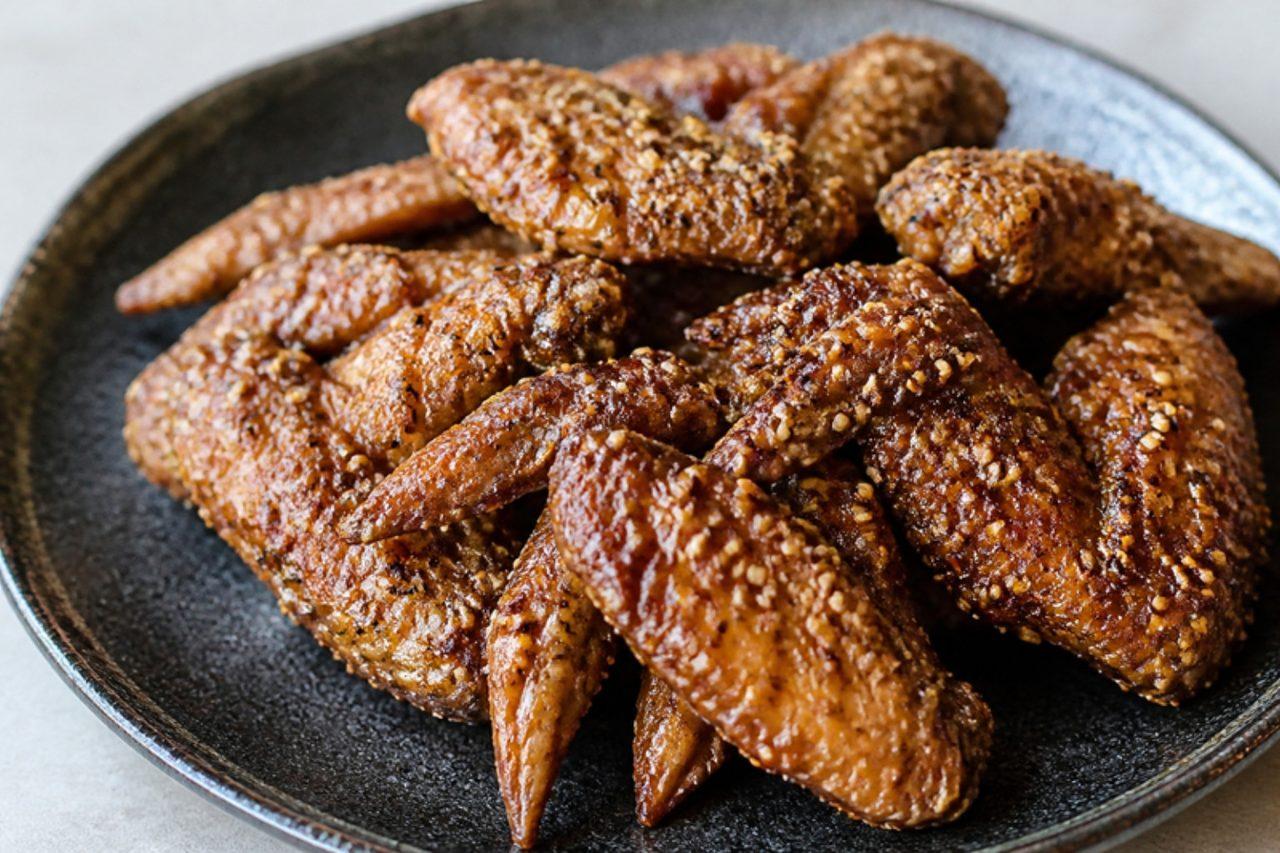
AI-generated image
Tebasaki (Nagoya fried chicken wings)
手羽先: crisp double-fried wings brushed with sweet soy and buried in black pepper and sesame

In Nagoya's izakaya, chicken wings come whole, with the mid-joint and tip still joined in a V, and they arrive in piles beside cold drinks. Tebasaki are fried without batter until the skin turns crisp and thin, then brushed with a sweet soy glaze and dusted heavily with pepper and sesame. The spice is the point: they should taste peppery, salty and sticky at once. Eat them with your hands, twisting the two bones apart to pull the meat off. Chef's tip: brush on the glaze the moment the wings leave the oil; hot, crisp skin soaks it up and stays crunchy, while cooled wings just turn sticky.
- Total time
- 40 min
- Difficulty
- easy
- Serves
- 4
Ingredients
For the wings
For the glaze
To finish
Method
0/7 doneStep 1: Pat the 2 ¼ lb whole chicken wings, tips on completely dry with kitchen paper, inside the joints too, and sprinkle with the ½ tsp salt. Common mistake: frying damp wings. The water makes the oil spit dangerously and the skin steams instead of crisping.
Step 2: Make the glaze: simmer the 3 tbsp soy sauce, 2 tbsp mirin, 1 tbsp sake, 1 ½ tbsp sugar, 1 clove garlic and 1 tsp fresh ginger in a small pan over a medium heat for 3 minutes, until slightly syrupy. Most of the alcohol cooks off; for an alcohol-free glaze replace the mirin and sake with 3 tablespoons of water and 1 extra teaspoon of sugar.
3 minStep 3: Mix the 2 tsp black pepper and ½ tsp white pepper in a small bowl.
Step 4: Heat the 4 ¼ cups vegetable oil, for deep-frying in a deep, heavy pan (no more than a third full) to 325°F.
8 minStep 5: Fry the wings in two batches for 8 to 10 minutes, turning now and then, until pale golden and cooked through. Lift out onto a rack.
10 minStep 6: Raise the oil to 350°F. Return the wings in batches for 2 to 3 minutes, until deep golden, crackly and the thickest part reaches 165°F/165 °F with juices running clear.
5 minStep 7: While they are still sizzling, brush each wing all over with the glaze, then sprinkle generously with the pepper mix and 1 tbsp toasted white sesame seeds. Serve hot.
Nutrition per serving
- Calories
- 450 kcal
- Protein
- 30 g
- Carbs
- 9 g
- Fat
- 32 g
- Fibre
- 1 g
Nutrition values are estimates.
KrazyBadal
Good to know
- How long does tebasaki (Nagoya fried chicken wings) take?
- About 40 minutes in total: 10 minutes to prepare and 30 minutes to cook.
- How many people does it serve?
- 4 as written. Change the servings above the ingredients and every amount scales to match.
- Is it very spicy?
- It has some heat. Use less chilli for a milder version, or more if you like it hot.
- What can I use instead of soy sauce?
- Tamari, same amount (gluten free).
- What can I use instead of mirin?
- Rice vinegar with ½ tsp sugar per tbsp.
Reviews
No reviews yet. Be the first to cook it.
Rate this recipe
Sign in to rate and review this recipe.
You might also like
Okonomiyaki
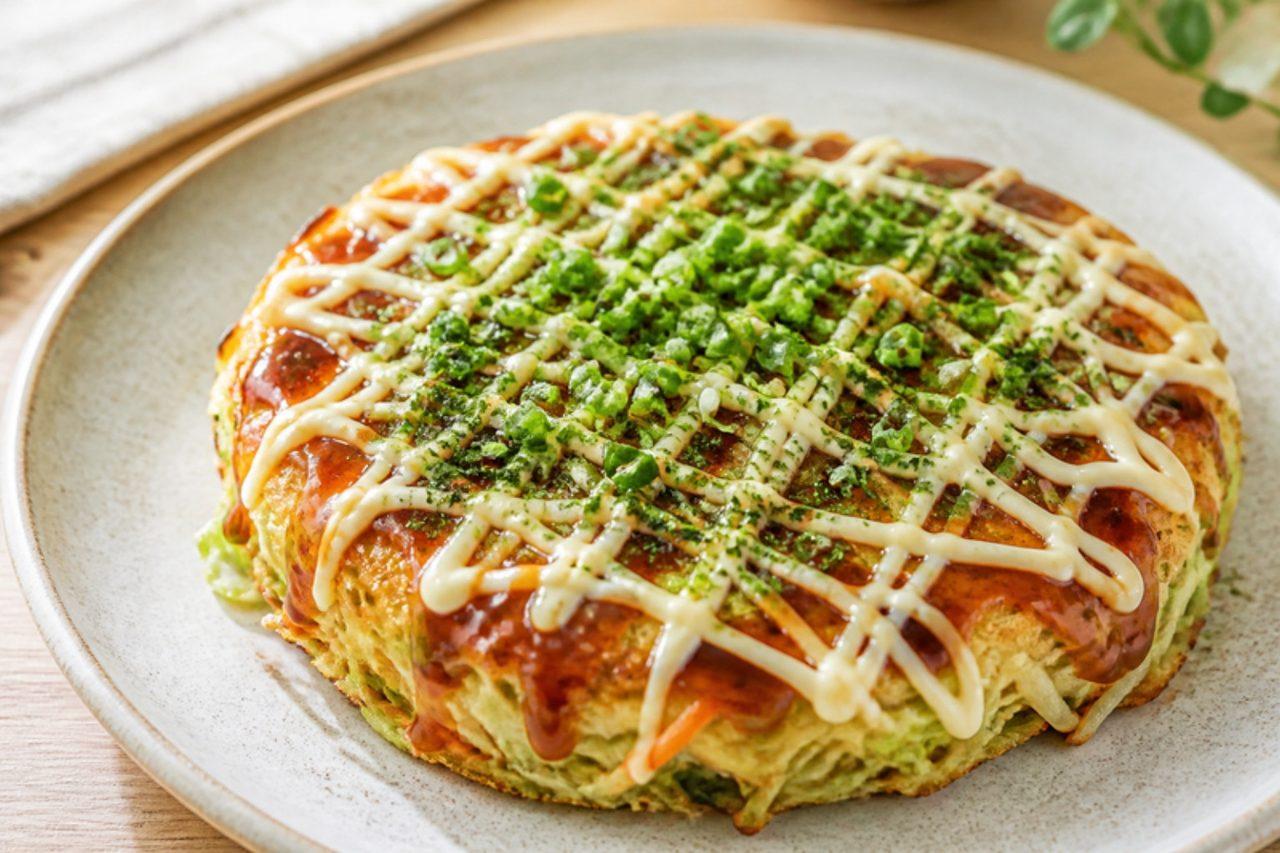
Okonomiyaki (お好み焼き, 'grilled as you like it') is the pride of Osaka, where it's cooked on hot iron griddles in lively restaurants. Finely shredded cabbage is folded into a light batter with egg and spring onion, then fried into a thick, soft pancake with a crisp outside. It's painted with a fruity brown sauce and zigzagged with mayonnaise. Bonito flakes are usual on top; this vegetarian version uses seaweed flakes and pickled ginger instead. Chef's tip: don't press the pancake down with your spatula while it cooks. Osaka cooks leave it alone so the cabbage steams inside and stays light and fluffy; pressing squeezes out the air.

Miso soup
Miso soup (味噌汁) is drunk every day in homes all over Japan, at breakfast as well as dinner, beside a bowl of rice. The base is dashi; this vegan version uses kombu and dried shiitake instead of bonito, which gives it a deep, rounded flavour. Silken tofu and wakame seaweed are the classic fillings. It takes ten minutes; just remember not to boil the miso. Chef's tip: add the miso at the very end and never let it boil. Boiling kills the miso's fresh, fermented aroma; Japanese cooks say the soup should only 'smile', with the surface barely trembling.

Agedashi tofu
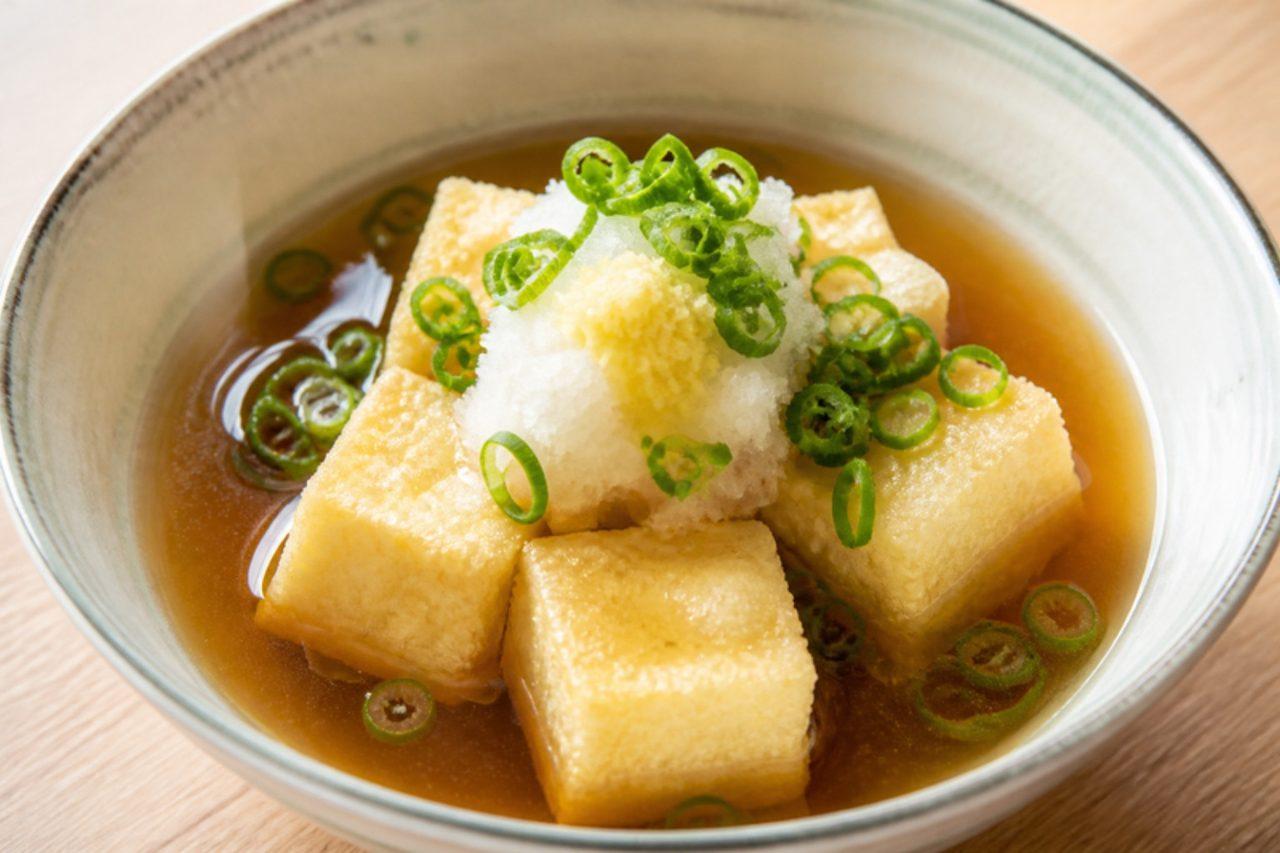
Agedashi tofu (揚げ出し豆腐) is a classic izakaya dish eaten all over Japan: cubes of soft tofu dusted in potato starch, fried until they form a thin, crisp shell, then bathed in a hot, savoury broth. The coating turns silky as it soaks up the sauce while the tofu inside stays creamy. Usually topped with bonito flakes; here it's grated daikon, ginger and spring onion with a kombu-shiitake broth instead. Chef's tip: coat the tofu in starch right before it goes into the oil, not ahead of time; if it sits, the starch turns damp and the coating fries up gummy instead of crisp.