
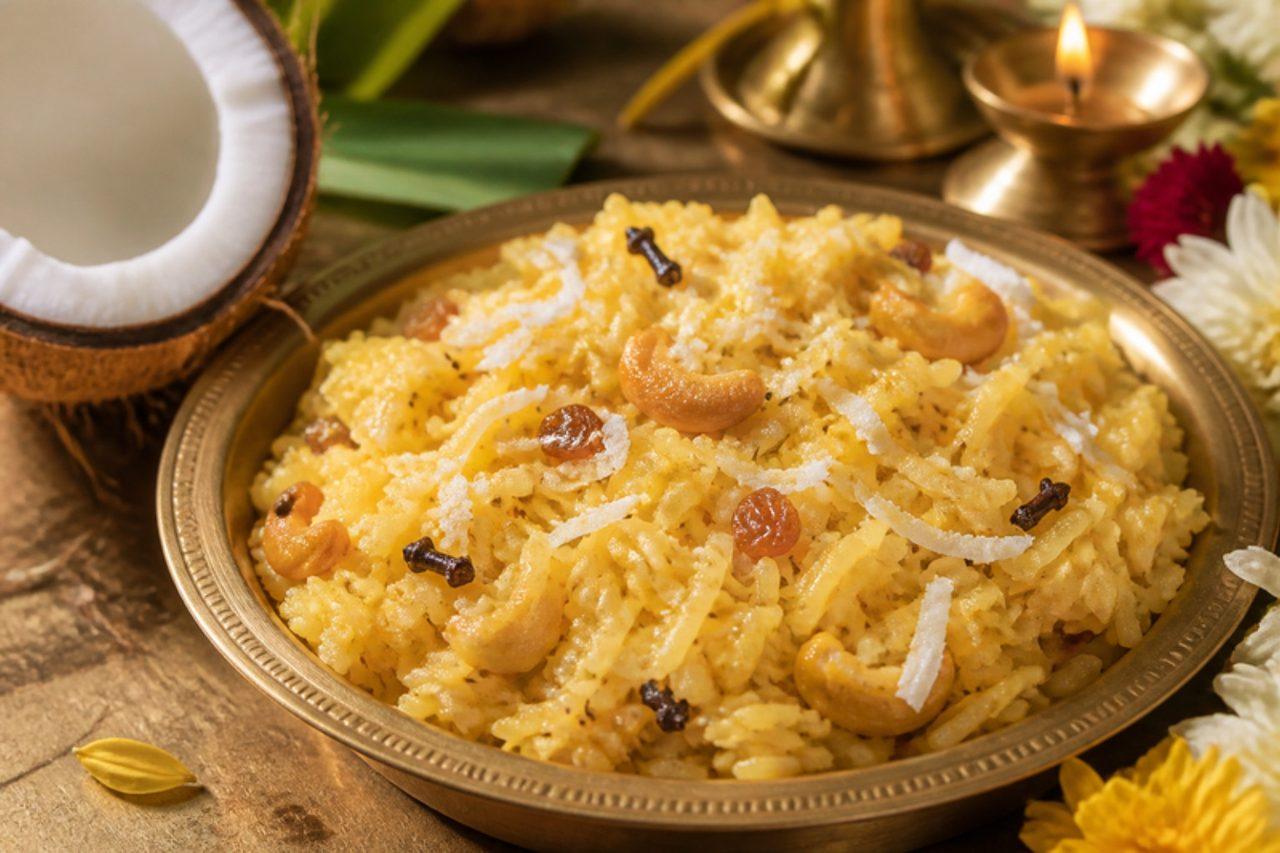
AI-generated image
Narali bhaat
Coconut jaggery rice
नारळी भात: Maharashtrian coconut-jaggery rice for Narali Purnima and Raksha Bandhan


On the full moon of Shravan, Konkan fishing families offer a coconut to the sea to mark the end of the monsoon, and the same day in most Maharashtrian homes is Raksha Bandhan, so sisters and brothers sit down to a plate of narali bhaat. It is basmati or ambemohar rice cooked with fresh grated coconut, jaggery, ghee, clove and cardamom until each grain is glossy, golden-brown and separate, with cashews and raisins through it. It tastes of caramel and coconut, warm and only gently spiced. Common mistake: adding the jaggery to rice that is not fully cooked; jaggery stops rice softening, so the grains must be tender before it goes in, then the mixture is cooked until the syrup is absorbed and the rice looks dry and shiny. Chef's tip: keep the rice slightly undercooked when you first boil it and spread it on a plate to cool; firm, cool grains stay whole when they meet the hot jaggery.
- Total time
- 50 min
- Difficulty
- easy
- Serves
- 4
Ingredients
For the rice
- 7 oz basmati ricerinsed and soaked 20 minutes
- 2 cups water
- 1 pinch salt
For the sweet coconut
- 3 tbsp ghee
- 4 cloves
- ⅔ oz cashews
- ⅔ oz raisins
- 4 oz fresh grated coconut
- 5 ½ oz jaggerygrated
- ½ tsp ground green cardamom
- 1 pinch saffron strands (optional)soaked in 1 tbsp warm milk
Shop this recipe on Amazon
Links open Amazon in a new tab. As an Amazon Associate, WhatToEat.Today earns from qualifying purchases.
Method
0/7 doneStep 1: Drain 7 oz basmati rice and bring 2 cups water and 1 pinch salt to the boil in a pan. Add the rice, cover and cook on a low heat for 10–12 minutes until the grains are just tender with a tiny bite.
12 minStep 2: Spread the rice on a wide plate and leave it to cool for 10 minutes so the grains firm up.
10 minStep 4: Stir in 4 oz fresh grated coconut and 5 ½ oz jaggery and cook, stirring, for 4–5 minutes until the jaggery melts into a bubbling, sticky syrup with the coconut.
5 minStep 5: Gently fold in the cooled rice with a flat spatula, lifting rather than stirring so the grains do not break.
2 minStep 6: Cover and cook on the lowest heat for 8–10 minutes, folding once halfway, until the syrup is absorbed and the rice looks dry, glossy and golden-brown. Add ½ tsp ground green cardamom and 1 pinch saffron strands in the last minute.
10 minStep 7: Rest it covered off the heat for 5 minutes, then serve warm.
5 min
Nutrition per serving
- Calories
- 480 kcal
- Protein
- 6 g
- Carbs
- 78 g
- Fat
- 17 g
- Fibre
- 3 g
Nutrition values are estimates.
KrazyBadal
Good to know
- How long does narali bhaat take?
- About 50 minutes in total: 15 minutes to prepare and 35 minutes to cook.
- How many people does it serve?
- 4 as written. Change the servings above the ingredients and every amount scales to match.
- Is it vegetarian?
- Yes. It has no meat or fish.
- Is it gluten free?
- Yes, as written. Check the labels on stock, sauces and spice mixes, which sometimes contain gluten.
- What can I use instead of basmati rice?
- Any long-grain rice, same amount.
- What can I use instead of ghee?
- Butter, same amount (keep the heat a little lower, butter burns sooner).
Reviews
No reviews yet. Be the first to cook it.
Rate this recipe
Sign in to rate and review this recipe.
You might also like

SakarpadaSweet fried dough diamonds
Sakarpada (shakarpara) are little sweet diamonds of a rich dough made with ghee, milk and sugar, fried until golden and crunchy. They are a Diwali favourite with tea, and the cubes go into bhusu too. They keep for weeks in an air-tight tin.
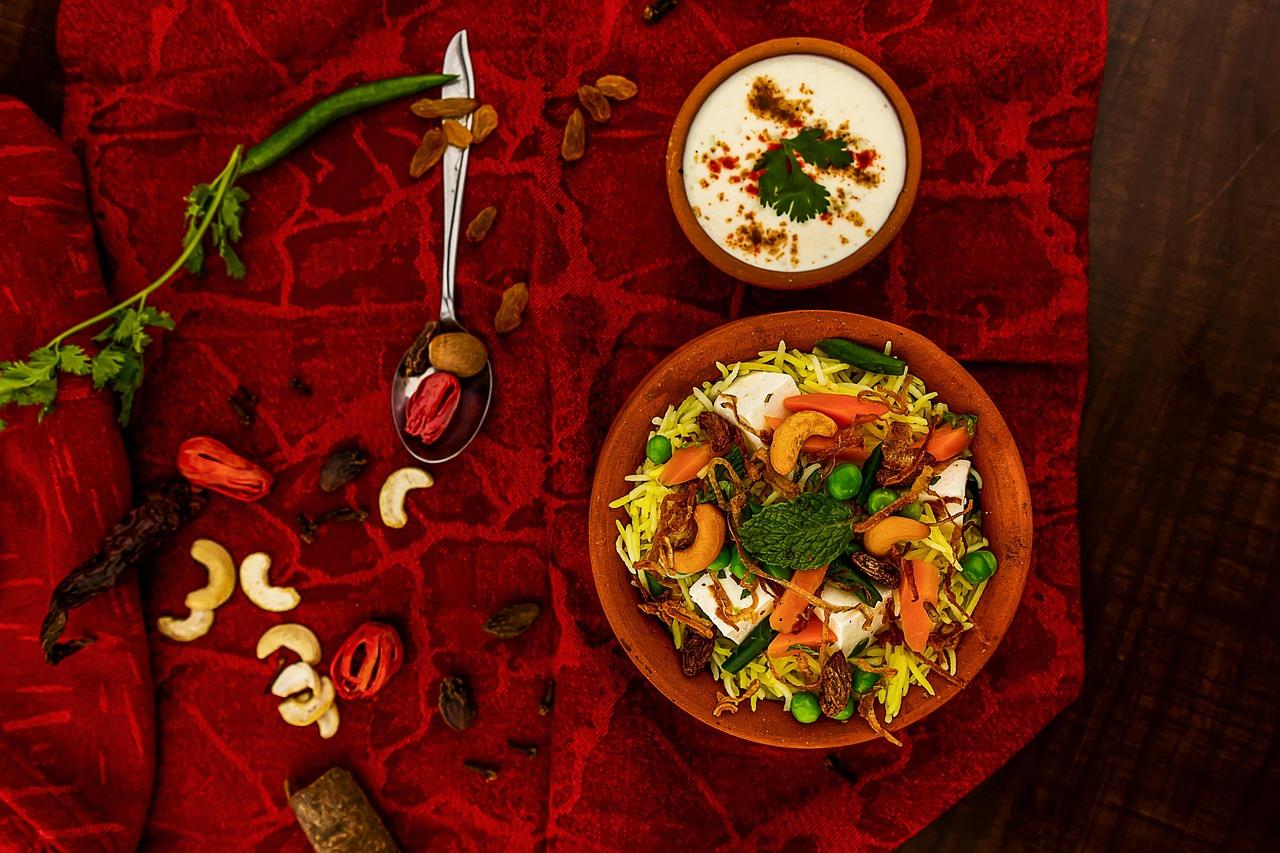
Paneer biryaniRice and moong dal in coconut milk
A mild, creamy biryani: rice and husked green gram roasted in ghee, then cooked in coconut milk with peas, carrots, potatoes, peanuts and cashews, and finished with soft fried paneer and a fresh coriander yogurt. Serve hot, garnished with more fried cashews and paneer.


Sabudana khichdiSago with peanuts and potato
Sabudana khichdi is the dish that sees Maharashtra through every vrat (fast), from Navratri to Ekadashi, but it's so good that people eat it any day of the week. Soaked sago pearls are tossed in a pan with crushed roasted peanuts, cubes of potato, cumin and green chilli until each pearl turns glassy and separate, then finished with lemon and coriander. It's soft, chewy, nutty and gently hot. Fasting rules vary from family to family, so check yours; this version uses rock salt and no asafoetida, onion or garlic. Traditionally it's cooked in ghee; use ghee instead of oil if you aren't keeping it vegan. Chef's tip: soak the sago in just enough water to cover by the height of the pearls themselves, no more; too much water is the reason khichdi turns into one sticky lump.
