
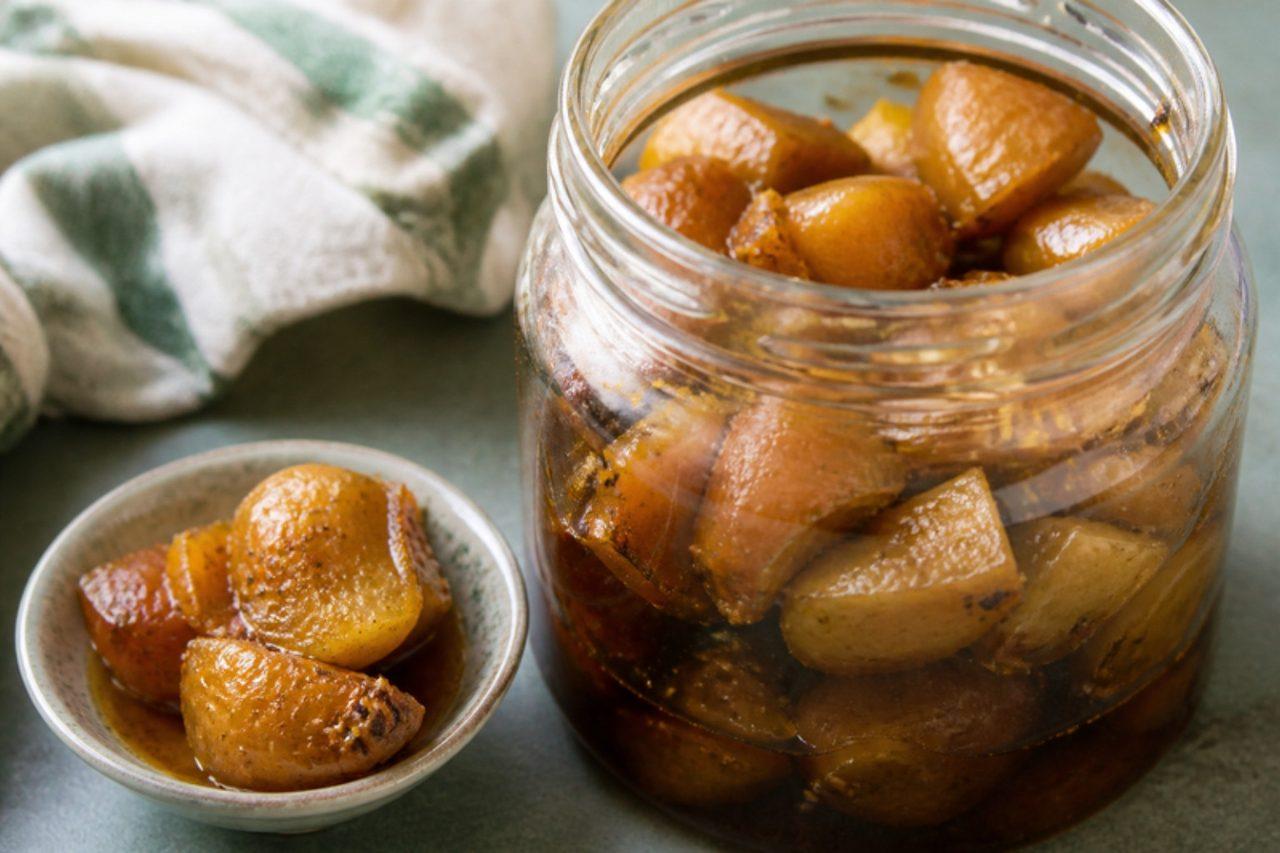
AI-generated image
Nimbu ka achar
Lemon pickle
नींबू का अचार: oil-free lemon pickle cured in its own juice with salt, sugar and ajwain until the peel is soft (plus 3–4 weeks in the sun)



Lemon pickle is the one achar that North Indian grandmothers hand over without a speech, because there is almost nothing to it: lemons, salt, a few spices, a jar and patience. No oil goes in. The quartered lemons sit in salt and their own juice, in a sunny window or on the roof, and over three or four weeks the peel turns soft, translucent and brown, and the juice becomes a thick, sweet-sour syrup. This version is the khatta-meetha kind, with sugar, ajwain, black salt and chilli, loved with parathas, khichdi and as a cure for an upset stomach; leave out the sugar and double the chilli for the salty, sharp version. Use thin-skinned, juicy lemons (kagzi nimbu) and wash and dry them thoroughly. Common mistake: being impatient; the peel is bitter and hard until it has fully cured, so wait until it squashes easily. Keep the pieces pressed under the juice, use only a dry spoon and discard the jar if mould appears. Chef's tip: shake the jar every day rather than opening it; less air and fewer spoons mean less risk of spoilage.
- Total time
- 30 min
- Difficulty
- easy
- Serves
- 20
Ingredients
For the pickle
- 1 ⅛ lb thin-skinned lemonsabout 8, washed and dried completely
- 1 ¾ oz salt
- 2 tsp black salt (kala namak)
- 1 tsp ground turmeric
- 1 tsp carom seeds (ajwain)
- 1 tsp cumin seeds
- 1 tsp black peppercorns
- 2 tsp Kashmiri chilli powder
- 7 oz sugar
- ½ tsp garam masala (optional)
Shop this recipe on Amazon
Spices & pantry
Fresh ingredients (1)
Links open Amazon in a new tab. As an Amazon Associate, WhatToEat.Today earns from qualifying purchases.
Method
0/7 doneStep 1: Sterilise the jar and lid: wash in hot soapy water, rinse, then dry in a 250°F oven for 15 minutes (or in strong sun for a few hours). Cool completely; jar, lid, bowls, spoons and your hands must be bone dry.
Step 2: Wipe the 1 ⅛ lb thin-skinned lemons once more with a dry cloth. Cut each into 8 wedges on a dry board, picking out as many pips as you can; save the juice that runs out.
10 minStep 3: Dry-roast 1 tsp carom seeds (ajwain), 1 tsp cumin seeds and 1 tsp black peppercorns in a small pan over a low heat for 1–2 minutes until fragrant, then crush coarsely.
3 minStep 4: In a dry glass bowl, toss the lemon wedges and their juice with 1 ¾ oz salt, 2 tsp black salt (kala namak) and 1 tsp ground turmeric. Pack into the jar, pressing down so the juice rises, close and set in the sun for 7 days, shaking the jar daily.
2 minStep 5: After a week, tip the lemons into a dry bowl and mix in 7 oz sugar, 2 tsp Kashmiri chilli powder, the crushed spices and ½ tsp garam masala, if using. Return to the jar and press down.
Step 6: Keep in the sun for another 2–3 weeks, shaking daily, until the sugar has dissolved into a thick syrup and the peel is soft, brown and squashes easily between your fingers. Common mistake: eating it before the peel softens, when it is still bitter.
Step 7: Store in a cool cupboard for up to a year, keeping the pieces under the syrup and using a clean dry spoon. Discard if mould or an off smell appears.
Nutrition per serving
- Calories
- 50 kcal
- Protein
- 0 g
- Carbs
- 13 g
- Fat
- 0 g
- Fibre
- 1 g
Nutrition values are estimates.
KrazyBadal
Good to know
- How long does nimbu ka achar take?
- About 30 minutes in total: 25 minutes to prepare and 5 minutes to cook.
- How many people does it serve?
- 20 as written. Change the servings above the ingredients and every amount scales to match.
- Is it vegan?
- Yes. It has no meat, fish, dairy or eggs.
- Is it gluten free?
- Yes, as written. Check the labels on stock, sauces and spice mixes, which sometimes contain gluten.
- Can I make it ahead?
- Yes. It keeps well, so you can cook it earlier in the day or the day before and reheat it.
- What can I use instead of thin-skinned lemons?
- Lime, or 2 tbsp bottled lemon juice per lemon (no zest from bottled juice).
- What can I use instead of black salt (kala namak)?
- Ordinary salt, same amount (loses the tangy, sulphurous note).
Reviews
No reviews yet. Be the first to cook it.
Rate this recipe
Sign in to rate and review this recipe.
You might also like

SakarpadaSweet fried dough diamonds
Sakarpada (shakarpara) are little sweet diamonds of a rich dough made with ghee, milk and sugar, fried until golden and crunchy. They are a Diwali favourite with tea, and the cubes go into bhusu too. They keep for weeks in an air-tight tin.
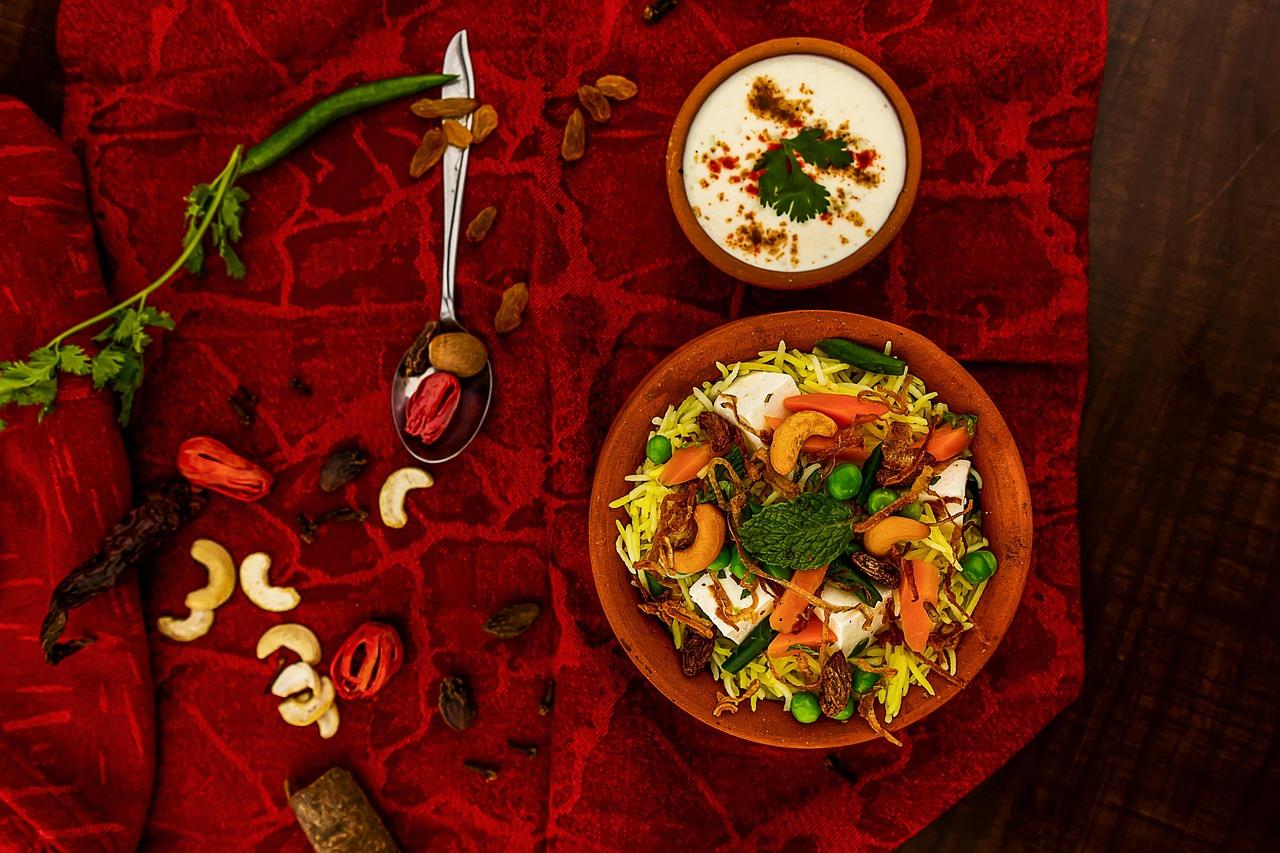
Paneer biryaniRice and moong dal in coconut milk
A mild, creamy biryani: rice and husked green gram roasted in ghee, then cooked in coconut milk with peas, carrots, potatoes, peanuts and cashews, and finished with soft fried paneer and a fresh coriander yogurt. Serve hot, garnished with more fried cashews and paneer.


Sabudana khichdiSago with peanuts and potato
Sabudana khichdi is the dish that sees Maharashtra through every vrat (fast), from Navratri to Ekadashi, but it's so good that people eat it any day of the week. Soaked sago pearls are tossed in a pan with crushed roasted peanuts, cubes of potato, cumin and green chilli until each pearl turns glassy and separate, then finished with lemon and coriander. It's soft, chewy, nutty and gently hot. Fasting rules vary from family to family, so check yours; this version uses rock salt and no asafoetida, onion or garlic. Traditionally it's cooked in ghee; use ghee instead of oil if you aren't keeping it vegan. Chef's tip: soak the sago in just enough water to cover by the height of the pearls themselves, no more; too much water is the reason khichdi turns into one sticky lump.
