
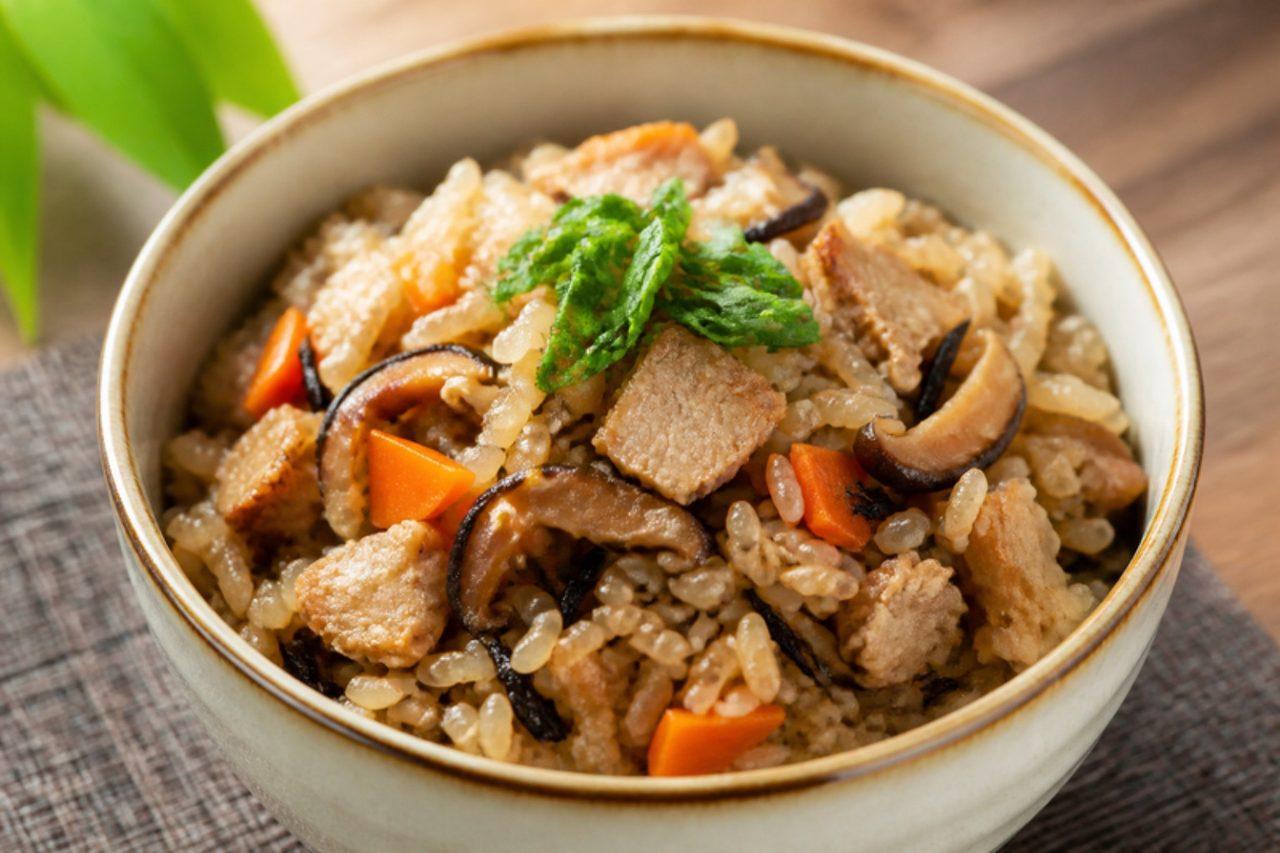
AI-generated image
Jushi (Okinawan mixed rice)
じゅーしー (kufa-jushi): rice cooked with pork, vegetables, hijiki and bonito stock
Jushi is Okinawa's seasoned rice, cooked with pork, vegetables and bonito stock. The firm kind, kufa-jushi, is what you find in rice balls at Okinawan supermarkets and alongside soba at lunch counters; a soupy, porridge-like version is cooked as well. On the winter solstice many families make a special jushi with taro root. Pork fat is part of its flavour, so the rice is cooked with a little lard and the belly pork itself. Chef's tip: measure the liquid carefully; the soy and stock replace part of the water, and firm, separate grains are what you want.
- Total time
- 50 min
- Difficulty
- easy
- Serves
- 4
Ingredients
For the rice
For the mix-ins
To serve
Method
0/9 doneStep 1: Soak 3 dried shiitake mushrooms in ¾ cup warm water for 15 minutes. Soak ⅛ oz dried hijiki seaweed in a separate bowl of cold water at the same time, then drain the hijiki.
15 minStep 2: Rinse 16 oz Japanese short-grain rice in cold water 4 or 5 times until the water runs almost clear, then leave to drain in a sieve.
5 minStep 3: Squeeze the mushrooms dry, keeping their soaking water, cut off the stems and slice the caps thinly.
2 minStep 4: Heat 1 tbsp lard or vegetable oil in a heavy pot over medium heat. Stir-fry 5 ½ oz pork belly, skin removed until no pink remains and the fat starts to render, about 3 minutes.
3 minStep 5: Add 1 carrot, the mushrooms and the hijiki and stir-fry for 2 minutes. Season with 2 tbsp soy sauce and ½ tsp salt.
2 minStep 6: Add the rice and stir for 1 minute until every grain is glossy.
1 minStep 7: Mix 2 cups bonito dashi with the strained mushroom water and make it up to 540 ml with water if needed. Pour it over the rice and stir once. Common mistake: adding the soy and stock and then topping up to the usual water line; the rice turns soft and sticky, so measure the total liquid instead. In a rice cooker, use the same amount of liquid and the normal setting.
1 minStep 8: Cover tightly and bring to the boil over medium-high heat, then cook over the lowest heat for 13 minutes without lifting the lid.
15 minStep 9: Turn off the heat and leave covered for 10 minutes. Fold through gently with a rice paddle, scraping up the toasty layer from the bottom, and serve topped with 3 tbsp spring onions or mugwort leaves. Leftovers make good rice balls; cool quickly and refrigerate within an hour, and eat within a day.
10 min
Nutrition per serving
- Calories
- 520 kcal
- Protein
- 15 g
- Carbs
- 87 g
- Fat
- 12 g
- Fibre
- 3 g
Nutrition values are estimates.
KrazyBadal
Good to know
- How long does jushi (Okinawan mixed rice) take?
- About 50 minutes in total: 15 minutes to prepare and 35 minutes to cook.
- How many people does it serve?
- 4 as written. Change the servings above the ingredients and every amount scales to match.
- Can I make it ahead?
- Yes. It keeps well, so you can cook it earlier in the day or the day before and reheat it.
- What can I use instead of japanese short-grain rice?
- Any long-grain rice, same amount.
- What can I use instead of soy sauce?
- Tamari, same amount (gluten free).
Reviews
No reviews yet. Be the first to cook it.
Rate this recipe
Sign in to rate and review this recipe.
You might also like
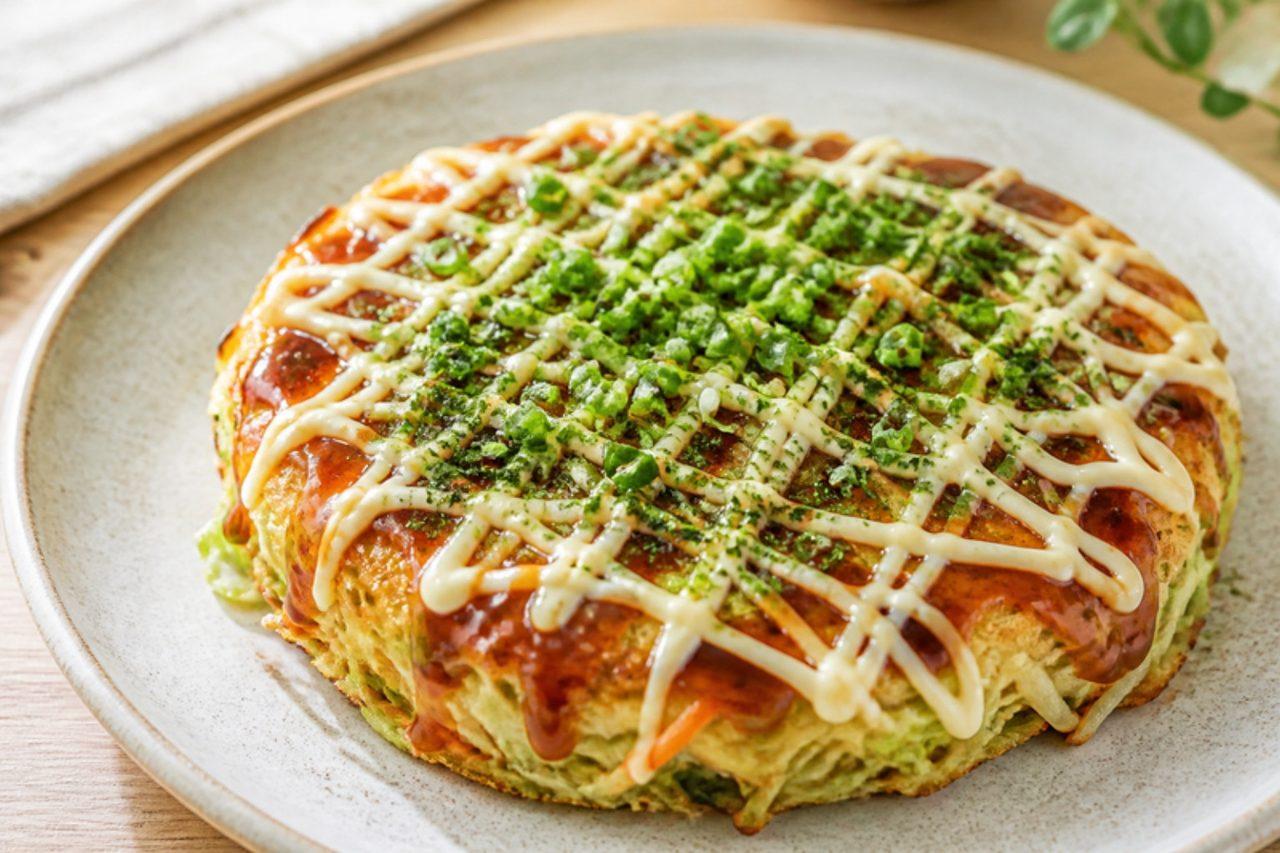
Okonomiyaki
Okonomiyaki (お好み焼き, 'grilled as you like it') is the pride of Osaka, where it's cooked on hot iron griddles in lively restaurants. Finely shredded cabbage is folded into a light batter with egg and spring onion, then fried into a thick, soft pancake with a crisp outside. It's painted with a fruity brown sauce and zigzagged with mayonnaise. Bonito flakes are usual on top; this vegetarian version uses seaweed flakes and pickled ginger instead. Chef's tip: don't press the pancake down with your spatula while it cooks. Osaka cooks leave it alone so the cabbage steams inside and stays light and fluffy; pressing squeezes out the air.
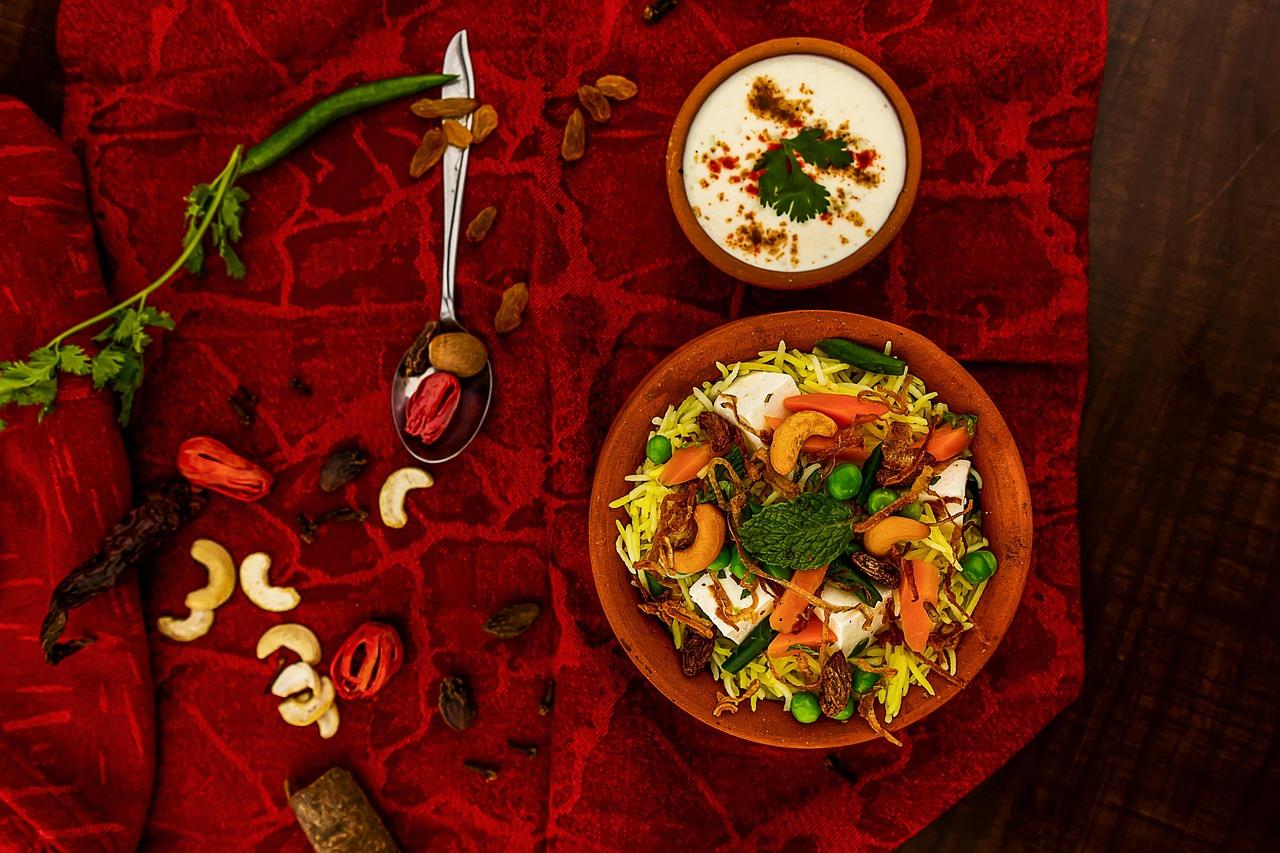
Paneer biryani
A mild, creamy biryani: rice and husked green gram roasted in ghee, then cooked in coconut milk with peas, carrots, potatoes, peanuts and cashews, and finished with soft fried paneer and a fresh coriander yogurt. Serve hot, garnished with more fried cashews and paneer.



Miso soup
Miso soup (味噌汁) is drunk every day in homes all over Japan, at breakfast as well as dinner, beside a bowl of rice. The base is dashi; this vegan version uses kombu and dried shiitake instead of bonito, which gives it a deep, rounded flavour. Silken tofu and wakame seaweed are the classic fillings. It takes ten minutes; just remember not to boil the miso. Chef's tip: add the miso at the very end and never let it boil. Boiling kills the miso's fresh, fermented aroma; Japanese cooks say the soup should only 'smile', with the surface barely trembling.
