
 Indian
Paba
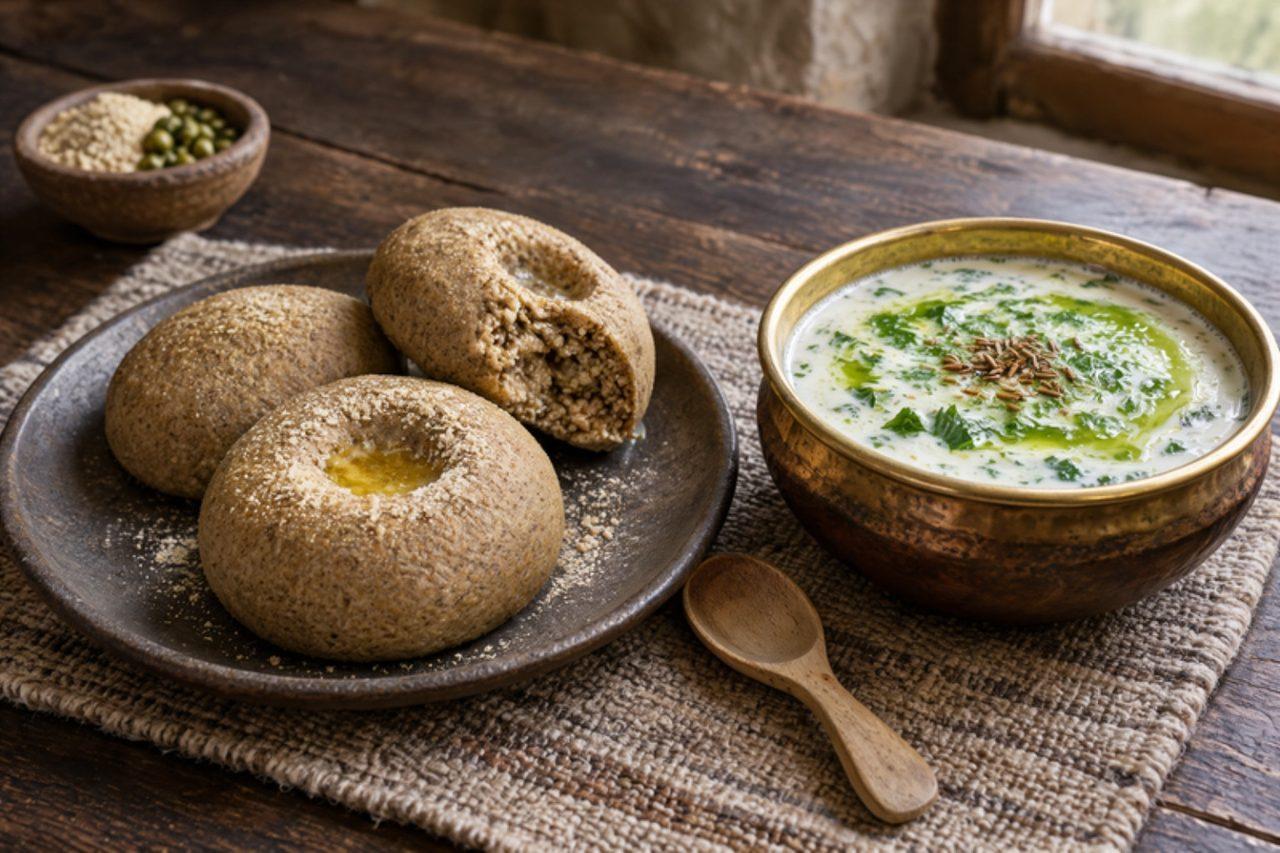
Roasted barley and pea dough
པ་བ: Ladakhi dough of roasted barley, pea and wheat flours, eaten with tangtur
Paba is the plain, sustaining staple of Ladakhi farm kitchens, especially in Zanskar and the Nubra valley, where roasted barley, dried peas and wheat are ground together and stirred into hot water with a little butter. It is eaten at lunch with tangtur, the cool curd-and-greens side, or with a thin vegetable soup, pinched off by hand. The texture is dense and earthy, with a nutty taste from the roasting. The most common mistake is adding the flour all at once, which leaves dry lumps in the middle; sprinkle it in while stirring hard. Chef's tip: toast the flours in a dry pan until they smell like biscuits before you start, even if the bag says roasted, because fresh toasting makes all the difference.
- Prep
- 5 min
- Cook
- 15 min
- Difficulty
- Easy
- Serves
- 4
- Per serving
- 260 kcal
Ingredients
For the paba
- 2 ⅛ oz pea flour or gram flour
- 2 ⅛ oz wholewheat flour
- 2 cups water
- ½ tsp salt
- 2 tbsp butter or ghee
Tick what you have; the rest goes in the basket.
Method
0/5 doneStep 1: Put 4 oz barley flour (or sattu), 2 ⅛ oz pea flour or gram flour and 2 ⅛ oz wholewheat flour in a dry heavy pan over medium-low heat and stir for 6–8 minutes until the flour turns a shade darker and smells toasty. Tip into a bowl.
8 minStep 2: Bring 2 cups water and ½ tsp salt to the boil in a heavy pot and add 2 tbsp butter or ghee.
4 minStep 3: Lower the heat. Sprinkle in the flour a handful at a time, beating hard with a wooden spoon after each addition so no dry lumps form.
3 minStep 4: Keep stirring and pressing against the side of the pot for 2–3 minutes until the dough comes together in one smooth, stiff mass that leaves the pot clean.
3 minStep 5: Wet your hands and shape into four rounds. Serve warm with tangtur or soup, pinching off pieces to scoop.
1 min
KrazyBadal
Reviews
No reviews yet. Be the first to cook it.
Rate this recipe
Sign in to rate and review this recipe.
You might also like
Chana masala
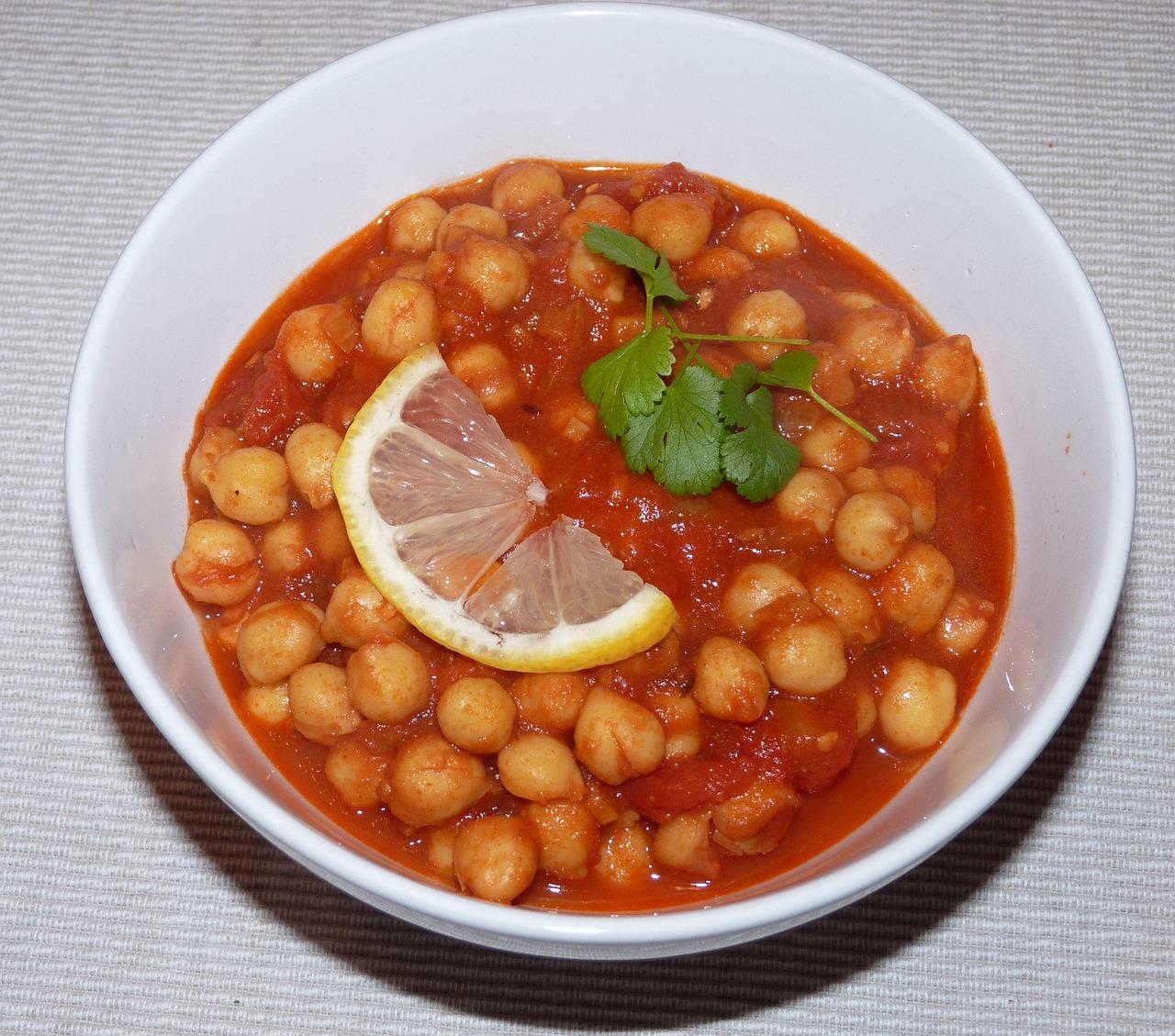
A North Indian staple that comes together from the store cupboard. Toasted cumin, slow-softened onion and a good spoonful of garam masala give tinned chickpeas real depth. Serve with rice, naan or a stack of warm rotis.


Kaju curryCashew curry
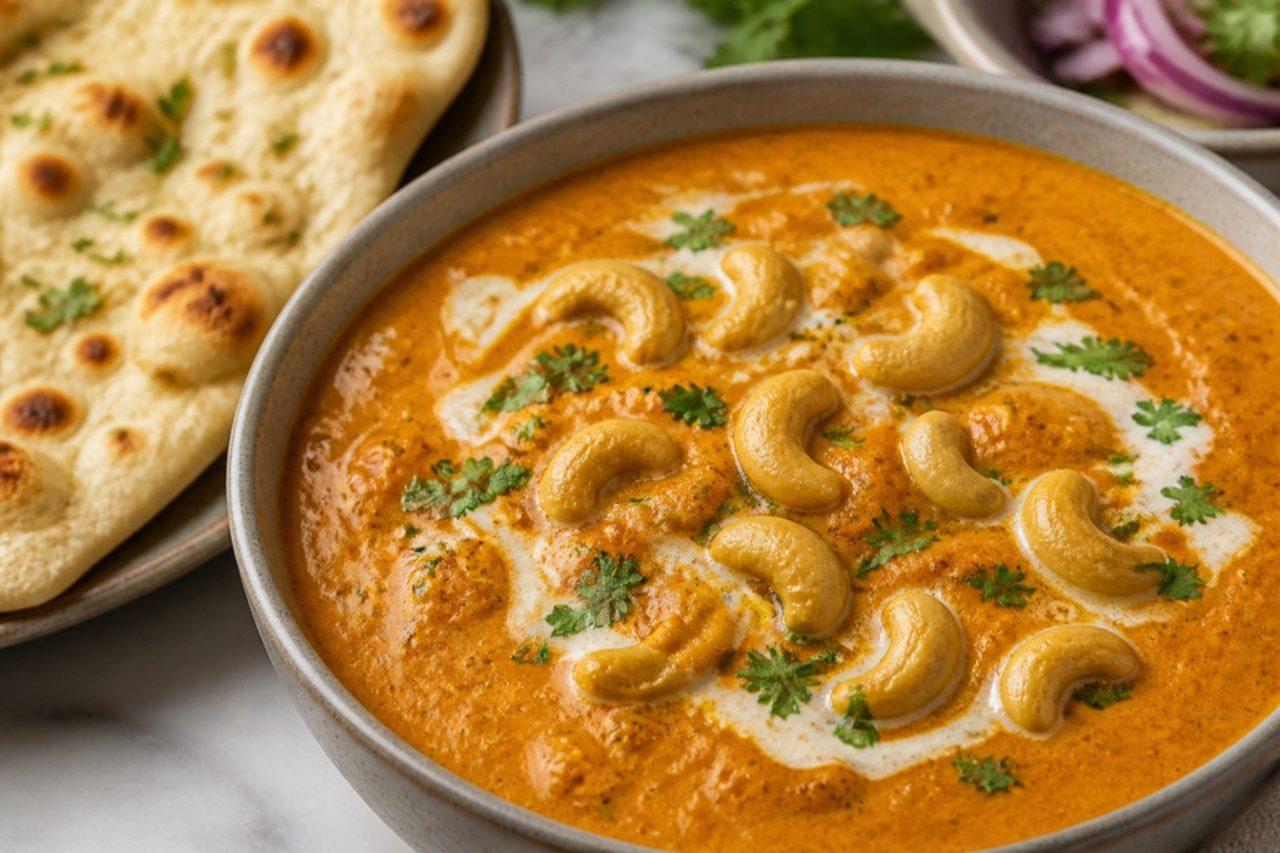
Walk along any wedding buffet in Pune, Mumbai or Ahmedabad and there is usually a chafing dish of kaju curry near the paneer, with guests going back for seconds. Whole cashews are fried in ghee until golden, which makes them crunchy outside and buttery inside, then folded into a rich onion and tomato gravy thickened with more cashews, finished with cream and kasuri methi. The gravy is orange, smooth and rounded with a touch of sweetness; it should taste of roasted nuts and gentle spice, not fire. Gujarati restaurants often serve a spicier Kathiyawadi version, but the wedding style here is the mild one. Eat it with butter naan, tandoori roti or jeera rice. Common mistake: adding the fried cashews too early; they soak up the gravy and turn soft, so fold them in just before serving. Chef's tip: keep a few fried cashews back and scatter them on top at the table so every spoonful has some crunch.

Bagara bainganBaby aubergines in peanut sesame sauce
Bagara baingan is a Hyderabadi wedding dish of small aubergines cooked whole in a dark, tangy gravy of roasted peanuts, sesame, dried coconut and tamarind. Unlike a Gujarati stuffed brinjal, the aubergines here are only quartered at the base and fried until silky, then left to soak up a thin-but-rich sauce that is finished with a tempering, the 'baghar' that gives the dish its name. It's sour, nutty and gently spiced, and is served with biryani, bagara rice or plain rice. Chef's tip: choose small, glossy purple aubergines that feel heavy for their size; soft, light ones are full of seeds and turn mushy before the gravy has a chance to cling.