
AI-generated image
Panades
Lamb and pea pies
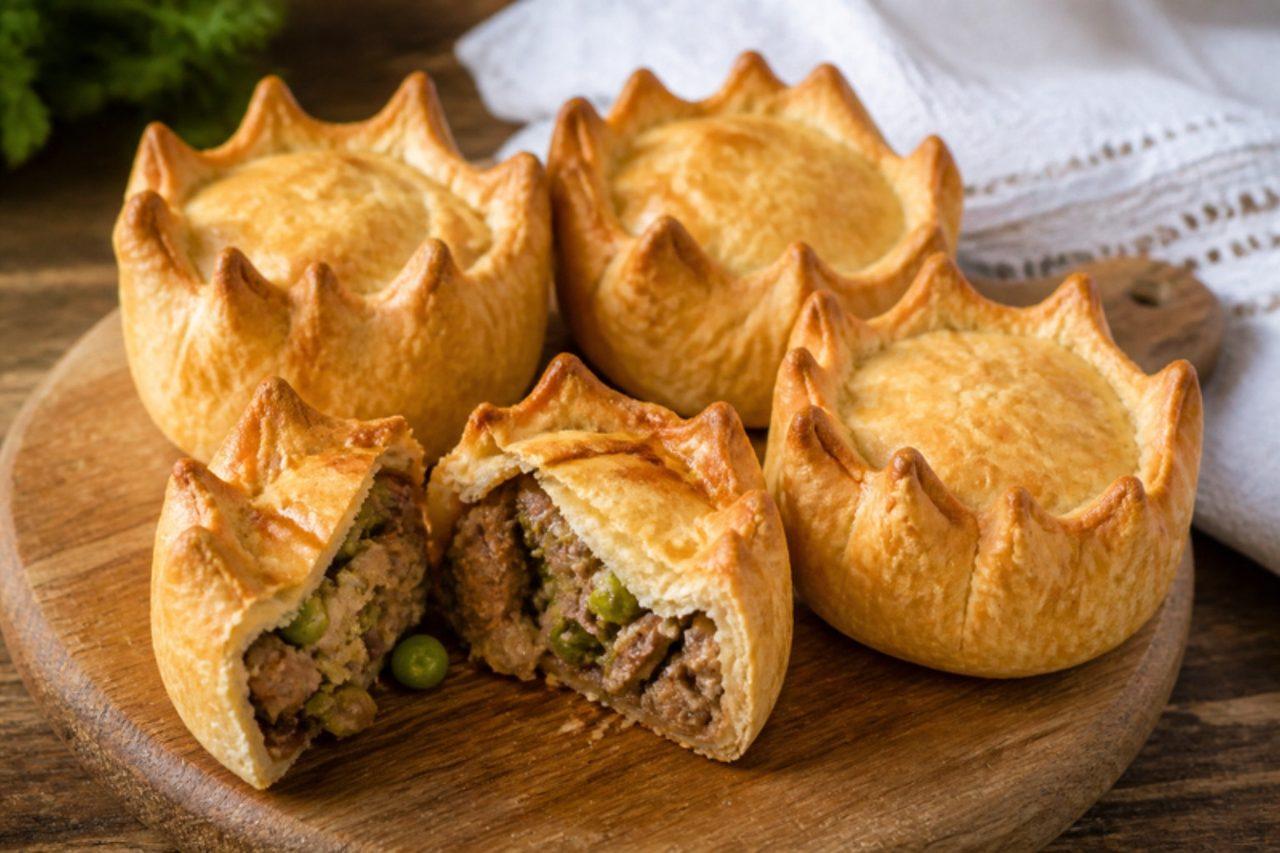
Panades de Pasqua: Mallorca's crimped Easter pies of lamb and peas

On Easter Saturday, Mallorcan kitchens turn into pie workshops: whole families shape panades, small upright pies with pinched rims and a pastry lid, filled with raw diced lamb, peas and a little pork belly, then bake them to eat on Easter Sunday and the picnics of the days after. This contains pork (lard in the pastry and pork belly in the filling); butter can replace the lard and the belly can be left out. The meat cooks inside the pastry, staying juicy. Chef's tip: cut the lamb small, no bigger than 1.5 cm, so it cooks right through in the time the pastry takes to brown.
- Total time
- 120 min
- Difficulty
- hard
- Serves
- 8
Ingredients
For the pastry
- 1 ⅓ lb plain flour
- 1 tsp salt
- 3 ½ oz pork lardsoftened (or butter)
- ½ cup olive oil
- ½ cup fresh orange juice
- ¼ cup water
For the filling
- 1 ½ lb boneless lamb leg or shouldercut into 1.5 cm dice
- 3 ½ oz pork bellyrind removed, finely diced
- 5 ½ oz peasfresh or frozen
- 1 ½ tsp salt
- 1 tsp black pepperground
- 1 tsp sweet paprika
- ¼ tsp ground nutmeg
To finish
- 1 eggbeaten
Shop this recipe on Amazon
What you'll need
Spices & pantry
Fresh ingredients (6)
Links open Amazon in a new tab. As an Amazon Associate, WhatToEat.Today earns from qualifying purchases.
Method
0/6 doneStep 1: Mix the 1 ½ lb boneless lamb leg or shoulder, 3 ½ oz pork belly, 5 ½ oz peas, 1 ½ tsp salt, 1 tsp black pepper, 1 tsp sweet paprika and ¼ tsp ground nutmeg in a bowl. Cover and keep in the fridge while you make the pastry.
5 minStep 2: Rub the 3 ½ oz pork lard into the 1 ⅓ lb plain flour and 1 tsp salt, then add the ½ cup olive oil, ½ cup fresh orange juice and ¼ cup water. Knead briefly into a smooth, firm dough that does not stick. Rest for 20 minutes, covered.
25 minStep 3: Heat the oven to 350°F. Take two-thirds of the dough, divide it into 8 pieces and press each into a cup about 9 cm across and 5 cm high, pushing the walls up between your fingers. Stand them on a lined tray.
20 minStep 4: Fill each cup with the meat mixture, packing it in. Roll the remaining dough thin and cut 8 lids. Lay one on each pie, fold the walls over the lid and pinch all round into a rope-like crimp. A common mistake is leaving gaps in the seal; the juices then leak and burn on the tray.
20 minStep 5: Make a small hole in each lid and brush with the beaten 1 egg.
3 minStep 6: Bake for 55–60 minutes until the pastry is deep golden and the juices bubble at the hole. A thermometer pushed into the centre should read at least 160°F. Cool for 15 minutes; they are also eaten cold the next day.
60 min
Nutrition per serving
- Calories
- 560 kcal
- Protein
- 27 g
- Carbs
- 58 g
- Fat
- 24 g
- Fibre
- 3 g
Nutrition values are estimates.
KrazyBadal
Good to know
- How long does panades take?
- About 120 minutes in total: 60 minutes to prepare and 60 minutes to cook.
- How many people does it serve?
- 8 as written. Change the servings above the ingredients and every amount scales to match.
- Can I make it ahead?
- Yes. It keeps well, so you can cook it earlier in the day or the day before and reheat it.
- What can I use instead of plain flour?
- Self-raising flour, same amount (then leave out the baking powder).
- What can I use instead of fresh orange juice?
- Shop-bought orange juice, same amount.
Reviews
No reviews yet. Be the first to cook it.
Rate this recipe
Sign in to rate and review this recipe.
You might also like

Pork souvlaki
This is a pork recipe. Walk through any Greek town after dark, from Athens to Thessaloniki, and the smell of souvlaki stands drifts down the street; cubes of pork shoulder grilled on thin skewers are the country's favourite cheap supper, eaten standing up or at a plastic-table taverna. At home you marinate the meat in lemon, olive oil, garlic and dried oregano, grill it hard and fast, and pile it on warm pitta with tzatziki, tomato and red onion. Chef's tip: cut the pork into even 2.5 cm cubes and leave a little fat on; lean loin dries out, shoulder stays juicy over high heat.
 Greek
Arroz con pitu de caleyaSoupy rice with chicken
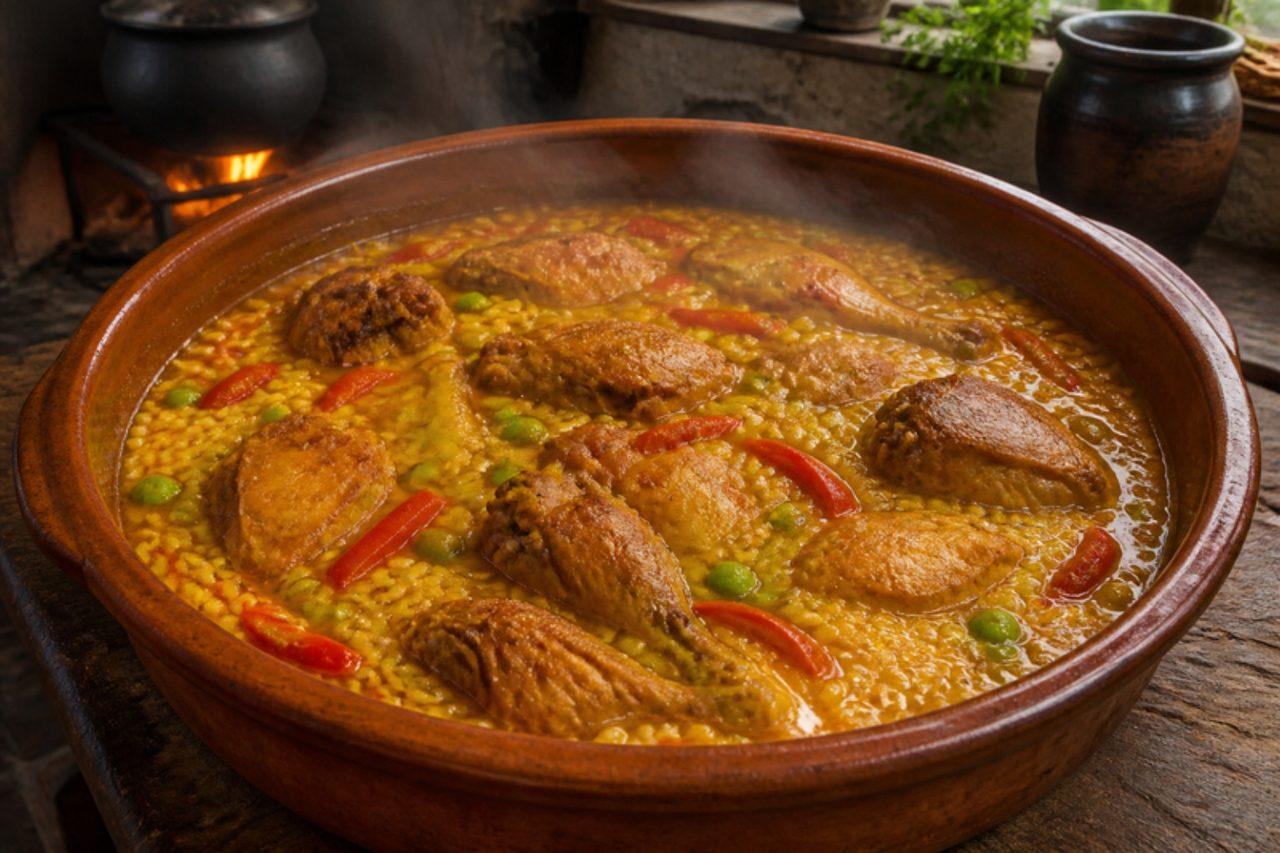
A pitu de caleya is a cockerel raised free in the lanes, or caleyas, of rural Asturias; its firm, flavourful meat needs long stewing, and families around Villaviciosa and Grado still cook it for feast days. The stew is often finished as a soupy rice, so the deep chicken juices go into every grain. Use the best free-range chicken you can find. The braise includes dry white wine; replace it with extra stock and a squeeze of lemon if you want it alcohol-free. Chef's tip: brown the chicken slowly and deeply; that colour is where the flavour of the whole pot comes from.
Pfälzer SaumagenStuffed pig's stomach
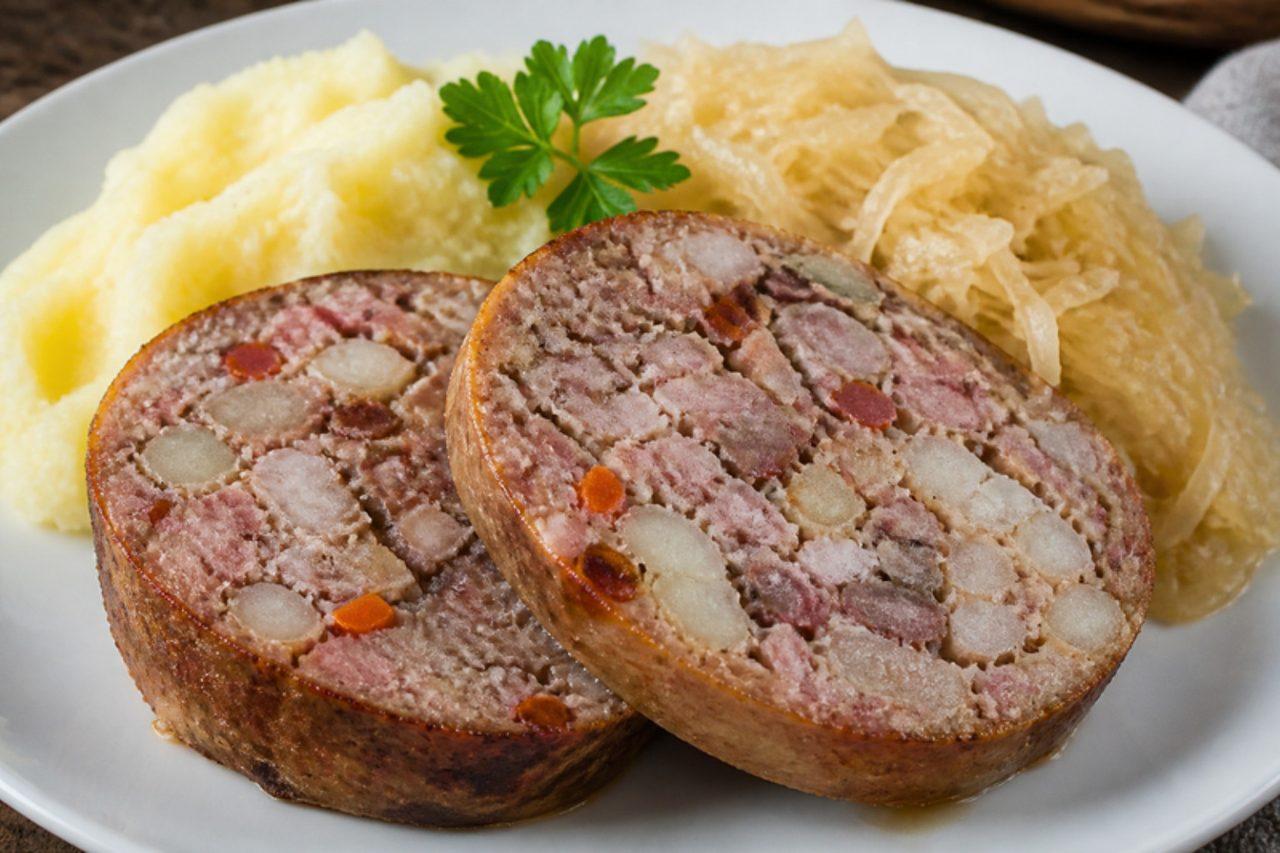
Saumagen is the pride of the Palatinate, served at wine-village festivals and family dinners from the Haardt hills to Ludwigshafen. A cleaned pig's stomach is stuffed with diced pork shoulder, pork sausage meat, potato and carrot seasoned with marjoram and nutmeg, poached slowly, then sliced thick and fried until crusty. The stomach works only as a casing and is ordered from a butcher; if you can't get one, bake the same filling in a covered terrine in a water bath. Serve with sauerkraut and mashed potato. Chef's tip: fill the stomach only three-quarters full, or it bursts as the potatoes swell.
 German
