
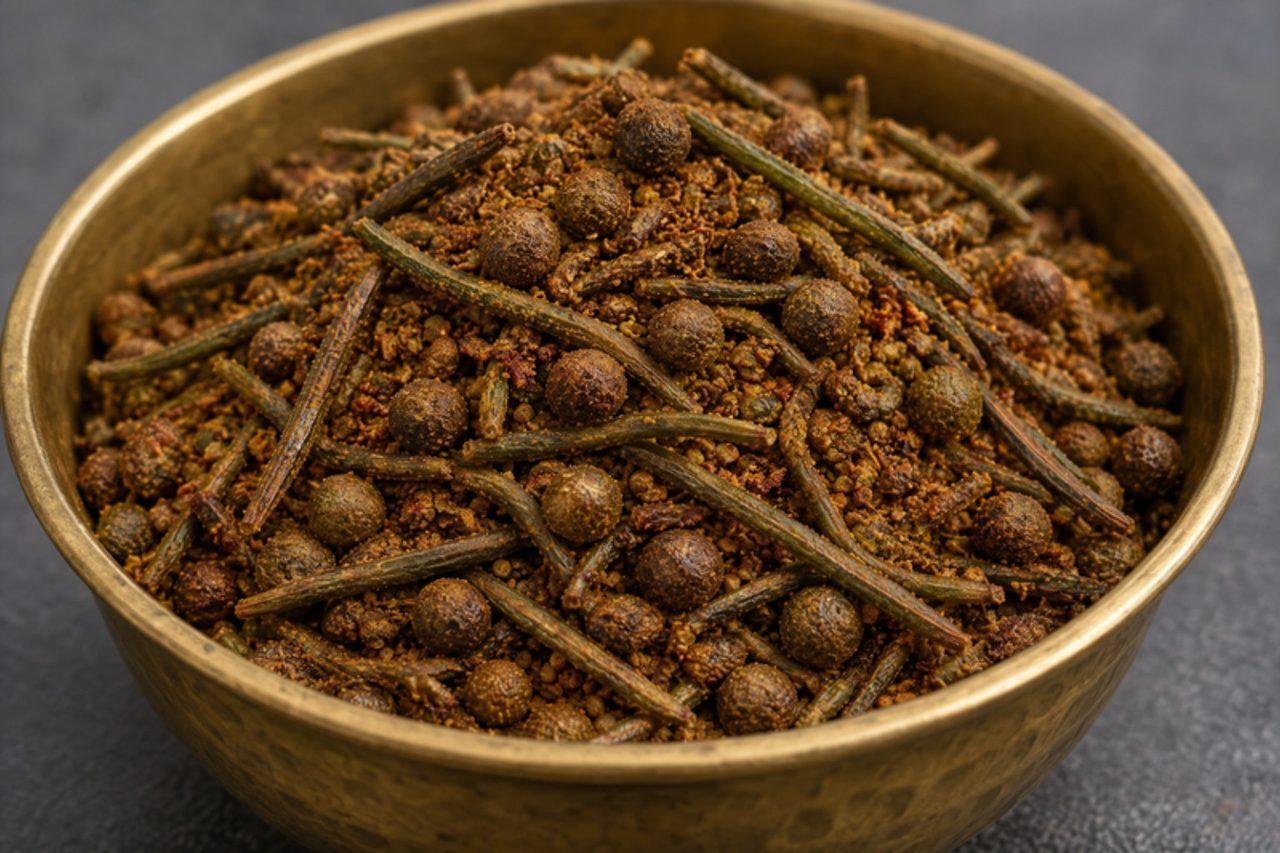
AI-generated image
Panchkuta
Five desert vegetables with spices
पंचकूटा: Marwar's five desert foods (ker, sangri, kumatiya, gunda and amchur) slow-cooked with spices (plus overnight soaking)



Panchkuta is the Marwari answer to a land where fresh vegetables are scarce: five sun-dried desert foods, ker berries, sangri beans, kumatiya seeds, gunda (lasoda) and amchur, soaked back to life and cooked in mustard oil with red chilli. Jodhpur and Bikaner families keep it for Sheetla Ashtami, when food is cooked a day ahead, and for wedding thalis with bajra roti, because it keeps for days without spoiling. The common mistake is cutting the soaking short; under-soaked ker and sangri stay leathery and bitter. Chef's tip: boil the soaked ker on its own and throw away the first water, which carries most of its bitterness.
- Total time
- 60 min
- Difficulty
- medium
- Serves
- 6
Ingredients
For the desert vegetables
- 1 ¾ oz dried sangri
- 1 oz dried ker berries
- ⅔ oz dried kumatiya seeds
- ⅔ oz dried gunda (lasoda)
- 8 ¼ cups water for soaking and boiling
For the masala
- 5 tbsp mustard oil
- 1 tsp cumin seeds
- 1 ½ tsp red chilli powder
- 2 tsp ground coriander
- ½ tsp ground turmeric
- 1 tsp salt
- ⅔ oz raisins
- ½ cup water
Shop this recipe on Amazon
Spices & pantry
Fresh ingredients (1)
Links open Amazon in a new tab. As an Amazon Associate, WhatToEat.Today earns from qualifying purchases.
Method
0/5 doneStep 1: Rinse 1 ¾ oz dried sangri, 1 oz dried ker berries, ⅔ oz dried kumatiya seeds, ⅔ oz dried gunda (lasoda) and ½ oz dried raw-mango slices (amchur) separately, then soak them all overnight (10–12 hours) in about half the 8 ¼ cups water for soaking and boiling.
10 minStep 2: Drain. Boil the ker alone in fresh water for 10 minutes and discard that water. Boil the rest together for 15 minutes until the sangri bends without snapping. Drain well.
25 minStep 3: Heat 5 tbsp mustard oil in a heavy kadhai until it smokes lightly, then lower the heat. Add ¼ tsp gluten-free asafoetida (hing), 1 tsp cumin seeds and 3 dried red chillies and let them sizzle 30 seconds.
2 minStep 4: Stir in 1 ½ tsp red chilli powder, 2 tsp ground coriander and ½ tsp ground turmeric with 2 tbsp of the measured ½ cup water and cook 1 minute until the oil turns red.
1 min
Nutrition per serving
- Calories
- 180 kcal
- Protein
- 4 g
- Carbs
- 16 g
- Fat
- 12 g
- Fibre
- 8 g
Nutrition values are estimates.
KrazyBadal
Good to know
- How long does panchkuta take?
- About 60 minutes in total: 20 minutes to prepare and 40 minutes to cook.
- How many people does it serve?
- 6 as written. Change the servings above the ingredients and every amount scales to match.
- Is it vegan?
- Yes. It has no meat, fish, dairy or eggs.
- Is it gluten free?
- Yes, as written. Check the labels on stock, sauces and spice mixes, which sometimes contain gluten.
- Can I make it ahead?
- Yes. It keeps well, so you can cook it earlier in the day or the day before and reheat it.
- What can I use instead of gluten-free asafoetida (hing)?
- A pinch each of garlic powder and onion powder (asafoetida stands in for onion and garlic).
- What can I use instead of cumin seeds?
- Ground cumin, three quarters of the amount (add it with the other ground spices, not to hot oil first).
Reviews
No reviews yet. Be the first to cook it.
Rate this recipe
Sign in to rate and review this recipe.
You might also like

Caramelised clay-pot tofu and mushroomsBraised tofu and mushrooms
Kho is the slow braise of the Mekong Delta: food simmered in a little clay pot (nồi đất) with dark caramel and seasoning until the sauce is sticky and the flavours go deep. This vegetarian cousin of cá kho tộ (braised fish) uses golden tofu and meaty mushrooms in place of fish, cooked in coconut water, as cooks do in the south, and finished with plenty of black pepper. Serve it bubbling in its pot with steamed rice and a sour soup or plain boiled vegetables. Chef's tip: take the caramel (nước màu) to a deep mahogany, darker than you think, just before it smokes; pale caramel only tastes sweet, while dark caramel gives the bittersweet, smoky flavour of a real kho.
 Vietnamese


Sabudana khichdiSago with peanuts and potato
Sabudana khichdi is the dish that sees Maharashtra through every vrat (fast), from Navratri to Ekadashi, but it's so good that people eat it any day of the week. Soaked sago pearls are tossed in a pan with crushed roasted peanuts, cubes of potato, cumin and green chilli until each pearl turns glassy and separate, then finished with lemon and coriander. It's soft, chewy, nutty and gently hot. Fasting rules vary from family to family, so check yours; this version uses rock salt and no asafoetida, onion or garlic. Traditionally it's cooked in ghee; use ghee instead of oil if you aren't keeping it vegan. Chef's tip: soak the sago in just enough water to cover by the height of the pearls themselves, no more; too much water is the reason khichdi turns into one sticky lump.


Bagara bainganBaby aubergines in peanut sesame sauce
Bagara baingan is a Hyderabadi wedding dish of small aubergines cooked whole in a dark, tangy gravy of roasted peanuts, sesame, dried coconut and tamarind. Unlike a Gujarati stuffed brinjal, the aubergines here are only quartered at the base and fried until silky, then left to soak up a thin-but-rich sauce that is finished with a tempering, the 'baghar' that gives the dish its name. It's sour, nutty and gently spiced, and is served with biryani, bagara rice or plain rice. Chef's tip: choose small, glossy purple aubergines that feel heavy for their size; soft, light ones are full of seeds and turn mushy before the gravy has a chance to cling.